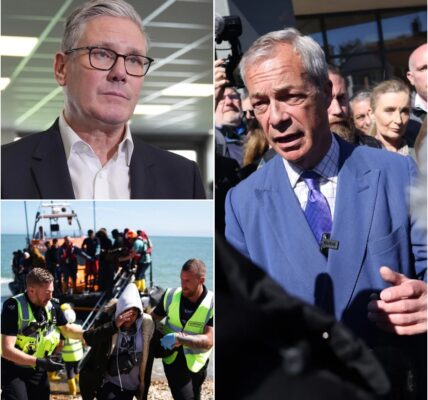

UK Government Faces Questions Over Reported Plans for New Asylum Centres as Parliament Demands Answers
The UK government is facing renewed scrutiny over its handling of immigration policy after reports suggested that the Home Office intends to establish 12 new asylum accommodation centres across England.
While the reported expansion of accommodation has already generated political debate, the immediate controversy is not centred on the centres themselves. Instead, it concerns how the information was reportedly communicated—and whether Parliament was sidelined in the process.
The issue erupted during proceedings in the House of Commons, where Conservative MP Katie Lam raised a formal point of order after media reports suggested that the Home Office planned to announce the new accommodation sites without first informing Members of Parliament.
Lam argued that elected representatives should never learn about decisions affecting their constituencies through media reports rather than through Parliament itself.
Her intervention immediately drew a strong response from Sir Lindsay Hoyle, who emphasized the constitutional importance of ministerial accountability to Parliament.
Speaker Warns Against Bypassing Parliament
Responding from the Speaker’s Chair, Hoyle said that if the reports were accurate, it would be “totally unacceptable” for Parliament to be bypassed.
He stressed that MPs—regardless of party affiliation—should receive important government announcements before those decisions are released publicly.
Hoyle also indicated there was still an opportunity for the responsible minister to appear before the House and explain the government’s plans, including which constituencies could potentially be affected by the proposed asylum accommodation centres.

His comments reflected one of Westminster’s longstanding constitutional conventions: that ministers are expected to make significant policy announcements to Parliament before briefing the media.
Although this principle is not always followed perfectly in practice, Speakers have repeatedly defended Parliament’s right to scrutinize government decisions before they become public.
MPs Cite Previous Communication Problems
The discussion widened when another Member of Parliament described a similar experience involving an asylum accommodation site established in their own constituency.
According to the MP, local representatives received only a few hours’ notice before the facility opened, while local authorities had reportedly been informed several days earlier.
The account reinforced concerns that MPs may sometimes receive less advance warning than local administrative bodies despite being directly accountable to affected communities.
Hoyle reiterated that Parliament should always be informed first whenever government decisions carry significant consequences for local constituencies.
The exchange underscored growing frustration among MPs about the flow of information between government departments and elected representatives.
Immigration Policy Remains Under Political Pressure
The parliamentary dispute came shortly after Keir Starmer defended his government’s record on immigration.
Speaking during what was described as one of his final major public appearances before leaving office, Starmer argued that Labour had made measurable progress since entering government.
He pointed to several areas where the government says conditions have improved:
- Net migration has fallen compared with the levels inherited when Labour took office.
- Small-boat crossings across the English Channel have reportedly declined.
- The government has begun reducing its use of asylum hotels as demand for emergency accommodation has eased.
“We are in a much better place than we were two years ago,” Starmer said, while acknowledging that immigration remains an area requiring continued attention.
His remarks were intended to demonstrate that Labour’s approach has begun delivering results after years in which immigration dominated British political debate.
Why New Asylum Centres Matter
The reported proposal to establish additional asylum accommodation centres has inevitably prompted questions about how the policy aligns with the government’s broader immigration strategy.
Labour has repeatedly stated that reducing reliance on hotels is one of its priorities.
Hotels have been widely criticised for several reasons:
- High costs to taxpayers.
- Pressure on local communities.
- Limited suitability for long-term accommodation.
- Public concern over the visibility of the asylum system.
Permanent or semi-permanent accommodation centres are generally presented as a more structured alternative.

However, relocating asylum seekers from hotels into dedicated centres does not eliminate the broader political debate surrounding immigration.
Instead, it shifts attention toward questions of location, local consultation, capacity and community impact.
At the time of the parliamentary exchange, ministers had not yet provided detailed information regarding:
- The proposed locations.
- Opening schedules.
- Capacity of each centre.
- Expected operational costs.
- Consultation with affected communities.
Until those details are released, much of the public discussion remains focused on the reported proposal rather than confirmed government policy.
Local Communities Likely to Seek Greater Clarity
Experience from previous asylum accommodation projects suggests that local communities often seek answers to practical questions rather than abstract policy debates.
Residents typically want to know:
- Why their area was selected.
- How many people will be accommodated.
- What security arrangements will be in place.
- Whether additional NHS, education and policing resources will be provided.
- How long facilities are expected to remain operational.
For local MPs, receiving timely information is therefore essential.
Without advance notice, representatives have limited opportunity to answer constituents’ concerns or seek clarification from ministers before public debate begins.
My Professional Perspective
The immediate political argument surrounding this story is not actually about immigration.
It is about accountability.
One of Westminster’s oldest constitutional principles is that governments are accountable first to Parliament.
That principle exists regardless of which political party forms the government.
Whenever ministers announce significant policy decisions through media reports before addressing MPs, criticism tends to emerge across party lines.
The Speaker’s response reflects that institutional concern more than any particular view on immigration policy itself.
A second issue deserves equal attention.
The government’s reported plan appears designed to address one problem while potentially creating another.
Successive governments have faced sustained criticism over the extensive use of hotels for asylum accommodation.
Hotels are expensive, temporary by design and often unpopular within local communities.
Dedicated accommodation centres may reduce some of those financial pressures and provide more consistent management.
Yet relocating asylum seekers into permanent centres does not remove the political sensitivity of asylum policy—it simply changes its focus.
Instead of debating hotel costs, public discussion turns toward the location of accommodation centres, consultation with residents and the capacity of local public services.
That is why transparency becomes so important.
Communities generally respond more constructively when governments clearly explain why decisions have been made, what safeguards exist and how local impacts will be managed.
Uncertainty often creates the space in which speculation flourishes.
Another important point is the broader political context.
Immigration has remained one of the defining issues in British politics for more than a decade. Every major party now faces pressure to demonstrate both effective border control and a functioning asylum system while meeting the UK’s domestic legal obligations and international commitments toward people seeking protection.
This balancing act is exceptionally difficult.
Governments must process asylum claims efficiently, manage accommodation costs, ensure public confidence in the immigration system and maintain support for genuinely vulnerable refugees. Progress in one area does not necessarily eliminate challenges in another.
Finally, there is a lesson about political communication.
When governments communicate major policy changes primarily through unofficial reports or media leaks, they risk shifting attention away from the substance of the policy and toward the process itself.
That appears to be what has happened here.
Rather than debating whether additional asylum centres represent an effective long-term solution, Parliament first found itself debating whether Parliament had been properly informed at all.
In politics, process often shapes perception as much as policy.
How a government announces a decision can sometimes become almost as controversial as the decision itself.
Conclusion
The reported proposal to establish 12 new asylum accommodation centres has reopened debate over one of Britain’s most politically sensitive issues. While ministers argue that reforms to the asylum system have reduced reliance on hotels and improved immigration management, questions remain about how additional accommodation fits into that broader strategy.
At the same time, the parliamentary dispute has highlighted an equally important constitutional issue: the expectation that significant government decisions should be presented to elected representatives before being announced publicly.
As further details emerge from the Home Office, attention is likely to shift from reports and speculation to the practical realities of implementation, including where the centres will be located, how they will operate and what impact they may have on local communities.
Ultimately, the debate extends beyond asylum accommodation alone. It raises a broader question about democratic accountability: when governments make decisions that directly affect communities across the country, should the first audience be the public through the media—or Parliament, where ministers are expected to answer directly to the representatives elected on the public’s behalf?