
The London Echo: Deconstructing Pauline Hanson’s Overseas Crusade, Trans-Hemispheric Populism, and the Politics of National Identity
A Transatlantic Political Storm
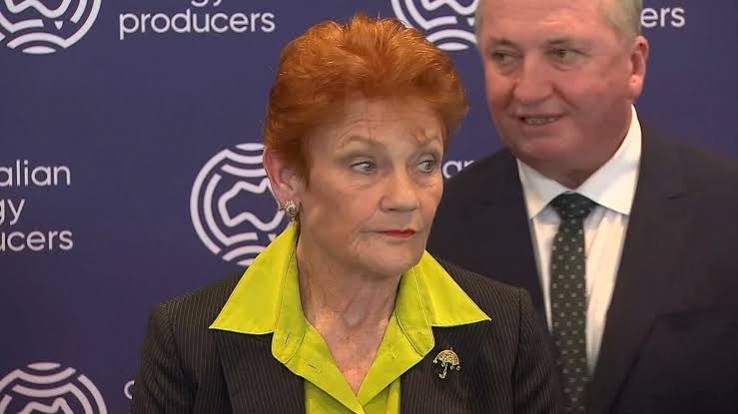
During the Australian parliamentary winter recess, One Nation leader Senator Pauline Hanson embarked on what her office framed as a European “fact-finding mission.” What began as a tour of right-wing political networks in the United Kingdom rapidly mutated into a major domestic political controversy, drawing sharp condemnation from across the Australian political spectrum—most notably from Prime Minister Anthony Albanese.
                 THE CANBERRA–LONDON POLITICAL AXIS
                                 |
    +----------------------------+----------------------------+
    |                                                         |
 SENATOR PAULINE HANSON                               PRIME MINISTER ANTHONY ALBANESE
 - Addresses CPAC London conference                    - Accuses Hanson of "talking Australia down"
 - Appears on Tommy Robinson podcast                   - Urges leaders to "talk Australia up" abroad
 - Endorses Restore Britain "mass deportations"        - Frames Australia as global success model
 - Laments end of White Australia policy                          |
    |                                                         |
    +----------------------------+----------------------------+
                                 |
                         THE ELECTORAL IMPACT
             Importing UK-style populist narratives to re-energize
             domestic voter base ahead of upcoming federal polling.
The controversy reached a tipping point following Hanson’s address to a conservative political gathering at the Conservative Political Action Conference (CPAC) in London. Speaking before an international audience, the Queensland senator declared that Australia was “too stupid” in its handling of transgender rights, called for bans on the burqa, and asserted she was “sick of hearing about white privilege.”

Her formal conference remarks followed a series of podcast appearances and media engagements in which she cited the historical dismantling of the White Australia policy as the catalyst for modern immigration challenges, claiming that unvetted migration was “destroying” Australia in a manner parallel to the United Kingdom.
       CHRONOLOGY OF A TRANS-HEMISPHERIC CONTROVERSY

 [ Early July 2026: UK Arrival ] ---> [ Luton Walkthrough & Podcast ] ---> [ Restore Britain Alliance ]
   Hanson begins "fact-finding"        Records podcast with Tommy         Meets MP Rupert Lowe; backs
   mission in Great Britain.           Robinson in Luton.                 "mass deportation" concept.
                                                                                     |
                                                                                     v
 [ Prime Minister's Rebuttal ]  <--- [ Spotlight Broadcast ]      <--- [ CPAC London Address ]
   Albanese accuses Hanson of          Backs mass deportations on          Tells London crowd Australia
   "badmouthing" nation abroad.        Channel 7's Spotlight.              is "stupid" on woke policies.
Key Figures, Podcast Controversies, and the Spotlight Interview
The narrative surrounding Hanson’s European tour was defined by three high-profile interactions:
-
The Tommy Robinson Podcast: In Luton, Bedfordshire, Hanson sat down for an extended video podcast with Stephen Yaxley-Lennon (who operates under the pseudonym Tommy Robinson). Yaxley-Lennon, a co-founder of the English Defence League with a history of criminal convictions—including assault, stalking, and public order offenses—guided Hanson on a tour of local neighborhoods. During the recording, Yaxley-Lennon questioned how Australia developed “African problems” and “violent Africans,” asking why strong border policies failed. Hanson responded by tracing the origin of Australia’s contemporary immigration framework back to 1973, when Prime Minister Gough Whitlam fully abolished the White Australia policy.
-
The Restore Britain Alignment: Hanson met with Rupert Lowe MP, founder of the newly formed Restore Britain movement. Lowe has publicly advocated for aggressive state-sponsored “mass deportations” targeting illegal entrants and visa overstayers. In a televised interview on Channel 7’s Spotlight, Hanson explicitly endorsed Lowe’s vision. When pressed on the practical logistics of executing mass deportations within Australia, Hanson stated: “These are things that will be discussed with the relevant authorities to see the best way to go about it… I’m not gonna give you politics on the run here.”
-
The Prime Minister’s Rebuttal: Speaking to national media on Sunday afternoon, Prime Minister Anthony Albanese delivered a stern rebuke of Hanson’s international commentary. Without naming her directly in every sentence, Albanese laid down an explicit standard for parliamentarians traveling overseas:
“When I have the opportunity to represent Australia overseas, I talk Australia up. I don’t talk Australia down,” Mr. Albanese stated. “There’s nowhere you’d rather be than Australia, and I think that it is up to our representatives, no matter where they stand in the parliament, when they’re overseas to talk Australia up, not talk Australia down.”
                 THE RETAIL POLITICS VS. NATIONAL BRAND MATRIX

 [ HANSON'S UK STRATEGY ]                     [ ALBANESE'S DIPLOMATIC STANDARD ]
 - Frame domestic policies as "failing"        - Promote national stability and cohesion
 - Align with British far-right activists       - Defend multicultural democracy as an asset
 - Import UK culture war rhetoric              - Demand parliamentarians act as brand ambassadors
 - Target disaffected domestic voters          - Reject overseas criticism of Australian law
Following intense backlash back home, Hanson released a social media video attempting to clarify her comments regarding the White Australia policy. She denied advocating for a return to race-based immigration laws, maintaining that her primary concern was cultural compatibility, assimilation, and security. However, moments after uploading the clarification, she reiterated to the CPAC audience in London that leaders globally were failing to protect their sovereign borders against “incompatible” cultures.
“My Professional Perspective”
Having covered three decades of Australian federal politics, international diplomatic summits, and the evolution of global populist movements, I have learned that when a politician travels halfway around the world to speak to a sparse room in London, they are rarely speaking to the audience in front of them. They are broadcasting to the cameras pointed back at their home electorate.
“Pauline Hanson’s UK trip was not a fact-finding mission; it was a content-generation exercise designed to import European civilizational angst into the Australian suburban political landscape.”
       THE CONTENT-GENERATION FEEDBACK LOOP

 [ UK Media Appearances ]  --->  [ Viral Social Clips ]  --->  [ Domestic News Cycle ]
   Podcasts with Yaxley-Lennon   Short, highly emotive         Australian media picks up
   and CPAC London speeches.     video clips generated.        and debates the statements.
                                                                          |
                                                                          v
 [ Electorate Polarization ] <--- [ Mainstream Rebuttals ] <--- [ Base Re-Energization ]
   Voters forced to take sides   PM and moderate Liberals      One Nation base views Hanson
   on cultural issues.           condemn the rhetoric.         as "unfiltered truth-teller."
What we witnessed in London was a sophisticated execution of Trans-Hemispheric Populist Syndication. By stepping outside the formal boundaries of Australian parliamentary decorum, Hanson gained access to an ecosystem of British alt-right influencers, dissident MPs, and digital platforms that operate without the editorial guardrails of traditional Australian broadcasting.

Understanding why this episode ignited such a fierce reaction from Prime Minister Albanese requires looking past the surface-level outrage to examine the deeper structural dynamics at play.
What Important Details Have People Overlooked?
1. The Strategic Importation of the “Broken Britain” Narrative
For over two decades, Australian political discourse on immigration has been anchored by a sense of geographic isolation and strict maritime border control—a framework popularized by the famous dictum that Australia decides who comes to the country and the circumstances in which they come.
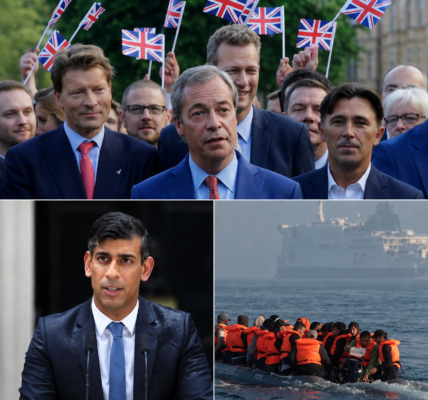
In Great Britain, however, the public narrative around border control has broken down due to the visible, unmanaged influx of small boat crossings across the English Channel and heavy pressure on regional public housing. By touring towns like Luton alongside Stephen Yaxley-Lennon and linking arms with Rupert Lowe’s Restore Britain, Hanson deliberately attempted to transpose the imagery of “Broken Britain” onto Australian suburbia.
               THE DIVERGENT BORDER REALITIES

  GREAT BRITAIN (The "Broken Britain" Narrative)
  +-------------------------------------------------------------------+
  | - Unmanaged maritime small boat crossings across the Channel      |
  | - Severe pressure on municipal housing and public services        |
  | - High visibility street protests and localized social friction   |
  +-------------------------------------------------------------------+

  AUSTRALIA (The Managed Border Narrative)
  +-------------------------------------------------------------------+
  | - Geographic isolation enforced by strict offshore policies       |
  | - High-volume, highly planned skilled & student visa migration      |
  | - Structural housing pressure driven by supply/demand economics   |
  +-------------------------------------------------------------------+
Her goal was to persuade Australian voters that despite the country’s vast geographic advantages, it is suffering from the exact same structural decay as post-Brexit Britain.
2. The Mechanics of “Talking Australia Down”
Prime Minister Albanese’s rebuttal was strategically precise. By accusing Hanson of “talking Australia down,” the Prime Minister weaponized a classic patriotic trope historically deployed by conservative leaders—most notably former Prime Minister John Howard, who famously accused critics of being “black armband” historians who denigrated the nation.
                         THE PATRIOTIC RHETORIC SWAP

  HISTORICAL CONSERVATIVE POSITION (John Howard Era)
  +-------------------------------------------------------------------+
  | Accuse progressive critics of "talking Australia down" by         |
  | focusing on historical injustices or institutional racism.        |
  +-------------------------------------------------------------------+
                                   VS
  MODERN LABOR STRATEGY (Anthony Albanese Era)
  +-------------------------------------------------------------------+
  | Accuse populist-right critics of "talking Australia down" by      |
  | telling international audiences that Australian society is failing. |
  +-------------------------------------------------------------------+
By turning this rhetorical weapon against Hanson, Albanese accomplished two key objectives:
-
Securing the Patriotic High Ground: He framed Labor as the defender of Australian national pride, economic success, and global standing.
-
Isolating One Nation: He cast Hanson’s rhetoric not as brave truth-telling, but as an un-Australian betrayal delivered to foreign audiences.
3. The Re-emergence of the “White Australia” Shadow

Hanson’s decision to cite the 1973 abolition of the White Australia policy under Gough Whitlam was no offhand historical reference. In Australian political history, the dismantling of the White Australia policy was a landmark bipartisan achievement, initiated by Liberal Prime Minister Harold Holt in 1966 and finalized by Labor’s Gough Whitlam in 1973.
By raising this specific historical milestone on an international podcast, Hanson re-opened a taboo debate that mainstream Australian politics considered settled half a century ago. The subsequent pushback from moderate Liberals—such as Deputy Leader Jane Hume calling her remarks “unnecessary, divisive, and totally un-Australian”—demonstrates how deeply uncomfortable mainstream conservatives are when forced to defend or litigate race-based historical policies.
Comparative Structural Breakdown
To understand how different political factions view Hanson’s overseas tour, we can map their core perspectives, operational strategies, and inherent vulnerabilities:
| Political Entity | Primary Narrative | Strategic Goal | Core Vulnerability |
| Prime Minister Anthony Albanese (Labor) | “Australia is an extraordinary, envy-of-the-world nation that must be defended abroad.” | Secure the patriotic middle ground; isolate One Nation as fringe and un-Australian. | Risk of appearing dismissive of genuine voter anxieties regarding housing affordability and cost of living. |
| Senator Pauline Hanson (One Nation) | “Globalist elites are destroying Western nations through unvetted migration and woke policies.” | Re-energize populist grassroots base; harvest high-engagement digital content for upcoming elections. | Association with convicted figures (e.g., Tommy Robinson) alienates mainstream suburban voters. |
| Coalition Opposition (Liberal/National) | “Hanson’s rhetoric is divisive and inflammatory, but voter frustration over immigration is real.” | Retain conservative voters tempted by One Nation without endorsing overt racial commentary. | Walking a razor-thin tightrope between moderate suburban seats and conservative regional bases. |
| The British Populist Network (CPAC/Restore) | “A unified international front against globalist migration and cultural decline.” | Validate domestic UK platforms by hosting visiting international conservative figures. | Operates in an echo chamber that often lacks broad electoral appeal in mature democracies. |
What Deeper Meaning Lies Behind This Event?
This dispute signals a profound shift in how political identity is negotiated in the digital era: The Globalization of Culture War Politics.
                       THE DECAY OF LOCALIZED POLITICS

     +-----------------------------------------------------------------+
     |                     HISTORICAL MODEL                            |
     |         Domestic political debates anchored in localized        |
     |         economic issues, domestic infrastructure, and laws.     |
     +-----------------------------------------------------------------+
                                    VS
     +-----------------------------------------------------------------+
     |                     GLOBALIZED MODEL                            |
     |         Border policies, gender identity, and heritage framed   |
     |         as a single, interconnected global civilizational battle. |
     +-----------------------------------------------------------------+
Historically, Australian minor parties were intensely regional—focused on local farming subsidies, regional road funding, or municipal water rights. Today, political movements are hyper-connected. A speech delivered in a London hotel ballroom can be edited into short clips, uploaded to global platforms, and viewed by millions of voters in Queensland, New South Wales, or Western Australia within hours.
When Hanson frames immigration not as a technical policy debate about annual permanent intake numbers, but as an existential struggle against “cultural destruction,” she is adopting the globalized language of international populism. In doing so, she is betting that Australian voters are no longer interested in nuance—they want to participate in a global cultural narrative.
Unanswered Questions
As the political dust settles from Hanson’s European tour, several critical questions remain unanswered:
-
The Policy Mechanics of “Mass Deportation”: How does One Nation propose to reconcile a UK-style “mass deportation” policy with Australia’s legal framework, international treaty obligations, and administrative law systems?
-
The Preference Flow Consequences: Will mainstream Coalition strategists formally penalize One Nation in preference directing arrangements at the next federal election due to Hanson’s comments on the White Australia policy?
-
The Foreign Influence Question: As Australian lawmakers continue to tighten regulations around foreign political influence, how will parliament view domestic party leaders aligning directly with foreign political movements (like Restore Britain) to shape domestic legislation?
The Limits of Imported Indignation
Pauline Hanson’s UK tour demonstrated the immense power of modern digital media to flatten geography and export cultural conflict. By seeking out figures like Tommy Robinson and speaking at CPAC London, the One Nation leader successfully captured national headlines and re-energized her core supporter base.
However, political stunts delivered thousands of miles from home carry inherent risks. By attacking Australia’s societal health from a foreign stage, Hanson handed Anthony Albanese an effective political weapon. The Prime Minister’s call to “talk Australia up” resonates with a deeply ingrained national instinct: that while Australians are quick to criticize their own institutions at home, they expect their elected leaders to defend the country when standing on the global stage.
As Australia approaches its next electoral cycle, voters will face a fundamental choice. They can view their nation through the lens of imported civilizational grievance—or they can embrace a confident, sovereign story that celebrates what Australia has built. In the final analysis, a country’s future is never decided in a hotel ballroom in London; it is written by the citizens who call it home.
A Question for Reflection
When elected representatives choose to critique their own country on foreign platforms to score domestic political points, are they exercising legitimate free speech—or are they eroding the foundational trust required to sustain a confident, sovereign democracy?