
The ABC has no standard protecting Gina Rinehart or any other Australian woman from what it airs. u1

The Architecture of an Unregulated Slur: The ABC, Gina Rinehart, and the Illusion of Accountability
The Spark in the Dark
On the evening of July 12, an unassuming four-minute submission titled A Very Relaxing Video aired on the Australian national broadcaster’s revived documentary competition series, Race Around the World. Produced by independent television banner Endemol Shine Australia, the episode was classified “M” for mature audiences and presented to viewers as a provocative exploration of travel, personal endurance, and irreverent storytelling.
The short film, created by contestant Kate McGuinness, began innocuously enough. It depicted a character stylized as a “Scottish forest warrior ninja” guiding McGuinness through meditation exercises and wilderness routines. But as the segment reached its climax, the comedic register shifted radically into explicit, violent provocation directed at Australia’s wealthiest citizen, mining magnate Gina Rinehart.
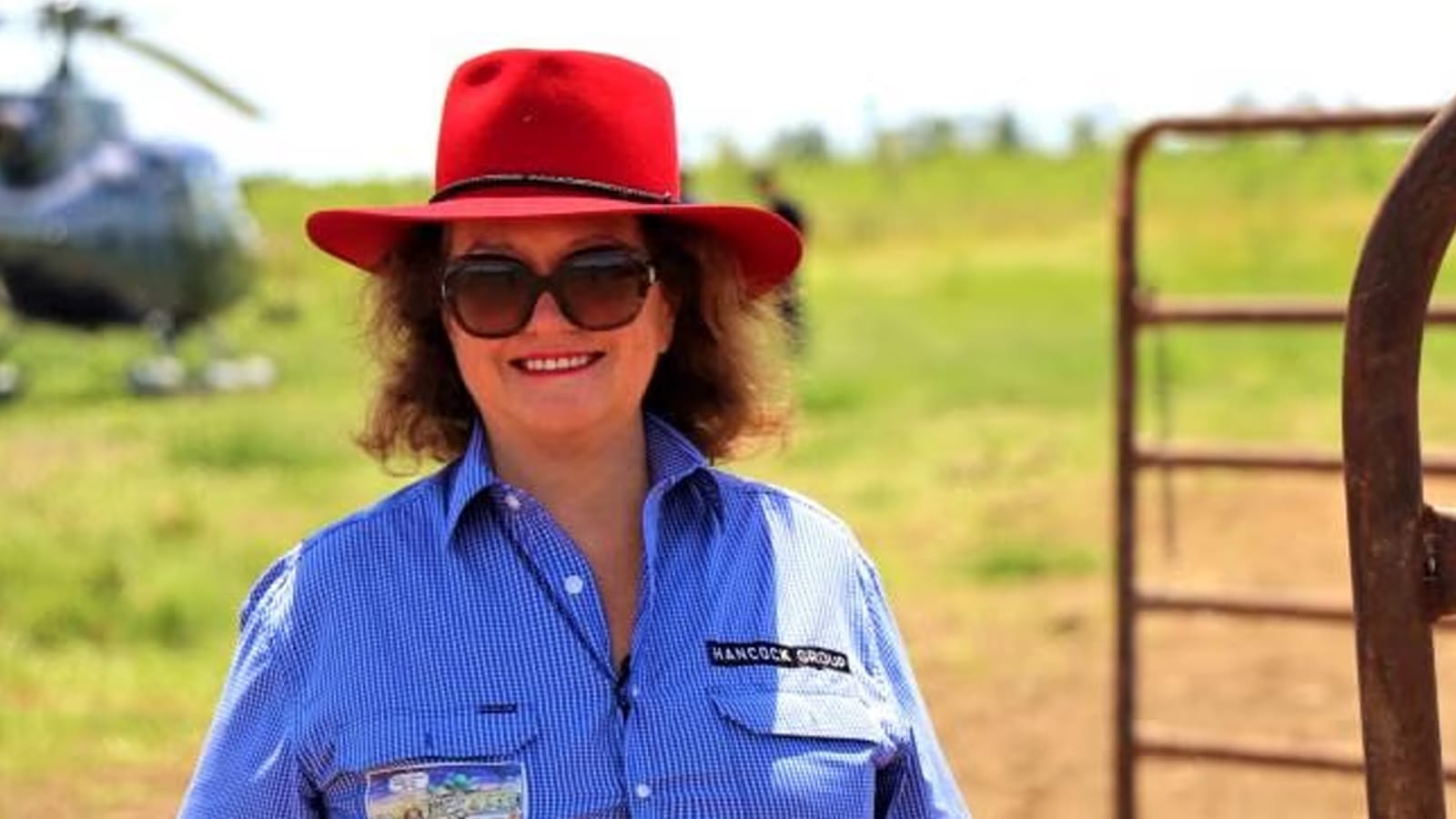
The closing monologue posed a brutal hypothetical to the audience:
“Because when the revolution comes, will you hide under the bed? Or will you know exactly how to shove a stick right up Gina Rinehart’s butthole, stirring it around, mixing her guts up nice and smooth, to make up one big sausage roll to make something out of nothing.”
The on-air judging panel critiqued the ending immediately following the screening. One judge described the line as “easy” and “nasty,” noting that the intended artistic metaphor had landed poorly. Yet, despite that immediate on-air unease, the program was neither pulled from circulation nor edited. For twenty-five days, the unedited segment remained accessible across the Australian Broadcasting Corporation’s (ABC) national digital platforms, including ABC iview.
+---------------------------------------------------------------------------------------+
|                                 TIMELINE OF THE FALLOUT                               |
+-------------------+-------------------------------------------------------------------+
| July 12           | Episode of Race Around the World airs on ABC TV and iview.        |
| July 12–19        | Initial public reaction yields 8 direct audience complaints.       |
| July 19           | ABC Insiders panel discusses poolside photos of Rinehart.          |
| July 23           | Hancock Prospecting issues first formal legal letter to ABC Board.|
| July 25           | Hancock calls publicly for apology; complaints surge toward 1,000.|
| July 30           | Legal notices sent to ABC Chair, Deputy Chair, and MD.            |
| August 6          | Ombudsman Fiona Cameron clears broadcast under editorial rules.   |
| August 6          | ABC MD Hugh Marks issues formal apology; segment removed.         |
| August 8          | Hancock Prospecting publishes scathing rebuttal of findings.      |
| October 26–29     | ABC executives scheduled before Senate Budget Estimates.          |
+-------------------+-------------------------------------------------------------------+
The Escalation and the Legal Threat
Initial audience pushback was modest: eight viewers lodged complaints in the first week following the broadcast. However, as clips and transcripts of the graphic line began circulating across commercial media, outrage surged, generating an additional 988 formal complaints.
On July 23, Hancock Prospecting—Rinehart’s private multi-billion-dollar mining enterprise—intervened directly. Corporate legal counsel dispatched letters to the ABC Board demanding an immediate retraction, a public apology, and a formal inquiry into how the material cleared editorial pre-broadcast vetting.
When the broadcaster failed to take down the footage immediately, Hancock Prospecting escalated matters on July 30, placing ABC Chair Kim Williams, Deputy Chair Lisa Caffery, and Managing Director Hugh Marks formally on legal notice. The company alleged potential contraventions of Australian civil and criminal statutes regarding the incitement of violence, harassment, and telecommunications misuse.
Filmmaker Kate McGuinness issued a statement conceding that her remarks were crude, noting that her intended artistic hyperbole was never meant to be taken literally.
The Ombudsman’s Verdict: Cleared on a Technicality
The internal dispute came to a head on August 6, when ABC Ombudsman Fiona Cameron delivered the findings of her official investigation. Cameron cleared the broadcast of breaching ABC Editorial Policies. Her analytical framework rested entirely on two specific provisions from the broadcaster’s rulebook:
-
Standard 7.1: Requiring that content likely to cause harm or offense must be justified by editorial context.
-
Standard 7.6: Requiring the ABC to prevent content that could lead to dangerous imitation or worsen threats to health, safety, or welfare.
Cameron concluded that while graphic, the monologue did not violate these standards because the satire targeted Rinehart’s public wealth and political prominence rather than her sex or gender:
“Violent language directed at a named public figure may have a greater impact on some audiences because violence against women is a significant social concern and at the forefront of community consciousness. However, in context, the target of the satire appeared to be Ms Rinehart’s public profile and status within contemporary political and economic debates rather than her gender.”
Cameron further observed that the monologue did not draw upon traditional gender stereotypes or express broad hostility toward women as a collective demographic class. The finding also cited several structural justifications:
-
The program operated under an unconventional documentary format produced by an external vendor (Endemol Shine Australia).
-
The legacy of Race Around the World—which launched provocateurs like John Safran in the late 1990s—set a historical precedent for boundary-pushing content.
-
The on-air panel had openly criticized the line, which Cameron ruled provided instant contextual balancing.
-
According to the ABC’s internal submission, the broadcast contained an “absence of any visual depiction of violence.”
The Backdown and the Corporate Backlash

Hours after the Ombudsman’s ruling was publicized, Managing Director Hugh Marks executed a sharp institutional retreat. The ABC issued an unreserved apology to Rinehart, wiped the offending footage from ABC iview and social channels, and announced an immediate review to amend editorial guidelines concerning depictions and descriptions of violence. Marks acknowledged on public radio that the content had fallen decisively short of community expectations and indicated that future rules would explicitly forbid violent comedic descriptions of specific individuals.
On August 8, Hancock Prospecting issued a blistering official response, published directly through Hancock Agriculture. A company spokesperson declared that the Ombudsman’s findings represented a structural failure that “fails all Australian women and the millions of taxpayers who fund the ABC”.
Hancock Prospecting contended that Cameron had performed administrative gymnastics: by defining the attack as an assault on wealth and ideology, the ABC had effectively constructed a standard under which an individual woman can never claim protection from targeted misogynistic rhetoric unless her entire gender is attacked simultaneously. The company further disputed Cameron’s factual premise regarding visual content, stating that the visual package had displayed the weapon named in the monologue alongside an effigy of Rinehart’s head on a stick.
2. My Professional Perspective
The Grand Illusion of Internal Self-Regulation
When an ombudsman within a state-funded media enterprise assesses whether that enterprise violated its own charter, the public expects forensic detachment. What we witnessed in the Fiona Cameron finding was not an interrogation of editorial standards; it was a demonstration of institutional insulation.
In thirty years of investigating media accountability and broadcast ethics, I have rarely seen an administrative ruling rely on such circular logic. Consider the linchpins of the Ombudsman’s defense:
                  +--------------------------------------------------+
                  |         THE ABC'S CIRCULAR DEFENSE MATRIX        |
                  +--------------------------------------------------+
                                           |
    +--------------------------------------+--------------------------------------+
    |                                      |                                      |
    v                                      v                                      v
+-----------------------+      +-----------------------+      +-----------------------+
|  THE DISMISSAL OF     |      |  THE JUDGES' CRITIQUE |      |  THE LEGACY DEFENSE   |
|  INDIVIDUAL IDENTITY  |      |  AS INSTANT ABSOLUTION|      |  (SAFRAN PRECEDENT)   |
+-----------------------+      +-----------------------+      +-----------------------+
| An attack on a woman's|      | Because the judges on |      | Citing 1997 shock     |
| wealth or status is   |      | air called the line   |      | tactics excuses       |
| legally divorced from |      | "nasty," the slur is  |      | present-day broadcast |
| gendered violence.    |      | deemed contextualized.|      | failures.             |
+-----------------------+      +-----------------------+      +-----------------------+
-
The Semantic Cleaving of Identity: The ruling asserts that because the filmmaker targeted Gina Rinehart’s wealth, the violent fantasy was political rather than gender-based. This creates an absurd standard. It suggests that if a public figure possesses immense economic capital, the graphic description of sexualized mutilation ceases to be an attack on a woman. By requiring that a slur must explicitly target “women as a class” to breach editorial standards, the ABC has effectively rendered every single individual woman outside the scope of its protections.
-
The Disapproval Paradox: The Ombudsman cited the judging panel’s on-air discomfort as proof that the material was contextualized. In investigative journalism, this is known as converting a red flag into an alibi. If a line is so egregiously inappropriate that a panel of seasoned media judges winces on camera, that is prima facie evidence of a broadcast failure—not an editorial buffer that immunizes the network from public scrutiny.
-
The 1997 Nostalgia Shield: Invoking the rebellious television era of John Safran from nearly three decades ago is a profound misreading of cultural and legal evolution. In 1997, television was linear, ephemeral, and bounded by broadcast slots. In 2026, content is digitized, clipped, and permanent. Using the stylistic freedom of late-nineties gonzo television to justify modern broadcast standards represents an astonishing refusal to engage with the reality of contemporary media consumption.
The Regulatory Trapdoor: Why ACMA Matters

The most crucial detail overlooked by the broader press gallery lies in the difference between the ABC’s internal Editorial Policies and its statutory Code of Practice.
The internal standards (Sections 7.1 and 7.6) are private administrative guidelines. No outside court or citizen can compel the ABC to act on them. However, the ABC Code of Practice is a legal instrument lodged directly with the federal communications regulator, the Australian Communications and Media Authority (ACMA), under the Broadcasting Services Act.
Within that Code of Practice sits the mandatory classification framework. The broadcast was rated M. The statutory guidelines for the M classification contain an explicit, binding rule:
“Verbal and visual references to sexual violence may only be included if they are: discreet and infrequent, and strongly justified by the narrative or documentary context.”
Notice what occurred in the Ombudsman’s report: Cameron acknowledged the “M” rating as proof that warnings were given to the public, yet she never applied the substantive legal test of the M rating itself. Was a monologue about impalement and visceral mutilation “discreet”? By no definition of the English language could it be classified as such.
By restricting her investigation exclusively to the amorphous terrain of Standard 7.1 (Harm and Offense), the Ombudsman avoided the exact statutory provision that a complainant could elevate to ACMA. Under Section 150 of the Broadcasting Services Act, a complainant dissatisfied with an ABC internal response can bypass the standard 60-day holding pattern and haul the public broadcaster before the federal regulator.
| Dimension | Internal ABC Editorial Policies | Statutory Code of Practice (ACMA) |
| Legal Status | Internal corporate framework | Formally notified under Broadcasting Services Act |
| Adjudicator | ABC Ombudsman (Reports to Board) | ACMA (Independent Federal Regulator) |
| Gender Specifics | General harm / offense provisions | Explicit constraints on sexual violence |
| Enforceability | Voluntary internal management action | Formal breach findings, remedial orders |
| Ombudsman Use | Applied exclusively to clear the broadcast | Omitted from investigative analysis |
The Hypocrisy of the Culture Blindspot
What makes this episode particularly explosive is the cultural context within which the ABC operates. The national broadcaster has spent the past decade positioning itself as a moral authority on workplace culture, misogyny, and the pervasive menace of gender-based violence.
Yet, when confronted with explicit, violent language directed at a woman whose politics and financial scale offend the cultural sensibilities of its creative class, the institution’s moral compass short-circuited.
Consider the timing:
-
On July 19, during a broadcast of Insiders, federal Greens senator Sarah Hanson-Young openly mocked poolside photographs of Gina Rinehart and Pauline Hanson in Sicily, calling them images “you don’t want in your head.”
-
A fortnight later, Hanson-Young publicly called the Race Around the World segment “disgusting.”
-
Meanwhile, the network’s rulebook contained zero specific protections governing denigration based on physical appearance or targeted personal debasement.
When Hugh Marks announced on August 6 that the ABC would “amend its guidance as it applies to violence” to ensure no individual is subjected to violent comedy, he inadvertently conceded the entire premise. You do not urgently draft an amendment for a standard that was already functioning properly. His concession proved what Hancock Prospecting had alleged from day one: the public broadcaster was operating without structural guardrails to prevent violent misogynistic rhetoric against individuals it deemed fair game.
                           THE DRIFT IN EDITORIAL INTEGRITY
                                           |
    +--------------------------------------+--------------------------------------+
    |                                                                             |
    v                                                                             v
INSTITUTIONAL POSTURE                                         PRACTICAL APPLICATION
"Zero tolerance for misogyny,                                 "Graphic violent satire is permitted
workplace harassment, and gender-based                        if the target is an affluent,
dehumanization in public life."                               conservative public figure."
The Unanswered Questions
As the ABC prepares for the upcoming Senate Supplementary Budget Estimates hearings, several deep investigative questions demand answers:
-
The Chain of Custody: Who signed off on this broadcast during pre-screening? Race Around the World is a packaged, edited reality format delivered weeks before transmission. It was not a live broadcast slip. Whose signature appears on the legal and compliance clearance forms at both Endemol Shine Australia and the ABC’s non-scripted programming division?
-
The Twenty-Five-Day Delay: Why did it require four weeks, direct threats of civil and criminal litigation against the ABC Board, and nearly 1,000 public complaints to remove a digital file from ABC iview? In modern content management systems, unpublishing a video takes three keystrokes. Who ordered the file to remain live while the legal storm gathered?
-
The Silence at the Summit: Why have ABC Chair Kim Williams and the governing board maintained absolute silence, delegating the fallout to an internal ombudsman and an embattled Managing Director? When an organization faces credible legal threats alleging statutory breaches of telecommunications and criminal law, the board’s fiduciary detachment ceases to be governance—it becomes abdication.
The crisis surrounding the Gina Rinehart broadcast is not an isolated squabble over crude television humor. It is a defining case study in how public institutions compromise their stated ethical values when their targets sit outside their ideological sympathies.
When satire ceases to be wit and becomes a graphic visualization of physical brutality, it loses the protection of art. And when an internal ombudsman rationalizes that brutality by arguing that wealth strips a citizen of her right to be protected from gendered violence, the regulator has failed the public it is chartered to serve.
Gina Rinehart has the private fortune to retain top silks, freeze boardrooms, and force institutional retreats. But the true tragedy of the ABC’s structural failure belongs to every Australian who does not possess millions of dollars in corporate legal firepower. If the national broadcaster’s rulebook cannot protect the most powerful woman in the nation from broadcasted fantasies of sexualized mutilation, what protection does it offer anyone else?
When a taxpayer-funded public broadcaster decides that certain citizens can be stripped of their basic humanity under the defense of political satire, has it simply made an editorial mistake—or has it revealed that its ethical standards apply only to the people it likes?
For deeper background on Hancock Prospecting’s extensive legal history and corporate operations in Australia, see The Gina Rinehart court ruling explained | ABC NEWS. This explainer provides helpful context on the vast commercial empire and legal disputes surrounding Australia’s richest mining magnate.