Labor’s Secret Harbour candidate Georgia Tree said the NRL had a better sexual assault policy than Labor. u1

The Sound of Silence in Secret Harbour: The Anatomy of a Political Reckoning
When veteran Labor MP and former cabinet minister Paul Papalia announced his retirement in July, the southern suburban Perth electorate of Secret Harbour—formerly held by Labor on an 11.5% margin—abruptly became the focal point of Western Australian politics.
To defend the seat, the Labor Party endorsed Georgia Tree, a former policy adviser to federal Resources Minister Madeleine King. However, Tree’s sudden elevation into the electoral spotlight has resurrected candid statements she made in 2021 regarding her own party’s internal handling of sexual harassment and workplace misconduct.
The Resurfaced Comments
On July 27, 2021, Tree appeared in a 50-minute episode of the podcast In the House and In the Senate, hosted by former Labor staffer Alisha Aitken-Radburn. At the time, Tree had recently organized a staff sit-in at Parliament House in Canberra to protest workplace culture and the treatment of female staffers across federal politics.
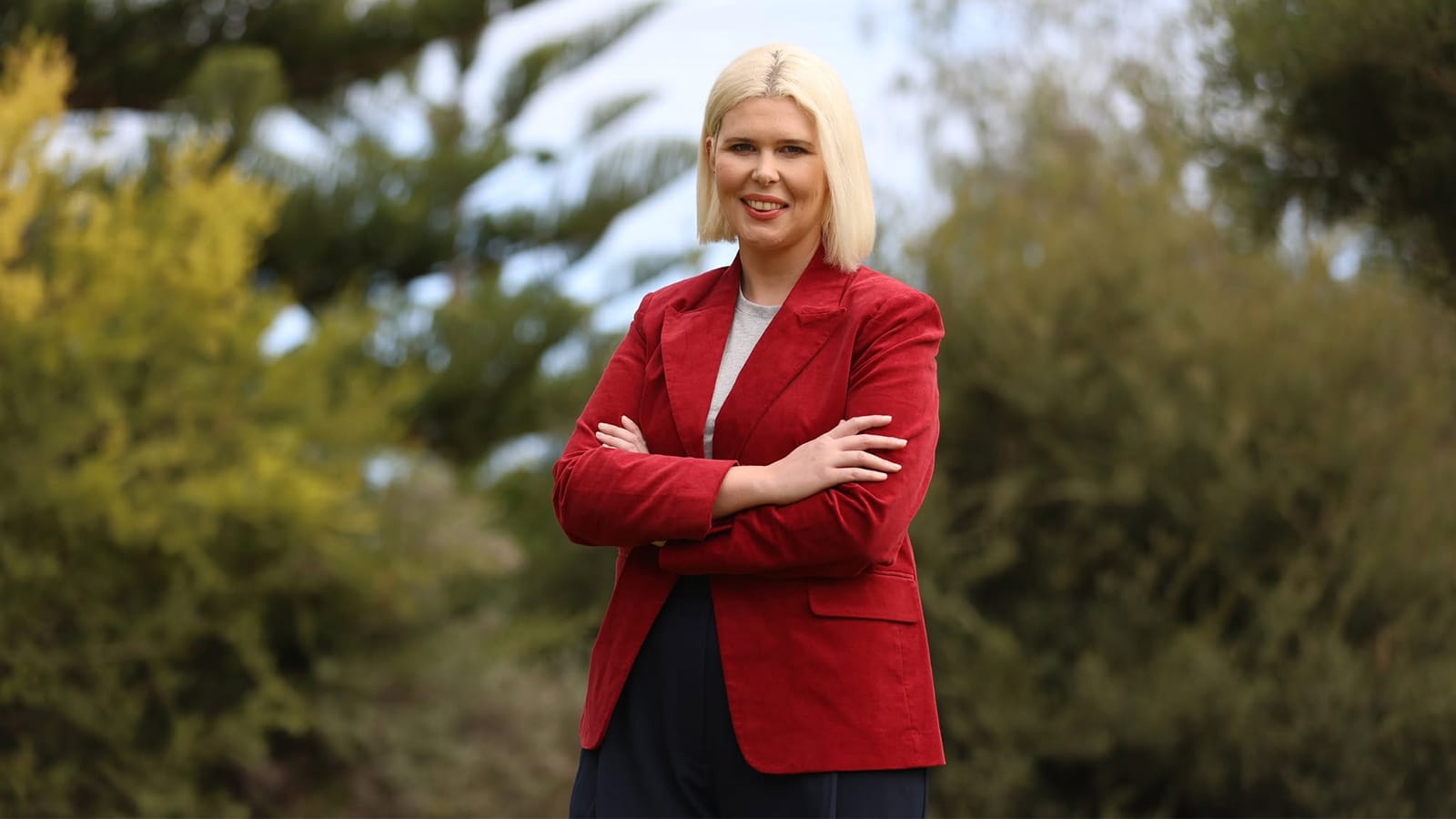
During that interview, Tree spoke critically about the internal pressure within political parties to prioritize brand management over staff safety:
-
The “Catholic Church” Comparison: Tree stated that when staffers attempted to raise complaints, the unwritten mandate was to protect the party brand: “It’s like the Catholic Church, right? Like we don’t want to taint the brand, so let’s deal with everything in house and everyone just shut up.”
-
Deflection by Party Figures: Tree recalled how discussions among staffers were often deflected by senior men who urged them to focus scrutiny exclusively on the Liberal Party rather than addressing issues within Labor ranks: “You’ve got like these literal old men being like, you know, one either being like, look over there, look at the Liberal Party, don’t bring light to us.”
-
Policy Shortcomings: She contended that major sports institutions had clearer handling mechanisms than political organizations, remarking: “The NRL had a better sexual assault policy than we did.”
-
A Call for Accountability: Rejecting advice that the party should avoid opening up “skeletons in our closet,” Tree argued: “No, this is the time, this is the time the skeletons are coming out… If we lose a couple of people in the process, and they need to resign, so be it.”
While Tree has publicly stood by her 2021 statements, citing her record of speaking out on behalf of women and noting Minister Madeleine King’s consistent support for her actions, her recent appearances on the campaign trail have drawn sharp media attention.
The Campaign Dynamic
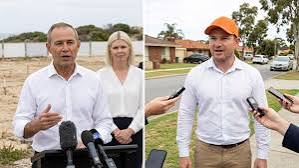
During a joint appearance with Premier Roger Cook and Deputy Premier Rita Saffioti to announce a $156 million commitment for the Karnup train station, media representatives noted that Tree was shielded from answering press questions directly. Additional scrutiny has centered on Tree’s residency outside the electorate, with reports confirming her residence in Inglewood, approximately 60 kilometers north of the district.
In contrast, Pauline Hanson’s One Nation candidate Luke Herdegen—a local gym owner and former trades worker who lives within the community—has aggressively pursued an open-mic campaign style, taking questions directly at public events and mounting a vigorous ground campaign across the region.
2. Professional Analysis & Personal Perspective
My Professional Perspective
Having covered legislative corridors and backroom power dynamics for three decades, you learn that the most telling moments in politics rarely come from well-rehearsed talking points. They emerge in the stark, uncomfortable gaps between what a person says when they are fighting for a cause and how they behave once the machine decides to run them for office.
Here is the deeper reality behind what is unfolding in Secret Harbour:
The Friction Between Principle and the Party Machine
In 2021, Georgia Tree delivered what was arguably one of the most blistering, articulate critiques of political brand protectionism ever voiced by an insider. She accurately identified how major political apparatuses operate like closed institutions: protecting the hierarchy, burying internal friction, and prioritizing electoral viability above human accountability.
Yet the central paradox of party politics is that the very machine she criticized demands complete conformity from its candidates. When high-level party managers step in to prevent a candidate from taking unscripted questions at a press conference, they are enacting the exact “protect the brand” playbook she once condemned. The tension is palpable: can an individual fundamentally change a system from within, or does the system inevitably neutralize the individual before they even cross the chamber floor?
The Geography of Trust
Beyond the cultural debate, there is an equally critical issue driving voter sentiment: local representation versus top-down political appointments.
When a major party parachutes in a well-credentialed ministerial adviser residing 60 kilometers away in an inner-city suburb, it inadvertently creates an opening for minor parties. One Nation’s Luke Herdegen is leveraging this contrast deliberately. By positioning himself as a local tradesman and business operator who lives in the community and takes every question without a minder present, he taps directly into the anti-establishment sentiment simmering across outer-metropolitan working-class electorates.
The Questions That Remain Unanswered
For reporters and constituents alike, several core questions remain on the table:
-
The Institutional Record: Has the internal structure of major party workplace safety and accountability progressed in the five years following the 2021 Canberra reckonings, or has reform stalled behind institutional inertia?
-
The Candidate’s Autonomy: When elected, will new-generation MPs retain the independence to challenge their party’s executive leadership on structural reform, or will parliamentary discipline force them into the same silence they once opposed?
-
The Electorate’s Choice: Will working-class voters prioritize major party policy funding—such as infrastructure commitments—or will they register a protest vote against perceived party management and candidate detachment?
The contest in Secret Harbour is more than an isolated local poll; it is a live case study in how modern political organizations manage dissent, curate their public image, and respond to deep-seated cultural critiques.
When staff and advocates raise their voices from the backbenches or the committee rooms, their calls for transparency resonate with the public. But when the transition is made from advocate to candidate, the walls of party discipline inevitably close in.
As the community prepares to cast its ballots, voters are left to weigh a fundamental dilemma: Is real institutional change possible from within the established party system, or will the demands of the political machine always silence the very voices that sought to reform it?