One Nation Surges in New Poll as Cost-of-Living Crisis Reshapes Australian Politics. u1

Beyond the Shock Poll: Unpacking One Nation’s Surge, the Coalition’s Identity Crisis, and Australia’s Fragmented Electorate
In early August 2026, a groundbreaking national poll conducted by RedBridge Group and Accent Research for The Australian Financial Review sent shockwaves through the Australian political establishment.
For decades, Australian federal politics operated on a reliable two-party axis: the Australian Labor Party (ALP) fighting the Liberal-National Coalition for government, while minor parties competed for crossbench influence. The August 2026 RedBridge poll shattered that historical framework.
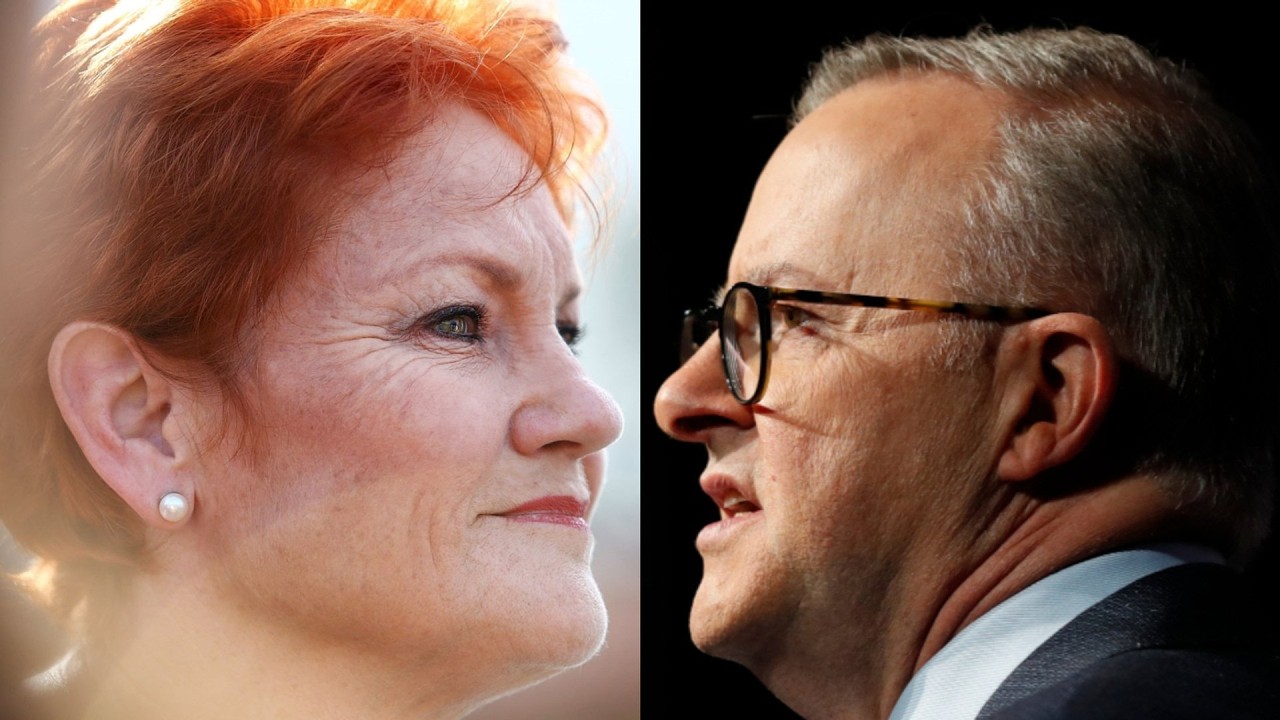
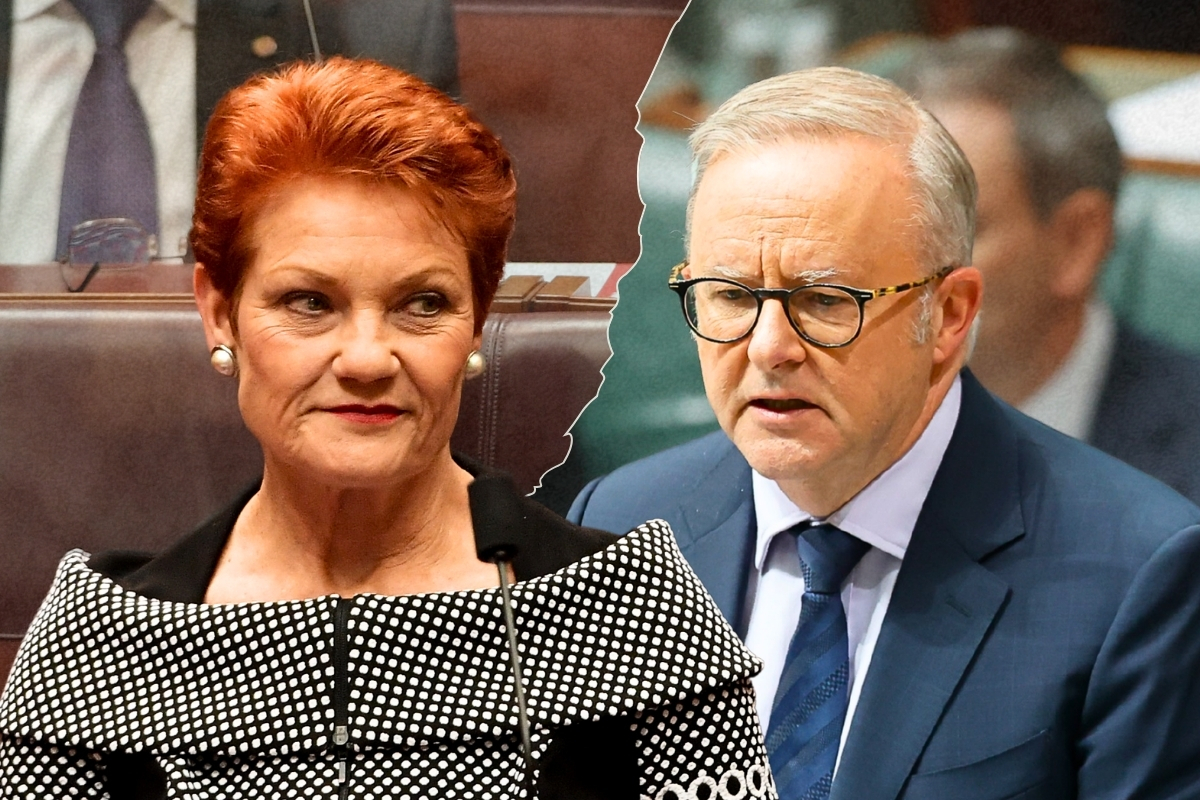
Driven by compounding cost-of-living pressures, persistent housing unaffordability, and growing voter cynicism toward major-party promises, Pauline Hanson’s One Nation surged to 31% on the primary vote. This placed the populist minor party ahead of the governing Labor Party at 29% and well clear of the Opposition Coalition, which polled at 22% despite a modest four-point improvement.
========================================================================================
                     REDBRIDGE / ACCENT RESEARCH NATIONAL POLL (AUG 2026)
========================================================================================
PARTY                         PRIMARY VOTE (%)           SHIFT SINCE JULY 2026
--------------------          ----------------           ----------------------
• One Nation                  31%                        ▲ Up 2 points
• Australian Labor Party      29%                        ▼ Down 1 point
• Liberal-National Coalition  22%                        ▲ Up 4 points
• Australian Greens           10%                        ▼ Down 4 points
• Independents & Others        8%                        ▼ Down 1 point
========================================================================================
Main Events: Analysts Clash Over the Implications
The polling figures sparked immediate, fierce debate among political strategists, former ministers, and parliamentary crossbenchers trying to decipher whether the numbers represent a temporary protest vote or a permanent realignment of Australian democracy.
+---------------------------------------------------------------------------------------+
|                              THE PANEL DEBATE SNAPSHOT                                |
+-----------------------------------+---------------------------------------------------+
| SPEAKER / ANALYST                 | CORE PERSPECTIVE & ARGUMENTS                      |
+-----------------------------------+---------------------------------------------------+
| Tanya Mihailuk MP                 | • Voters face real economic pain and feel         |
| (Independent State MP)            |   disillusioned by major parties.                  |
|                                   | • One Nation is now a permanent kingmaker.        |
|                                   | • Preference transfer to Coalition is uncertain.  |
+-----------------------------------+---------------------------------------------------+
| David Elliott                     | • Coalition suffers from an identity crisis.      |
| (Former NSW Police Minister)      | • Angus Taylor must stop attacking One Nation if  |
|                                   |   he expects their preferences.                 |
|                                   | • Hanson's personal brand drives the vote.        |
+-----------------------------------+---------------------------------------------------+
During a televised commentary panel, former New South Wales Police Minister David Elliott and independent MP Tanya Mihailuk analyzed the polling through sharply contrasting lenses:
-
Economic Disillusionment and Realignment: Mihailuk argued that the primary vote spike reflects deep, structural disillusionment. With everyday households battered by inflation, mortgage rate pressure, and rental stress, voters no longer treat One Nation as a temporary protest vehicle. She warned that One Nation’s rising floor could complicate the Victorian Liberal Party’s state election prospects and reshape upcoming contests in New South Wales.
-
The Coalition’s Ideological Confusion: Elliott delivered a scathing assessment of the Liberal Party’s current positioning. He argued that under Opposition Leader Angus Taylor, the Coalition suffers from a blurred political identity, leaving conservative voters confused over where the party stands on multiculturalism, net-zero energy transitions, and economic management. Elliott urged Taylor to cease public attacks on Pauline Hanson, arguing it is politically foolish to insult the very party whose preference flows are essential for the Coalition to ever regain government.
-
The Preference Arithmetic Paradox: While combining One Nation’s 31% and the Coalition’s 22% yields a theoretical 53% conservative primary majority, Mihailuk cautioned that preference flows in a three-cornered contest are notoriously unpredictable. She noted that One Nation lacks the sophisticated ground-campaign machinery needed to guarantee that how-to-vote cards translate into disciplined preference transfers to Liberal candidates at the ballot box.
+---------------------------------------------------------------------------------------+
|                      PREFERRED PRIME MINISTER BREAKDOWN (AUG 2026)                    |
+---------------------------------------------------------------------------------------+
| Anthony Albanese (Labor)         | 32% (▼ Down 1 point)                               |
| Others / Neither                 | 29% (Held stable)                                  |
| Pauline Hanson (One Nation)      | 24% (▲ Up 1 point)                                 |
| Angus Taylor (Coalition Leader)  | 15% (▲ Up 4 points)                                |
+---------------------------------------------------------------------------------------+
Broader Panel Debates: Indigenous Affairs, the ABC, and School Uniforms
The commentary panel extended beyond election arithmetic to cover several national flashpoints:
-
Indigenous Policy Centralization: The panel evaluated a proposal from Cape York leader Noel Pearson, who advocated transferring primary responsibility for remote Indigenous communities directly to the Commonwealth government to dismantle redundant state bureaucracies. Elliott praised Pearson’s idea as a refreshing attempt to strip away ineffective public sector overhead, whereas Mihailuk cautioned that centralizing healthcare, housing, and education in Canberra risks ignoring the unique local needs of diverse regional communities.
-
The ABC & Gina Rinehart Backlash: Addressing the fallout from a controversial satirical segment aired on the ABC targeting mining executive Gina Rinehart, panel host Jamie McLaren and guest Dawn Fraser criticized senior Labor ministers for failing to deliver a prompt, unequivocal condemnation. Elliott argued that the government’s hesitant response exposed a political double standard on public decorum, while Mihailuk welcomed Hancock Prospecting’s decision to pursue formal legal recourse and an ABC Ombudsman investigation.
-
The School Uniform Protest: The discussion concluded on a lighter note, addressing a high-school student petition protesting dress-code rules that measure girls’ skirt lengths. Both Elliott and Mihailuk dismissed the petition, with Elliott recalling strict historical dress codes for boys and Mihailuk labeling the controversy a case of “first-world privilege” when schools face far more urgent educational challenges.
My Professional Perspective: The Unraveling of the Two-Party Monopoly
Having covered Australian federal elections, leadership coups, and realignment dynamics for thirty years, analyzing this RedBridge poll reveals something far more profound than a simple mid-term slump for the government.

What we are witnessing is the structural exhaustion of the traditional major-party duopoly.
========================================================================================
                      THE TRIANGLE OF AUSTRALIAN ELECTORAL FRAGMENTATION
========================================================================================

                                [ THE GOVERNING LABOR PARTY ]
                                /                           \
                               /                             \
     Eroding Working-Class    /                               \  Cost-of-Living
     Primary Vote (29%)      /                                 \ & Housing Frustration
                            v                                   v
          [ POPULIST INSURGENCY (31%) ] <-------------> [ THE INNER-CITY & TEAL VOID ]
           (One Nation / Regional Base)                 (Coalition Stranded at 22%)
========================================================================================
1. The Overlooked Reality: The Seat-Distribution Paradox
What commentators and headline writers frequently miss when analyzing a poll showing One Nation at 31% primary support is the spatial distribution of the vote.
Under Australia’s preferential, single-member electorate system (Westminster system), primary vote totals do not translate linearly into parliamentary seats.
                               THE SEAT TRANSLATION PARADOX
                                             │
                 ┌───────────────────────────┴───────────────────────────┐
                 ▼                                                       ▼
     UNIFORM NATIONAL SWING ASSUMPTION                        REAL-WORLD REGIONAL CLUSTERING
  • Assumes 31% is spread evenly nationwide.              • Support clusters heavily in outer-suburban
  • Would result in minority parliament chaos.              mortgage belts & regional industrial hubs.
  • Creates dramatic headline seat projections.            • High primary votes risk being trapped behind
                                                            major-party two-candidate preferred counts.
If One Nation’s 31% primary vote is spread evenly across affluent metropolitan seats in Sydney and Melbourne, it risks finishing second or third in dozens of electorates, failing to reach the 50%+1 threshold required to win lower house seats. However, if that vote is concentrated heavily in outer-suburban mortgage belts and regional industrial centers, One Nation could sweep through working-class Labor electorates and regional Coalition seats alike, creating an unprecedented crossbench that shatters minority government calculations.
2. The Coalition’s Strategic Trap: Attack or Coalitionize?
David Elliott’s warning to Opposition Leader Angus Taylor exposes the existential strategic dilemma facing the Liberal and National parties.
+---------------------------------------------------------------------------------------+
|                          THE COALITION'S ELECTORAL DILEMMA                            |
+-----------------------------------+---------------------------------------------------+
| STRATEGY A: ATTACK ONE NATION     | STRATEGY B: COZY UP TO ONE NATION                 |
+-----------------------------------+---------------------------------------------------+
| • Tries to reclaim right-wing base| • Secures vital preference flows in regional seats|
| • Alienates moderate inner-city   | • Permanently surrenders metro "Teal" seats       |
|   voters to Teal Independents     |   to independent candidates                       |
| • Risks splitting conservative vote| • Validates One Nation as a legitimate senior partner|
+-----------------------------------+---------------------------------------------------+
For decades, the Liberal Party maintained power by acting as a “broad church”—uniting moderate suburban voters with conservative regional base supporters. Today, that church has fractured:
-
If Angus Taylor moves further to the right to match Pauline Hanson’s rhetoric on immigration and energy, the Coalition permanently loses moderate, inner-city electorates to “Teal” independents and Labor.
-
If Taylor ignores One Nation, his primary vote remains trapped at an unsustainable 22%, making it impossible to form a majority government.
3. The “Pauline Brand” vs. Candidate Vetting Reality
David Elliott’s observation that One Nation campaigns primarily on the personal brand of Pauline Hanson rather than local candidates highlights both the party’s greatest strength and its most vulnerable flank.
========================================================================================
                          THE DUAL NATURE OF POPULIST BRANDING
========================================================================================

    THE BRAND ASSET                               THE OPERATIONAL LIABILITY
   -----------------                             ---------------------------
   • Instant national recognition                • High vulnerability to candidate scandals
   • Direct emotional connection to voters        • Lack of experienced local campaign teams
   • Bypasses traditional media filtering        • Inconsistent preference flow discipline
   • Insulates party from local policy errors    • Difficulty maintaining party room unity

========================================================================================
While running a national campaign focused almost entirely on Hanson allows One Nation to capture disaffected voters without needing well-known local figures in all 151 electorates, it creates extreme risk during the formal campaign period. As candidate lists are finalized, media scrutiny on inexperienced local candidates often leads to public blunders that test the brand’s resilience.
4. Unanswered Questions for the Road to 2028
As political analysts process this historic survey, several critical questions remain unexamined:
-
How solid is the preference discipline? In a three-cornered contest where One Nation leads the primary vote, where do disaffected Labor voters direct their second-preference votes—to the Coalition, or back to Labor?
-
What is the economic tipping point? If interest rates soften or inflation stabilizes before the next federal election, will voters return to mainstream major parties, or has the trust deficit become permanent?
-
How will major parties adjust campaign financing? With One Nation polling above 30%, public election funding allocations will shift dramatically, providing Hanson’s party with millions of dollars in taxpayer-funded campaign reserves for future cycles.
+---------------------------------------------------------------------------------------+
|                               THE UNEXAMINED METRICS                                  |
+-------------------------------+-------------------------------------------------------+
| UNEXAMINED METRIC             | REAL-WORLD SYSTEMIC IMPACT                            |
+-------------------------------+-------------------------------------------------------+
| Preference Flow Reliability   | Unpredictable distribution in multi-candidate counts  |
| Public Campaign Funding       | Millions in state funding shifting to minor parties   |
| Economic Sentiment Lag        | High interest rates driving long-term voter alienation|
| House vs. Senate Split        | Disparity between lower house seats & upper house wins|
+-------------------------------+-------------------------------------------------------+
A Powerful Summary
The August 2026 RedBridge poll is a landmark moment in modern Australian political history. By placing One Nation at 31% on the primary vote, ahead of both Labor (29%) and the Coalition (22%), the survey exposes a deep, systemic rejection of traditional major-party politics.
Driven by unrelenting economic pressure, cost-of-living distress, and an acute identity crisis within the Liberal Party, Australian voters are increasingly turning to populist alternatives. Whether this trend culminates in a historic parliamentary realignment or serves as an urgent wake-up call for the major parties, the era of comfortable two-party politics in Australia is officially over.
Emotional Reflection
There is a quiet, pervasive exhaustion across Australian communities today. Walk through outer-suburban shopping centers or regional main streets, and you do not hear voters debating complex parliamentary procedure—you hear families talking about gas bills they cannot afford, rental payments that double every few years, and a growing sense that the political class in Canberra is living in a completely different world.
When a electorate feels that mainstream institutions no longer listen to their daily struggles, they will naturally reach for the loudest voice willing to challenge the status quo. The surge in support for minor parties is not an endorsement of chaos; it is an urgent plea for leadership that treats economic survival and public accountability as priorities rather than political slogans.
A Thought-Provoking Question
As Australia navigates this era of political fragmentation, voters and strategists alike must confront a fundamental question:
When a nation’s electorate permanently abandons its traditional major parties, can our parliamentary system adapt to multi-party coalition governance—or are we entering an era of permanent legislative gridlock?