
The Battle for the Australian Microphone: Why Free Speech Has Become the New Frontier for Right-Wing Populism
In the landscape of Western democracies, Australia occupies a unique constitutional position. Unlike the United States with its sweeping First Amendment, or European nations bound by explicit charters of rights, Australia possesses no codified, express constitutional right to freedom of speech. Instead, the High Court of Australia established in landmark 1990s decisions—most notably Lange v Australian Broadcasting Corporation—an “implied freedom of political communication.” This implied freedom is not an individual right, but a structural protection designed narrowly to ensure that citizens can discuss political and government matters necessary for a representative democracy to function.
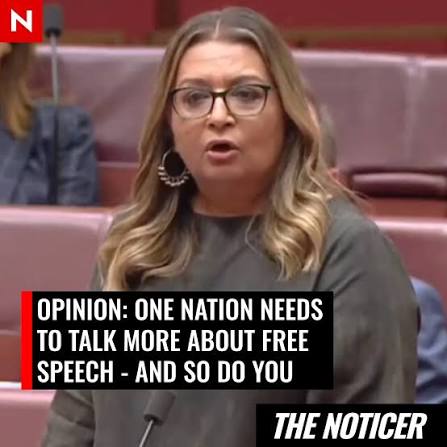
Against this legal backdrop, Pauline Hanson’s One Nation has built its political identity around hardline nationalism, border restrictions, and economic protectionism. While immigration remains the primary pillar of One Nation’s platform and voter base, an increasingly vocal faction within the Australian conservative movement is calling on the party to elevate freedom of speech to its official second priority.
The argument put forward by right-wing strategists and commentators is built on a premise of political survival: without robust protections for free expression and political organizing, conservative and nationalist movements risk being systematically policed out of the public square and institutional life.
========================================================================================
                      THE DUAL PILLARS OF POPULIST MOBILIZATION
========================================================================================
PILLAR 1: IMMIGRATION CONTROL                 PILLAR 2: FREEDOM OF SPEECH
-----------------------------                 ---------------------------
• Federal-level primary focus                 • State & federal foundational protection
• Reduces net migration intake                • Repeals vilification & hate speech laws
• Focuses on cultural integration             • Pushes for constitutional referendum
• Drives core voter alignment                 • Protects political organizing & dissent
========================================================================================
Main Events: The Strategy to Elevate Free Speech
A prominent conservative argument circulating through Australian political analysis urges One Nation leadership to transition its free speech policy from a neglected website manifesto into an active, high-profile campaign strategy.
The core elements of this proposed strategy focus on several key legislative and electoral fronts:
-
Moving Beyond Section 18C: For over a decade, conservative debates around Australian speech laws focused almost exclusively on Section 18C of the Racial Discrimination Act 1975, which makes it unlawful to offend, insult, humiliate, or demean someone on the basis of race. However, analysts argue that Section 18C is rarely invoked in daily life and has been eclipsed in severity by state-level “racial vilification” and “hate speech” statutes passed in recent years, which enshrine criminal penalties for public speech.
-
Rebuking Federal “Hate Group” Laws: Right-wing commentators point to federal anti-hate group legislation passed by the Labor government—such as criminal code amendments banning prohibited symbols and criminalizing hate group association—as unprecedented state overreach. Legal critics within the movement warn that these laws could ultimately be weaponized by incumbent governments to proscribe or ban populist political organizations like One Nation itself.
-
Demanding a Constitutional Referendum: One Nation’s official platform includes a pledge to hold a national referendum to explicitly enshrine freedom of speech into the Australian Constitution. Strategists argue that the party’s elected representatives—including Senator Pauline Hanson—have made a tactical error by failing to publicly promote this policy on national media channels.
+---------------------------------------------------------------------------------------+
|                         ONE NATION'S PROPOSED FREE SPEECH AGENDA                      |
+-----------------------------------+---------------------------------------------------+
| LEGISLATIVE REPEALS               | • Repeal Section 18C of Racial Discrimination Act |
|                                   | • Abolish state-level criminal vilification laws  |
|                                   | • Roll back federal anti-hate group statutes      |
+-----------------------------------+---------------------------------------------------+
| CONSTITUTIONAL REFORM             | • Initiate a national referendum to enshrine an   |
|                                   |   explicit right to free speech in the Constitution|
+-----------------------------------+---------------------------------------------------+
| ELECTORAL DIFFERENTIATION         | • Target state Labor governments (NSW & VIC)      |
|                                   | • Expose Liberal Party support for speech laws    |
+-----------------------------------+---------------------------------------------------+
Key Arguments and Electoral Mechanics
Proponents of this strategy contend that making free speech a signature campaign issue offers One Nation major electoral advantages:
-
Broad Public Resonance: Citing 2023 survey data indicating that approximately 47% of Australians believe the law should impose no restrictions on public speech (compared to 44% who support legal restrictions), strategists argue that free speech is a winning issue that transcends traditional party lines, appealing to 45% of Labor voters and 50% of Coalition voters.
-
A Distinct Weapon for State Politics: While immigration is strictly a federal responsibility, state governments control criminal law, policing, and public order statutes. By attacking state Labor governments in New South Wales and Victoria over recent speech restrictions, One Nation can establish a distinct policy identity during state elections.
-
Exposing Coalition Inconsistencies: New South Wales Premier Chris Minns has explicitly defended speech restrictions by arguing that Australia cannot maintain US-style free speech laws if it wishes to maintain social peace within a diverse, multicultural society. Strategists point out that the opposition Liberal Party frequently votes alongside Labor to pass these restrictions, allowing One Nation to position itself as the sole defender of traditional Australian liberties.
-
Shifting to Political Offense: By forcing major-party politicians and mainstream media outlets to actively defend censorship and speech controls, One Nation can force its opponents into an uncomfortable, defensive posture—forcing them to equate free expression with “racism” in front of a skeptical public.
My Professional Perspective: The Architecture of Speech, Populism, and State Control
Having spent thirty years dissecting political movements, constitutional battles, and media dynamics across Australia, North America, and Europe, examining the push to transform free speech into One Nation’s primary battleground reveals a fascinating tactical evolution within Western populism.
For decades, political establishments viewed speech regulations as benign administrative tools designed to maintain social harmony in pluralistic democracies. But in an era defined by digital algorithms, intense polarization, and mistrust of major institutions, speech has ceased to be an abstract legal debate. It has become the primary battleground for political legitimacy.
========================================================================================
                      THE TRIANGLE OF SPEECH POLITICS IN AUSTRALIA
========================================================================================

                                [ THE LEGISLATIVE STATE ]
                                /                       \
                               /                         \
    Speech Restrictions       /                           \  Constitutional Limits
    & Vilification Statutes  /                             \ & Public Backlash
                            v                               v
             [ MAJOR PARTY CONSENSUS ] <-------------> [ POPULIST INSURGENCY ]
                                  Mutual Ideological Clash
========================================================================================
1. The Constitutional Anomaly: Why Australia’s Legal Framework Invites Friction
To understand why the free speech debate generates such intense emotion in Australia, one must recognize the country’s unique legal architecture. Unlike American conservatives who rely on the near-absolute protections of the First Amendment, Australian citizens operate in a system where speech protections are fragile, implied, and constantly subject to judicial interpretation.
+---------------------------------------------------------------------------------------+
|                         COMPARATIVE FREE SPEECH ARCHITECTURE                          |
+-----------------------------------+---------------------------------------------------+
| UNITED STATES (FIRST AMENDMENT)   | AUSTRALIA (IMPLIED FREEDOM)                       |
+-----------------------------------+---------------------------------------------------+
| • Codified, explicit individual right| • Implied structural protection only           |
| • Protects virtually all speech    | • Limited strictly to political communication     |
| • High threshold for government bans| • Subject to "proportionality testing" by courts |
+-----------------------------------+---------------------------------------------------+
Because the Australian High Court’s implied freedom of political communication only protects speech deemed necessary for democratic voting, state and federal parliaments enjoy broad power to enact civil and criminal laws restricting speech. Over the past decade, successive governments—both Labor and Coalition—have used this power to pass:
-
Anti-Vilification Statutes: State-level laws that criminalize public statements deemed likely to incite hatred or serious contempt against protected groups.
-
Prohibited Symbols Bans: Federal legislation banning the display of specific extremist symbols or Nazi gestures in public spaces.
-
Misinformation Frameworks: Proposed federal bills attempting to hold social media platforms accountable for spreading “seriously harmful” false information.
To right-wing populists, this expanding patchwork of statutes represents a creeping institutional net. They recognize that in Australia, freedom of expression exists at the pleasure of parliament—making a constitutional referendum the ultimate, albeit elusive, structural goal.

2. The Strategy of “Cultural Self-Defense”
What mainstream political reporting routinely misses in its coverage of One Nation is that for populist voters, free speech is not an ideological luxury; it is a mechanism of cultural self-defense.
When right-wing commentators argue that without free speech, “patriots will be permanently policed out of public life,” they are expressing a deep, systemic anxiety felt across regional and working-class electorates. In these communities, voters feel that mainstream cultural institutions—universities, public broadcasters, corporate HR departments, and major political parties—have adopted a progressive orthodoxy that treats traditional views on national identity, immigration, and gender as inherently offensive or “hateful.”
                               THE POPULIST SPEECH ESCALATION
                                              │
                 ┌────────────────────────────┴────────────────────────────┐
                 ▼                                                         ▼
     INSTITUTIONAL LANGUAGE BOUNDARIES                        POPULIST REACTION
  • Expansion of hate speech & vilification definitions   • Perception of systemic political censorship
  • Corporate & HR enforcement of speech norms           • Fear of being ostracized from public life
  • Stigmatization of traditional national identity      • Demand for total legal protection of speech
By framing speech restrictions as the weapon of an out-of-touch “uniparty,” One Nation can position itself as the sole defender of the “silent majority.” It allows the party to convert everyday anxieties about political correctness into an urgent, constitutional crusade.
3. The State-Level Electoral Trap: Premier Minns and the Multicultural Paradox
The decision to bring the free speech debate directly into state politics—specifically in New South Wales and Victoria—targets a vulnerable flank in major-party strategy.
When NSW Premier Chris Minns publicly acknowledged that Australia does not have US-style free speech laws because the state must manage and protect a diverse “multicultural community,” he articulated the core governing philosophy of modern state labor administrations. From the government’s perspective, restricting inflammatory speech is a necessary administrative price to pay for maintaining social peace in rapidly changing suburban neighborhoods.
========================================================================================
                          THE MULTICULTURAL SPEECH DILEMMA
========================================================================================

    GOVERNMENT GOVERNING PHILOSOPHY              POPULIST COUNTER-PHILOSOPHY
   ---------------------------------            ------------------------------
   • Pluralism requires speech boundaries        • Liberty requires absolute free expression
   • Protection against racial vilification      • Speech laws protect political elites
   • Social peace through regulation             • Censorship fuels underground extremism
   • Restraint prevents community clashes        • Free debate is the essence of democracy

========================================================================================
However, to conservative strategists, Premier Minns’ statement is a gift. It presents voters with a stark, binary choice: Do you prioritize traditional Australian liberties, or do you accept that multiculturalism requires the permanent reduction of your free speech?
By forcing major-party leaders to defend speech controls using the language of multicultural necessity, One Nation can peel away working-class Labor voters and disaffected Liberals who feel that traditional Australian rights are being traded away without public consent.
4. Unanswered Questions and Operational Obstacles
While elevating free speech as a secondary priority is strategically clever, several profound, unexamined challenges remain for One Nation and the broader right-wing movement:
-
The Referendum Reality Check: Australia’s constitutional referendum record is notoriously unforgiving. Since federation in 1901, only 8 out of 44 constitutional referendums have successfully passed. A referendum to enshrine an explicit right to free speech would face intense, multi-million-dollar counter-campaigns from legal bodies, civil rights commissions, and major political parties. Can One Nation realistically build a national coalition capable of clearing the required “double majority” (a majority of voters nationally AND a majority of voters in four out of six states)?
-
The Defining Boundary Problem: Even among ardent defenders of free speech, absolute consensus is rare. Where does One Nation draw the line regarding speech that directly incites violence, defamation, child exploitation, or national security treason? Without clear, legally rigorous definitions, the demand for “absolute free speech” can collapse under detailed policy scrutiny during broadcast interviews.
-
The Platform Censorship Paradox: Many of the most severe speech restrictions faced by political activists today do not come from state parliaments, but from private Silicon Valley tech giants executing content moderation policies. How does a party dedicated to deregulation force private, multinational social media platforms to host content they deem violates their terms of service?
+---------------------------------------------------------------------------------------+
|                               THE UNEXAMINED OBSTACLES                                |
+-------------------------------+-------------------------------------------------------+
| UNEXAMINED CHALLENGE          | REAL-WORLD SYSTEMIC REALITY                           |
+-------------------------------+-------------------------------------------------------+
| Referendum Threshold          | Requires double-majority historically achieved 8/44 times|
| Defamation & Incitement Boundaries| Lack of legal precision on real-world harm thresholds |
| Tech Platform Moderation      | Private corporate terms of service beyond state reach |
| Parliamentary Discipline      | Keeping candidate messaging focused & scandal-free    |
+-------------------------------+-------------------------------------------------------+
A Powerful Summary
The argument for making freedom of speech One Nation’s explicit second priority represents a sophisticated realignment of right-wing strategy in Australia. By moving beyond localized policy debates and challenging the legal and constitutional limits placed on public expression, the party addresses a core existential fear among its voter base.
In an environment where state and federal governments increasingly rely on vilification statutes, hate speech controls, and misinformation frameworks to manage public debate, the fight over free speech is no longer an academic exercise. It is a defining battle over who controls the boundaries of Australian political life.
Emotional Reflection
There is a quiet, profound anxiety running through modern democratic societies. Walk through any Australian township or suburb, and you will find citizens who admit—often in hushed tones—that they no longer feel comfortable speaking their minds on the defining issues of our time. They worry about their jobs, their social standing, or the knock of a regulator if their opinions cross an ever-shifting line of acceptable speech.
A healthy, confident nation does not fear the words of its citizens. Democracy was built on the understanding that light is the best disinfectant for dangerous ideas, and that the answer to bad speech is more speech, not state-mandated silence. When a society decides that its citizens can no longer be trusted to debate hard truths openly, it sacrifices the very trust that holds a free nation together.
A Thought-Provoking Question
As Australia navigates an increasingly complex future shaped by digital platforms, demographic shifts, and evolving speech laws, every citizen must confront an essential question:
When a democracy decides to restrict free expression in the name of protecting social harmony, is it truly preserving peace—or is it simply building a silent society where resentment grows beneath the surface?