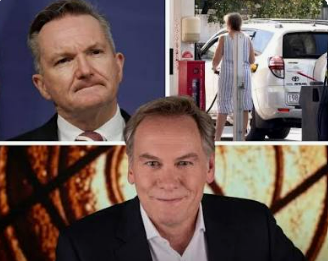

The Crucible of Press Row: Ambush Journalism, Energy Realpolitik, and the Battle for Australia’s Grid
The Press Conference Ambush
SYDNEY — High-stakes press conferences are normally tightly choreographed rituals of government messaging and controlled media interrogation. However, an exchange in Sydney erupted into an unscripted confrontation when veteran investigative reporter Liam Bartlett confronted Federal Minister for Climate Change and Energy Chris Bowen.
┌──────────────────────────────────────────────────────────────────┐
│                   Sydney Press Conference                        │
│     Minister Chris Bowen Updates Media on Fuel Shock & Iran      │
└─────────────────────────────────┬────────────────────────────────┘
                                  │
                                  ▼
┌──────────────────────────────────────────────────────────────────┐
│                  Liam Bartlett (7NEWS Spotlight)                 │
│       Interrupts Briefing: "What are you afraid of?"            │
│       Claims Government Renewables "Obsession" Worsened Crisis    │
└─────────────────────────────────┬────────────────────────────────┘
                                  │
                ┌─────────────────┴─────────────────┐
                ▼                                   ▼
┌──────────────────────────────┐    ┌──────────────────────────────┐
│      Chris Bowen (Labor)     │    │   Liam Bartlett's Stance     │
│  • Sun & Wind Unaffected by  │    │  • Demands Minister Resign   │
│    Middle East Blockades     │    │  • Accuses Minister of       │
│  • Rejects Question Premise   │    │    Dodging Exclusive Interview│
└──────────────────────────────┘    └──────────────────────────────┘
Bowen had stepped before the microphones to deliver a routine daily update regarding Australia’s fuel reserves amid volatile Middle East conflict and shipping bottlenecks near the Strait of Hormuz. Bartlett—fronting Seven Network’s flagship investigative program Spotlight—bypassed standard press gallery decorum to challenge the Minister directly.
Accusing the government of evading formal one-on-one sit-downs since late January, Bartlett launched an aggressive volley:
“If this war in Iran has shown us nothing else, hasn’t it proved once and for all, that your obsession with renewables will only lead us back to another energy crisis?”
The Escalation on Live Television

The clash rapidly escalated as Bowen refused to accept the core premise of Bartlett’s opening line, characterizing it as a partisan commentary rather than an open-ended enquiry.
+-----------------------------------------------------------------------------------+
|                        ANATOMY OF A PRESS ROOM EXPLOSION                          |
+-----------------------------------------------------------------------------------+
|  1. THE OPENING SALVO:                                                            |
|     Bartlett links Middle East conflict directly to Australia's green transition. |
|                                                                                   |
|  2. THE PROCEDURAL COUNTER:                                                       |
|     Bowen brands it a "loaded comment" and asserts renewables protect grid security.|
|                                                                                   |
|  3. THE RESIGNATION DEMAND:                                                       |
|     Bartlett asks when Bowen will "hand over to someone more competent."          |
|                                                                                   |
|  4. THE DECORUM BREAKDOWN:                                                        |
|     Bowen appeals to press gallery protocol, urging respect for fellow reporters. |
+-----------------------------------------------------------------------------------+
When Bartlett insisted it was not a “trick question,” Bowen challenged the reporter’s approach: “Are you asking a question or are you having a debate?”
Undeterred, Bowen leveraged astrophysics and energy geography to counter the reporter’s argument:
“Renewable energy is a secure form of energy,” Bowen asserted. “The Australian sun cannot be interrupted by a war or anything else. Solar energy has to travel 150 million kilometres from the sun. It doesn’t have to travel the 150 kilometres of the Strait of Hormuz.”
                 THE GEOPOLITICAL ENERGY PARADOX

 LIQUID FOSSIL FUELS                           RENEWABLE ELECTRICITY
 ┌──────────────────────────────────────┐      ┌──────────────────────────────────────┐
 │ • Vulnerable to maritime chokepoints │      │ • Zero shipping transit risk         │
 │ • Exposed to global price shocks     │  VS  │ • Generation localized within grid   │
 │ • Requires refined import logistics  │      │ • Domestic supply cannot be blocked  │
 └──────────────────────────────────────┘      └──────────────────────────────────────┘
Bartlett repeatedly interrupted the Minister, accusing him of “playing catch up” and demanding to know at what point Bowen would resign and hand over power to a “more competent” authority. As the exchange grew increasingly tense, Bowen pointed out the presence of dozens of other journalists waiting to ask questions, urging Bartlett to respect media gallery norms.
A Pattern of Confrontation
This encounter is not an isolated incident between the veteran reporter and the Minister. The dynamic between the two figures previously erupted during the Sydney International EV AutoShow.
| Incident Location | Core Dispute | Key Escalation |
| Sydney EV AutoShow | 7NEWS Spotlight investigation into Indonesian nickel supply chains for EV batteries. | Interrupted by YouTuber Sam Evans; exchange nearly descended into physical confrontation. |
| Sydney Fuel Presser | Middle East crisis impacts on domestic liquid fuel security vs. renewable grid targets. | Live broadcast shouting match; direct call for Ministerial resignation. |
Following the press conference, Bartlett defended his actions to media outlets, denying the exchange was overly fiery and framing his confrontation as a necessary step after months of ignored interview requests. In response, Bowen affirmed the right of media to ask questions while noting that democratic norms allow public figures to choose which programs they grant exclusive sit-downs to.

My Professional Perspective
Having spent thirty years covering press conferences, political campaigns, and international energy summits, I view this blow-up not merely as a dramatic piece of television, but as an illustration of three intersecting pressures reshaping modern political communications:
                  +----------------------------------------------+
                  |           THE TRIAD OF MEDIA FRICTION        |
                  +----------------------------------------------+
                  |                                              |
                  |     [1] THE PERFORMANCE OF AMBUSH            |
                  |     Television demands conflict; viral       |
                  |     grabs replace policy discourse.          |
                  |                   /  \                       |
                  |                  /    \                      |
                  |                 /      \                     |
                  |   [2] ENERGY DISINFORMATION [3] RETENTION    |
                  |   Confusing liquid fuels    OF CONTROL       |
                  |   (diesel) with electricity Ministers dodge  |
                  |   grid transition targets.  sit-downs via    |
                  |                             presser control. |
                  +----------------------------------------------+
The Overlooked Detail: Conflating Grids with Liquid Fuels
What gets lost in the theatrical shouting match is a fundamental technical fallacy embedded in the debate.
Bartlett’s central thesis—that an international conflict disrupting crude oil transit through the Strait of Hormuz proves Australia’s “obsession with renewables” is a failure—conflates two distinct energy systems:
-
The Transport Fuel System: Heavily reliant on imported liquid petroleum and refined diesel, making it vulnerable to foreign supply disruptions.
-
The Domestic Electricity Grid: Powered by coal, gas, wind, solar, and hydro generation. Accelerating renewables and electric mobility actually reduces long-term national reliance on imported foreign crude oil.
                 AUSTRALIA'S DUAL ENERGY REALITY

 IMPORTED LIQUID FUELS                         DOMESTIC ELECTRICITY GRID
 ┌──────────────────────────────────────┐      ┌──────────────────────────────────────┐
 │ • Highly vulnerable to Middle East   │      │ • Domestic coal, solar, and wind     │
 │   maritime blockades (Hormuz)        │  VS  │ • Transitioning away from gas/coal  │
 │ • Powers heavy transport/agriculture │      │ • Strengthened by electrification    │
 └──────────────────────────────────────┘      └──────────────────────────────────────┘
When a journalist frames a global oil shock as proof that domestic solar and wind energy have failed, it shifts public debate away from structural energy independence toward political rhetoric.
The Deeper Meaning: The Theater of “Confrontational Journalism”
As traditional news consumers migrate to digital platforms, television networks increasingly rely on dramatic, high-conflict moments to capture public attention.
                       THE EVOLUTION OF MEDIA STRATEGY

  TRADITIONAL PRESS CONFERENCE                     THE MODERN VIRAL AMBUSH
  ┌─────────────────────────────────────┐          ┌─────────────────────────────────────┐
  │  • Structured question rotation     │          │  • High-energy confrontation        │
  │  • Technical policy probing         │  ──────► │  • Designed for social clips      │
  │  • Focus on policy details          │          │  • Focus on personal conflict       │
  └─────────────────────────────────────┘          └─────────────────────────────────────┘
This dynamic creates a cycle in political reporting:
-
Access Denial: Ministers avoid long-form sit-down interviews on programs known for aggressive framing.
-
The Ambush Strategy: Reporters use public press conferences to corner politicians, using dramatic questioning to generate broadcast clips.
-
Institutional Friction: The format prioritizes viral moments over nuanced discussions of complex issues like grid stability and supply chain logistics.
Why This Story Matters Beyond the Headlines
This exchange highlights the central challenge facing modern democracies during energy transitions: balancing immediate energy security with long-term infrastructure reform.
┌─────────────────────────────────────────────────────────────────────────────┐
│                    THE STRATEGIC TIMELINE DILEMMA                           │
├─────────────────────────────────────────────────────────────────────────────┤
│                                                                             │
│   THE SHORT-TERM REALITY:                                                   │
│   Australia remains tied to international oil markets for immediate supply. │
│   Disruptions cause real pressure for consumers and regional industries.    │
│                                                                             │
│   THE LONG-TERM TRANSITION:                                                 │
│   Electrifying transport and building out domestic renewables reduces      │
│   vulnerability to international geopolitical shocks over time.            │
│                                                                             │
└─────────────────────────────────────────────────────────────────────────────┘
When public discourse treats these two realities as mutually exclusive, policy discussions become polarized. Managing liquid fuel shortages while building out renewable infrastructure requires clear communication rather than soundbite-driven debates.
The Unsettled Reality

The exchange between Chris Bowen and Liam Bartlett will pass from the daily news cycle into the archives of Australian political presser clashes. Yet the structural challenges it laid bare remain unresolved.
Australia continues to navigate a delicate path: managing immediate vulnerabilities in liquid fuel supply chains while building out thousands of kilometers of transmission lines and renewable generation.
                         SUMMARY OF CORE ISSUES

   JOURNALISTIC RIGOR           POLICY TRANSPARENCY         ENERGY SECURITY
 ┌──────────────────────┐  ┌──────────────────────┐  ┌──────────────────────┐
 │ Moving past drama to │  │ Ministers engaging   │  │ Distinguishing grid  │
 │ scrutinize complex   │  │ with tough queries   │  │ transition from oil  │
 │ energy economics.    │  │ without evading.     │  │ import vulnerability.│
 └──────────────────────┘  └──────────────────────┘  └──────────────────────┘
Political figures will continue to manage media access, and investigative reporters will continue to press for responses. But as energy transitions accelerate worldwide, the public is best served when interrogation focuses on technical realities rather than broadcast theater.
A Reflection for the Road Ahead
As news formats adapt to a fast-moving digital landscape, newsrooms and public officials face an ongoing test. When media exchanges prioritize theatrical confrontation over substantive analysis, public understanding of complex policy issues suffers.
True journalistic accountability relies not on shouting loudest in a crowded press pack, but on asking precise questions that illuminate the realities behind national policy.
When global conflicts expose domestic energy vulnerabilities, does aggressive ambush journalism help hold leaders accountable, or does it obscure the technical solutions required to secure the nation’s energy future?
Chris Bowen gets into fiery clash with journalist on renewable policies
This video provides direct broadcast coverage of the heated exchange between Climate Change and Energy Minister Chris Bowen and reporter Liam Bartlett, showing the unedited dynamics and dialogue of the press conference confrontation.