
What Would a Reform UK Government Actually Look Like? Party’s Policies Face Growing Scrutiny as Poll Lead Continues. n1

What Would a Reform UK Government Actually Look Like? As Poll Numbers Rise, the Party’s Policies Face Their Toughest Examination Yet
British politics has entered another period of uncertainty.
Speculation surrounding the future leadership ambitions of Greater Manchester Mayor Andy Burnham has temporarily shifted political attention back toward the governing Labour Party. Yet beneath the daily headlines, a more significant political trend continues to develop.
Reform UK remains at or near the top of several national opinion polls, with some recent surveys placing the party ahead of Labour. While Britain is not expected to hold another general election for several years unless one is called early, Reform UK’s sustained popularity has transformed it from a protest movement into a party increasingly viewed as a potential governing force.
That transition changes the political conversation.
When smaller parties campaign from the political sidelines, voters often judge them primarily by their rhetoric. But once a party begins polling as a realistic contender for government, attention shifts dramatically toward the practicality of its policies.
For Reform UK, that moment appears to have arrived.
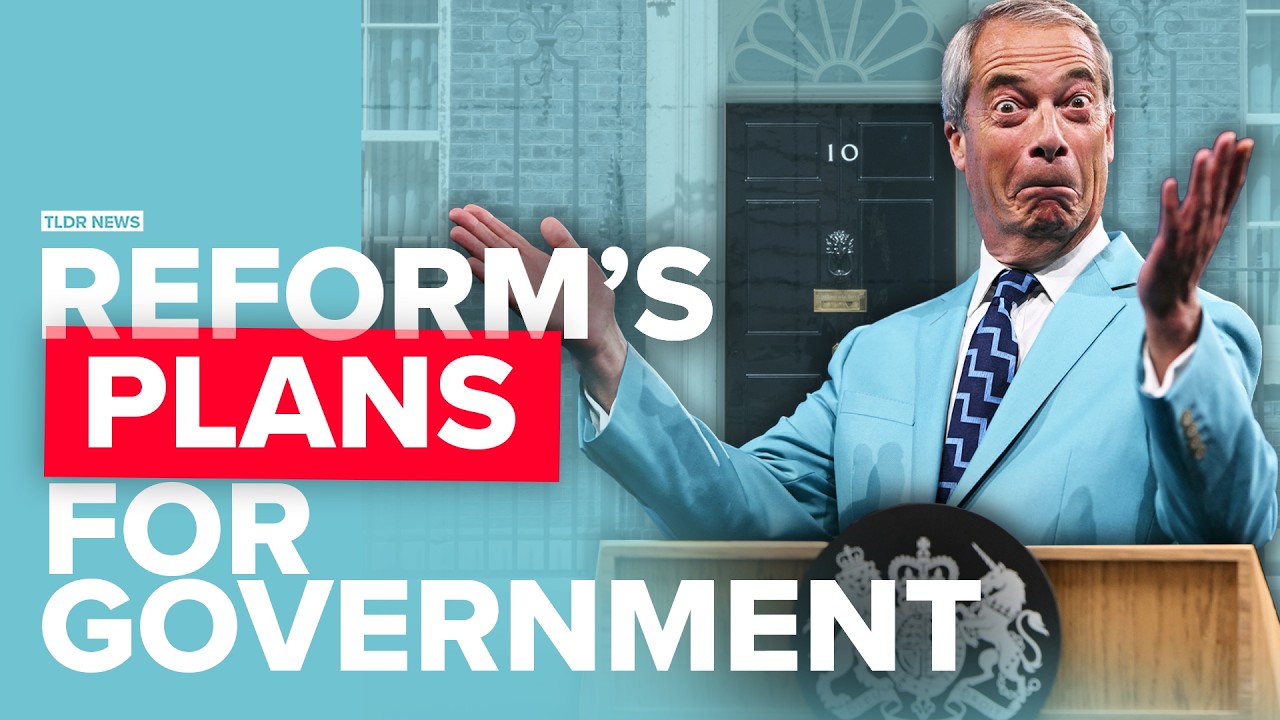
Supporters describe the party as offering decisive solutions to problems that successive governments have failed to resolve. Critics argue many of its proposals underestimate legal, financial and administrative obstacles.
As its polling numbers remain strong, virtually every major element of Reform UK’s platform is now receiving closer examination.
Immigration: Reform UK’s Defining Issue
No policy is more closely associated with Reform UK than immigration.
The party has consistently argued that Britain’s immigration system has become ineffective and that existing legal frameworks make it unnecessarily difficult to remove people who have entered or remained in the country unlawfully.
Its proposals are outlined in a document entitled Operation Restoring Justice, one of the most ambitious immigration programmes proposed by a major British political party in recent decades.
At the centre of the plan is a target to deport approximately 600,000 illegal migrants during the government’s first year in office.
To pursue that objective, Reform UK proposes sweeping constitutional and legal changes.
Among them are:
- Withdrawal from the European Convention on Human Rights>
- Repealing the Human Rights Act 1998
- Replacing it with a British Bill of Rights
- Disapplying several international agreements relating to refugees, torture and human trafficking
The party argues these legal arrangements have increasingly limited the government’s ability to deport illegal migrants and enforce immigration laws effectively.
Under Reform’s proposals, asylum claims made by anyone arriving illegally would automatically be rejected.
The party also proposes creating a new UK Deportation Command, designed to combine information from multiple government agencies—including the Home Office, NHS, HMRC, DVLA, banking systems and police databases—to identify individuals without lawful immigration status before arranging detention and removal.
Reform has further proposed expanding detention facilities while negotiating with countries—including Afghanistan—to accept the return of their nationals.
The proposals have generated intense political debate.
Supporters argue they represent long-overdue enforcement of immigration law.
Critics question whether several proposals would survive legal challenge, comply with Britain’s international obligations, or prove administratively achievable.
Financially, Reform estimates implementation would cost more than £10 billion over five years, while arguing that long-term savings would result from ending the current asylum system.
Independent economists and migration specialists, however, have suggested that actual costs could be considerably higher depending on litigation, detention capacity, transportation and international agreements.
A Smaller Civil Service
Another cornerstone of Reform UK’s programme involves restructuring the British Civil Service.
The party proposes eliminating roughly 100,000 Civil Service positions, representing nearly one-third of the current workforce.
According to Reform, these reductions could save more than £5 billion annually while making government departments more efficient and less bureaucratic.
The proposal reflects one of Nigel Farage’s longstanding political arguments—that Britain’s state bureaucracy has expanded beyond what is necessary to deliver effective public services.
However, scrutiny of the proposal has identified several practical questions.
Policy documents indicate reductions across numerous departments, including occupational psychology positions supporting prison services, along with significant reductions in government security personnel.
Critics argue these roles often perform specialised functions that are not easily replaced.
Particular concern has been raised regarding departments responsible for national security and diplomacy, including the Ministry of Defence and the Foreign Office, where security staff protect sensitive government facilities and classified information.
Administrative experts generally agree that Civil Service reform deserves discussion.
Where opinions diverge is whether large workforce reductions alone would improve efficiency or whether structural reform, technological modernisation and management changes would produce better long-term outcomes.
Climate Policy Would Shift Dramatically
Climate policy represents another major dividing line between Reform UK and Britain’s established parties.
The party has repeatedly argued that Britain’s transition toward net zero carbon emissions places unnecessary financial burdens on households and businesses.
Accordingly, Reform has pledged to repeal the Climate Change Act 2008, ending the UK’s legally binding commitment to achieve net zero emissions by 2050.
Since Reform gained control of several local councils following the 2025 local elections, some councils have already begun reversing climate emergency declarations or abandoning local net zero initiatives.
Party leaders argue these measures will lower energy costs, reduce regulation and improve economic competitiveness.
Supporters believe Britain should prioritise energy affordability, domestic production and industrial growth over emissions targets they consider unrealistic.
Critics, however, question the projected savings.
Several independent research organisations argue that slowing investment in renewable energy could reduce future electricity generation capacity, discourage private investment and increase long-term costs if fossil fuel prices remain volatile.
Others warn that uncertainty surrounding climate policy could affect investor confidence in Britain’s energy sector.
A Party Under Greater Scrutiny
Political analysts note that Reform UK now faces a challenge familiar to every party approaching government.
Campaign slogans must increasingly be translated into detailed policy.
Opinion polls often reward parties expressing public frustration.
Governments, however, are ultimately judged by implementation.
As Reform’s support has grown, journalists, economists, constitutional lawyers and civil servants have begun examining not only what the party wants to achieve but how it intends to accomplish those objectives.
Questions now extend beyond political messaging.
Can deportation targets realistically be achieved?
How would international treaties be renegotiated?
Can government departments continue functioning effectively after major staffing reductions?
Would abandoning net zero commitments reduce living costs—or create different economic challenges later?
These are no longer hypothetical questions.
If polling trends continue, they may become central issues during Britain’s next general election campaign.
My Professional Perspective
One of the most striking aspects of Reform UK’s rise is how quickly the political conversation has changed.
Only a few years ago, many commentators viewed Reform primarily as a pressure group influencing Conservative policy.
Today, increasing numbers of voters are asking an entirely different question:
Could this party actually govern Britain?
That shift is significant because governing demands a different standard than campaigning.
Campaigns are designed to identify problems.
Governments must solve them within legal, financial and institutional constraints.
Immigration provides the clearest example.
Public concern over illegal migration has remained consistently high across multiple opinion surveys, and Reform has successfully positioned itself as offering the strongest response.
But implementation is another matter.

Mass removals require functioning detention systems, cooperation from countries accepting returnees, judicial processes, transportation capacity and sustained diplomatic agreements.
Even governments with broad parliamentary majorities often discover that immigration enforcement depends on far more than domestic legislation alone.
The Civil Service proposals reveal another broader issue.
Across much of the developed world, frustration with government bureaucracy has grown.
Calls for leaner government resonate politically.
Yet governments also depend upon experienced officials to implement ministerial decisions, manage crises, negotiate international agreements and oversee complex public services.
Reducing bureaucracy without weakening institutional capacity is considerably harder than reducing headcount alone.
Climate policy reflects perhaps the deepest ideological divide.
Supporters of Reform argue Britain should focus first on affordability and energy security.
Opponents argue delaying decarbonisation could create larger economic and environmental costs later.
This debate extends beyond Britain.
Many Western democracies are wrestling with exactly the same balance between climate commitments, industrial competitiveness and household living costs.
Perhaps the biggest overlooked point is that Reform UK’s growing popularity says as much about Britain’s broader political mood as it does about Reform itself.
Opinion polls do not merely measure enthusiasm.
Often they measure dissatisfaction.
Many voters supporting Reform appear motivated less by ideological purity than by frustration with successive governments that, in their view, have failed to resolve long-standing concerns over immigration, economic growth, housing, productivity and public services.
That distinction matters.
Protest votes can propel parties into prominence.
Maintaining public support while governing is an entirely different challenge.
If Reform UK ultimately forms a government, expectations would become extraordinarily high almost overnight.
Promises that sound compelling during opposition become measurable outcomes once ministers enter office.
The party’s greatest political test would therefore begin after victory—not before it.
Ultimately, Britain’s next election may not simply determine who occupies Downing Street.
It could become a national referendum on competing visions of the British state itself.
One vision argues that stronger borders, a smaller state and fewer regulatory constraints will restore national confidence.
The other maintains that complex national challenges require sustained investment, institutional reform and continued international cooperation.
The electorate will eventually decide which vision appears more convincing.
Conclusion
Reform UK’s rise in the polls has fundamentally altered Britain’s political landscape. The party is no longer judged solely by its criticism of the political establishment but increasingly by the credibility, affordability and practicality of its proposals.
Its immigration agenda, plans to reduce the size of the Civil Service and commitment to reverse key climate policies represent some of the most significant departures from recent British governments. Supporters see these measures as decisive action to address long-standing problems, while critics argue that legal constraints, implementation challenges and financial risks could make several of the proposals difficult to deliver.
As the next general election approaches, public debate is likely to move beyond campaign slogans toward a more detailed assessment of how each policy would work in practice. If Reform UK continues to lead opinion polls, that scrutiny will only intensify.
The central question for voters may therefore be broader than whether they agree with Reform UK’s objectives. It is whether those objectives can realistically be translated into effective government—and whether Britain’s appetite for political change extends from supporting an opposition movement to entrusting it with the responsibilities of governing the country.