
When a Search for Justice Turned Into Street Disorder: The Henry Nowak Case Reopens Britain’s Debate Over Policing, Public Trust, and Political Division
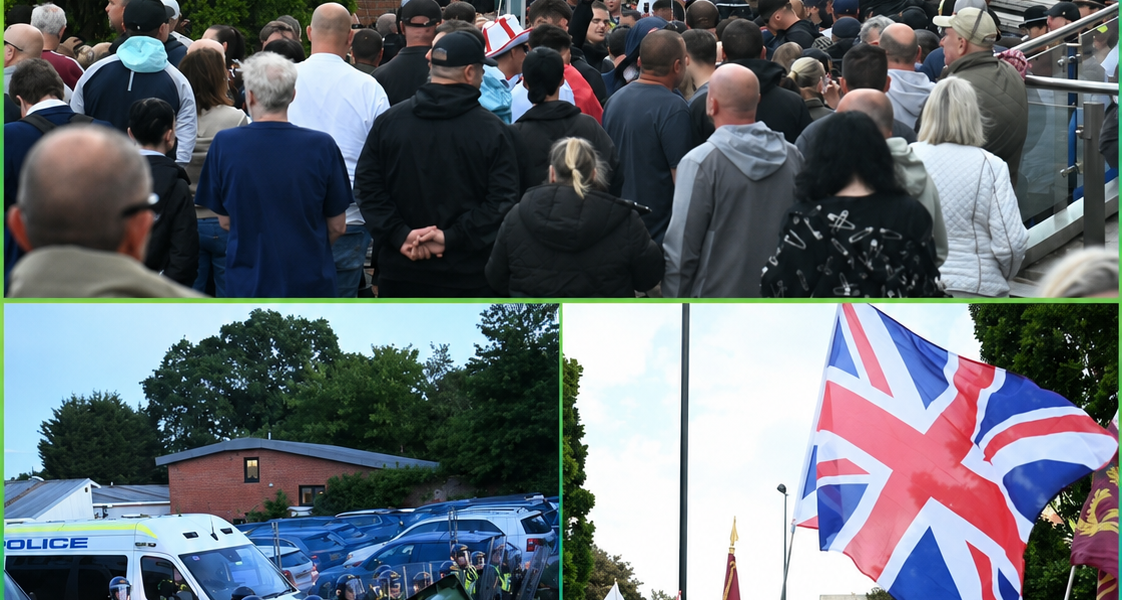
On what was intended to be an evening of remembrance, thousands of people gathered outside Southampton Central Police Station carrying flowers, candles, and placards demanding justice for 18-year-old Henry Nowak.
Many arrived expecting a peaceful vigil.
By the end of the night, riot police had formed defensive lines, officers had deployed pepper spray after being struck by projectiles, and at least one person had been arrested as confrontations erupted outside the police station. Video shared across social media showed bins being thrown, protesters chanting at officers, and police struggling to contain rapidly escalating disorder. Authorities later confirmed that officers had come under attack and condemned the violence. (The Guardian)

Yet the disorder itself was only the latest chapter in a case that has shaken confidence in policing and become one of Britain’s most controversial criminal justice stories of recent months.
At the center of the controversy is Henry Nowak, an 18-year-old finance student whose fatal stabbing in Southampton was followed by a series of police decisions that have since become the subject of an Independent Office for Police Conduct (IOPC) investigation. Body-worn camera footage released after the criminal trial showed officers handcuffing the severely injured teenager after they were allegedly misled by the attacker, Vickrum Digwa, who falsely claimed that he had been the victim of a racist assault. The trial judge later rejected those allegations entirely, concluding there was no evidence Henry had used racist language. (The Guardian)
Digwa was subsequently convicted of murder and sentenced to life imprisonment with a minimum term of 21 years after the court found he had repeatedly stabbed the unarmed student with a ceremonial blade. Prosecutors described the attack as sustained and deliberate, while the sentencing judge said Henry’s final moments—dying while handcuffed—were a tragic consequence of Digwa’s deception and compounded the suffering of his family. (The Times)
The release of the police footage transformed what had already been a high-profile murder case into a wider national debate about policing, public confidence, race, and accountability.
Criticism focused not only on the actions of the killer but also on the response of the first officers who arrived at the scene. Hampshire & Isle of Wight Constabulary later apologized for aspects of its handling of the incident, while the IOPC expanded its investigation into whether officers failed in their duty of care and whether race or religion influenced operational decisions. Two officers are now under investigation for possible gross misconduct, while the broader inquiry continues. (The Guardian)
As public anger grew, campaigners organized a protest outside Southampton Central Police Station.
Organizers described the gathering as a call for accountability and justice.
Many participants observed a minute’s silence in Henry’s memory before demonstrations intensified later in the evening. As crowds grew, police deployed additional public order units. According to authorities, some protesters began throwing bricks, bottles, bins, and other objects, injuring officers and damaging property. Police confirmed arrests and said criminal investigations into the disorder would continue. (The Guardian)
The unrest immediately triggered a fresh political argument.
Some protesters argued the demonstration reflected widespread frustration over policing failures and demanded systemic reforms.
Government ministers, local officials, and police leaders condemned the violence, stressing that while peaceful protest is a democratic right, attacks on officers and public disorder cannot be justified. Henry’s father also appealed for restraint, urging that his son’s death should not be used to fuel hatred or further divide communities. (The Guardian)
Far beyond Southampton, the case has become a flashpoint in Britain’s wider debate over criminal justice, immigration, policing, and public trust. For some, it represents evidence of serious institutional failures that require urgent reform. For others, it demonstrates how rapidly a personal tragedy can become entangled in broader political narratives, sometimes overshadowing the wishes of the victim’s own family.
Whether remembered as a policing failure, a criminal justice controversy, or a lesson in the dangers of political polarization, the Henry Nowak case has already become one of the defining public debates of the year. As multiple investigations continue and further legal proceedings remain underway, the questions raised by that night in Southampton are unlikely to disappear anytime soon.