On November 6, 1860, Americans went to the polls without knowing that the election taking place that day would soon become the opening chapter of the bloodiest conflict in the nation’s history. Abraham Lincoln won the presidency with less than 40 percent of the popular vote, carrying almost entirely the North. His name did not appear on the ballot in several Southern states, and the opposition vote had been divided among three major candidates: Stephen Douglas, John C. Breckinridge, and John Bell. Lincoln’s victory did not itself create the Civil War, but it exposed a political fracture that had been widening for decades—above all over slavery and its expansion into the territories. Within weeks, South Carolina would begin the process of leaving the Union.
What followed was not one sudden explosion, but a chain of decisions. One state seceded. Then another. Federal forts became isolated islands of national authority inside territories controlled by governments that no longer recognized Washington’s power. A new Confederate government appeared. Armies formed. Diplomacy nearly failed. Battles that many had expected to be short became campaigns measured in years.
And somewhere inside those four years, the meaning of the war itself would change.
At first, the central question was whether the United States could remain one nation.
By the end, the nation would have to decide what kind of country that reunited nation was going to be.
The transformation began in the election of 1860.
Lincoln represented the newly formed Republican Party, whose platform opposed the expansion of slavery into the territories. His victory was possible because the opposition had fractured. Douglas carried a number of states but could not unite the Democratic vote; Breckinridge represented the pro-slavery wing of the Democratic Party; Bell represented the Constitutional Union Party.
The result was decisive in the Electoral College even though Lincoln did not win a majority of the national popular vote.
For slaveholding political leaders in the South, the election appeared to confirm a fear that had been growing for years: that the political balance of the country was moving against them.
The issue was not simply who would occupy the White House.
It was what the election seemed to mean about the future.
Could slavery expand?
Could slaveholding interests continue to exert the same influence over federal policy?
Could the Union survive if one section increasingly believed that the other intended to reshape the country permanently?
The answers were about to be tested not in a courtroom or congressional chamber, but on the ground.
Lincoln’s appearance itself briefly became part of the political story. An eleven-year-old girl, Grace Bedell, had written to him suggesting that he grow a beard because his thin face would look better and might attract more votes. Lincoln eventually did grow the beard, and photographs of the new president soon showed a markedly different face.
It was a small detail in comparison with what followed.
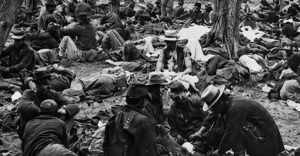
But history is filled with such details—small enough to seem almost trivial until we realize that the person carrying them is standing at the edge of something enormous.
On December 20, 1860, South Carolina formally seceded from the United States. The state’s secession convention in Charleston unanimously adopted an Ordinance of Secession. In its subsequent declaration explaining the causes, South Carolina explicitly connected the crisis to the election of Lincoln and to the defense of slavery.
The bells and newspaper announcements that followed could not have revealed what was coming.
At that moment, secession was still a political act.
It had not yet become four years of national war.
But the next decisions would make that transformation increasingly difficult to prevent.
Mississippi, Florida, Alabama, Georgia, Louisiana, and Texas followed South Carolina between January and February 1861. Delegates from the seceded states then gathered in Montgomery, Alabama, where they organized the Confederate States of America. Jefferson Davis was chosen provisional president, with Alexander Stephens as vice president.
The Confederacy was not merely a military rebellion that appeared overnight. It attempted to construct a government, adopt a constitution, establish institutions, and present itself as an independent nation.
And the ideological foundation of that new government was not mysterious.
In his famous “Cornerstone” speech, Alexander Stephens explicitly described racial inequality and slavery as central to the Confederacy’s political order.
That fact matters because later memories of the war sometimes attempted to separate secession from slavery. The documents produced by the seceding states themselves, however, leave no room to treat slavery as an incidental issue. The political crisis was deeply rooted in slavery and in disputes over its protection and expansion.
Meanwhile, Lincoln had not yet taken office.
The United States had entered an extraordinary period in which rival political authorities claimed power while the outgoing administration struggled to respond.
Federal forts in the South became symbols of that uncertainty.
In Charleston Harbor, one of the most important was Fort Sumter.
Major Robert Anderson commanded the federal garrison there. On December 26, 1860, he secretly moved his soldiers from the more vulnerable Fort Moultrie to Fort Sumter, which stood on an artificial island in the harbor.
The move infuriated South Carolina authorities.
The fort was now surrounded by territory controlled by people who considered themselves outside the Union.
In January 1861, the federal government attempted to send supplies to Anderson’s garrison aboard the Star of the West. Confederate batteries fired on the ship, forcing it to withdraw.
The confrontation had not yet become a full-scale battle.
But the message was unmistakable.
The federal government was trying to maintain its position.
South Carolina was prepared to resist.

By the time Lincoln took office on March 4, 1861, the political crisis had already passed a point from which returning to the old situation would be increasingly difficult.
Then came April.
In the early morning hours of April 12, Confederate forces opened fire on Fort Sumter.
For more than thirty hours, artillery battered the federal position.
The fort eventually surrendered.
The attack itself produced relatively few casualties, but its political consequences were enormous. Fort Sumter transformed the secession crisis into open war.
The following day, Lincoln called for 75,000 volunteers to suppress the rebellion. That decision in turn pushed Virginia, Arkansas, Tennessee, and North Carolina toward secession.
The country had crossed a line.
There would be no easy return.
The first great test came at Manassas, Virginia.
On July 21, 1861, Union and Confederate armies met in what became known as the First Battle of Bull Run or First Manassas.
The public had not yet fully understood what modern warfare could mean.
Some civilians came from Washington to watch the battle, expecting something that resembled a dramatic public spectacle rather than a prolonged national catastrophe.
The illusion did not survive the afternoon.

Union forces initially advanced, but Confederate resistance stiffened. Reinforcements arrived by rail from the Shenandoah Valley. The Confederate army counterattacked, and the Union retreat became disorderly.
Among the Confederate commanders was Thomas Jackson.
During the fighting, he held his position so firmly that a fellow officer reportedly compared him to a stone wall.
The nickname “Stonewall” remained.
But the more important consequence was psychological.
Bull Run demonstrated that the war would not be settled by one dramatic battle.
The conflict had begun, and both sides were only beginning to understand its scale.
The casualty figures were already enough to shock a country that had expected a relatively short confrontation.
Instead, the war was becoming something much larger.
And it would soon pull the United States into diplomatic crises far beyond its own borders.
On November 8, 1861, the Union warship USS San Jacinto stopped the British mail steamer Trent and removed Confederate diplomats James Mason and John Slidell.
In the North, the action was initially celebrated.
In Britain, it was viewed as a violation of neutral rights.
The British government prepared for the possibility of confrontation and reinforced Canada.
Lincoln and his administration ultimately chose to release the diplomats.
The decision avoided a potentially disastrous conflict with Britain at a time when the United States could scarcely afford another enemy.
The Trent Affair demonstrated something important: the Civil War was not isolated from the international system.
The Confederacy needed foreign recognition and support.
Britain and France were watching.

The Union needed to prevent the conflict from becoming an international war.
The survival of the United States therefore depended not only on what happened on American battlefields, but also on decisions made in European capitals.
Then, in March 1862, the war entered a new technological age.
In Hampton Roads, Virginia, the Confederate ironclad Virginia confronted the Union ironclad Monitor.
The Virginia had been constructed on the hull of the former USS Merrimack. The Monitor had been designed by Swedish-born engineer John Ericsson and featured a rotating gun turret that was revolutionary for its time.
On March 8, the Virginia had already demonstrated how vulnerable traditional wooden warships could be.
The next day, the Monitor arrived.
The two armored vessels fought for hours at close range.
Neither achieved a decisive victory.
But the implications were enormous.
The battle showed naval powers around the world that the age of wooden warships was ending.

The battlefield was changing.
The machinery of war was changing.
And the scale of destruction was about to change with it.
In Tennessee, another battle would demonstrate the human cost.
On April 6, 1862, Confederate forces attacked the Union army near Shiloh.
The first day went badly for the Federals. Union troops were pushed back toward the Tennessee River, and the Confederate army appeared close to a major victory.
But Confederate commander Albert Sidney Johnston was mortally wounded.
During the night, Union reinforcements arrived under Ulysses S. Grant.
On April 7, the Union army counterattacked.
The Confederates withdrew.
The battle had produced enormous casualties, and the scale shocked the public.
Shiloh destroyed another comforting assumption.

This was not going to be a conflict settled by a handful of dramatic encounters.
Thousands were already dead.
Thousands more were wounded.
And still the war had barely entered its second year.
In Virginia, General Robert E. Lee took command of the Confederate Army of Northern Virginia and launched the Seven Days Battles against George McClellan’s Army of the Potomac.
McClellan had advanced toward Richmond, the Confederate capital.
For a moment, the Union army appeared dangerously close.
Lee attacked repeatedly between June 25 and July 1, 1862.
The fighting was costly on both sides, including at Malvern Hill, where Confederate attacks against strong Union positions suffered heavily.
Yet McClellan eventually withdrew.
Richmond survived.
Lee’s reputation grew.
McClellan’s relationship with Lincoln deteriorated.
And the Confederate government had gained something it desperately needed: time.
The next major confrontation came on familiar ground.
Near Manassas, Virginia, Lee and Stonewall Jackson faced Union forces again in late August 1862.
The result repeated the humiliation of the previous year.
Jackson’s men held an unfinished railroad cut against Union attacks. Confederate forces under James Longstreet later launched a massive assault against the Union flank.
The Union army retreated toward Washington.
For the second time in little more than a year, the road to the capital was crowded with soldiers moving backward.
But Lee now had a different idea.
He would carry the war into the North.
The Confederate invasion eventually brought the armies together near Antietam Creek in Maryland.
On September 17, 1862, the Battle of Antietam became the bloodiest single day in American military history, with roughly 23,000 casualties killed, wounded, or missing.
The names of places on the battlefield became permanently associated with the slaughter: the Cornfield, the Sunken Road, Burnside Bridge.
The fighting ended without a decisive tactical victory.
But Lee withdrew into Virginia.
That was enough for Lincoln.
Days later, he issued the Preliminary Emancipation Proclamation.
The war was beginning to change its declared purpose.
At first, Lincoln had emphasized preservation of the Union.
Now the destruction of slavery in the rebellious states was becoming an explicit war aim.

On January 1, 1863, the Emancipation Proclamation went into effect. It declared enslaved people in areas still in rebellion against the United States to be free. It did not apply to loyal slave states or to Confederate areas already under Union control, but its significance was enormous. It also authorized the enlistment of Black men into the Union armed forces.
The war had changed.
Freedom was no longer only a consequence that might emerge from Union victory.
It had become part of the stated purpose of the conflict.
More than 180,000 Black men eventually served in the Union Army, alongside others in the Navy.
For many formerly enslaved people, the Union army became not simply an army fighting a rebellion, but an instrument through which freedom could become real.
Yet the winter of 1862 brought another disaster.
At Fredericksburg, Union troops under Ambrose Burnside repeatedly attacked Confederate positions at Marye’s Heights.
The open ground below the stone wall became a killing field.
Attack after attack failed.
The Union suffered far more casualties than the Confederates.
The defeat deepened the crisis of confidence surrounding Lincoln’s military leadership.
And still the war continued.
In May 1863, Robert E. Lee achieved one of his greatest battlefield victories at Chancellorsville.

His army was heavily outnumbered.
Yet Lee divided his forces and sent Stonewall Jackson on a daring flank march.
The maneuver struck the Union army unexpectedly.
But victory came at an enormous cost.
Returning from reconnaissance that night, Jackson was mistakenly fired upon by Confederate soldiers who did not recognize him in the darkness.
He was badly wounded.
His left arm was amputated.
Pneumonia followed.
On May 10, Jackson died.
Lee had lost one of his most important commanders just as he was preparing for another invasion of the North.
That invasion brought the war to Gettysburg.
Between July 1 and July 3, 1863, Union and Confederate armies fought in Pennsylvania.
The battle became the largest and one of the most consequential engagements of the war.
On the third day, Lee ordered a massive assault against the Union center.
Thousands of Confederate soldiers advanced across open ground in what became known as Pickett’s Charge.
The attack failed.
Lee’s army suffered devastating losses and withdrew toward Virginia.
He would never again invade the North on such a scale.
Gettysburg was not the only catastrophe facing the Confederacy that week.
On July 4, Vicksburg surrendered to Grant after a prolonged siege.
The Union now controlled the Mississippi River from north to south.
The Confederacy had effectively been cut in two.
Gettysburg stopped Lee’s invasion.
Vicksburg severed the Confederacy’s territorial connection across the Mississippi.
The balance was beginning to shift.
But even in the North, the war was producing profound internal conflict.
In July 1863, New York City erupted in draft riots.

The federal conscription law had become deeply unpopular, particularly among working-class residents, while the provision allowing men to pay $300 for an exemption became a powerful symbol of class resentment.
The violence spread.
Black residents and Black institutions were attacked, including the Colored Orphan Asylum.
Federal troops, some drawn directly from the armies that had fought at Gettysburg, were deployed to restore order.
The episode revealed something uncomfortable.
The Union was fighting to preserve the nation, increasingly to destroy slavery, and yet racism and opposition to Black freedom remained deeply rooted inside Northern society.
The war was not producing a simple division between good and evil regions.
It was exposing contradictions throughout the country.
In South Carolina, another photograph-worthy moment in the war carried a different meaning.
The 54th Massachusetts Infantry, composed largely of Black soldiers, attacked Fort Wagner in July 1863.
The regiment suffered severe losses.
Its white commander, Colonel Robert Gould Shaw, was killed.
During the retreat, Sergeant William Carney helped preserve the regimental flag.
His actions later earned him the Medal of Honor.
The attack did not capture Fort Wagner.

But the performance of the 54th Massachusetts became an important argument for those who believed Black men could and should serve as soldiers.
The war was changing not only military strategy but the meaning of citizenship and national belonging.
Four months after Gettysburg, Lincoln traveled to the battlefield cemetery.
On November 19, 1863, he delivered the Gettysburg Address.
The speech lasted only a few minutes.
It was brief compared with the much longer address delivered by Edward Everett that day.
Yet Lincoln’s words would outlive the battlefield itself.
He connected the war to the principles of equality and self-government and described the conflict as a test of whether government by the people could survive.
There is no confirmed photograph of Lincoln actually delivering the address. The technology of photography at the time made capturing a short speech difficult, and surviving images show the surrounding occasion rather than a confirmed image of Lincoln in the act of speaking.
That absence almost makes the story more striking.
One of the most famous speeches in American history exists without a definitive photograph of the moment it was spoken.
The words survived.
The image did not.
Later in November, Union forces broke the Confederate siege of Chattanooga.

At Lookout Mountain, fighting took place through heavy fog, producing the famous nickname “Battle Above the Clouds.”
At Missionary Ridge, Union troops advanced up the Confederate position in an assault that surprised even some of their commanders.
The victory opened the road toward Georgia.
And one man was becoming increasingly difficult for Lincoln to ignore.
Ulysses S. Grant.
Grant had won important victories in the West.
He had captured Vicksburg.
He had helped break the Confederate position at Chattanooga.
In March 1864, Lincoln placed him in command of all Union armies.
The strategy changed.
Instead of treating each theater of war as a separate problem, Grant coordinated pressure across multiple fronts.
He would remain with the Army of the Potomac and confront Lee directly.
William Tecumseh Sherman would advance through Georgia.
The objective was no longer simply to win individual battles.
It was to destroy the Confederacy’s capacity to continue fighting.
In May 1864, Grant entered the Wilderness of Virginia.

The fighting was chaotic.
Dense vegetation limited visibility.
Fires spread through the woods.
The wounded faced terrible conditions.
Previous Union commanders had often retreated after failing to break Lee.
Grant did something different.
When the fighting ended, he moved south.
The Army of the Potomac was going forward.
The Overland Campaign followed, with battles at Spotsylvania and Cold Harbor and eventually the long siege of Petersburg.
The casualties were immense.
But Lee’s army could no longer replace its losses as the Union could.
The war was becoming a contest of endurance.
Then came Atlanta.

On September 2, 1864, Sherman captured the city after months of campaigning.
The victory arrived at a crucial political moment.
Lincoln was facing a presidential election while Northern morale had been damaged by years of war.
Atlanta changed the atmosphere.
The Union victory suggested that the Confederacy was losing its ability to resist.
Lincoln was reelected in November.
Then Sherman turned toward the coast.
On November 15, 1864, his army left Atlanta and began the campaign later remembered as the March to the Sea.
Approximately 60,000 Union soldiers moved across Georgia while operating without the traditional supply line.
Foraging parties collected food and livestock.
Railroads and military infrastructure were destroyed.

The campaign was deliberately designed to damage the Confederacy’s capacity to wage war and to demonstrate to civilians that the conflict had reached their homes.
On December 21, Sherman entered Savannah.
He famously telegraphed Lincoln that he presented the city as a Christmas gift.
The war was entering its final stage.
In Tennessee, Confederate General John Bell Hood had attempted to stop the Union advance.
At Franklin on November 30, 1864, thousands of Confederate soldiers attacked fortified Union positions across open ground.
The assault was catastrophic.
Six Confederate generals were killed, including Patrick Cleburne.
Two weeks later, Hood’s army suffered another devastating defeat at Nashville.

The Army of Tennessee was effectively broken as a major fighting force.
The Confederacy was running out of armies.
It was running out of territory.
It was running out of time.
And slavery itself was approaching a legal end.
On January 31, 1865, the House of Representatives approved the proposed Thirteenth Amendment by a vote of 119 to 56.
The Senate had already passed it.
The amendment would abolish slavery throughout the United States, but it still required ratification by three-fourths of the states. That ratification came on December 6, 1865.
The distinction between the Emancipation Proclamation and the Thirteenth Amendment is crucial.
The proclamation was a wartime measure applying to areas in rebellion.
The amendment was permanent constitutional law.
The war had therefore produced something larger than military reunification.
It had created the legal foundation for ending slavery throughout the country.
But the war was not yet finished.
By April 1865, Richmond was collapsing.

After months of fighting around Petersburg, Lee informed the Confederate government that the defenses could no longer be held.
On April 2, Confederate officials began leaving Richmond.
The city burned as retreating forces destroyed military and industrial facilities.
On April 3, Union troops entered.
The Confederate capital had fallen.
Two days later, Lincoln visited Richmond.
For a president who had spent four years fighting to preserve the Union, walking through the former Confederate capital carried enormous symbolic meaning.
But the war was not quite over.
Lee was moving west.
Grant was following.
On April 9, 1865, Lee met Grant at Appomattox Court House.
The meeting took place in the home of Wilmer McLean.
The two commanders negotiated the surrender of the Army of Northern Virginia.

Grant offered terms that allowed Confederate soldiers to return home.
They could keep their horses and mules for agricultural work.
They had to surrender their weapons and agree not to resume hostilities.
The surrender did not legally end every Confederate force.
But it broke the heart of the Confederacy’s principal army.
The war was effectively decided.
Grant also discouraged his soldiers from celebrating too aggressively.
The men who had been enemies were about to become citizens of the same country again.
The photographs and written records from Appomattox would eventually become some of the most enduring symbols of the conflict.
Yet only five days later, the country received another shock.
On the night of April 14, Lincoln attended a performance at Ford’s Theatre in Washington.
John Wilkes Booth entered the presidential box and shot him.
Lincoln was carried to a boardinghouse across the street.
Doctors remained with him through the night.
On the morning of April 15, 1865, Abraham Lincoln died.

He had guided the United States through its greatest constitutional crisis and its most destructive war.
He did not live to see Reconstruction.
He did not see the final ratification of the Thirteenth Amendment.
He did not see how the reunited nation would attempt to define freedom after slavery.
Andrew Johnson became president.
Booth fled Washington and was eventually cornered in Virginia, where he died during the attempt to capture him.
Meanwhile, the war continued in fragments.
On April 26, General Joseph E. Johnston surrendered his forces to Sherman in North Carolina.
Jefferson Davis was captured in Georgia on May 10.
Confederate forces in the Trans-Mississippi eventually surrendered in June.
The final military actions and surrenders stretched beyond Appomattox, which is why historians distinguish Lee’s surrender from the formal conclusion of every Confederate military organization. The National Park Service notes that the war ended piecemeal through several major surrenders rather than at one single moment.
By the end, hundreds of thousands of soldiers were dead.
The precise total has long been debated, but the commonly cited estimate is roughly 620,000 military deaths.
The physical landscape had been transformed.

Cities had burned.
Railroads had been destroyed.
Families had been separated.
Millions of enslaved people faced a future that was legally different from the one into which they had been born.
The Union had survived.
The Confederacy had disappeared.
Slavery was on its way to constitutional abolition.
But none of those outcomes erased the complexity of what had happened.
Freedom did not instantly produce equality.
The end of the war did not end racism.
The destruction of slavery did not immediately settle the question of how formerly enslaved people would live, work, vote, own property, educate their children, or participate in American political life.
Those questions became the enormous unfinished work of Reconstruction.

And perhaps that is where the story of the Civil War becomes more complicated than any battlefield map.
The war began with a political crisis over the future of a divided Union.
It expanded into a military struggle.
It became a diplomatic crisis.
It transformed naval technology.
It transformed the role of Black Americans in the Union war effort.
It transformed the stated purpose of the conflict.
It transformed the Constitution.
And, eventually, it transformed the legal status of millions of human beings.
Four years earlier, the United States had been arguing over whether the Union could survive.
By 1865, the Union had survived—but the country that emerged was not the same country that entered the war.

The election of 1860 had exposed a fracture.
Fort Sumter turned that fracture into war.
Bull Run destroyed hopes of a quick victory.
Shiloh revealed the scale of the bloodshed.
Antietam opened the door to emancipation.
Gettysburg and Vicksburg shifted the strategic balance.
Chattanooga opened the road into the Deep South.
Grant and Sherman brought relentless pressure.
Atlanta weakened Confederate hopes.
The Thirteenth Amendment transformed emancipation from wartime policy into constitutional law.
Appomattox brought Lee’s army to surrender.
And Lincoln’s assassination left the nation without the leader who had guided it through the crisis.
The photographs and documents left behind do not show a single simple story.
They show a country arguing with itself.

They show soldiers marching toward battles whose consequences they could not know.
They show political leaders making decisions that would outlive them.
They show enslaved people moving toward freedom.
They show cities transformed by war.
And they preserve the faces of people who could not possibly know that their own moment would later become part of the historical memory of an entire nation.
Perhaps that is what makes this period so difficult to forget.
The Civil War was not simply a story of one side defeating another.
It was the story of a country discovering, through enormous suffering, that preserving the Union would require confronting the institution of slavery at the center of its political crisis.
And even when the guns finally fell silent, the questions raised by those four years did not disappear.
What did freedom actually mean?
Who would be allowed to exercise it?
Could a country reunite without confronting the legacy of slavery?
And after so much destruction, could the United States truly become the nation its leaders had claimed it was meant to be?
Those questions survived the battlefield.
In many ways, they became the next chapter of American history.