Striking vintage photos that have been hidden from us | Rare historical photos – Archaeological ruins .P

A woman churns butter under the watchful eye of a kitten. Two fishermen knit winter clothes. A family waits at the train station. A woman drives a taxi in New York. Children in handmade Halloween costumes wander the street.
And then there are photographs that seem almost impossible to look at.
A plane crashes into a building in wartime Berlin. Soldiers, machine guns in hand, march through the streets after the assassination of Martin Luther King Jr. A child stands amidst the decay of London. A French woman has her hair forcibly cut after being accused of collaboration. Workers toil precariously on steel beams in New York, without the safety equipment now considered essential.
Each image can only be captured for a single moment.
But behind this moment lies a world.
A world of wars and revolutions, inventions and catastrophes, discrimination and social change, ordinary work and extraordinary courage.
The further one gets from this world, the stranger it can seem.
Yet, these people did not think they were living through a historic moment.
They were simply living.
In 1890, an Iranian photograph documented a brutal method of execution using a cannon. Public executions were carried out in various forms in several parts of the world, often as demonstrations of state power and as punishment.
To a modern eye, the scene is difficult to understand.
But historical photographs constantly confront us with practices that once existed within the accepted systems of their time.
This is one of the unpleasant lessons one learns from studying the past.
People who lived through a particular era rarely understood how differently future generations would judge it.
More than half a century later, another photograph immortalized a public humiliation of a completely different kind.
In France, in 1944 and 1945, after liberation from German occupation, women accused of collaborating with German soldiers were publicly humiliated. In several documented cases, their heads were forcibly shaved.
These scenes were not simply private punishments.
They became public spectacles.
The crowd was watching.
Photographers have immortalized them.
These images have become an integral part of the emotional trauma associated with the occupation and liberation.
The end of a war does not automatically bring about the end of its consequences.
For many civilians, the liberation was a relief.
For others, it has led to accusations, revenge, and social judgment.
The photographs therefore capture something more complex than just victory.
They report on what happens when a society emerges from years of occupation and tries to decide who should be considered a victim, who should be condemned, and who should be forgiven.
Elsewhere, another type of farewell was taking place.
Women stood near the windows of a docked ship, saying goodbye to their companions before departure.
For much of the 20th century, ships and trains were much more than just means of transport.
These were places where families separated.
People emigrated.
The soldiers have left.
The workers were looking for opportunities in distant countries.
A few seconds in a train station or port could mark the beginning of several years of separation.
This same uncertainty has increased considerably in times of war.
Thousands of young men left their families to go and fight in World War II.
In train stations and ports, photographs immortalized the hugs, handshakes and last moments spent together.
No one could know exactly when — or even if — the person who was walking away would return.
The human cost of war is often described through casualty figures.
But the photographs reveal the cost even before the figures exist.
A mother watches a train disappear.
A child waiting for his father.
A woman standing at the port.
A uniform that blends into the crowd.
History eventually records these battles.
Photography sometimes immortalizes farewells.
In 1944, during the Allied campaign in Italy, Henri Cartier-Bresson photographed people living amidst the ravages of war.
An image shows a man helping an amputee.
There is no battlefield within the frame.
No artillery.
No city in flames.
Just two human beings helping each other.
This type of photograph reveals another facet of the war.
History is not just about armies.
It’s also about friendship.
Dependence.
Injury.
Recovery.
And the simple act of helping someone keep moving forward.
The First World War had created a completely different context.
Two German soldiers photographed in 1916 belonged to a generation that entered an unprecedented conflict in Europe.
The trenches stretched across the continent.
Mud, cold, disease, hunger, and artillery bombardments were part of the soldiers’ daily life.
The major battles on the Western Front demonstrated how industrial technology had transformed warfare.
The machine guns could sweep across open ground.
Artillery could destroy positions miles away.
Barbed wire can turn a few hundred meters into a deadly obstacle.
And yet, the soldiers remained human beings trapped in the war machine.
Sometimes, this humanity manifested itself in unexpected places.
During World War II, a little London girl was photographed holding a doll amidst the ruins left by the bombings.
The image is powerful precisely because the child is doing something ordinary.
She is holding a toy.
Around her, the adult world collapsed.
This contrast reveals something that statistics cannot show us.
A city can be described as damaged.
But for a child, destruction can mean a vanished house, a deserted street, a destroyed school, and a familiar neighborhood that is no longer familiar.
London suffered relentless German bombing during the Blitz.
Thousands of homes have been destroyed or damaged.
However, photographs from that era also show people continuing to work, play, and care for one another.
Life went on amidst the destruction.
This pattern would be repeated across Europe.
In Berlin in 1945, towards the end of the war, the city was devastated by years of fighting and bombing.
An extraordinary photograph shows a crashed plane, stuck high up in a building.
The image seems almost unreal.
A machine designed to fly in the sky found itself trapped in the upper floors of a city that was already collapsing around it.
The photograph captures the physical absurdity of total war.
Technology had reached astonishing heights.
However, entire cities were reduced to ruins.
And the people responsible for creating these technologies were still suffering the consequences.
The same contradiction existed within Nazi Germany itself.
Photographs of high-ranking Nazi officials often showed huge residences, lavish ceremonies, and displays of power.
An image associated with Hermann Göring shows him presenting an exercise horse to Adolf Hitler at his Carinhall estate in the 1930s.
The decor reflected the immense wealth and social status accumulated by high-ranking Nazi officials.
But beyond these private spaces, the regime was putting in place a system of dictatorship, persecution and, ultimately, massacres.
The contrast between luxury and destruction is one of the recurring visual themes of the 20th century.
Power can look comfortable from the inside.
Its consequences often appear very different when viewed from the outside.
The rise of Nazism also transformed individuals into political symbols.
Horst Wessel, a member of the Nazi party assassinated in 1930, was subsequently portrayed as a martyr by Nazi propaganda.
The regime used his image and history for political purposes.
A photograph associated with the arrest of his murderer is therefore part of a larger story of propaganda and political violence.
Images do more than simply document history.
Governments can use them to construct historical memory.
This happened several times during the 20th century.
Political rallies filled the stadiums.
The streets were covered in flags.
The leaders appeared before huge crowds.
The ceremonies were carefully staged.
Photography has become an integral part of the show.
The camera was no longer content with simply recording political power.
This allowed the political power to communicate.
This same century also saw the emergence of figures who attempted to challenge this power.
In the United States, protests against the Vietnam War became increasingly visible during the 1960s and 1970s.
The veterans themselves eventually became some of the most vocal critics of the conflict.
Their presence had a different meaning than that of ordinary protesters.
They had served.
They had direct experience of military life.
Their opposition could not simply be dismissed as ignorance of the war.
The slogan “We will no longer fight a rich man’s war” reflected one aspect of the anger expressed by pacifist activists and veterans, even though the motivations of the protesters were diverse.
The Vietnam War had divided American society.
And the debate did not end with the fighting.
The memory of the conflict persisted for decades.
Another photograph dating from 1968 shows a soldier positioned near the US Capitol during the unrest that followed the assassination of Martin Luther King Jr.
King’s death sparked protests and unrest in many American cities.
National Guard units have been deployed to several locations.
This image reveals how quickly a political and social tragedy can transform ordinary streets into areas of tension.
But history was also changing in other ways.
At the beginning of the 20th century, children were still found working in dangerous industrial environments.
A photograph of boys working in a textile factory testifies to the reality of child labor in the industrial age.
Small bodies were often considered useful for machine-related tasks.
This job could be exhausting and dangerous.
The existence of such photographs became one piece of evidence among others for reformers who campaigned for stricter laws on child labor and better working conditions.
Industrialization had generated enormous wealth.
She had also created new forms of exploitation.
The modern labour movement developed in part as a reaction to this contradiction.
The same period was marked by another disturbing chapter in the history of medicine.
Photographs of psychiatric institutions in England around 1910 reveal conditions that later generations would consider profoundly inadequate and inhumane.
Understanding of mental illness was limited.
Treatment methods were often rudimentary.
Institutionalization can mean isolation rather than healing.
The history of mental health therefore contains an important lesson: medical progress is not limited to the discovery of new treatments.
It is also about changing the way society perceives people who need it.
Technology can evolve rapidly.
Mentalities often evolve much more slowly.
The early 20th century was also a time of extraordinary engineering.
The Empire State Building rose above Manhattan in the early 1930s.
Photographs of its construction show workers standing on steel beams hundreds of meters above the ground.
There are no modern harnesses or enclosed platforms to protect them.
The workers look surprisingly small in the face of the immensity of the structure.
This photograph has become one of the most iconic visual testimonies of American construction.
But behind this romantic appearance lay a very real danger.
The skyscraper symbolized confidence.
These workers represented the human cost of transforming that trust into steel.
At ground level, another revolution was underway.
Automobiles were transforming cities.
The trains connected new destinations.
Electricity was spreading.
Telephones were becoming increasingly common.
In 1853, the Clifford steam locomotive ran on the Brooklyn, Bath and Coney Island Railway, a testament to the expansion of rail transportation in New York.
Railways have changed the concept of distance.
A destination that once required hours of difficult travel could suddenly become accessible to ordinary passengers.
Coney Island would eventually become one of the great entertainment destinations in the United States.
Transportation has helped make this possible.
The automobile has accelerated this transformation even further.
In 1899, Camille Jenatzy drove La Jamais Contente, an electric car, and became the first person to exceed 100 kilometers per hour in a road vehicle.
The vehicle looked almost like a futuristic projectile.
This success demonstrated the speed with which engineers were experimenting with electric propulsion and aerodynamic design.
At the time, no one could know which technologies would eventually dominate.
Steam.
Electricity.
Essence.
They all competed for the future.
The world we know today was not inevitable.
It was the result of choice.
Meanwhile, ordinary people continued to build their own futures.
In the 1920s, Ma Odell drove a taxi in New York and joined the small but growing number of women who embraced traditionally male-dominated professions.
It was still unusual for a woman to work independently while driving a taxi.
But the photographs of women in transport, factories and offices reveal a broader social transformation.
The boundaries of acceptable work were changing.
The same was true of expectations regarding women’s independence.
The transformation was gradual.
It wasn’t uniform.
But it was visible.
The streets themselves were changing too.
A photograph of New York dating from 1915 shows cars, horse-drawn vehicles and pedestrians sharing the same urban environment.
The old town and the new town existed simultaneously.
The horses had not yet disappeared.
The automobile had not yet completely taken over.
The technological transition was visible on every street.
This is one of the reasons why old photographs can be more informative than carefully crafted historical illustrations.
They illustrate the chaotic nature of change.
New technologies rarely arrive and immediately replace everything that was old.
For decades, the old and the new have coexisted.
This was true in the field of transportation.
This was true in the field of communications.
This was true in the world of entertainment.
And that was true in everyday life.
A photograph from 1922 shows one of the first mechanical traffic lights in Philadelphia.
Traffic regulation became necessary as cities became increasingly congested with automobiles.
The modern transportation system was invented almost in response to problems caused by modern transportation itself.
More cars have led to more traffic jams.
The increase in traffic congestion has necessitated new rules.
New rules required new technologies.
The city was constantly adapting to the machines it had created.
In Venice, workers were cleaning the canals, removing debris accumulated in the waterways that had served the city for centuries.
In Paris, restaurants were packed with customers.
In London, Westminster Bridge accommodated both vehicles and pedestrians.
In New York, workers and customers crowded the streets, which had already become symbols of modern urban life.
The city was becoming a machine.
But there were still a lot of people.
People were still stopping to eat.
People continued to attend the shows.
People continued to meet up with friends.
People were still falling in love.
And people still found ways to entertain themselves.
In 1998, New Yorkers gathered in Times Square to watch the final episode of Seinfeld.
A television program had become important enough to transform public space into a temporary gathering place.
The technology was completely different from that of the 19th century.
But the human behavior was familiar.
People wanted to share an experience together.
This same desire is evident in photographs of public chess games on Broadway in 1986.
People were sitting outside and playing.
They watched.
They talked.
They participated in a competition.
A city capable of housing financial markets, skyscrapers, theaters, and millions of commuters could still make room for a simple game.
The entertainment culture of the 20th century also produced some extraordinary celebrities.
Brigitte Bardot appeared in photographs from the 1950s, when she was becoming an international film star.
Paul Newman and Joanne Woodward were photographed shopping in Paris in 1959.
They were famous.
But the photograph shows them doing something ordinary.
This is another recurring characteristic of historical photography.
Fame disappears when the camera catches her between performances.
The same applies to political figures.
Richard Nixon appears aboard the USS Hornet during the recovery of the Apollo 11 astronauts in 1969.
The event was historic.
Humanity had just succeeded in the first manned lunar mission.
But the photographs also show something practical.
The astronauts were returning home.
A spacecraft had to be recovered.
Medical precautions had to be taken into account.
The ships and aircraft had to cooperate.
The greatest achievements in history still rely on thousands of ordinary procedures.
Apollo 11 made this visible on a scale the world had never seen before.
The astronauts had traveled further than any humans before them.
They returned to Earth inside a quarantine center.
The future had arrived.
And yet, humanity remained cautious about what might have come back with it.
This mixture of ambition and uncertainty characterized the century.
Men built enormous machines.
Then I became concerned about what these machines could do.
They developed nuclear energy.
Then I lived through Chernobyl.
They built airliners capable of carrying hundreds of people.
Then we learned lessons from catastrophic accidents.
On April 28, 1988, Aloha Airlines Flight 243 suffered a catastrophic structural failure when a large section of the upper fuselage broke off in flight.
Despite the destruction, the plane managed to land and most of the passengers survived.
A flight attendant, Clarabelle Lansing, was killed.
This accident became a significant event in the history of aviation safety as it highlighted the dangers of metal fatigue in aging aircraft.
Here again, photographing or filming the damaged aircraft may seem almost impossible.
A passenger plane was flying without part of its roof.
And yet, some people survived.
The lesson to be learned was not simply that aviation was dangerous.
The reason is that accidents could reveal weaknesses and lead to changes that would protect future passengers.
History often progresses through painful lessons.
The same principle applies to environmental disasters.
In March 1978, the Amoco Cadiz ran aground off the coast of Brittany, France, spilling approximately 220,000 tons of crude oil.
The resulting pollution devastated vast coastal areas and became one of the biggest oil disasters of the 20th century.
The photographs of the damaged tanker are much more than just images of a broken ship.
They remind us that modern transport carries enormous power — and enormous risks.
A single ship can affect an entire ecosystem.
The industrial era created unprecedented capabilities.
This has also led to unprecedented consequences.
Man’s relationship with nature was changing.
The same was true for the relationship between people and information.
During the 20th century, governments learned how powerful propaganda could be.
Photographs could become symbols.
Posters could become political weapons.
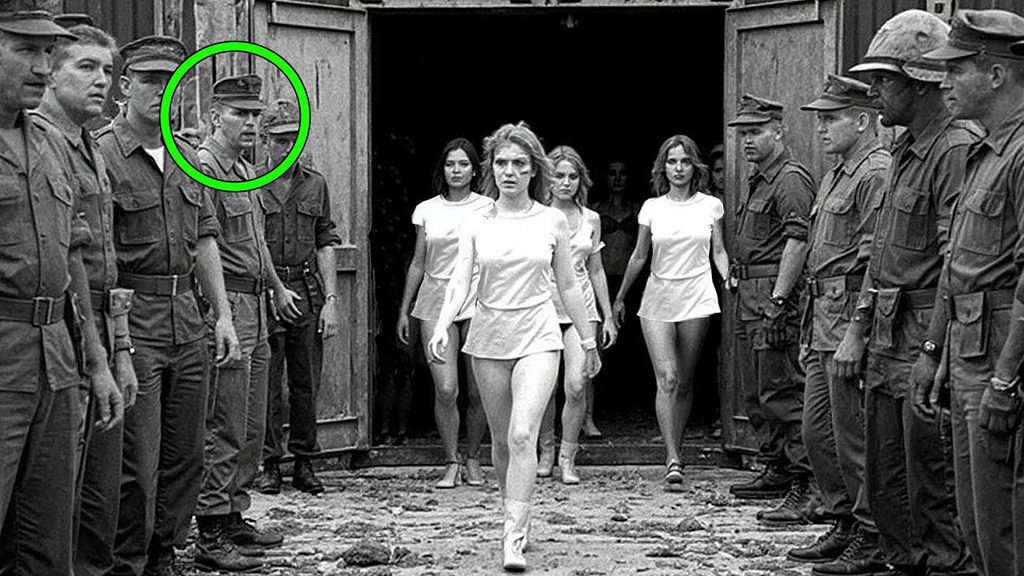
Crowds could be organized through carefully designed shows.
A packed stadium could express its strength even before a single speech was given.
However, individuals have also learned to resist.
Demonstrations took place in the streets, on campuses and in public squares.
In 1965, anti-communist demonstrations were visible in New York in the midst of the Cold War.
Elsewhere, demonstrations took place against the war, racial discrimination, authoritarianism, and social restrictions.
A photograph of a demonstration freezes the crowd.
But she cannot grasp everything that is happening within the crowd.
Each person may have a different reason for being there.
This is why historical interpretation requires caution.
A photograph shows what was visible.
This does not automatically reveal each person’s beliefs.
The same caution is necessary when looking at photographs illustrating ethnic and racial discrimination.
After the attack on Pearl Harbor in December 1941, Japanese Americans faced widespread suspicion and discrimination.
Chinese Americans sometimes feared being mistaken for Japanese because of racial stereotypes and wartime hostility.
A photograph of a Chinese-American woman waving a Chinese flag reflects this atmosphere.
This image is not simply a matter of national identity.
It is also about the fear of being misidentified.
The photograph captures a moment where origins can suddenly become a source of danger.
The history of wars is full of such contradictions.
People can become targets because of assumptions about their origin.
People can be persecuted even if they have served the same country.
People can be treated differently because of their appearance.
And sometimes, the camera becomes the only remaining record of what one felt during those moments in public life.
During the Nazi era, even Jewish veterans of World War I were not protected from anti-Semitic persecution.
Some had served Germany and had received military decorations.
After the Nazis came to power, however, Jewish identity became a basis for exclusion and persecution.
The photograph of a decorated World War I veteran standing near a scene of Nazi intimidation therefore carries a particularly painful historical contradiction.
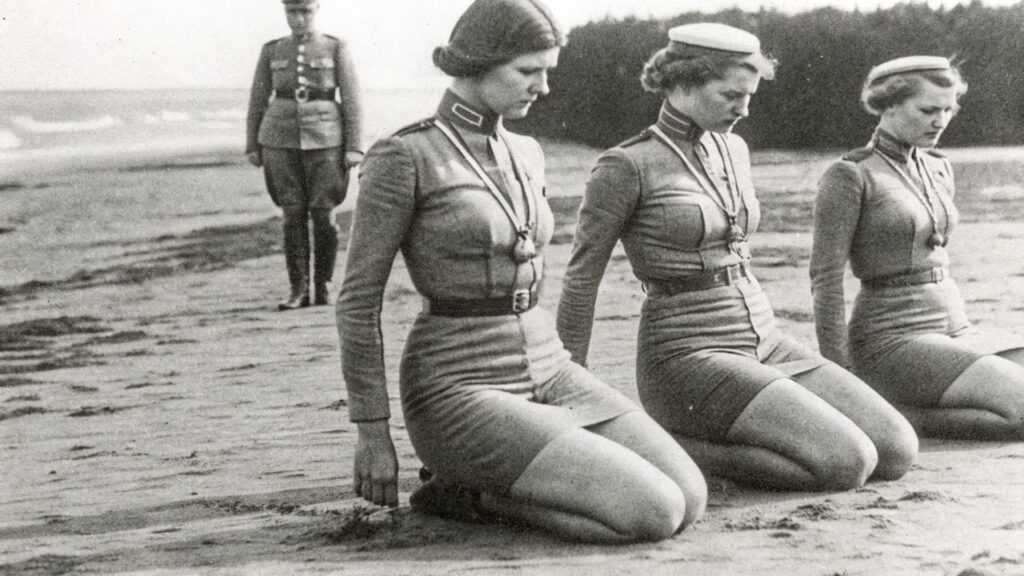
The uniform that once symbolized national service could not protect anyone from racial ideology.
The past had been rewritten around him.
The world had changed its definition of belonging.
This transformation would ultimately lead to catastrophe.
World War II produced some of the most extreme examples of what happens when political ideology turns into institutionalized violence.
However, the photographs also show people who resist, survive and help each other.
In the Pacific, Australian soldiers operated through jungle, rivers and flooded areas.
In North Africa, in Tobruk, soldiers worked under the threat of attacks.
In the Italian mountains, soldiers occupied shelters built into the hillside.
The war was not only taking place in open countryside.
The fighting took place in the desert.
Mountains.
Cities.
Jungles.
Ports.
Factories.
And the oceans.
Each environment presented a different challenge.
Photographs rarely capture the experience in its entirety.
But they leave clues.
A gas mask.
A machine gun.
A muddy uniform.
A mountain refuge.
A damaged building.
A boat.
A char.
Each object becomes an element of the story.
A photograph taken in the Italian Alps shows a mountain refuge located high in the mountains.
The landscape itself becomes an integral part of the military environment.
At such an altitude, the weather conditions can be as dangerous as the enemy.
The First World War had already demonstrated that modern warfare could extend into environments previously considered almost impossible for large-scale military operations.
The mountains became battlefields.
The sky too.
And finally, space.
The evolution is astonishing.
In the 19th century, the steam locomotive symbolized technological progress.
In the 20th century, man launched spacecraft.
Yet, despite all this, people continued to perform the same basic tasks.
They prepared food.
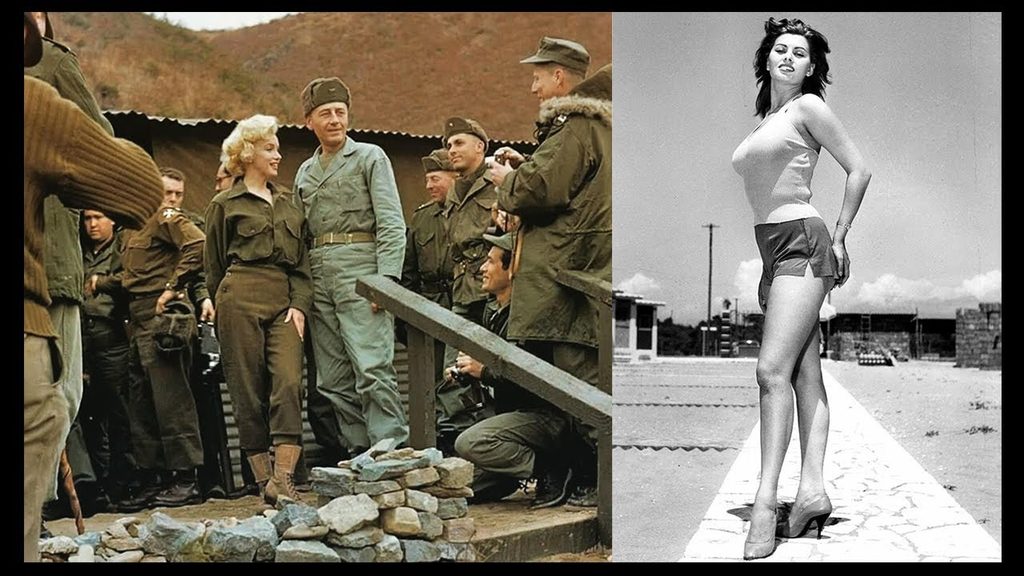
They were cleaning the houses.
They raised children.
They went shopping.
They attended weddings.
They visited restaurants.
They read the newspapers.
They watched shows.
They worked.
They waited.
They said goodbye.
A photograph from 1897 shows a woman churning milk while reading, with a kitten nearby.
The scene is not historically monumental.
That’s precisely why it’s important.
History is mostly made up of moments like this one.
Not every day brings revolution.
Not every morning means a battle.
Most days are punctuated by chores.
Meal.
Work.
Weather report.
Family.
And the little distractions.
The photograph captures a world where domestic work was physically demanding and entertainment was simple.
It was possible to read while working because there were fewer distractions.
A kitten would be enough to make the scene memorable.
More than a century later, our technology has changed to the point of being almost unrecognizable.
Yet, people are still looking for small moments of entertainment amidst the routine.
This continuity is easy to overlook.
The world is changing.
Human nature often evolves much more slowly.
In 1919, A&W began selling its root beer in California, helping to establish what would become one of the oldest still-existing fast-food brands in America.
The business model was simple.
A cold drink.
A customer.
A place to stop.
However, these establishments would eventually become part of a much larger transformation of American culinary culture.
Fast food is associated with automobiles, suburban expansion, and evolving work and leisure patterns.
Once again, the future was hidden in something ordinary.
A small root beer stand didn’t exactly look like the starting point of a global food culture.
But history rarely reveals itself.
That is why photographs are so precious.
They preserve the origins.
They preserve the transitions.
They preserve moments before anyone even knows their importance.
In 1863, a crowd gathered at Gettysburg for the dedication of the National Soldiers’ Cemetery.
Abraham Lincoln was present.
He delivered the Gettysburg Address.
The event was short-lived.
But the words spoken by Lincoln would be etched into American historical memory for generations.
A photograph of the ceremony, seen out of context, might simply show a crowd of men in 19th-century clothing.
Knowing what happened there changes everything.
Suddenly, hats matter.
The gathering is important.
Location is important.
The people matter.
That’s the hidden power of context.
Without context, an old photograph is just an image.
With context, it becomes history.
The same applies to women who worked in factories during the Second World War.
Photographs of women workers in American industry during wartime became associated with the broader cultural image of “Rosie the Riveter”.
These women held jobs in factories and industrial workplaces while millions of men served in the armed forces.
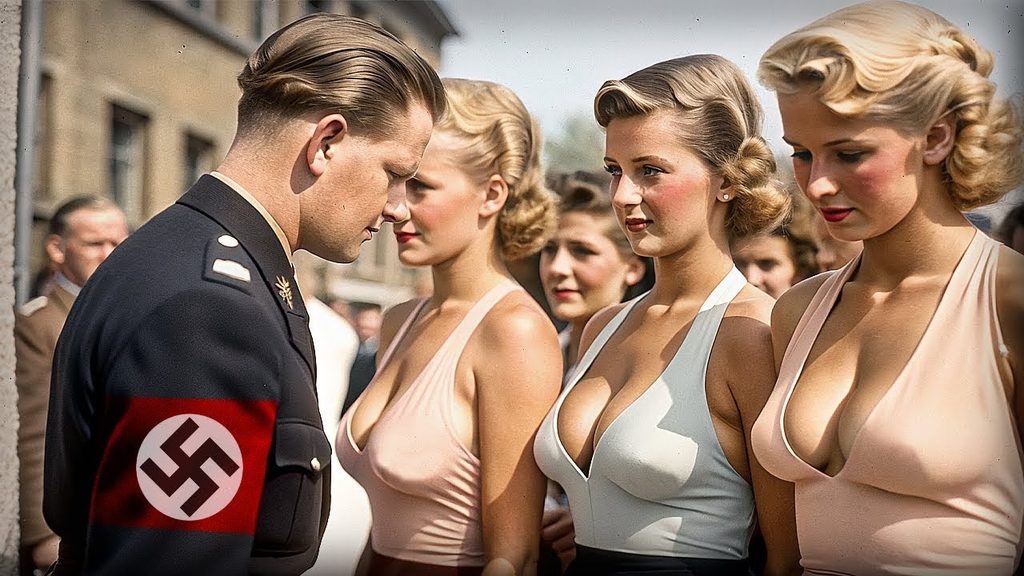
Their work was essential to wartime production.
And their participation challenged preconceived ideas about the type of work women could do.
The social consequences extended beyond the war.
Millions of women have entered workplaces previously dominated by men.
At the end of the war, it was expected that many would resume their traditional roles.
But this experience had permanently changed expectations.
The photographs remained.
They demonstrated what women had already proven they could do.
The same pattern can be observed in transportation, medicine, communications, and entertainment.
Each generation pushes the boundaries of what seems normal.
Sometimes this is done through legislation.
Sometimes thanks to technology.
Sometimes out of necessity.
And sometimes simply because people refuse to remain prisoners of old expectations.
That is why old photographs should not be considered mere curiosities.
These are testimonies of transition.
A woman driving a taxi.
A worker suspended above a skyscraper.
A factory worker manufacturing war materiel.
A child watching television.
A scientist enters an area devastated by a nuclear disaster.
An astronaut returning from the Moon.
A family welcoming a soldier returning home.
A crowd watches the finale of a television episode.
Different moments.
Different worlds.
Yet, each belongs to the same long human history.
Perhaps the most moving photographs are those that show people reunited after years of separation.
A soldier returning home.
A child meets his father.
A family reunited after a long absence.
These moments are easy to understand even without knowing the language of the people photographed.
Emotions are visible in body movements.
Someone is running.
Someone makes contact.
Someone is waiting.
The distance between them disappears.
War can separate people for years.
A photograph can immortalize the moment when this separation finally ends.
And sometimes, history offers us a strange final chapter.
Calamity Jane was photographed at the grave of Wild Bill Hickok in Deadwood, South Dakota.
She had long claimed to have a close connection with Hickok, and after his death in 1903, she was buried near him, thus fulfilling a wish connected with her story.
The Wild West had already become a legend while many of its actors were still alive.
Photographs have helped to transform real people into historical figures.
The same thing happened to outlaws like the members of the Wild Horde.
The line between reality and legend was becoming increasingly difficult to draw.
Here is another warning hidden in old photographs.
A photograph proves that a moment existed.
This does not automatically prove all the stories later told about that moment.
History demands proof.
This requires a comparison.
This requires skepticism.
And sometimes, this means admitting that a caption accompanying an old photograph is incorrect.
This is perhaps one of the most important lessons in the entire collection.
The past deserves our attention.
But it also deserves to be accurate.
A striking photograph loses its value, not the other way around, when invented details are added to it.
The true story is usually convincing enough.
There is no need to create dialogues.
There’s no need to invent patterns.
There’s no need to turn every ordinary person into a hero or a villain.
Photographs already contain something more powerful.
Test.
A trace of a vanished world.
Look again at the woman walking through a ruined city.
The child among the declines.
Workers above New York.
The soldiers in the mountains.
The family is waiting at the train station.
Women entering factories.
The taxi driver.
The astronaut.
The scientist.
The actor.
The politician.
An ordinary person is standing somewhere in the background.
They all arrive within the same grand human chronology.
None of them knew exactly what the future held for them.
This is what makes historical photographs so strangely intimate.
We know more than the people who are there.
We know which technologies have disappeared.
Which buildings survived?
Which governments have collapsed?
Which wars have ended?
Which celebrities became famous?
What accidents have changed the safety rules?
What inventions have transformed everyday life?
What ordinary moments have ultimately become historical records?
But they didn’t know that.
They were simply living.
And perhaps that is the deepest reason to continue looking at photographs of the past.
They remind us that our own lives are also recorded in moments whose future meaning we cannot perceive.
The ordinary street seen through the window.
A family meal.
An employee at his desk.
A child playing.
A train leaving a station.
An urban silhouette.
A new machine that seems revolutionary.
One day, these things may seem as strange to future generations as a horse-drawn carriage, a manual traffic light, or a telephone operator seem to us.
The world of yesteryear seemed modern to those who managed to access it.
Their buildings were new.
Their technology was fascinating.
Their clothes were fashionable.
Their political arguments seem straightforward.
Their future seemed uncertain to them.
Just like the current situation.
That is why these photographs are much more than just windows into history.
They are mirrors.
They show us how quickly the present becomes the past.
And they remind us that history is not written solely during the moments that appear in school textbooks.
It is factory-made.
In the streets.
In the houses.
In train stations.
In hospitals.
On the battlefields.
Inside the laboratories.
Behind the film cameras.
Dinner’s ready.
And in the seconds of silence that precede the shutter release.
A photograph lasts less than a second.
The world around him is at risk of disappearing.
But the image remains.
And sometimes, a single frozen moment is enough to bring back an entire vanished century.
Some content was generated using AI tools (including ChatGPT) and modified by the author for creative, narrative, and historical illustration purposes. Historical facts and important details should be verified with reliable historical sources. AI-generated or reconstructed visuals are provided for illustrative purposes only and should not be interpreted as original historical photographs or archival documents.