
Jeremy Clarkson’s Remarks Ignite Political Debate as Reform UK Claims Growing Support Among British Farmers
Television presenter and farmer Jeremy Clarkson has once again found himself at the centre of Britain’s political conversation after making striking comments about the changing political loyalties of rural Britain.
The remarks gained widespread attention after Zia Yusuf shared video footage of Clarkson discussing British farming and the political mood among farmers. Reform UK supporters quickly described the comments as evidence that the party is making historic inroads into one of Britain’s most traditionally influential voting blocs.
Clarkson’s most widely quoted remark was direct:
“There’s one party in particular that seems to be doing very well with the young farmers that I do know. Caleb tells me all of his friends, all of them, are Reform. And I don’t think there’s a farmer alive who’s Labour anymore.”
The reference to “Caleb” was widely understood to be Kaleb Cooper, Clarkson’s farming colleague whose popularity has grown through the television series Clarkson’s Farm.
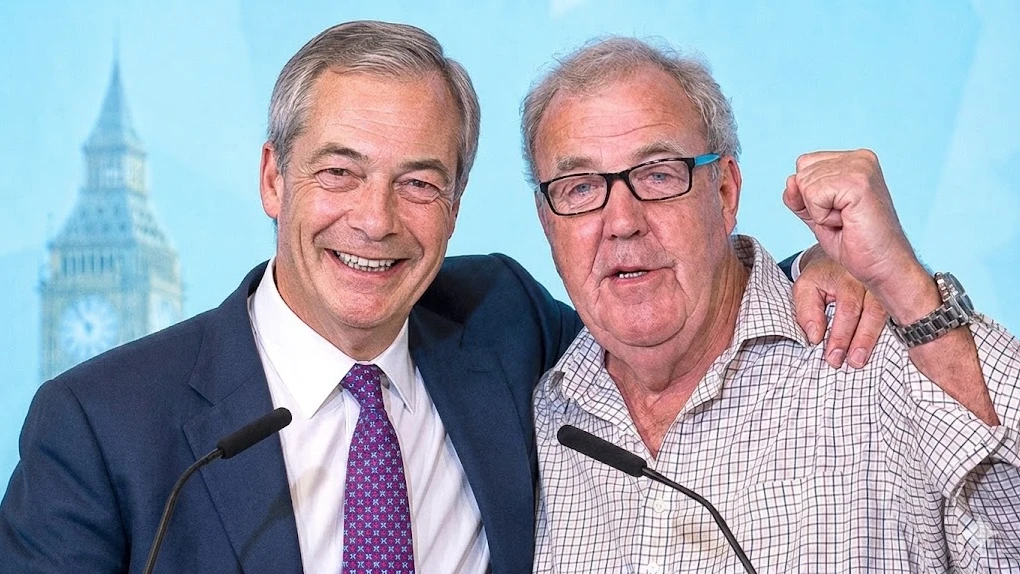
Although Clarkson was clearly describing the views of farmers he personally knows rather than presenting survey data, the comments immediately fuelled debate over whether Britain’s rural political landscape is undergoing a significant transformation.
The Green Party Exchange
The interview became even more politically charged when Clarkson was asked why more farmers were not supporting the Green Party of England and Wales.
His response reflected his characteristic blunt style.
Clarkson suggested that aspects of Green Party policy were fundamentally incompatible with commercial farming, remarking:
“I don’t think the Greens are particularly business-friendly. And farming is a business.”
The exchange resonated with many farmers who argue that agricultural policy is too often discussed primarily through environmental objectives while giving insufficient attention to the economic realities of operating farms.
Supporters of the Green Party, however, argue that sustainable farming and environmental protection are not mutually exclusive and point to policies intended to support long-term food security, biodiversity and climate resilience.
Why Farming Has Become a Political Battleground
Clarkson’s remarks arrive during a period of significant pressure on British agriculture.
Across the sector, farmers have expressed concerns about multiple issues affecting profitability and long-term viability.
Among the concerns most frequently raised are:
- Changes to inheritance tax affecting family farms.
- Rising operating costs.
- Increasing regulatory requirements.
- Labour shortages.
- Energy prices.
- Food import competition.
- Long-term uncertainty following Britain’s departure from the European Union.
Many farming organisations argue that these pressures have accumulated over several years rather than resulting from any single government decision.
The consequence has been growing frustration throughout rural communities, with many farmers expressing dissatisfaction toward the political establishment more broadly.
Reform UK’s Rural Strategy
For Reform UK, agriculture has become an increasingly important part of its political messaging.
The party has sought to position itself as an advocate for rural communities by criticising what it describes as excessive regulation, high energy costs and policies that place unnecessary burdens on farmers.
Reform has also argued that food production and national food security should receive greater priority within government policy.
The party believes these messages resonate particularly strongly in rural constituencies where farming remains central to local economies.
Whether that support translates into electoral success will ultimately depend on voting behaviour rather than anecdotal accounts.
Nevertheless, Clarkson’s comments provide Reform with a high-profile endorsement of the broader political mood it has sought to cultivate among rural voters.
Is Clarkson Speaking for Farmers?
This question lies at the centre of the debate.
Clarkson has become one of Britain’s most recognisable public advocates for farming through Clarkson’s Farm, a programme that has introduced millions of viewers to the economic and practical realities facing modern agriculture.
Many farmers credit the series with increasing public understanding of issues such as unpredictable weather, planning regulations, rising costs and narrow profit margins.
At the same time, Clarkson himself has repeatedly acknowledged that he is an entertainer rather than a politician or agricultural spokesperson.
His observations reflect personal experiences and conversations rather than systematic polling.
Without comprehensive survey evidence, it is difficult to determine whether his statement that “there’s not a farmer alive who’s Labour anymore” accurately reflects nationwide political opinion within Britain’s farming community.
It is best understood as a rhetorical expression of frustration rather than a verified statistical claim.
The Political Context
Clarkson’s comments come at a time when Britain’s traditional party loyalties appear increasingly fluid.
Rural areas that historically leaned toward the Conservative Party have experienced growing political fragmentation in recent years.
Some voters remain loyal to the Conservatives.
Others have shifted toward Reform UK.
Meanwhile, Labour has sought to improve its standing in some rural constituencies while defending its broader agricultural policies.
The emergence of Reform as a serious competitor has complicated this landscape.
Rather than simply drawing support from one party, Reform increasingly competes for voters dissatisfied with both major parties.
If that trend strengthens, rural constituencies could become more competitive than they have been historically.
My Professional Perspective
Jeremy Clarkson’s comments are politically significant—but perhaps not for the reason many headlines suggest.
The real story is not whether every farmer supports Reform UK.
There is currently no publicly available evidence demonstrating unanimous or near-unanimous support for any political party among British farmers.
Instead, Clarkson’s remarks are significant because they reflect a broader sense of dissatisfaction that has become increasingly visible across rural Britain.
Farmers today face pressures unlike those experienced a generation ago.
Profit margins remain tight.

Production costs fluctuate dramatically.
Climate variability affects harvests.
Planning rules, environmental obligations and labour shortages add further complexity.
Regardless of political affiliation, many within agriculture believe successive governments have underestimated the cumulative impact of these pressures.
That dissatisfaction creates political opportunity.
Reform UK has recognised this earlier than many observers expected.
By focusing heavily on farming, energy costs and rural regulation, the party has positioned itself as a vehicle for protest among voters who feel overlooked by Westminster.
Whether that strategy produces long-term electoral success remains uncertain.
Winning support during periods of public frustration is one challenge.
Maintaining that support while developing detailed agricultural policy is another.
Clarkson himself occupies an unusual position in British public life.
He is neither an elected politician nor an agricultural lobbyist.
Yet his influence may exceed that of many political figures because millions of viewers have watched him experience firsthand the realities of modern farming through Clarkson’s Farm.
His opinions therefore carry weight not because they are official, but because many people perceive them as grounded in lived experience.
Another important point often overlooked is that rural politics is becoming more diverse rather than more uniform.
Younger farmers may prioritise different issues from older generations.
Livestock producers often face different challenges from arable farmers.
Tenant farmers frequently have different concerns from landowners.
The idea of a single “farmer vote” has always been something of an oversimplification.
Finally, Clarkson’s remarks illustrate how influential cultural figures can become in political debate without formally endorsing a party.
A single interview can shape national discussion—not because it changes public opinion overnight, but because it gives voice to frustrations that already exist beneath the surface.
Whether those frustrations ultimately benefit Reform UK, the Conservatives, Labour or another party will depend less on celebrity commentary than on which party persuades rural voters that it has credible, workable solutions to the challenges facing British agriculture.
Conclusion
Jeremy Clarkson’s comments have added fresh momentum to an ongoing debate about the political direction of rural Britain. His suggestion that many young farmers are gravitating toward Reform UK has been welcomed by the party as evidence of growing support, while critics caution that personal observations should not be mistaken for comprehensive evidence of nationwide voting intentions.
What is beyond dispute is that farming has become an increasingly important political issue. Rising costs, regulatory pressures, tax concerns and uncertainty about the future of British agriculture have created a climate in which many rural voters are reassessing long-standing political loyalties.
As Britain moves closer to its next general election, the key question may not be whether one celebrity accurately captured the mood of every farmer. Rather, it is whether the growing frustration within rural communities represents a temporary protest or the beginning of a lasting political realignment.
If Britain’s farmers are indeed changing the way they vote, the consequences could extend far beyond the countryside. Rural constituencies have often played a decisive role in shaping parliamentary majorities, and shifts in those areas could influence the balance of power at Westminster for years to come.