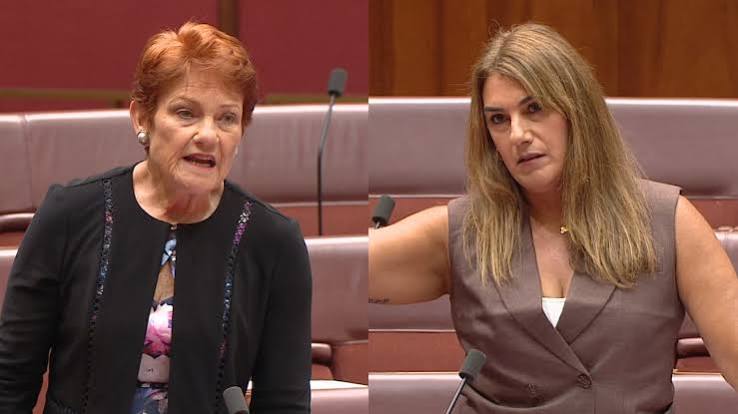
Senate Clash Ignites National Debate as Thorpe and Hanson Trade Accusations of Racism and Insults. u1

The Parliamentary Arena: Dissection of a Broken Political Culture
The March 2, 2026 confrontation in the Australian Senate between Independent Senator Lidia Thorpe and One Nation Leader Pauline Hanson is far more than a passing headline about unparliamentary language. It is a diagnostic snapshot of an institution battling structural erosion, deep demographic fragmentation, and an increasingly volatile political environment.
When two of Australia’s most polarizing public figures trade the words “bitch” and “racist” across the floor of the red chamber, the incident demands an analysis that moves past moral outrage. It reveals how weaponized identity, declining parliamentary standards, and shifting electoral math have collided in Canberra.
+-----------------------------------------------------------------------------------+
|                        THE MARCH 2, 2026 SENATE FLASHPOINT                         |
+-----------------------------------------------------------------------------------+
|  THE CONFRONTATION: Exchanges of "racist" and alleged swearing ("bitch").        |
|  THE IMMEDIATE AFTERMATH: Senate passes formal Censure Motion against Hanson      |
|  (36 to 17) over comments questioning if there are "good Muslims".               |
|  THE INSTITUTIONAL REACTION: Joint Thorpe-Faruqi motion to refer parliamentary     |
|  language/racism rules to Procedure Committee is defeated by major parties.       |
+-----------------------------------------------------------------------------------+
1. The News Story
The Mechanics of the Exchange
The clash occurred on Monday, March 2, 2026, during a debate on a Coalition motion supporting joint US-Israeli military strikes in Iran. As Senator Pauline Hanson addressed the chamber to endorse the action, Independent Senator Lidia Thorpe interjected repeatedly, calling Hanson a “liar”. Following a point of order raised by One Nation Senator Malcolm Roberts regarding the constant interjections, Hanson turned her focus to nearby senators, branding them “un-Australian.”
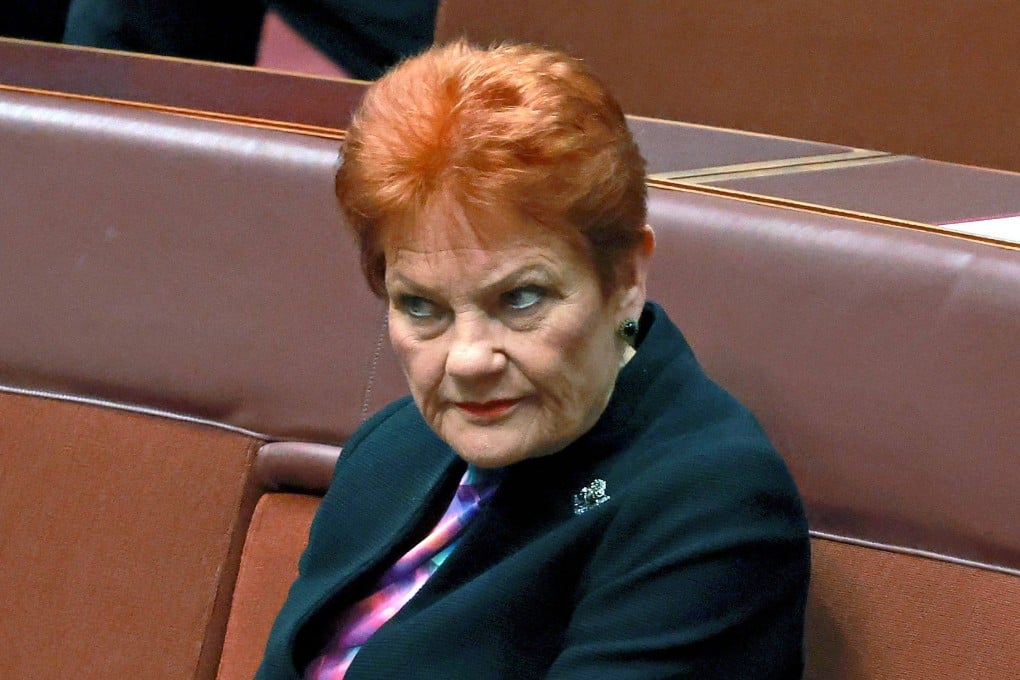
Thorpe instructed Hanson to “sit down” and called her an “absolute disgrace.” Moments later, Thorpe rose on a point of order, stating to the President: “I just got called a bitch by the racist.”
Hanson exited the chamber shortly thereafter, noting she would be “glad to see the back of you in two years’ time”—referencing Thorpe’s public intention not to contest her seat at the next federal election. While Hanson later issued a partial public statement offering an apology “if the public heard me,” she explicitly refused to withdraw the sentiment, claiming she had reached a breaking point due to Thorpe’s persistent interjections. Thorpe countered by framing Hanson’s provocations as a distraction technique designed to mask her alignment with corporate elites.
The Parallel Censure and the Procedure Defeat
Hours after the confrontation, the Senate voted 36 to 17 to pass a formal Censure Motion against Hanson. Moved by Foreign Minister Penny Wong, the censure responded to an interview Hanson gave to Sky News in February 2026, where she questioned whether there were “good Muslims” in Australia.
While Coalition senators condemned Hanson’s remarks as “wrong,” Leader of the Opposition in the Senate Michaelia Cash led her party to vote against the censure, arguing that formal institutional sanctions should not be used as routine political instruments.
+-----------------------------------------------------------------------------------+
|                           THE PARLIAMENTARY TRIFECTA                              |
+-----------------------------------------------------------------------------------+
|                                                                                   |
|  [ Floor Confrontation ] ──► Thorpe & Hanson trade insults during Iran debate.    |
|             │                                                                     |
|             ▼                                                                     |
|  [ Formal Censure ]       ──► Passed 36-17 against Hanson over anti-Muslim remarks. |
|             │                                                                     |
|             ▼                                                                     |
|  [ Procedure Motion ]     ──► Defeated; Labor & Coalition block parliamentary     |
|                               rule changes on racism/sexism.                      |
+-----------------------------------------------------------------------------------+
Three days later, on March 5, Thorpe and Greens Deputy Leader Mehreen Faruqi moved a joint motion to refer parliamentary language, conduct, and standing orders to the Senate Standing Committee on Procedure to systematically address institutional racism and sexism.
Despite Government Senate Leader Katy Gallagher acknowledging that chamber behavior had deteriorated to “unacceptable” levels, both Labor and the Coalition voted the motion down. Thorpe subsequently declared that racism in the Parliament was “routine,” charging that the major parties were adopting One Nation’s cultural posture rather than confronting it.
My Professional Perspective
To view this incident merely as a breakdown in manners is to misunderstand the state of contemporary Australian politics. Having covered political campaigns and institutional crises across democratic nations, I see three structural dynamics beneath this event that rarely receive proper scrutiny: the strategic utility of disruption, the major-party fear of procedural precedent, and the realignment of Australian minor-party politics.
1. The Weaponization of Disruption vs. The Architecture of Provocation
Neither Lidia Thorpe nor Pauline Hanson entered the Senate to play by traditional Westminster rules. Both figures understand that in an era dominated by rapid social media cycles and media fragmentation, spectacle generates political power.
+-----------------------------------------------------------------------------------+
|                        THE DUAL ASYMMETRIC STRATEGIES                             |
+-----------------------------------------------------------------------------------+
|  LIDIA THORPE (Blak Sovereignty)          │  PAULINE HANSON (One Nation)          |
|  ---------------------------------        │  ---------------------------          |
|  - Rejects legitimacy of colonial state.  │  - Positions as anti-elite, populism. |
|  - Uses disruption as anti-racist tool.   │  - Uses culture-war triggers.         |
|  - Target: Major party compromise.        │  - Target: Disaffected working class. |
+-----------------------------------------------------------------------------------+
-
Thorpe’s Model: Thorpe views the Australian Parliament not as a sacred democratic temple, but as an ongoing manifestation of colonial authority. For her constituency, polite adherence to parliamentary standing orders is a form of complicity. By interjecting and calling out perceived racism directly on the floor, she demonstrates non-compliance with a system she views as fundamentally rigged against First Nations people.
-
Hanson’s Model: Hanson’s career has relied on provoking the political establishment into overreactions that reinforce her narrative of anti-elite martyrdom. When major parties censure her, or when political opponents react emotionally in the chamber, it serves as evidence to her base that the “Canberra bubble” is trying to silence their values.
When these two operational models clash, the chamber ceases to function as a place of deliberative policy debate. It turns into a stage where both actors secure the exact media assets they require to feed their respective bases.

2. The Institutional Defense Mechanism: Why Labor and the Coalition Blocked the Procedure Motion
The decision by both major parties to vote down the Thorpe-Faruqi motion on March 5—which sought to overhaul standing orders to eliminate discriminatory language—reveals a significant institutional reality.
+-----------------------------------------------------------------------------------+
|                         THE MAJOR PARTY PROCEDURAL DILEMMA                        |
+-----------------------------------------------------------------------------------+
|                                                                                   |
|  PUBLIC CLAIMS: "Chamber behavior is unacceptable and must improve."             |
|                                                                                   |
|  REALPOLITIK: "Allowing a Procedure Committee overhaul gives crossbenchers a      |
|               mechanism to police major-party debate and derail proceedings."     |
|                                                                                   |
+-----------------------------------------------------------------------------------+
While Labor and Coalition leadership routinely condemn bad behavior, neither party wants to grant an independent procedure committee sweeping powers to police language.
In a chamber where crossbenchers hold the balance of power, expanding the definition of “unparliamentary conduct” to cover broad concepts of systemic racism or microaggressions creates an operational hazard for major-party frontbenchers. Party managers fear that such mechanisms would be weaponized daily by crossbenchers to shut down robust debate on sensitive immigration, defense, and economic policies.
Labor’s refusal to back the motion—despite Foreign Minister Penny Wong moving the censure against Hanson hours earlier—exposes the line the government draws between symbolic moral condemnation and actual structural change.
3. The Shadow of the Electoral Map
This parliamentary hostility is occurring against a backdrop of shifting primary votes across Australia. One Nation’s surge in national and state polling throughout 2025 and early 2026 has altered the strategic calculations of both major parties.
+-----------------------------------------------------------------------------------+
|                         ELECTORAL PRESSURE POINTS (2026)                          |
+-----------------------------------------------------------------------------------+
|  THE COALITION'S FLANK: Must compete with One Nation for outer-suburban and       |
|  regional working-class voters, making them reluctant to support censures.         |
|                                                                                   |
|  LABOR'S BALANCING ACT: Needs to maintain multicultural urban support while       |
|  preventing blue-collar defection to populist right-wing alternatives.             |
+-----------------------------------------------------------------------------------+
The Coalition’s refusal to support the formal censure of Hanson over her anti-Muslim comments—despite Coalition figures explicitly calling her statements “wrong”—was a calculated political choice. Facing pressure over preference flows in critical regional seats (such as the NSW seat of Farrer), the Coalition cannot afford to alienate One Nation voters who view formal censures as establishment overreach.
Conclusion
The March 2, 2026 Senate confrontation and its legislative aftermath signal a deeper shift in how Australian democracy operates. The chamber’s traditional enforcement tools—points of order, warnings from the President, and rare formal censures—were built for a two-party system that assumed a shared consensus on decorum.

That consensus has frayed. When parliamentary outrage becomes a primary asset for political survival, traditional rules lose their deterrent effect.
+-----------------------------------------------------------------------------------+
|                             THE TWO PARALLEL VIEWS                                |
+-----------------------------------------------------------------------------------+
|  VIEW A: "A necessary confrontation against entrenched institutional racism."     |
|  VIEW B: "A disgraceful degeneration of parliamentary standards and debate."     |
+-----------------------------------------------------------------------------------+
As Australia navigates mounting economic pressures, geopolitical friction, and unresolved debates surrounding Indigenous treaty and social cohesion, the federal parliament will remain vulnerable to these disruptive flashpoints.
The ultimate question facing the institution is not whether individual senators can be forced to use better manners, but whether an increasingly divided Parliament can maintain the public’s confidence when its own chamber floor becomes a battleground for the nation’s culture wars.