
Beyond Pauline Hanson: One Nation’s Next Generation Steps Into the Political Arena
For more than a quarter-century, One Nation has been synonymous with one name: Pauline Hanson. From its foundation in the late 1990s to its resurgence in recent years, the party’s identity, profile, and public image have been almost entirely shaped by its founder — a politician known for her uncompromising style, populist appeal, and willingness to challenge mainstream political consensus. But now, as the party records its strongest polling numbers in decades, attention is shifting: if One Nation is to grow into a lasting political force, it will need more than one leader. It will need a team capable of carrying its message forward.
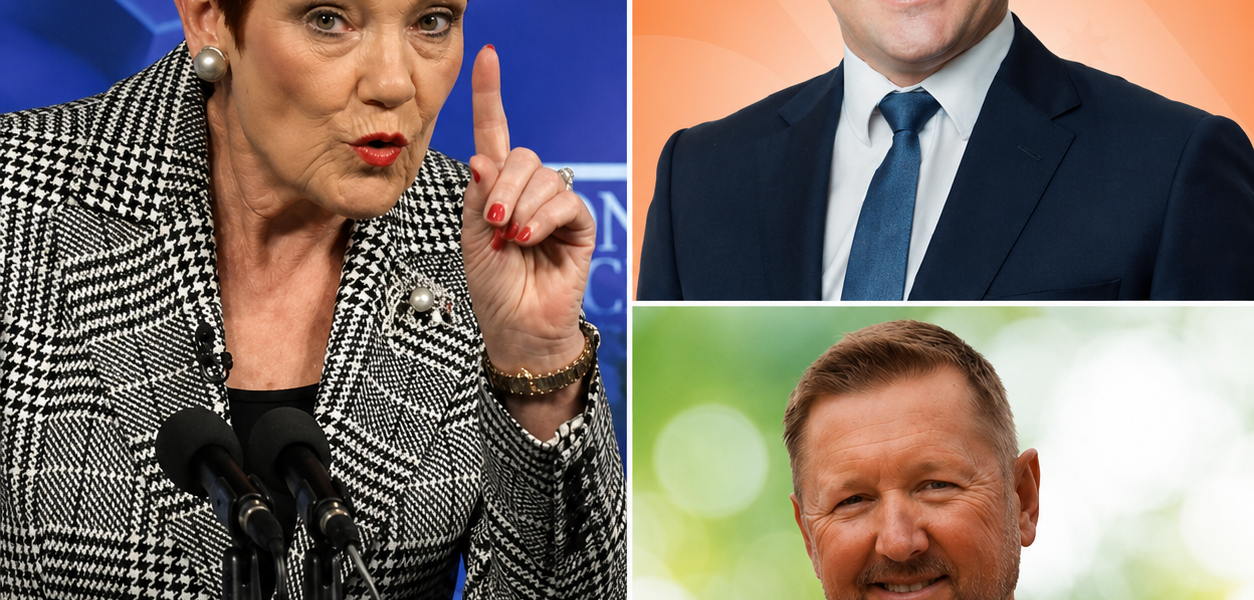
That new generation is beginning to emerge. At the forefront are Sean Bell and Tyron Whitten, two MPs elected to Parliament in the 2025 federal election. They come from different professional backgrounds, neither having followed the traditional career path of political advisors or party insiders, yet they share one key common thread: both say they were inspired by Pauline Hanson to enter public life and advocate for issues they believe have been neglected by Australia’s major parties.

Recent surveys have placed One Nation at around 30% of the primary vote in some regional and marginal seats — a level of support that, if sustained, could see the party expand its representation significantly in federal and state parliaments. This momentum comes amid widespread dissatisfaction with Labor and the Coalition. Voters cite rising living costs, housing shortages, energy price volatility, immigration concerns, and a sense that established parties have lost touch with ordinary communities. One Nation has positioned itself as the alternative choice: a voice for those who feel left behind.
Since taking office, the two new MPs have begun carving out their own profiles. Sean Bell has become One Nation’s most visible spokesperson on issues of national identity, immigration policy, government spending, and social cohesion. His speeches in Parliament and media appearances have drawn strong reactions — support from those who share his views, criticism from opponents who argue his framing of debates risks deepening division. Tyron Whitten, meanwhile, has focused more on regional Australia: advocating for better infrastructure, affordable fuel prices, and policies tailored to communities outside major cities, where One Nation’s support is strongest.

For political observers in Canberra, their rise marks a critical test. Can One Nation evolve from a protest movement centered on one leader into a structured, sustainable political party with a broader leadership bench? Supporters say Bell and Whitten bring fresh energy, new perspectives, and a connection to younger voters and different regions that will strengthen the party. Critics argue that personality alone will not be enough — to maintain support and exercise real influence, One Nation will need to develop detailed, practical policies and demonstrate it can govern responsibly, rather than just oppose.
As the political landscape shifts and competition intensifies, the question is no longer only what One Nation stands for — but who will lead it into the future. And as Pauline Hanson remains the face of the party, Bell and Whitten are quietly stepping out of her shadow to claim their place in Australia’s national conversation.

My Professional Perspective
With 30 years covering Australian politics, elections, and the rise and fall of minor parties across the country, I have watched this pattern unfold many times. One Nation’s current moment is not just about rising poll numbers — it is about the most difficult challenge any protest party faces: moving from being a reaction against the status quo to becoming a viable part of it.
Here is what the emergence of Sean Bell and Tyron Whitten really means, what is at stake, and what lies beneath the headlines.
The Hanson Factor: Strength and Limitation
Pauline Hanson has been a formidable political force. She understood long before many mainstream politicians that a large section of the electorate felt ignored, their concerns dismissed or even ridiculed. She gave those voters a voice — and in doing so, she built a political movement that has endured through highs and lows.
But there is also a well-known political rule: What makes you strong can also become your greatest limitation.
For decades, One Nation’s success depended almost entirely on Hanson’s personal appeal. That gave the party instant recognition, a clear brand, and unwavering loyalty from its base. But it also created a vulnerability: if the party is seen as little more than an extension of one person, it risks appearing fragile, without a clear future beyond her leadership. This is why the arrival of Bell and Whitten is so significant. They are not just new faces — they are proof of concept: can the party exist and grow without relying on one single figure?
That is why their performance is being watched so closely. They represent the bridge between One Nation’s past and its potential future.
Two Different Paths, One Shared Mission
It is striking that both MPs come from outside traditional politics. Sean Bell and Tyron Whitten did not climb the ladder through party headquarters or serve years as advisors. They bring the kind of background that appeals to One Nation voters — people who believe career politicians are out of touch.
But this also brings a challenge. Having real-world experience is an asset, but translating that into coherent policy and parliamentary influence takes time and skill. In my years of reporting, I have seen many promising outsiders enter politics only to struggle when faced with the complexity of legislation, the demands of scrutiny, and the reality of compromise.
So far, they have chosen different areas to focus on — Bell on national issues that play well in the media, Whitten on regional concerns that are the party’s electoral heartland. That division of labor makes strategic sense. It allows One Nation to speak to different parts of its support base and demonstrate a broader policy reach.
The Big Test: From Protest to Governance
This is the critical question: Can One Nation evolve from a party that says what is wrong into a party that explains how to fix it?
Right now, its support comes largely from dissatisfaction. Voters are saying “no” to Labor and the Coalition, and choosing One Nation as an alternative. But as every minor party eventually discovers, sustained success requires more than opposition — it requires credibility. If One Nation wins more seats, it will have more power to shape laws, negotiate budgets, and hold the balance of power. At that point, voters will demand answers: What exactly will you do? How will it work? What will it cost?
Supporters see Bell and Whitten as part of that transition — bringing fresh thinking to build stronger policies. Critics warn that so far, the party has relied more on broad statements than detailed plans. As one analyst put it to me recently: “It is easy to criticize housing prices; it is much harder to design a policy that builds more homes without driving costs even higher.”
That is the difference between protest and responsibility — and it is the hurdle One Nation must now clear.
The Image Challenge: Broadening Appeal
One Nation also faces a public relations challenge. For many years, it has been painted by opponents as narrow, divisive, and extreme. Hanson’s style and rhetoric have reinforced that image in the minds of many voters. For Bell and Whitten, the task is twofold: they must keep the core support energized, while also reaching voters who agree with some of their concerns but hesitate to vote for the party because of its reputation.
This is a delicate balancing act. If they sound too much like their founder, they risk reinforcing the old image. If they sound too different, they risk alienating their base. It is a tightrope walk — and one that requires political skill and consistency.
The Unanswered Questions
As this new generation steps forward, there are four key questions that will define their success:
- Will they develop clear, costed policies? Strong words alone will not be enough to maintain trust. Voters will want to know exactly how their plans work and what trade-offs they involve.
- Can they build coalitions? In Australian politics, minor parties rarely govern alone. They must negotiate. Will they be seen as constructive partners or as obstacles to progress?
- Can they unify the party? Growing pains are inevitable. With more representatives and broader representation, internal differences may emerge. Will the leadership structure evolve to manage this?
- Will they broaden their appeal without losing their identity? The party needs to expand its reach, but not at the cost of the values and concerns that brought voters to it in the first place.
Beyond the Polls: What This Means for Australian Politics
The rise of Bell and Whitten also reflects a much bigger shift. Australian politics is no longer dominated by two major parties. It is becoming more fragmented, more competitive, and more responsive to changing public sentiment.
One Nation is part of that change, alongside other minor parties and independents. Their growth shows that voters want more choice — but it also means the system becomes more complex. With more voices in Parliament, there is greater demand for clarity, transparency, and accountability from every representative, new or established.
Conclusion
The emergence of Sean Bell and Tyron Whitten is more than just a change of faces. It is a moment of transition for One Nation — a test of whether it can turn a protest movement into a lasting political force.
Pauline Hanson gave the party its voice and its purpose. Now, Bell and Whitten must give it its future. They face high expectations from supporters and close scrutiny from critics. If they succeed, they could reshape the party and make it a permanent fixture in Australian politics. If they struggle, One Nation may remain what it has often been: a powerful voice of protest, but not a governing alternative.
As the political landscape continues to shift, one truth remains: Poll numbers tell us what voters feel today — but policy and performance tell us who they will trust tomorrow.
So as we watch this new generation step into the spotlight, the question is not just whether they can win more headlines — it is whether they can deliver real solutions for the people they represent. And in the end, that is the only test that truly matters.