Old Protest Footage of Shabana Mahmood Resurfaces, Renewing Debate Over Past Activism and Public Office. n1

The Digital Ghost in Westminster: What a Resurfaced 2014 Protest Video Tells Us About Power, Memory, and Modern Politics
In the high-voltage arena of contemporary British politics, the past rarely stays buried. It sits quietly in digital cloud storage, waiting for the precise moment when a backbench campaigner becomes a senior government minister—and when a decade-old piece of video footage can be transformed into a weapon of political warfare.
That reality returned to the forefront of Westminster strategy when a 2014 video clip featuring Shabana Mahmood, the senior Cabinet minister and Member of Parliament for Birmingham Ladywood, re-emerged across social media feeds, independent news outlets, and political talk shows.
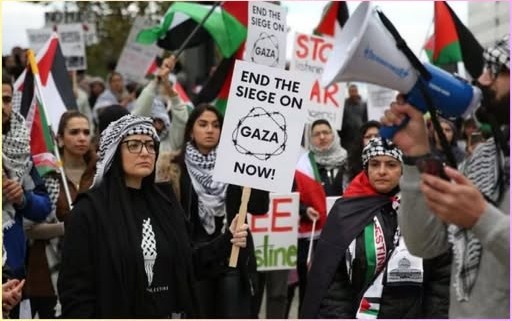
The revived footage dates back to August 2, 2014, during a period of intense military escalation in Gaza. At the time, Mahmood was a rising thirty-four-year-old Labour backbencher and Shadow Treasury Minister. The video captures her alongside approximately 200 activists participating in a “die-in” and picket outside—and inside—a Sainsbury’s supermarket branch on Union Street in central Birmingham. The demonstration aimed to pressure the retail giant to cease stocking goods originating from illegal Israeli settlements in the occupied West Bank.
In the original footage, recorded on a handheld camera and originally uploaded to YouTube, Mahmood speaks directly to the lens, detailing the operational impact of the demonstration:
“It’s half past three and the store has actually just shut as a result of the peaceful protest. That’s about four and a half hours worth of business that Sainsbury’s is losing for supporting goods from the Israeli settlements which are illegal under international law.”
At the time of the original incident in 2014, the demonstration ignited a fierce internal party squabble. Ed Miliband’s Labour leadership issued statements attempting to distance the party from store closures and unilateral boycotts, while Shadow Chancellor Ed Balls defended Mahmood’s personal integrity, describing her as a “hugely valued member of my team” while acknowledging a “difference of view” regarding boycott tactics. Communal organizations, including the Jewish Leadership Council, condemned the protest for promoting public disorder that forced a business to shutter.
                [ AUGUST 2014: BIRMINGHAM SAINSBURY'S PROTEST ]
                • ~200 activists execute a "die-in" inside/outside store
                • MP Shabana Mahmood speaks on video noting 4.5-hour closure
                • Miliband leadership distances; Ed Balls defends her integrity
                                       │
                                       ▼
                   [ A DECADE IN DIGITAL STORAGE (2014–2024) ]
                • Mahmood rises through Labour shadow cabinet
                • Labour secures governing majority; Mahmood named to senior Cabinet role
                                       │
                                       ▼
                   [ RESURFACING & VIRAL RE-CIRCULATION ]
                • Video spreads rapidly across X, TikTok, and commentary shows
                • Sparks nationwide debate on political consistency & protest laws
A decade later, the political landscape could not be more different. Mahmood no longer sits on the opposition backbenches; she sits at the apex of British executive power, holding one of the most senior Great Offices of State in the UK Cabinet, overseeing key aspects of the nation’s justice and legal architecture.

The sudden recirculation of the ten-year-old video sparked immediate, polar opposite reactions across the political spectrum:
-
Supporters and Allies: Emphasize the crucial importance of historical context. They point out that in 2014, Mahmood was acting as an energetic constituency MP expressing a widely held view on international law regarding West Bank settlements. They argue that political activism is a normal feature of a healthy parliamentary democracy and that elected officials naturally evolve as they transition from opposition campaigning to executive governance.
-
Critics and Political Opponents: Assert that public officials must face enduring accountability for their past conduct and rhetoric. Opponents argue that advocating tactics that led to the temporary shutdown of a commercial retail store stands in sharp tension with her current responsibilities for upholding public order, managing police resources, and enforcing protest legislation.
-
Pro-Palestinian Campaigners: Ironically, critics from the left and human rights groups have also weaponized the video from the opposite angle. They compare Mahmood’s 2014 direct-action participation with her recent votes and government policies curbing disruptive street demonstrations, accusing her of abandoning the very tactics she once used to build her political profile.
As digital view counts surged into the millions, neither Downing Street nor Mahmood issued a reactionary press statement, opting instead to let the government’s current policy agenda speak for itself. But the episode has reopened a fundamental debate in British public life: how should a democracy judge a leader whose past activist instincts clash with their present institutional duties?
My Professional Perspective
When you cover political campaigns and government administrations for three decades, you learn that nothing in politics is ever truly forgotten; it is merely archived.
When that 2014 footage of Shabana Mahmood lying on the floor of a Birmingham supermarket began lighting up smartphone screens across the United Kingdom, it was not an accidental algorithm glitch. It was a calculated reminder of how the modern digital architecture has permanently altered the lifecycle of political power.
To understand why this ten-year-old video matters—and why it cuts far deeper than a routine political spat—we have to look past the partisan outrage and examine the hidden structural mechanisms at play.
+-----------------------------------------------------------------------------------+
|               THE DUAL-FRONT CRITIQUE OF RESURFACED HISTORICAL FOOTAGE            |
+-----------------------------------------------------------------------------------+
| CRITIQUE FROM THE RIGHT / OPPOSITION              | CRITIQUE FROM THE LEFT / ACTIVISTS|
+---------------------------------------------------+-------------------------------+
| • Questions commitment to commercial public order | • Accuses minister of political hypocrisy
| • Highlights disruption of retail businesses      | • Contrasts 2014 activism with strict laws
| • Claims double standard on protest enforcement   | • Points to abstentions on key votes
| • Framing: "Too radical for senior governance"    | • Framing: "Abandoned core principles"
+---------------------------------------------------+-------------------------------+
The Invisible Friction: The Shift from Activist to Institutionalist
The fundamental tension animating this story is the dramatic psychological transition every politician must make when they step out of opposition and into executive office.
In opposition—especially as a backbench Member of Parliament representing a constituency with deep, passionate demographic ties to international human rights issues—your primary tool is moral advocacy. You carry a megaphone, you join demonstrations, you speak in stark ethical terms, and you use civil friction to force powerful institutions to pay attention.
In government, your primary tool is monopoly on legal force and administrative stability. You no longer sit outside the building throwing rocks at the glass; you own the building. You are responsible for the police officers patrolling the streets, the courts processing arrests, and the economic infrastructure keeping stores open and workers paid.
               [ THE EVOLUTION OF POLITICAL POWER ]

    OPPOSITION / BACKBENCH MP             EXECUTIVE CABINET MINISTER
    ┌─────────────────────────┐           ┌─────────────────────────┐
    │ • Primary Tool: Advocacy│           │ • Primary Tool: Law     │
    │ • Tactic: Direct Action │   ═════►  │ • Tactic: Order & Policy│
    │ • Target: Institutions  │           │ • Target: Stability     │
    │ • Currency: Passion     │           │ • Currency: Authority   │
    └─────────────────────────┘           └─────────────────────────┘
What makes the Mahmood footage so volatile is that it visually captures this exact transformation in high definition.
When citizens watch a sitting senior minister boasting about shutting down a commercial grocery store for four and a half hours, it creates an immediate cognitive dissonance. For right-leaning critics, it raises questions about whether the government’s top legal officers truly respect commercial property and public order. For left-leaning activists, watching that same minister now support policies that restrict disruptive street protests feels like the ultimate betrayal.
Both sides are reacting to the exact same phenomenon: the jarring visual evidence of a politician crossing the chasm from protest to power.
The Weaponization of the Digital Archive
Thirty years ago, if an opposition MP attended a controversial rally in Birmingham, the incident might have warranted a three-paragraph story in the local Birmingham Post or a twenty-second clip on regional evening television. Within forty-eight hours, the physical newspaper would be lining birdcages or wrapped around fish and chips, and the television tape would be filed away in a dusty broadcast vault accessible only to archivists.
Today, every public gesture is recorded in 1080p high definition, indexed by search engines, and preserved forever in cloud servers.
The resurfacing of the Mahmood video highlights three distinct realities of modern political warfare:
-
The Death of Context: The digital archive strips away the specific atmosphere of 2014—the specific diplomatic crisis in Gaza, the domestic political posture of the Miliband opposition, and the local constituency dynamics of Birmingham Ladywood. It presents a ten-second clip as if it occurred ten minutes ago, forcing the viewer to evaluate 2014 actions through the hyper-polarized lens of present-day politics.
-
Asymmetric Re-circulation: Digital algorithms do not promote old videos randomly. Material resurfaces because political strategists, activist networks, or independent media channels strategically deploy it at moments of maximum political vulnerability—such as during major cabinet reshuffles, crucial legislative votes, or high-stakes police operations.
-
The Unforgiving Standard: Modern voters increasingly demand total, uninterrupted ideological consistency from their leaders across decades. The political system historically allowed room for leaders to change their minds, mature, or adapt their tactics as they assumed greater responsibility. The digital archive treats any evolution in thought as hypocrisy.
The Overlooked Detail: Why Her Defenders Are Silent on Policy
What many political commentators have missed in this news cycle is the peculiar silence from mainstream government figures. Why hasn’t Downing Street launched a robust media push to defend Mahmood’s 2014 actions or explain her evolution?
The answer lies in tactical communications.
If the government aggressively defends her 2014 protest, they alienate moderate, law-and-order voters who are deeply concerned about street disruptions, business economic losses, and public safety. Conversely, if the government explicitly apologizes for her 2014 actions, they further alienate the Muslim community and progressive voters in urban constituencies who viewed her stance against illegal West Bank settlements as a rare moment of principled courage.
Therefore, the official strategy is silence: allow the viral wave to wash over the media landscape while keeping the Minister focused on her current departmental brief. It is a classic crisis-management tactic designed to deny the video fresh oxygen, but it leaves fundamental constitutional questions completely unanswered.
Unanswered Questions That Demand Public Clarity
As an investigative analyst, I look for the systemic gaps that simple headlines ignore. To evaluate the true impact of this resurfaced video, the public deserves answers to several key questions:
-
Where does the boundary sit between legitimate political protest and illegal public nuisance for an elected official? If a backbench MP participates in an action that forces a business to close, does that set a precedent that restricts their authority to oversee public order laws later in their career?
-
How does the Crown Prosecution Service and law enforcement view historical participation in direct action by current ministers? Does a minister’s past activism create perceived conflicts of interest when approving new public order frameworks or reviewing police protest guidelines?
-
What is the long-term impact on political recruitment? If young activists know that every rally attended, every banner held, and every speech delivered on a street corner in their twenties will be weaponized against them if they run for Cabinet in their fifties, will future leaders simply avoid grassroots politics altogether?
The resurfacing of Shabana Mahmood’s 2014 protest video is far more than a passing social media storm; it is a vivid case study in how the digital age has forever altered the social contract between elected officials and the public.
It reveals a political system struggling to reconcile two opposing truths: that democracy requires citizens—including future leaders—to engage passionately in public protest, but executive governance requires those same leaders to enforce the rule of law, protect commerce, and maintain civic stability.
Mahmood’s journey from a 2014 Birmingham storefront floor to the highest corridors of UK government power illustrates the profound weight of institutional responsibility. Whether voters view her journey as a natural maturation of a dedicated public servant or an opportunistic retreat from activist principles depends entirely on which side of the political divide they occupy.
What is undeniable, however, is that the digital vault never closes. In modern democracy, every word spoken, every floor laid upon, and every protest attended remains permanently recorded, waiting to test the legitimacy of those who claim the right to govern.
It leaves us with a profound question that will define the future of democratic leadership:
In an era where every past action is recorded forever, can our political system allow leaders the grace to evolve, or will the digital archive render genuine political maturity impossible?