Illegal Channel Crossings and the Border Debate: Public Pressure, Political Divisions, and the Search for Effective Solutions. n1

The Channel Paradox: Why Britain’s Small Boats Crisis Remains a Trap for Left and Right Alike
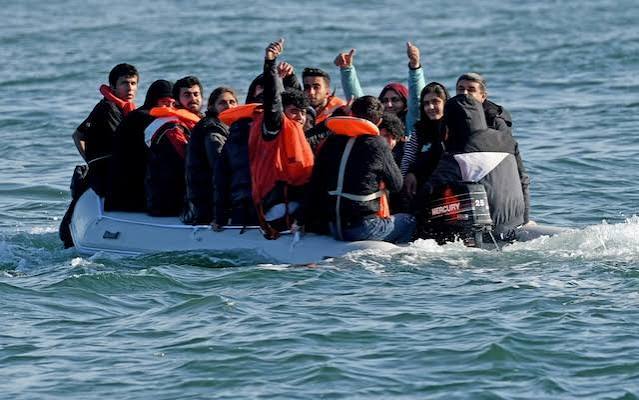
It is an image that has defined British political discourse for nearly a decade: a rubber dinghy, packed far beyond capacity, emerging from the morning fog of the Dover Strait toward the grey cliffs of Kent.
Over the past seven years, the 21-mile stretch of water separating northern France from southern England has transformed from one of the world’s busiest commercial shipping lanes into Europe’s most politically explosive migration corridor. What began in 2018 as a trickle of small boats has swollen into a massive, highly organized illegal transit route. Since 2018, more than 200,000 individuals have been detected making the perilous crossing in unseaworthy vessels.
                [ THE CROSSING CYCLE ]
                           │
      ┌────────────────────┴────────────────────┐
      ▼                                         ▼
[ FRENCH COAST: LAUNCH ]               [ DOVER STRAIT: INTERCEPT ]
• Smuggling gangs assemble craft       • Border Force & RNLI response
• 60+ migrants packed per dinghy       • Processing at Manston facility
• Highly hazardous departure           • Immediate asylum registration
      │                                         │
      └────────────────────┬────────────────────┘
                           ▼
              [ WESTMINSTER POLITICS ]
      • Headline outcry & media scrutiny
      • Policy declarations & deterrence deals
      • Systemic backlog & processing friction
Despite successive waves of legislative overhauls, bilateral treaties, enhanced surveillance drones, and multi-million-pound enforcement pacts signed between London and Paris, the flow continues whenever weather windows open across the Channel. In 2025 alone, over 41,000 people crossed the Channel in small craft—marking one of the highest annual volumes on record.
The mechanics of the operation have evolved into a lethal game of scale. Human smuggling networks, operating across Europe with criminal sophistication, have adapted to increased shore patrols by using larger, flimsier industrial inflatables. While fewer total boats are launching compared to peak years, the average number of passengers crammed onto each craft has climbed to over 60 people—exponentially increasing the peril when engines fail or tubes puncture in open water.

The political fallout in Westminster has been relentless. Channel crossings consistently rank among the top domestic concerns for the British electorate, driving bitter debates over national sovereignty, border security, housing costs, and human rights. Government ministers pledge to “smash the gangs” and restore order to the nation’s borders, while humanitarian organizations emphasize that over 90% of those arriving by small boat immediately claim asylum, with a significant majority fleeing conflict and persecution in countries like Eritrea, Afghanistan, Iran, and Sudan.
As the administrative cost of emergency hotel accommodation and legal processing continues to run into billions of pounds annually, the United Kingdom finds itself caught between international treaty obligations, public demands for enforcement, and the cold economic reality of global migration.
A Deeper Side of the Story That Many People Have Never Considered
When you cover global migration and statecraft across three decades, you quickly learn that headlines thrive on simple villains and quick fixes, while reality operates on structural mechanics.
The public conversation surrounding the English Channel is almost entirely built on a fundamental political illusion: the belief that small boat arrivals can be solved strictly at the shoreline.
To understand why every government policy—regardless of which political party holds power in Whitehall—continually runs aground, you have to look beyond the viral video clips of beach landings and examine the hidden structural machinery beneath the crisis.
+-----------------------------------------------------------------------------------+
|                  THE REALITY GAP IN BRITISH MIGRATION POLICY                      |
+-----------------------------------------------------------------------------------+
| THE POLITICAL HEADING                             | THE STRUCTURAL REALITY        |
+---------------------------------------------------+-------------------------------+
| Focus: Small boats dominate political news       | Small boats represent ~40% of asylum claims |
| Promise: "Stop the boats" via physical deterrence | Push factors originate in global conflicts |
| Narrative: Infiltration by economic opportunists  | 60%+ historical grant rate for boat arrivals |
| Strategy: Unilateral domestic legislation        | Requires deep international reciprocity |
+---------------------------------------------------+-------------------------------+
1. The Asymmetry of the Smuggling Business Model
The primary reason law enforcement agencies struggle to halt Channel crossings is that human smuggling networks possess an operational agility that state bureaucracies simply cannot match.
Smuggling syndicates do not view migrants as passengers; they view them as disposable inventory in a low-margin, high-volume logistics business. When British and French authorities increase beach patrols along the Calais coastline, the gangs simply shift their launch points further south toward the Somme estuary or north toward Belgium. When authorities confiscate small engines, the gangs source higher-horsepower industrial motors through unmonitored supply chains in Eastern Europe.
                   [ THE SMUGGLING ENGINE ]

    SUPPLY SIDE                       OPERATIONAL ADAPTATION
    ┌─────────────────────────┐       ┌─────────────────────────┐
    │ • Regional Displacement │       │ • Larger craft (60+ pax)│
    │ • Social Media Ads      │ ════► │ • Shifted launch zones  │
    │ • High-Fee Payments     │       │ • Decentralized networks│
    └─────────────────────────┘       └─────────────────────────┘
Furthermore, social media platforms have effectively decentralized human smuggling. A prospective migrant in Dunkirk or Istanbul does not look for a shadowy figure in a alleyway; they open an app on their smartphone, check reviews, compare prices, and arrange payment via informal hawala money transfers that leave zero digital paper trails. Government deterrence slogans posted on billboards or televised press conferences do not reach these digital networks—or if they do, they are quickly neutralized by smugglers who convince clients that once they reach UK territorial waters, maritime law guarantees safe transport ashore.
2. The Optical Distortion: Why 5% of Migration Consumes 90% of Political Energy
Perhaps the most overlooked detail in the entire British migration debate is the staggering disconnect between visual visibility and statistical weight.
Dinghies arriving on a beach provide perfect, high-impact television content. They create an immediate sense of crisis, loss of control, and physical intrusion. Because of this visual power, small boat crossings dominate parliamentary debates and front-page news cycles.
Yet, in terms of total net migration into the United Kingdom, small boat arrivals represent only a fraction of overall figures:
-
The vast majority of individuals who enter and remain in the UK do so via legal channels—such as work visas, international student visas, family reunification, or visa overstays.
-
Even within the UK asylum system itself, a substantial percentage of claimants arrive legally on short-term visas before applying for protection.
By focusing almost the entire national political bandwidth on stopping small craft in the Channel, governments create a trap for themselves. They tie their perceived competence to an outcome that is heavily dependent on summer weather patterns and global displacement crises over which they have zero direct control. When a warm, calm week in August brings several thousand arrivals, the government appears instantly powerless—regardless of whether its broader immigration processing or enforcement systems are functioning effectively.
+-----------------------------------------------------------------------------------+
|               TOTAL UK MIGRATION & ASYLUM PROFILE (ANNUAL CONTEXT)               |
+-----------------------------------------------------------------------------------+
| MIGRATION CATEGORY                 | PRIMARY ENTRY MECHANISM                      |
+------------------------------------+----------------------------------------------+
| Work & Study Migration (Majority)  | Legal Visa / Border Inspection               |
| Visa-Based Asylum Claims           | Inbound Air Travel / Overstaying             |
| Irregular Channel Crossings        | Maritime Inflatables (~40,000–45,000/year)   |
+------------------------------------+----------------------------------------------+
3. The Administrative Paralysis: The Hotel Backlog Engine
The true bottleneck of the small boats crisis is not situated in the waters of the Channel; it sits inside the administrative processing centers of the Home Office.
When a small boat is intercepted, the individuals on board are brought ashore, medically screened, and registered. Because international maritime and refugee law prohibits returning individuals to sea or deporting them without examining their protection claims, the UK state assumes immediate legal custody and duty of care.
For years, the initial decision-making process for asylum applications suffered from severe delays, creating an immense backlog of tens of thousands of unresolved cases. During these multi-month or multi-year waiting periods, applicants are legally barred from seeking formal employment, leaving the government responsible for providing housing, basic allowance, and medical coverage.
This dynamic fuels a self-perpetuating crisis:
-
Slow Processing Times: Create a backlog that forces the state to procure emergency hotel space at immense taxpayer expense.
-
High Fiscal Costs: Pushes the issue to the top of political news agendas, creating pressure for swift “deterrence” laws.
-
Legal Friction: Deterrence policies often face immediate judicial challenges under international conventions, leading to further procedural delays and expanding the backlog even more.
Without a streamlined, highly resourced processing infrastructure capable of making rapid, fair, and enforceable decisions—granting status swiftly to genuine refugees while promptly returning those whose claims fail—no amount of coastal security will resolve the underlying pressure.
The small boats crisis in the English Channel is not merely a border control challenge; it is a profound test of state capability, diplomatic realism, and political honesty.
For years, British political discourse has treated irregular migration as a problem that could be solved with a single bold slogan or a silver-bullet policy. But as long as severe push factors—war in East Africa, political repression in the Middle East, and economic collapse across global regions—continue to drive people toward Europe, the English Channel will remain a destination for those willing to risk everything on an inflatable craft.
True resolution requires moving beyond emotionally charged rhetoric and confronting hard truths:
-
Border security is impossible without deep, unvarnished diplomatic cooperation with European neighbors.
-
Smuggling networks cannot be dismantled without targeting their international financial clearinghouses.
-
Public confidence cannot be restored until the domestic administrative machinery processes claims with speed, fairness, and structural competence.
Until the national conversation shifts from chasing political headlines to fixing systemic mechanics, the boats will continue to cross, the political debates will continue to rage, and the waters between Dover and Calais will remain a mirror reflecting the broader fractures of our world.
It leaves us with a fundamental question for modern democracies:
Can a nation build a migration policy that commands public trust and secures its borders, while simultaneously honoring its legal and moral obligations to human beings in flight?