NSW Cannabis driving bill stalls as Labor admits it never modelled the cost to your green slip. u1

The Dilemma at the Wheel: Medical Necessity, Digital Privacy, and the Battle over NSW Drug-Driving Laws
The Midnight Stall on Macquarie Street
On Thursday night, August 6, in the upper chamber of the Parliament of New South Wales, the clock struck 10:00 PM. Under standing orders, the President of the Legislative Council brought formal proceedings to an abrupt halt mid-speech, cutting off Coalition member Natasha Maclaren-Jones while she was still addressing the floor.
The stalled legislation—the Road Transport Legislation Amendment (Medical Cannabis and Driving Offences) Bill 2026—had cleared the Legislative Assembly only twenty-four hours earlier. The Minns Labor government anticipated navigating the bill through the Legislative Council before the weekend adjournment. Instead, the debate reached the statutory curfew with no final division taken, holding over the final vote to the next parliamentary sitting day. While Labor is projected to marshal the requisite votes upon resumption, the forced pause exposed fundamental policy disputes that had remained largely unscrutinized during the bill’s initial passage.
+--------------------------------------------------------------------------------------------------+
|                            LEGISLATIVE ARCHITECTURE & ESCALATION                                 |
+---------------------+----------------------------------------------------------------------------+
| Eligibility         | Unrestricted NSW driver license holders with verified medical cannabis     |
|                     | prescriptions. Learners, P-platers, and heavy vehicle operators excluded.  |
+---------------------+----------------------------------------------------------------------------+
| Registration        | Voluntary enrolment via Transport for NSW portal; completion of safety     |
|                     | education module; condition code generated on digital driver's license.    |
+---------------------+----------------------------------------------------------------------------+
| Roadside Protocol   | Standard oral swab testing remains unchanged; positive initial detection   |
|                     | triggers mandatory, immediate 24-hour driving ban for all drivers.         |
+---------------------+----------------------------------------------------------------------------+
| Permitted Threshold | Negative/no charge if laboratory analysis confirms THC is below 50 ng/mL   |
| (Laboratory)        | in oral fluid or below 3.5 ng/mL in blood, with zero alcohol or illicit    |
|                     | substances detected.                                                       |
+---------------------+----------------------------------------------------------------------------+
| Three-Strike Rule   | • Strike 1 (within 2 yrs): Formal warning letter; no demerits or fine.     |
| (Above Threshold)   | • Strike 2 (within 2 yrs): Second formal warning letter.                   |
|                     | • Strike 3 (within 2 yrs): $722 fine + 3-month administrative suspension.   |
|                     |   (Court option: Up to $2,200 fine + 6-month license disqualification).    |
+---------------------+----------------------------------------------------------------------------+
The Existing Prohibition and the Patient Population
Under existing New South Wales road transport statutes, driving with any detectable trace of delta-9-tetrahydrocannabinol (THC) in oral fluid, blood, or urine constitutes a strict-liability criminal offense under Section 111 of the Road Transport Act 2013. Because THC is fat-soluble, inactive metabolic remnants linger in the human body for days or weeks after therapeutic ingestion—long after acute psychoactive effects have subsided.
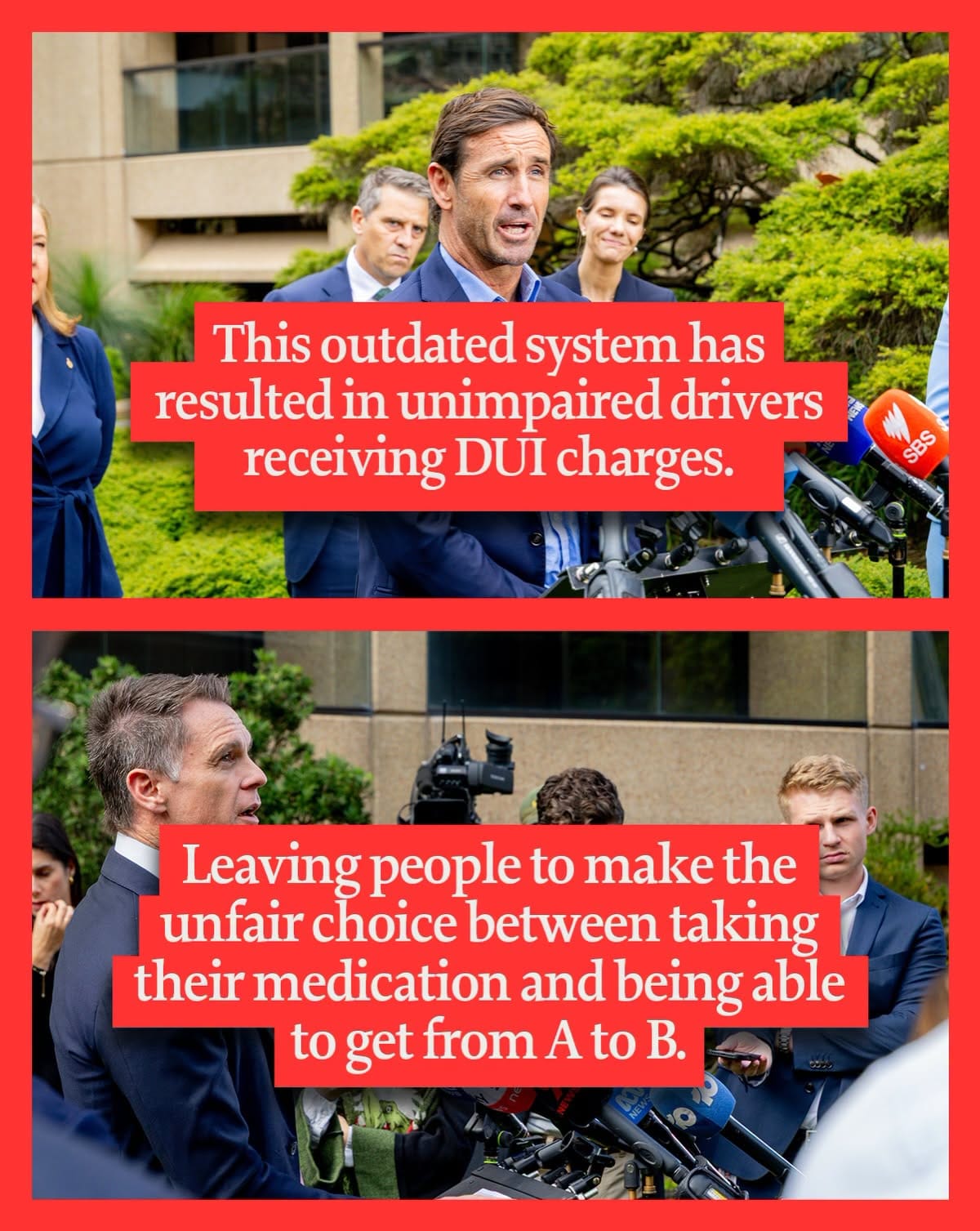
Consequently, hundreds of thousands of legally prescribed patients have faced a stark legal binary: forfeit mobility and employment by abstaining from driving, or risk license disqualification and criminal prosecution for taking prescribed medication. Data from NSW Health recorded at least 130,000 active medicinal cannabis patients across the state in 2025, while national regulatory projections from the Therapeutic Goods Administration (TGA) suggest the true patient footprint in NSW reaches as high as 300,000 individuals. These patients manage conditions ranging from chemotherapy-induced nausea and refractory epilepsy to chronic neuropathic pain and severe post-traumatic stress disorder (PTSD).
High-profile endorsements, including rugby league personality Andrew Johns—who publicly credited medicinal cannabis with helping him achieve complete seizure control—have amplified public pressure on the state government to align road rules with modern therapeutic medicine.
                CURRENT STRICT-LIABILITY FRAMEWORK (SEC. 111)
      [Prescribed Patient] ──> [Trace THC Detected] ──> [Mandatory Conviction / Ban]
                                        │
                                        ▼
             PROPOSED TIERED REFORM MODEL (MCDO BILL 2026)
      [Registered Patient] ──> [Roadside Positive] ──> [24-Hr Prohibition + Lab Confirmation]
                                                                  │
                                   ┌──────────────────────────────┴──────────────────────────────┐
                                   ▼                                                             ▼
                       [Below Laboratory Ceiling]                                    [Above Laboratory Ceiling]
                 (<50 ng/mL oral / <3.5 ng/mL blood)                           (≥50 ng/mL oral / ≥3.5 ng/mL blood)
                                   │                                                             │
                                   ▼                                                             ▼
                         [No Charge / No Offense]                                      [Three-Strike System]
                                                                                  • 1st & 2nd: Formal Warnings
                                                                                  • 3rd: $722 Fine + 3-Mo Ban
How the Proposed Statutory Framework Operates
Under the provisions introduced by NSW Roads Minister Jenny Aitchison and shepherded through the upper house by Transport Minister John Graham, eligible patients must register through a specialized database operated by Transport for NSW:
-
Eligibility Boundaries: Enrolment is restricted strictly to unrestricted license holders. Learner, provisional (P1 and P2), taxi, rideshare, and heavy vehicle operators are excluded. Applicants must submit certified proof of a valid prescription and complete a state-mandated digital education module.
-
Roadside Swab Protocols: Physical enforcement on the tarmac remains identical for all drivers. Police will continue conducting standard oral fluid screening swabs. Any driver returning a positive roadside reading receives an immediate, on-the-spot 24-hour driving prohibition while biological samples are sent to the NSW Health Forensic and Analytical Science Service (FASS) for laboratory confirmation.
-
Laboratory Thresholds and Warning Safeguards: If laboratory testing confirms THC concentrations below 50 nanograms per milliliter (ng/mL) in oral fluid or 3.5 ng/mL in blood—and confirms zero presence of alcohol or other illicit substances—no offense is committed. If testing reveals concentrations at or above those statutory ceilings, a graduated “three-strike” warning mechanism applies: the first and second positive detections within a rolling two-year window trigger formal administrative warning letters rather than criminal charges. A third violation within two years carries a $722 on-the-spot penalty notice and a mandatory three-month license suspension, scaling up to a $2,200 fine and six-month court-ordered disqualification if contested.
Addressing the chamber, Minister Graham stressed that the numeric limits should not be interpreted as safe driving thresholds: “I am not suggesting that people should drive immediately after taking cannabis medicine”.
+--------------------------------------------------------------------------------------------------+
|                                    KEY STAKEHOLDER POSITIONS                                     |
+----------------------------+-----------------------+---------------------------------------------+
| Stakeholder / Body         | Position              | Core Argument / Finding                     |
+----------------------------+-----------------------+---------------------------------------------+
| Minns Labor Government     | Proponent / Sponsor   | Balances clinical reality with community    |
| (John Graham / J. Aitchison)                       | protections; ends unjust criminalization.   |
+----------------------------+-----------------------+---------------------------------------------+
| NSW Liberal-National       | Formal Opposition     | Asserts lack of scientific basis; demands   |
| Coalition (Kellie Sloane)                          | STAYSAFE inquiry; warns on CTP costs.       |
+----------------------------+-----------------------+---------------------------------------------+
| Independent MLC            | Opposed               | Argues no level of impairment is safe;      |
| Tania Mihailuk                                     | questions double standard vs S4/S8 drugs.   |
+----------------------------+-----------------------+---------------------------------------------+
| Independent MLC            | Opposed               | Criticizes suppression of 5,000-driver      |
| Rod Roberts                                        | road safety study; calls for tabling data.  |
+----------------------------+-----------------------+---------------------------------------------+
| Legalise Cannabis Party    | Supportive            | Notes interstate/global crash data shows    |
| (Jeremy Buckingham)                                | no accident surge following medical reform. |
+----------------------------+-----------------------+---------------------------------------------+
| Dr. Geoff Healy            | Strong Opposition     | Warns changes risk escalating road trauma   |
| (Royal North Shore Trauma)                         | without conclusive impairment modeling.     |
+----------------------------+-----------------------+---------------------------------------------+
Compulsory Insurance and the Digital ID Footprint
The parliamentary pause illuminated two significant operational issues:
-
Unmodeled Compulsory Third-Party (CTP) Premiums: Transport Minister John Graham conceded that the executive government performed no empirical cost modeling on how the proposed liability adjustments would affect green slip insurance premiums. Compulsory Third-Party insurance is a mandatory statutory levy attached to every registered vehicle in NSW. Shadow Transport Minister Natalie Ward challenged the government to guarantee that everyday motorists would not absorb higher CTP premiums if insurers adjust regional risk calculations. The Insurance Council of Australia confirmed that pricing implications remain undetermined pending emerging actuarial data.
-
Medical Prescriptions Embedded on Everyday Digital IDs: Under the regulatory framework, a patient’s registered status will be embedded into the digital driver’s license application on mobile devices as a condition code. While the administration noted that the code appears as an abbreviated alphanumeric indicator requiring deliberate interaction to reveal underlying text, the digital license functions as the primary proof of identity across civil society—inspected by hospitality staff, venue security, retail clerks, and real estate property managers.
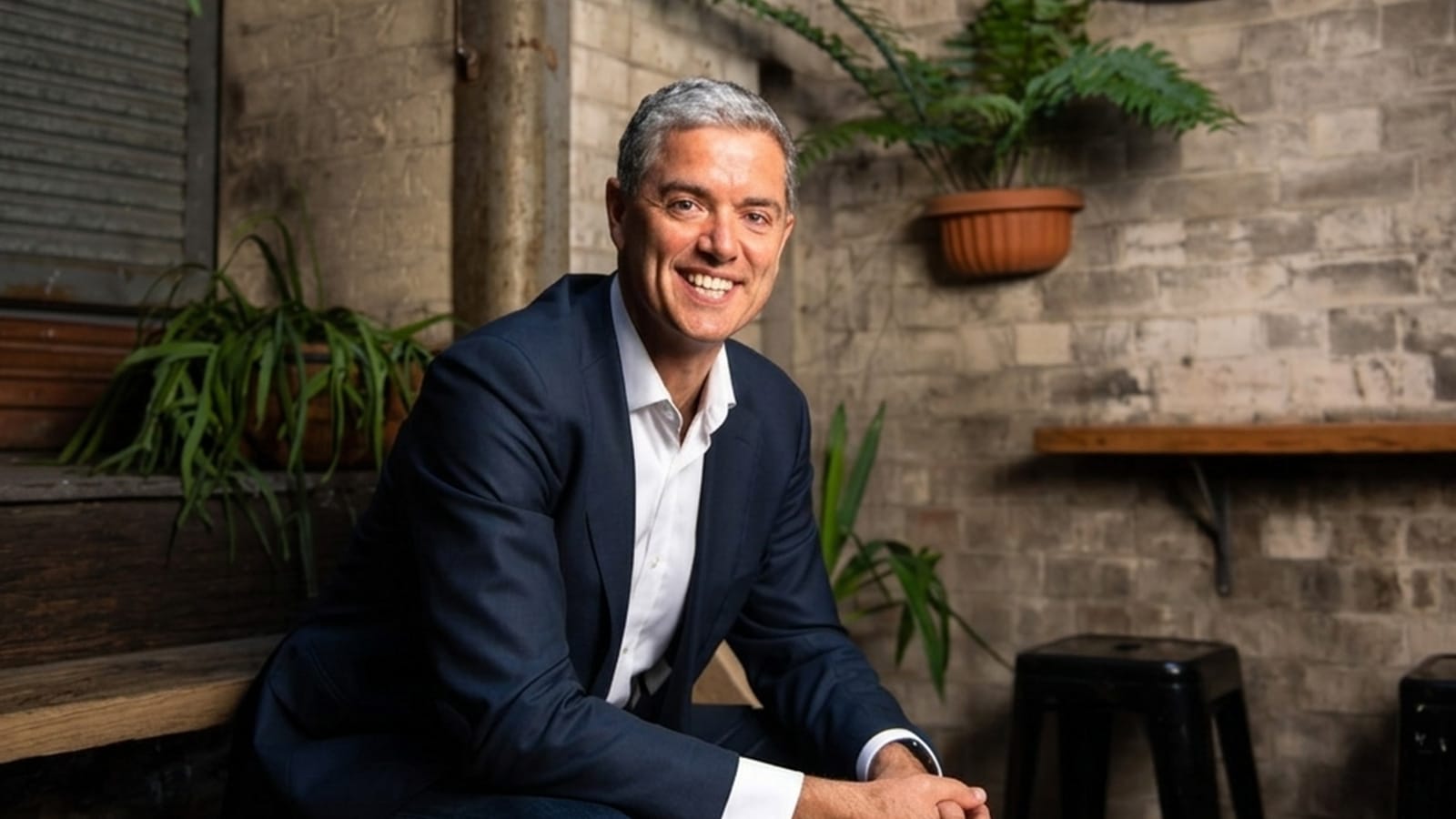
This privacy question unfolded simultaneously alongside separate legislation expanding the state’s integration with the Commonwealth’s National Driver Licence Facial Recognition Solution, granting law enforcement broader biometric and digital surveillance capabilities across the transport network.
                  THE EXPANDING SURFACE OF THE DIGITAL LICENSE
                                       │
    +----------------------------------+----------------------------------+
    |                                                                     |
    v                                                                     v
[CIVIL SURVEILLANCE & RECOGNITION]                          [THERAPEUTIC MEDICAL DISCLOSURE]
• Integrated into Commonwealth Biometric Database.         • Digital license carries cannabis condition code.
• Expanded police access to unredacted toll cameras.       • Inspected by venue staff, bouncers, and agents.
• Telecommunications device unlock provisions.             • Transforms basic ID into clinical record.
2. My Professional Perspective
==================================================================================================
                               THE ANATOMY OF REGULATORY COMPROMISE
==================================================================================================
  THE MEDICAL DILEMMA                THE ADMINISTRATIVE MECHANISM          THE UNINTENDED CONFLICT
  Prescription patients face         Government designs complex            Privacy compromised via
  strict-liability criminalization   tiered registration and warning       digital ID; unmodeled
  without active impairment.   ───>  thresholds to avoid direct     ───>   economic liabilities
                                     court-based impairment tests.         transferred to CTP pool.
==================================================================================================
The Science Gap: Presence Versus Impairment
For three decades covering parliamentary committees and regulatory policy, the most dangerous legislative initiatives have almost always been those that attempt to solve a complex biological question with a rigid administrative compromise.
The fundamental flaw embedded in the MCDO Bill 2026 is the persistent conflation of chemical presence with physiological impairment. In road safety law, alcohol provides a clear benchmark: the 0.05 blood alcohol concentration (BAC) limit is supported by decades of standardized toxicological evidence directly linking specific BAC ranges to psychomotor degradation and cognitive delay.
Cannabis does not conform to this linear dynamic. THC is lipophilic; it binds to adipose tissue and clears the bloodstream at unpredictable rates depending on metabolic speed, route of administration (inhalation versus ingestion), chronicity of therapeutic use, and individual patient tolerance. A daily medicinal cannabis patient can register 10 ng/mL in blood while exhibiting normal motor coordination and reaction times, whereas an occasional recreational user at 3 ng/mL may experience marked psychomotor impairment.
+------------------------------------+------------------------------------+
| ALCOHOL (0.05 BAC MODEL)           | CANNABIS (50 ng/mL ORAL FLUID)     |
+------------------------------------+------------------------------------+
| • Linear clearance from blood.     | • Lipophilic storage in fat cells. |
| • Clear link between BAC & reflex. | • Presence does not equal effect.  |
| • Universal impairment curve.      | • Tolerance varies by chronicity.  |
| • Standardized roadside readout.   | • Requires lab chromatography.     |
+------------------------------------+------------------------------------+
By settling on statutory ceilings of 50 ng/mL in oral fluid and 3.5 ng/mL in blood, the NSW Government has created an arbitrary middle ground. As Independent MLC Tania Mihailuk noted on the floor, if those numbers do not indicate a safe operating threshold—as the Transport Minister himself conceded—then the state is establishing a statutory regime that lacks a verified scientific foundation. The administration is attempting to manage an optics problem rather than solving a pharmacology problem.
The Suppressed Baseline: Evidence After the Fact
One of the most concerning procedural revelations of the August 6 debate was raised by Independent MLC Rod Roberts: the withholding of empirical government research until after the legislative division.
In October 2022, when previous iterations of medicinal cannabis driving exemptions were debated, the government committed to undertaking extensive safety modeling through the Centre for Road Safety before overhauling the statutory regime. The department completed a comprehensive study monitoring more than 5,000 drivers in August 2025. Yet, that foundational report has been withheld from parliamentary tabling, scheduled for release at a road safety symposium in October—months after this legislation is enacted into law.
Furthermore, the formal deliberations and advice of the government’s expert working group remain locked behind cabinet confidentiality. When an administration shields its own empirical research while asking parliament to vote on major road safety policy, it undermines transparency and invites public skepticism.
                           THE EVIDENCE DECOUPLING TIMELINE
                                          │
    +-------------------------------------+-------------------------------------+
    |                                                                           |
    v                                                                           v
OCTOBER 2022                                                  AUGUST 2025
Government pledges evidence-led review                        Centre for Road Safety completes
by Centre for Road Safety prior to changes.                   empirical study of 5,000+ motorists.
    |                                                                           |
    +-------------------------------------+-------------------------------------+
                                          │
                                          v
                              AUGUST 2026 (THE VOTE)
                              Parliament forced to vote while 5,000-driver study
                              remains withheld until post-enactment conference.
Privacy Creep: When Medical History Becomes an ID Stamp
The second overlooked dimension of this legislation is its intersection with civil liberties and data privacy.
To claim the statutory exemption, a patient must register on a government database and accept a condition code permanently embedded on their digital driver’s license. While departmental officials assert that the code appears as an unobtrusive letter requiring navigation to expand, this rationalization ignores how identity documentation functions in the modern service economy.
+--------------------------+     Inspects ID      +-----------------------------+
|    CITIZEN / PATIENT     | -------------------> |       NON-POLICE VENUE      |
|  (Displays Digital ID)   |                      | (Bouncers, Clerks, Agents)  |
+--------------------------+                      +-----------------------------+
             │                                                   │
             │ Contains Embedded                                 │ Can View Alphanumeric
             │ Condition Code                                    │ Endorsement & Details
             ▼                                                   ▼
+-------------------------------------------------------------------------------+
|                        SENSITIVE MEDICAL PRIVACY BREACH                       |
|  Everyday commercial interactions expose private therapeutic cannabis status  |
|  to unregulated third-party workers without clinical confidentiality duties.  |
+-------------------------------------------------------------------------------+
A driver’s license is no longer merely a transport permit; it is an all-purpose identity token presented when entering pubs, checking into commercial venues, picking up parcels, or applying for private tenancy agreements. Requiring citizens to carry their prescription status on their primary identity credential forces patients to disclose private medical details during routine commercial interactions.
This requirement creates a clear double standard. Patients prescribed Schedule 4 benzodiazepines or Schedule 8 opioid analgesics—substances with well-documented sedative effects—are not required to carry condition codes on their digital licenses, nor are they tracked via specialized central registries. This disparate treatment subjects medicinal cannabis users to heightened state surveillance while offering compromised digital privacy in exchange for baseline legal protection.
The Insurance Spillover: The Unquantified CTP Levy
The admission that no financial modeling was conducted on Compulsory Third-Party insurance introduces significant economic uncertainty.
The NSW green slip scheme operates as a closed actuarial ecosystem. Premium pricing is calibrated against regional crash rates, catastrophic injury compensation funds, and litigation recovery probabilities. If private insurers determine that introducing laboratory threshold defenses complicates subrogation claims, increases contested court hearings, or elevates regional liability profiles, they will adjust underwriting models across the entire driving population.
+-------------------------+       Elevated Crash /       +-------------------------+
| STATUTORY THRESHOLD     | ---------------------------> | ACTUARIAL RE-PRICING    |
| DEFENSE INTRODUCED      |       Litigation Risks       | BY PRIVATE UNDERWRITERS |
+-------------------------+                              +-------------------------+
                                                                      │
                                                                      │ Higher Scheme Costs
                                                                      ▼
                                                         +-------------------------+
                                                         | GREEN SLIP PRICE HIKES  |
                                                         | Absorbed by ALL Drivers |
                                                         +-------------------------+
Passing major transport reforms without actuarial clarity exposes millions of non-cannabis-using motorists to potential secondary costs, creating an economic vulnerability that the opposition will exploit if insurance rates escalate.

Crucial Unanswered Inquiries
-
The Suppression of Research: Why did the executive government withhold the Centre for Road Safety’s 5,000-driver study from parliamentary debate while demanding an immediate vote on the legislation?
-
The Clinical Parity Question: Why are cannabis patients subject to a state-managed register and license condition codes when patients prescribed heavily sedating Schedule 8 opioids face no equivalent administrative monitoring?
-
The Roadside Incongruity: Given that standard roadside oral swabs detect THC at approximately 15 ng/mL, what is the operational rationale for retaining a roadside test that subjects registered patients to mandatory 24-hour driving bans when their laboratory results ultimately show compliance beneath the 50 ng/mL legal ceiling?
The legislative standoff on Macquarie Street underscores the friction between an outdated criminal justice framework and the realities of modern clinical pharmacology.
For years, the state’s zero-tolerance drug-driving framework has subjected law-abiding patients to an unjust choice between health and mobility. The Minns government’s attempt to resolve that injustice through the Road Transport Legislation Amendment (Medical Cannabis and Driving Offences) Bill 2026 is a notable step toward reform, but one burdened by administrative compromise.
                               THE PATHWAYS FORWARD
                                        │
    +-----------------------------------+-----------------------------------+
    |                                                                       |
    v                                                                       v
THE TASMANIAN / SOUTH AUSTRALIAN MODEL                      THE NSW CONDITIONAL APPARATUS
• Direct medical defense framework.                         • Centralized user registration database.
• No centralized state patient database.                    • Diagnostic condition codes on digital IDs.
• Relies strictly on evidence of impairment.                • Arbitrary laboratory chemical thresholds.
• Protects civil liberties and health privacy.              • Unmodeled economic and CTP liabilities.
By relying on arbitrary chemical thresholds rather than verified functional impairment tests, suppressing its own empirical road safety data, and requiring patients to carry medical endorsements on everyday identification documents, the government risks replacing one flawed framework with another.
When a government creates a legal exemption that requires citizens to sacrifice medical privacy on their everyday IDs while leaving the underlying science behind closed doors, has it genuinely delivered progressive healthcare reform—or merely constructed a more bureaucratic form of surveillance?
For detailed insights into the historical context and legislative progress of cannabis law reform in the state, consult the NSW Parliament Legislative Council Hansard Records and the Transport for NSW Road Safety Drug Education Guidelines.