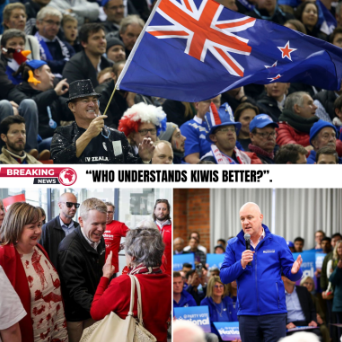

Luxon and Hipkins compete to connect with voters ahead of election
Prime Minister Christopher Luxon and Opposition leader Chris Hipkins are increasingly focusing their political messaging on everyday household concerns as parties prepare for the next general election.
Political commentators say both leaders are attempting to position themselves as better able to understand the pressures facing New Zealanders, particularly around affordability, healthcare, housing, wages, and public services.


The coalition Government continues arguing that economic stability and disciplined fiscal management are necessary to improve long-term living standards. Ministers say reforms already underway are intended to strengthen productivity, infrastructure investment, and economic confidence.
Labour representatives argue that many households continue experiencing financial strain despite signs that inflation has eased. Hipkins has increasingly framed Labour’s campaign around affordability, public service delivery, and support for working households.
Political analysts note that voter perception often depends not only on policy detail but also on leadership style, communication, and the ability to relate to everyday concerns. Analysts say this may become increasingly important as campaigning intensifies.
Luxon has focused heavily on economic management and business confidence, presenting the coalition’s policies as necessary for long-term growth and financial stability. Government ministers say consistent policy settings are important during uncertain global conditions.
Hipkins has concentrated on issues involving healthcare access, transport costs, wages, housing affordability, and broader cost-of-living pressure. Labour representatives argue that voters are seeking more immediate relief for household budgets.
Healthcare remains one of the most significant political issues facing both parties. Labour says staffing shortages and service demand require stronger action, while coalition ministers point to ongoing reforms and funding already committed to the sector.
Housing affordability also continues shaping political discussion. Labour argues that renters and first-home buyers remain under pressure, while the coalition says infrastructure investment and planning reforms are intended to improve supply over time.
Political scientists suggest leadership authenticity and communication style can strongly influence public opinion during election periods. Analysts say voters often assess whether leaders appear connected to everyday experiences and practical concerns.
The coalition Government continues arguing that its approach is focused on restoring economic resilience and avoiding unsustainable spending. Ministers say disciplined budgeting is necessary to protect long-term financial stability.
Labour representatives maintain that many New Zealanders have not yet seen meaningful improvement in living standards and public services. Hipkins has increasingly emphasised fairness and affordability in Labour’s political messaging.
Business organisations continue monitoring proposals from both major parties, particularly regarding taxation, regulation, infrastructure planning, and workforce development. Industry groups say certainty and stability remain important for economic confidence.
Public polling indicates affordability remains the dominant issue shaping voter attitudes ahead of the election. Analysts say healthcare, housing, and economic management are also likely to remain major campaign themes.
Media coverage surrounding both leaders has intensified alongside wider attention to polling trends and campaign strategy. Political commentators note that election narratives are often shaped by trust, competence, and public relatability.
The Government has sought to present Luxon as focused on long-term economic planning and stable leadership. Ministers argue that difficult reforms are necessary to strengthen the country’s economic position.
Labour continues presenting Hipkins as more closely connected to household concerns involving living costs and public service access. Opposition MPs say voters are increasingly focused on practical day-to-day issues.
Political analysts caution that leadership perception can shift during election campaigns depending on debates, policy announcements, economic developments, and broader public mood.
Questions remain regarding which leader will ultimately persuade voters that they best understand the challenges facing ordinary New Zealanders and can deliver meaningful improvement.
Ultimately, the growing political contest between Luxon and Hipkins reflects wider public concern over affordability, healthcare, housing, and economic confidence ahead of the next general election. As campaigning intensifies, leadership connection and credibility are expected to remain central to New Zealand politics.