Intense historical moments captured in rare photographs from the 1900s show a side of the past most people have never seen .P2

Intense historical moments captured in rare photographs from the 1900s show a side of the past most people have never seen
Some photographs leave us amazed because they capture events that seem almost impossible to imagine. Others make us stop and reflect because behind them lie pain, cruelty, and stories that history cannot easily erase. From a gangster who tried to erase his fingerprints to prisoners held in chains, and from the Navajo warriors who helped protect military secrets during World War II to the darkest moments of the Holocaust, each image opens a window into another world. But not every caption accompanying a historical photograph is entirely accurate. To understand history, we must look beyond brief descriptions and discover what really happened.
The first photograph takes us to Baltimore City Jail in the United States, around 1910. In the frame is a whipping post used to punish prisoners. This form of corporal punishment existed in some prison systems, where the bodies of incarcerated people became targets of painful and humiliating penalties. Prisoners could be tied to a post or another fixed structure and then subjected to a series of blows according to prison regulations.
Today, seeing such a device can be deeply disturbing. Yet throughout the history of criminal justice, physical punishment was once regarded as a tool for maintaining order. Authorities believed that pain and public humiliation would frighten prisoners and discourage them from committing further crimes. However, these practices also raise important questions about human dignity and the limits of institutional power. The whipping post does more than document an old prison device. It reflects an era when the rights of incarcerated people were far less protected than they are today.
Another photograph, believed to date from 1906, shows a Chinese prisoner wearing a punishment device commonly described as a pillory or cangue. The prisoner is kneeling with their hands restrained behind their back. The device restricts movement and turns the person wearing it into an object of public attention and humiliation.
In many societies throughout history, punishment was intended not only to cause physical suffering but also to shame offenders in front of the community. Wooden collars, stocks, and other restraining devices were used to control prisoners and prevent them from moving freely. However, the precise origin and purpose of the device in this particular photograph should be verified against reliable archival records. What the image does reveal is a period when public humiliation was still considered an acceptable part of punishment.
From early twentieth-century prisons, the story moves to the world of organized crime in the United States during the Great Depression. The central figure is Alvin Karpis, one of America’s most notorious gangsters of the 1930s. He was associated with the Barker-Karpis gang, which became involved in bank robberies, kidnappings, and other serious criminal activities.
As the FBI pursued him, Karpis understood that fingerprints could provide investigators with decisive evidence of his identity. He therefore turned to underworld medical practitioners in an attempt to alter his fingertips and make identification more difficult. According to FBI records, Karpis underwent procedures intended to distort his fingerprints and avoid recognition.
This was not an ordinary cosmetic operation. It was a desperate attempt by a criminal who knew that law enforcement was closing in. However, altering his fingerprints could not protect Karpis forever. He was eventually captured in 1936, becoming one of the most famous criminals arrested during J. Edgar Hoover’s leadership of the FBI.
Another image is said to document a traditional headache treatment practiced in an English village in 1865. The accompanying description claims that a blacksmith used an object resembling a pot to strike or apply pressure to a patient’s head, hoping to relieve the pain. If accurate, the story offers an unusual example of folk medicine before modern healthcare became widely available.
During the nineteenth century, many rural communities had limited access to doctors and medical facilities. People often relied on traditional knowledge, household remedies, and individuals with practical experience in their communities. Some treatments may seem unbelievable today, but they reflect a time when medical knowledge and healthcare resources were limited.
Nevertheless, there is no reason to regard striking someone’s head with a hard object as a medically established treatment. Without reliable supporting documentation, this story should be treated as an unverified caption rather than an established historical fact.
Next is László Bárdossy, the former Prime Minister of Hungary, who faced execution after the country’s defeat in World War II. He served as prime minister from 1941 to 1942, during a period when Hungary became increasingly aligned with the Axis powers and participated in military operations against the Soviet Union.
After the war, Bárdossy was tried in Hungary for his role in wartime policies, including decisions that brought the country deeper into the conflict. He was sentenced to death and executed in Budapest in 1946. Photographer Lee Miller documented events associated with his execution in December 1945, according to records of her work. Therefore, if a caption identifies the photograph itself as dating from 1946, the exact date should be checked.
The image raises an important question about the postwar world: how should leaders who held power during wartime be held accountable? Political decisions cannot always be judged solely by their final outcomes. But when those decisions help draw a nation into war and produce devastating consequences, the question of responsibility cannot simply be ignored.
Another story concerns photographs of the Moon taken during the period from 1966 to 1967. This was when NASA was conducting its Lunar Orbiter program to survey the lunar surface and identify suitable locations for future Apollo landings. The spacecraft captured thousands of images to help scientists map the terrain and evaluate potential landing sites.
Some online captions claim that NASA deliberately reduced the quality of certain images to deceive the Soviet Union into believing that the United States could only produce low-resolution reconnaissance photographs. However, there is no reliable evidence supporting this claim. NASA records indicate that some high-resolution frames from Lunar Orbiter 1 were lost or blurred because of problems involving shutter synchronization and the imaging system. Medium-resolution images were still useful and contributed significantly to the survey of potential landing locations.
This is a good example of why compelling stories circulating online do not always reflect historical reality. A low-quality photograph may raise questions, but that does not automatically prove that a conspiracy or deliberate cover-up took place. Sometimes, the explanation lies in the technical limitations of the technology available at the time.
The Vietnam War takes us to a very different photograph. It shows an American soldier leading a captured prisoner believed to be a Viet Cong fighter in the Don Lon area, according to the original transcript. During American and allied military operations, arrests, interrogations, and intelligence-gathering activities were common.
Guerrilla warfare made it particularly difficult to distinguish combatants from civilians. Fighters could blend into local communities, while opposing forces faced the constant threat of unexpected attacks. But this complexity also meant that civilians could easily become targets of suspicion, detention, or military operations.
If the photograph truly shows a prisoner being led on a leash, it raises serious questions about the treatment of captured fighters. Prisoners do not lose their right to humane treatment simply because they have taken part in combat. Even in the harshest conditions of war, protecting the dignity and safety of detainees remains an important principle of international humanitarian law.
Leaving Vietnam behind, we travel to Sakhalin Island in the Russian Empire at the beginning of the twentieth century. A photograph from 1903 is said to show a group of prisoners at a place once notorious for its system of penal labor. Located in Russia’s Far East, Sakhalin had a harsh climate and was used by the imperial authorities as a destination for people sentenced to exile or hard labor.
For many prisoners, being sent to Sakhalin meant separation from their families, strict supervision, and years of exhausting work under difficult conditions. Food shortages, freezing temperatures, and poor living conditions made life there extremely challenging. Many prisoners faced prolonged isolation, while the possibility of returning home remained uncertain.
Sakhalin was more than a remote location on the map of the Russian Empire. It represented a system of punishment in which removing a person from society could become a sentence lasting many years. A group photograph of prisoners cannot reveal everything they experienced, but it reminds us that behind every prison uniform was a human life that had been changed forever.
Next is an illustration by Charles Eisen, created for the eighteenth-century tales of Jean de La Fontaine. Eisen was an important artist of the Rococo period, known for richly detailed illustrations that sometimes included humor, sensuality, and satire.
The illustration mentioned in the original narration reportedly depicts a strange encounter between a woman and a demon. According to the accompanying description, the woman uses an act of revealing her body to frighten the devil away. This may reflect the humor, satire, and folk beliefs found in some European artistic traditions of the period. However, identifying the exact story requires comparing the illustration with the original publication and the specific title of the tale.
Eighteenth-century art often used the human body, religious symbolism, and absurd situations to create humor or communicate social commentary. The illustration offers a glimpse into the more unconventional side of European artistic culture during the Rococo era.
A photograph from around 1915 takes us underground to a coal mine in Saint-Étienne, France. It shows a small horse being lowered into the mine. These animals, commonly known as pit ponies, were used to pull carts carrying coal and other materials through underground tunnels.
Before modern machinery replaced much of the transportation work, animals played an important role in the mining industry. Horses could work in dark environments, narrow passages, and areas filled with dust. Some were taken underground for extended periods and spent much of their lives far from daylight.
Lowering a horse into a mine was not a simple task. The animal had to be transported using specialized lifting equipment before adapting to an environment completely different from the surface. These horses helped keep coal mines operating, but they also endured demanding working conditions.
The photograph reminds us that the history of industrial development was not built solely through human labor. Animals also played an important role, even though their contributions are rarely remembered.
In 1968, a heart transplant patient was photographed holding his diseased heart after it had been removed from his body and preserved in a jar of formalin. The patient is identified in the original caption as George De Board, from Texas. The image is striking because it turns an organ normally seen only in an operating room into an object visible before the camera.
The first successful human heart transplant was performed by surgeon Christiaan Barnard in South Africa on December 3, 1967. The operation marked a major turning point in medical history. Before that breakthrough, patients suffering from severe heart disease had very few treatment options. The successful transplant demonstrated that a donor heart could be placed inside another person’s body and continue functioning.
However, early heart transplant surgery involved enormous challenges. The recipient’s immune system could reject the transplanted organ, while surgical techniques and anti-rejection medications were still developing. Photographs from this period reflect a time when medicine was pushing into new territory, confronting questions that were both scientific and ethical.
One of the most disturbing images takes us back to 1945, to Bergen-Belsen concentration camp in Germany. After British forces liberated the camp, soldiers discovered thousands of prisoners suffering from starvation, disease, and extreme exhaustion. Appalling sanitary conditions had allowed epidemics, particularly typhus, to spread.
Following liberation, British forces faced an urgent challenge: rescuing the survivors while preventing disease from spreading further. Many of the camp’s buildings and barracks were burned after the prisoners had been evacuated as part of disease-control measures. The image of soldiers watching the final barracks burn is more than a wartime scene. It marks the destruction of a place that had become a symbol of Nazi brutality.
Bergen-Belsen was not an extermination camp designed in the same way as Auschwitz-Birkenau. Nevertheless, it became a site of mass death caused by starvation, disease, forced labor, and inhumane treatment. The soldiers who liberated the camp witnessed conditions far beyond anything they had expected. Even after the gates were opened, not everyone found alive could be saved.
Another story offers a rare moment of humanity amid those terrible years. The photograph is described as showing the reunion of Joseph Gutman, a young Holocaust survivor, and American soldier William Best on December 24, 1948.
According to the story, Gutman was liberated from Buchenwald in 1945 and later became closely associated with Best’s tank unit. The American soldier became an important guardian figure in the young boy’s life, helping him find a path to the United States and begin again. Their story is often presented as an example of the powerful bond that can develop between people from completely different backgrounds.
After experiencing life in a concentration camp, finding someone willing to care for and support him could have meant everything. For a child who had lost family members or been separated from loved ones, the kindness of an adult could become the foundation for a new beginning. Although the details surrounding the adoption and immigration to the United States should be verified through reliable records, the story highlights another side of war: kindness can emerge even under the most difficult circumstances.
In December 1943, British soldiers in Italy underwent training to identify and disable mines and common explosive traps. During wartime, mines could be hidden along roads, inside abandoned buildings, or in locations where enemy forces expected advancing troops to pass.
The danger was that soldiers could not always see the warning signs of an explosive device. A small object buried beneath the ground, a thin wire, or an unusual change in the road surface could signal a deadly threat. Training soldiers to recognize explosive traps in low-light conditions was particularly important during nighttime operations, when visibility was limited and the risk of mistakes increased.
In war, one careless decision could endanger an entire unit. These seemingly minor skills could therefore determine whether many soldiers survived. The photograph captures an often-overlooked but essential part of military operations.
In 1942, the first 29 Navajo men were recruited into the United States Marine Corps to develop a military communications system using the Navajo language. This became one of the most famous examples of Native American code talkers during World War II.
The Navajo language has a complex structure, and very few people outside the community could understand it. Navajo Marines developed a specialized vocabulary in which familiar words were assigned military meanings. Certain animal and bird names, for example, were used to represent aircraft, while other terms referred to military vehicles and equipment.
The original code contained 211 words and was later expanded to 411 terms during the war. The code talkers memorized the vocabulary and trained to transmit messages quickly under battlefield conditions.
Their contribution was especially important during campaigns in the Pacific, where American forces needed to communicate without allowing the Japanese military to understand their messages. The Navajo Marines did more than use their language as a means of communication. They transformed it into a strategic military tool.
At a time when many Native Americans had faced discrimination and policies of forced assimilation, these soldiers made an extraordinary contribution to their country’s military efforts.
Another photograph shows Jewish businessmen arrested after Kristallnacht, also known as the Night of Broken Glass, in November 1938. This was one of the most violent anti-Jewish attacks before the outbreak of World War II.
During the night of November 9–10, 1938, Nazi groups and mobs destroyed Jewish shops, homes, and synagogues throughout Germany and territories under German control. Windows were smashed, goods were stolen, and synagogues were set on fire. Tens of thousands of Jewish men were arrested and sent to concentration camps, including Buchenwald.
The name Kristallnacht comes from the countless broken pieces of glass scattered across the streets after the attacks. But the name cannot fully express the severity of what happened. This was not simply a spontaneous outbreak of violence. It was an organized campaign of persecution encouraged and supported by the Nazi authorities.
For Jewish communities, Kristallnacht marked a dangerous escalation. Earlier forms of discrimination were increasingly turning into open violence, mass arrests, and the seizure of property. The men shown in the photograph may have been among the tens of thousands detained during those days.
Another image shows bowls and personal belongings scattered across snow-covered railway tracks at Auschwitz II-Birkenau after the camp’s liberation on January 27, 1945. These objects had belonged to prisoners who were transported to the camp from countries across Europe.
When Soviet forces entered Auschwitz, they found thousands of survivors in extremely weakened condition. Most prisoners who were physically able to walk had already been forcibly evacuated by the Nazis in what became known as the death marches. Those left behind were often sick, elderly, children, or people too weak to take part in the forced marches.
Auschwitz-Birkenau was one of the largest killing centers established by Nazi Germany. More than one million people were murdered in the Auschwitz complex, most of them Jewish. The bowls lying beside the railway tracks may look like ordinary objects, but they represent people whose lives had been stripped of almost everything: their families, homes, possessions, and ultimately their right to live.
The liberation of Auschwitz could not bring back those who had died. But it exposed to the world the scale of a crime that humanity must never forget.
Another historical photograph is connected to Louis Boutan, a French zoologist and photographer who made important contributions to the development of underwater photography. At the end of the nineteenth century, taking photographs underwater was a major technical challenge. Cameras had to be protected from water pressure, light beneath the surface was limited, and exposure times could be extremely long.
In 1893, Boutan developed equipment for underwater photography. By 1899, he had produced a famous underwater portrait showing the Romanian biologist Emil Racoviță beneath the surface at Banyuls-sur-Mer in southern France.
His achievement demonstrated that photography could do more than record what people saw on land. It could also open up environments that had previously remained largely beyond human observation. Thanks to pioneering experiments like these, the underwater world gradually became a subject of scientific research and artistic exploration.
Another photograph documents a Ku Klux Klan gathering in South Carolina in 1952. The image shows members wearing their distinctive robes and participating in a cross-burning ceremony, a practice commonly associated with intimidation and threats.
The Ku Klux Klan was a white supremacist extremist organization that used violence, intimidation, and terrorism to maintain white dominance, particularly in the American South. Its activities targeted African Americans and other communities that its members considered undesirable.
During the 1950s, the American civil rights movement was gaining momentum. Demands for equality in education, voting rights, and an end to racial segregation provoked fierce opposition from extremist groups. Cross burning was not merely symbolic. It was often used as a direct threat intended to spread fear among targeted families and communities.
Photographs like this are historically important because they show that racial hatred existed not only in laws and government policies but also in public acts of intimidation. They also help us understand why the civil rights movement faced such serious danger and resistance.
Next is Miriam Kate Williams, better known by her stage name Vulcana, a famous female strongwoman of the late nineteenth and early twentieth centuries. At a time when women were generally expected to remain within traditional social roles, Vulcana appeared on stage as a woman with extraordinary physical strength.
She performed weightlifting displays and strength demonstrations before audiences, astonishing spectators. Her performance clothing also differed from what society typically expected women to wear during that period. Through her performances, Vulcana challenged the belief that physical strength belonged exclusively to men.
Some stories about her life also describe an act of bravery in which she reportedly rescued someone from a burning building. However, this detail should be checked against reliable biographical sources before being presented as established fact. Her best-known legacy remains her ability to build a career in a field where women were rarely accepted.
A photograph taken in Toronto in 1975 shows a very different aspect of urban culture. It depicts a topless woman shining a customer’s shoes beside a sign advertising a nude massage service. The image reflects one form of provocative advertising that appeared in some Western cities during the 1970s.
This was a period when many Western societies were experiencing significant changes in attitudes toward sexuality, fashion, and personal freedom. Adult entertainment businesses also began attracting customers through increasingly provocative forms of advertising. However, a single photograph cannot represent the whole of Toronto or the lives of women during that period. It offers only a glimpse into one aspect of commercial culture.
Another figure in the collection is Robert Wadlow, widely recognized as the tallest person in recorded modern medical history, standing approximately 272 centimeters, or 8 feet 11 inches, tall. The photograph is believed to have been taken in 1939, when he was 21 years old.
Wadlow suffered from excessive growth caused by abnormal production of growth hormone, associated with a tumor affecting his pituitary gland. His body began growing at an extraordinary rate during childhood. As he became older, his unusual height made walking increasingly difficult. He required leg braces and often needed assistance moving around.
Although his height attracted enormous public attention, Wadlow’s life was far from easy. His body placed tremendous strain on his bones, muscles, and joints. His health problems increasingly affected his ability to move. Robert Wadlow died in 1940, at just 22 years old.
Photographs of him often attract attention because of his extraordinary stature. But behind the remarkable measurement of 272 centimeters was a person who faced physical challenges that few people could imagine. His story reminds us that a characteristic that makes someone famous can also become a serious burden in everyday life.
Another wartime photograph shows the German battleship Gneisenau in dry dock at Kiel, with severe damage to its bow. The ship had been struck by a torpedo fired by the British submarine HMS Clyde in 1940. It was one example of the naval confrontation between Germany and Britain during the early years of World War II.
Gneisenau was one of Germany’s principal battleships, serving alongside its sister ship Scharnhorst. Both vessels were designed for operations in the Atlantic and to threaten Allied shipping routes. However, they also became targets for British submarines, aircraft, and naval forces.
A single torpedo could inflict serious damage on a massive warship. The destroyed bow in the photograph demonstrates that even heavily armed and armored vessels were vulnerable to attacks from beneath the water.
In October 1939, one of the early Nazi atrocities in occupied Poland took place following the defense of the Polish Post Office in Danzig, then known as the Free City of Danzig. Polish postal workers and defenders resisted German forces for several hours before being captured.
After the resistance ended, some of the survivors were tried and sentenced to death. The executions took place later in October 1939. The incident demonstrated the brutality of the German occupation during the first weeks of the invasion of Poland.
The original narration mentions 38 people being executed. However, the exact number and dates should be checked against historical records relating to the Polish Post Office attack. What is clear is that the people who defended the building became victims of severe repression after German forces took control of the city. Their story became part of Poland’s memory of resistance against the invasion of 1939.
On November 22, 1963, American President John F. Kennedy was assassinated in Dallas, Texas. The event shocked the United States and became one of the most heavily investigated political assassinations in modern history.
After Kennedy was shot while traveling in the presidential motorcade, investigators quickly secured the area and examined nearby buildings. A rifle was discovered on the sixth floor of the Texas School Book Depository. Lee Harvey Oswald was identified as the principal suspect in the assassination.
The photograph mentioned in the original narration is said to show the rifle at the crime scene. However, it is important to distinguish between photographs taken during the investigation and the official conclusions about the evidence. Kennedy’s assassination has generated decades of debate, but any account of the event should separate documented investigative findings from theories that lack convincing evidence.
In 1916, German forces launched a major offensive against French positions at Verdun, one of the bloodiest battles of World War I. Germany aimed to inflict enormous losses on the French army and force its opponent to exhaust its resources in a prolonged battle.
Verdun became a symbol of attrition warfare. Artillery bombardments continued relentlessly, infantry units fought in muddy trenches, and defensive positions were repeatedly destroyed. Soldiers endured shortages, constant shelling, and the threat of being buried beneath collapsing fortifications.
The French ultimately held Verdun, but the human cost was enormous. Total casualties on both sides are generally estimated at hundreds of thousands, including those killed, wounded, and missing. The battle became not only a French military victory but also a symbol of endurance and the devastating cost of trench warfare.
Another photograph shows Germans in Prague in 1945 waiting to be expelled from their homes and transferred to areas of Germany under Allied occupation. After Nazi Germany’s defeat, the political and demographic map of Central Europe changed dramatically.
During the final months of the war and the postwar period, millions of Germans were forced to leave territories where they had previously lived across Eastern and Central Europe. These movements took place amid violence, disorder, and political decisions intended to reshape borders after the conflict.
The people in the photograph may have lost their homes, property, and the places they once considered their homeland. However, acknowledging the suffering of German civilians during this period does not erase Nazi Germany’s responsibility for launching an aggressive war and committing widespread atrocities. The history of postwar Europe is complex, and many communities suffered the consequences of political and military decisions beyond their control.
On December 5, 1933, a shipment of vodka from the Soviet Union reportedly arrived at the Port of New York after the end of Prohibition in the United States. National Prohibition officially ended when the Twenty-First Amendment to the U.S. Constitution was ratified on December 5, 1933.
During Prohibition, the production and sale of many alcoholic beverages were banned, creating opportunities for smuggling and organized crime. When the ban ended, the legal alcohol market gradually returned, and international brands began exploring new opportunities in the American market.
However, the specific claim that this was the first Soviet vodka shipment to arrive in the United States should be verified before being presented as fact. What is certain is that 1933 marked a major turning point for the American alcohol industry, bringing an end to a lengthy period of nationwide prohibition.
A photograph from 1943 shows Australian soldiers getting their hair cut using a captured Japanese flag as a makeshift cover. The image is said to have been taken in New Guinea, where Australian and Japanese forces fought some of the fiercest battles of the Pacific War.
New Guinea was one of the most challenging battlefields of World War II. Dense jungles, steep mountains, heavy rainfall, malaria, and difficult terrain made movement and supply operations extremely dangerous. Soldiers had to fight not only their enemies but also the harsh environment around them.
Under such conditions, ordinary moments like getting a haircut could become rare glimpses of everyday life amid the fighting. Using a captured enemy flag as a makeshift cover may have carried a symbolic or mocking meaning, or it may simply have been a practical solution. Either way, the photograph reminds us that war was not made up entirely of major battles. It also consisted of long days in which ordinary people struggled to maintain some sense of normal life under difficult circumstances.
The final image mentioned in the collection features Adolf “Sailor” Malan, a South African fighter pilot who served in the Royal Air Force during World War II. He became famous for his aerial combat record and later emerged as an active opponent of racial discrimination in South Africa.
Malan was recognized as one of the RAF’s outstanding fighter pilots during the Battle of Britain. After returning home, he became involved in efforts to oppose racial segregation, at a time when South Africa was increasingly enforcing the apartheid system.
The photograph is described as dating from around 1952 and showing Malan being carried by fellow veterans during an anti-apartheid demonstration. The image creates a striking contrast: a man who had fought against dictatorship in Europe later continued to oppose racial injustice in his own homeland.
Malan’s life demonstrates that war does not always end when the guns fall silent. Struggles for freedom, equality, and human dignity can continue long after the battlefield has disappeared. A soldier may leave the front lines, but the principles they believe in can still inspire them to stand against new forms of injustice.
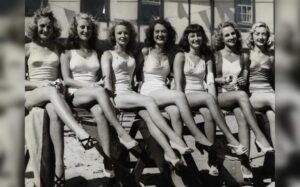
Looking back at all these photographs, we can see that history was not created solely by kings, generals, or famous battles. It was also preserved in prisons, mines, hospitals, laboratories, streets, and the everyday moments of ordinary people.
Some photographs reveal the cruelty of punishment systems. Others show how people struggled to survive during wartime. And some remind us that courage, creativity, and compassion can exist even during the darkest periods of human history.
What makes historical photographs valuable is not simply their rarity. It is their ability to reveal the real people behind historical events, help us understand the circumstances in which they lived, and remind us that decisions made in the past can leave consequences that last for generations.
Which photograph in this collection made you think the most: the images revealing the brutality of war, the punishment methods of the past, or the stories of human kindness and resilience?
Some content was generated using AI tools (including ChatGPT) and edited by the author for creativity, storytelling, and historical illustration purposes. Historical facts and key details should be verified against reliable historical sources. Any AI-generated or reconstructed visuals are intended for illustrative purposes and should not be interpreted as original historical photographs or archival evidence.