
The Final Broadcast: How Derryn Hinch’s State Funeral Sparked a Cultural Flashpoint
The Farewell of the “Human Headline”
On a cool winter Monday in Port Melbourne, more than 350 mourners gathered inside the cavernous, industrial timber hall of The Timber Yard. They came to pay their final respects to Derryn Hinch—the trailblazing broadcaster, former federal senator, convicted crusader, and unapologetic provocateur known across Australia simply as “The Human Headline”.
Hinch passed away peacefully in his sleep on July 10 at the age of 82 following a grueling, two-decade battle with complex health issues, including a life-saving liver transplant in 2011. Organized and funded by Victoria’s Labor state government, the state funeral was designed as a sweeping national tribute to a man who dominated Australian airwaves, print media, and political debate for over half a century.
The casket, draped solemnly with the Australian national flag and surrounded by vibrant red roses, stood at the center of a room filled with veterans of Australian media, entertainment, and politics. Prominent figures from the golden era of 1980s and 1990s broadcasting—including television icon Ray Martin, broadcaster Denis Walter, entertainers Rhonda Burchmore and Greg Evans, and former spouse Jacki Weaver (who sent a warm video tribute from the United States)—assembled to celebrate a life lived entirely in the spotlight.
Born in New Zealand, Hinch migrated to Australia as a young reporter, rapidly ascending through the journalistic ranks to become editor of The Sun before making his mark as a formidable talkback radio host on Melbourne’s 3AW. Beyond the microphone, Hinch was defined by his relentless campaign against child sex offenders and violent criminals. That campaign led to three separate criminal convictions and 50 days behind bars for contempt of court after he deliberately breached judicial suppression orders to publicly name convicted pedophiles and killers. Later in life, at age 72, he channeled that populist zeal into electoral victory, founding Derryn Hinch’s Justice Party and securing a seat in the Australian Senate.
The Spark of National Controversy
Yet, despite the warm eulogies and Sinatra’s That’s Life ringing out as a final sign-off, the state funeral quickly erupted into a fierce national debate—one that threatened to overshadow the legacy of the man being remembered.
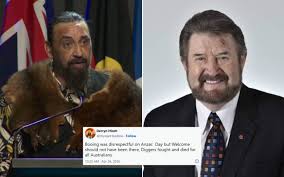
At the center of the storm was the inclusion of an official “Welcome to Country” ceremony at the opening of the proceedings. The ritual was performed by Mark Brown, an Aboriginal activist who has drawn intense public scrutiny in recent years. Brown has faced public backlash, including being booed during consecutive Anzac Day dawn services, and generated outrage after publicly celebrating the political assassination of U.S. conservative activist Charlie Kirk.
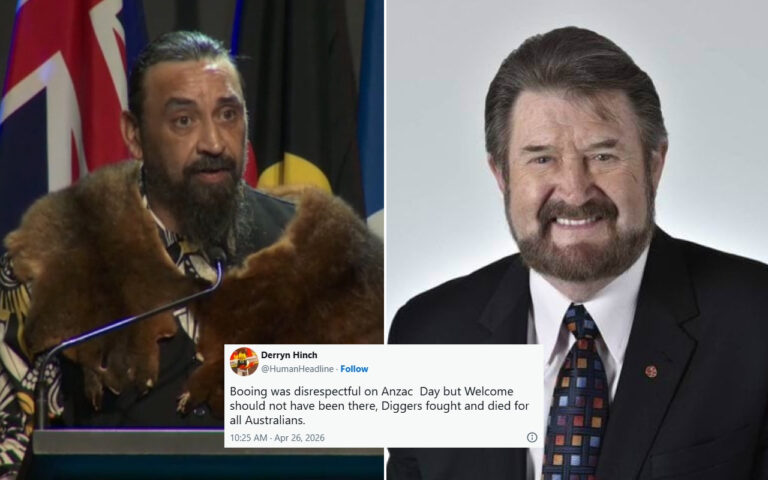
Brown, who commands fees of up to $4,500 for official speaking appearances and cultural ceremonies, has also faced criticism for wearing personal promotional merchandise and a baseball cap during solemn national commemorations.
Taking the stage at Hinch’s state funeral—this time without his signature cap—Brown acknowledged the unusual nature of his presence before the assembled crowd.
“A ‘Welcome to Country’ is usually offered at the beginning of something, but today we offer it as part of a farewell,” Brown addressed the room. “I welcome those who remain, while our ancestors stand steady to receive the spirit of the one who has passed.”
A Final Irony and Public Backlash
To many attendees and observers across Australia, the performance represented a stark ideological contradiction. Throughout his life, Derryn Hinch had been a vocal, unyielding opponent of ceremonial “Welcome to Country” performances, viewing them as divisive cultural rituals rather than unifying national gestures.
Hinch’s opposition was documented and well known. Just months before his death, following controversy at an Anzac Day service, Hinch posted directly on X (formerly Twitter):
“Booing was disrespectful on Anzac Day but Welcome should not have been there, Diggers fought and died for all Australians.” — Derryn Hinch, April 26
Furthermore, during the 2023 national campaign, Hinch campaigned firmly against Prime Minister Anthony Albanese’s proposed Indigenous Voice to Parliament referendum, maintaining his belief in a single, undivided Australian civic identity.
The hypocrisy of performing the ritual over Hinch’s coffin was not lost on his closest friends. During his eulogy, legendary television journalist Ray Martin acknowledged the elephant in the room, remarking candidly that Hinch “wouldn’t have much cared for the ‘Welcome to Country.'”
Across the nation, citizens and commentators voiced outrage over what they viewed as a state-mandated political imposition on a dead man’s memory. Commentator Lozzy B argued that “Labor used Derryn’s funeral to virtue signal and push their own divisive political ideology.” Independent content creator I Malcontent echoed the sentiment, writing, “Even in death they want to force the guilt trip on you.”
What was meant to be a dignified farewell for a giant of Australian journalism instead transformed into a heated battleground over political correctness, government overreach, and the commercialization of cultural ritual.
Having spent three decades in newsrooms across Sydney, London, Washington, and Melbourne, I have covered hundreds of state funerals, political spectacles, and institutional controversies. In journalism, there is an unwritten rule: The most revealing moment of a public event is rarely what is written in the official program—it is the friction between what the state wants you to see and what the subject actually stood for.
What played out at The Timber Yard in Port Melbourne was not merely an awkward breach of protocol. It was a textbook case of institutional co-optation—a government protocol apparatus so rigid, so tone-deaf, and so determined to project a standardized ideological image that it imposed a ritual upon a man who spent his life fighting against it.
                    ┌─────────────────────────────────────────────────┐
                    │      THE STATE FUNERAL PROTOCOL COLLISION       │
                    └────────────────────────┬────────────────────────┘
                                             │
               ┌─────────────────────────────┴─────────────────────────────┐
               ▼                                                           ▼
┌───────────────────────────────┐                           ┌───────────────────────────────┐
│     THE DECEASED'S LEGACY     │                           │   THE STATE GOVERNMENT PROTOCOL│
│ • Lifelong opponent of 'Welcome'│                           │ • Mandatory government template│
│ • Opposed 2023 Voice Referendum│                           │ • Civic virtue signaling       │
│ • Individualist & anti-establishment│                       │ • Commercialized cultural agency│
└──────────────┬────────────────┘                           └──────────────┬────────────────┘
               │                                                           │
               └─────────────────────────────┬─────────────────────────────┘
                                             ▼
                            ┌─────────────────────────────────┐
                            │    PUBLIC & MEDIA REACTION      │
                            │ • "Virtue signaling over coffin"│
                            │ • Ray Martin's eulogy callout   │
                            │ • National debate on compliance │
                            └─────────────────────────────────┘
The Anatomy of an Institutional Mismatch
To understand why this event struck such a raw nerve with the Australian public, one must analyze the fundamental mechanics of state-sponsored honors versus the character of Derryn Hinch.
State funerals are double-edged swords. When a government offers a state service, it pays the bill with taxpayer funds, but it also claims ownership of the narrative. For the Allan Labor government in Victoria, the standard state funeral checklist includes specific civic protocols: an Australian flag draped over the casket, official government representatives, and, as standard administrative policy, an opening Welcome to Country.
| Dimension | Derryn Hinch’s Stated Beliefs | State Funeral Execution |
| Cultural Rituals | Opposed “Welcome to Country” as divisive and unnecessary in civic life. | Included a paid Welcome to Country by a controversial activist. |
| Constitutional Reform | Publicly opposed the 2023 Voice to Parliament referendum. | Governed by an administration actively promoting Indigenous treaty and voice frameworks. |
| Institutional Trust | Deeply skeptical of government bureaucracy; jailed for defying courts. | Fully managed and scripted by Victorian State Government protocol officers. |
| Personal Integrity | Demanded absolute authenticity, regardless of offense caused. | Prioritized institutional compliance over the personal wishes of the deceased. |
When a state protocol machine operates on autopilot, it creates moments of profound absurdity. The organizers were so focused on executing their standard civic template that they forgot the first rule of memorializing a human being: Respect the convictions of the person in the box.
The Commercialization of “Humiliation Rituals”
The inclusion of activist Mark Brown amplified public outrage. In media analysis, the messenger is often as important as the message.
Brown represents a highly corporatized, activist wing of cultural performance—charging up to $4,500 per appearance while appearing at sacred national events like Anzac Day in baseball caps and branded apparel. For millions of working-class Australians who watched Hinch battle for decades against elite hypocrisy, seeing a paid activist perform a $4,500 ceremony over Hinch’s casket felt like a final, state-sanctioned insult.
Hinch famously referred to these mandatory performances as “humiliation rituals”—ceremonies designed not to foster genuine reconciliation, but to enforce institutional compliance and impose collective moral guilt on everyday citizens.
By inserting a polarizing figure like Brown into the service, the government transformed a moment of national mourning into a political theater. It forced the audience—and the viewers watching at home—to participate in a ceremony that Hinch himself had condemned just weeks prior on social media.
                     ┌──────────────────────────────────────┐
                     │      THE JOURNALISTIC HYPOCRISY      │
                     └──────────────────┬───────────────────┘
                                        │
        ┌───────────────────────────────┴───────────────────────────────┐
        ▼                                                               ▼
┌───────────────────────────────────────┐               ┌───────────────────────────────────────┐
│     WHAT THE PUBLIC WAS SHOWN         │               │     WHAT THE PROTOCOL OBSCURED        │
│ • A polished, dignified state farewell│               │ • Overriding the subject's explicit core│
│ • Unity across media & political lines│               │ • Ideological messaging over truth   │
│ • Standard civic cultural compliance  │               │ • Commercialized activism at taxpayer expense│
└───────────────────────────────────────┘               └───────────────────────────────────────┘
The Silence of the Media Class—and the One Who Spoke Up
As a journalist who sat in newsrooms alongside figures like Hinch and Ray Martin, I found the reaction inside the room deeply revealing.
Derryn Hinch built his entire career on breaking the rules. He was a man who went to prison because he believed the public’s right to know the identity of child abusers trumped the legal system’s suppression orders. He was loud, abrasive, arrogant, and fiercely independent.
Yet, inside The Timber Yard, surrounded by Melbourne’s media elite, almost no one in the official lineup dared to challenge the state government’s program before the event took place. It was left to Ray Martin—a veteran who understands the power of plain speaking—to drop the polite mask during his eulogy and speak the truth that everyone in the room knew: Hinch wouldn’t have cared for it.
That single sentence from Ray Martin did more to honor Hinch’s legacy than the entire state-sanctioned program. It reminded the audience that journalism is not about going along with the script; it is about calling out nonsense, even when it is wrapped in the solemnity of a state funeral.
The Unanswered Questions
This controversy extends far beyond one broadcast legend’s memorial. It raises fundamental questions about civil liberties, state power, and cultural freedom in modern Australia:
-
Individual Consent vs. State Power: Does the state have the moral right to override the explicit, publicly stated beliefs of a citizen during a state-funded funeral?
-
Financial Transparency: What criteria does the Victorian state government use when allocating thousands of taxpayer dollars to private contractors and activists for civic rituals?
-
The Limits of Protocol: Why did government protocol officers fail to consult Hinch’s estate or review his public statements regarding Welcome to Country ceremonies prior to drafting the official program?
-
The Future of State Honors: When a state funeral becomes a platform for government virtue signaling, does it honor the deceased—or does it simply serve the political needs of the administration hosting it?
Derryn Hinch spent 82 years creating tsunamis. He was a man who courted controversy in life, and it is perhaps fittingly poetic that his death sparked one final, massive national debate.
He was a complex, flawed, and extraordinary figure—a journalist who broke laws to protect children, a broadcaster who refused to be censored, and a politician who refused to play by party rules. He believed in calling a spade a spade, regardless of the personal, professional, or legal cost.
┌────────────────────────────────────────────────────────────────────────┐
│                          IN MEMORIAM & REFLECTION                      │
│                                                                        │
│  "If a state funeral requires a man to abandon his principles in death, │
│   then it is not the man being honored—it is the state honoring itself."│
└────────────────────────────────────────────────────────────────────────┘
The uproar over his state funeral is not about disrespecting Indigenous culture or picking a political fight. It is about intellectual honesty and individual dignity. A nation that purports to honor its great iconoclasts must have the courage to respect their convictions—especially when those convictions run counter to the prevailing political orthodoxy.
When the state uses a coffin as a prop for administrative compliance, it undermines the very purpose of a national tribute. Derryn Hinch would have hated the mandatory ritual, but he would have loved the headline it created.
As the dust settles on his final broadcast and Frank Sinatra’s words fade into history, everyday Australians are left with a troubling reflection.
If the state can override the lifelong principles of a world-famous senator and journalism giant on his final day on Earth, what chance does an ordinary citizen have against the quiet, unstoppable march of institutional conformity?