
Prime Minister Andy Burnham Faces Intense Parliamentary Clash Over Defense Spending and Chagos Islands Deal
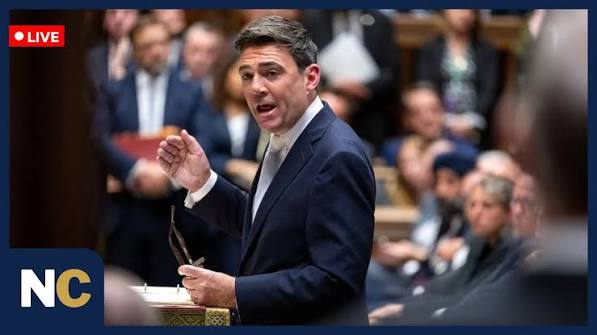
Prime Minister Andy Burnham defended his government’s economic and military priorities during a fierce session of Prime Minister’s Questions, clashing with the opposition over defense funding, welfare cuts, and the controversial Chagos Islands agreement.
Prime Minister Andy Burnham confronted a barrage of aggressive questioning during a high-stakes session of Prime Minister’s Questions, highlighting the growing political friction over his administration’s national security strategy.
The parliamentary showdown was dominated by intense clashes over defense spending targets, welfare allocations, and Britain’s foreign policy posture.
Facing persistent pressure from the opposition, Burnham defended his government’s approach to balancing military readiness with domestic social commitments.
The heated exchanges underscored the delicate tightrope the Prime Minister must walk as he navigates key policy decisions while trying to maintain control of the national political narrative.
The Clash Over Defense Spending and Military Targets
The central confrontation of the session revolved around Britain’s long-term defense budget and the timeline for hitting key military investment milestones.
The Leader of the Opposition aggressively pressed Burnham on whether his government remains committed to reaching the benchmark of 3 percent of GDP on defense by 2030.
Critics pointed to the recent career trajectory of John Healey—who transitioned from Defense Secretary to Chancellor—noting that he previously warned that failing to hit the 3 percent target by the end of the decade would leave British troops vulnerable.
Burnham pushed back by reaffirming his administration’s dedication to national security and NATO alliances.
He announced a target of 3.5 percent of GDP by 2035, with detailed budgetary roadmaps slated for release during the upcoming spending review.
Accusing his political rivals of political point-scoring, Burnham urged the opposition to focus on collaborative problem-solving when addressing complex defense requirements.
Welfare Cuts Versus Armed Forces Funding
The debate quickly escalated into a broader philosophical fight over national priorities when the discussion turned to how defense enhancements should be financed.
The opposition argued that the government was prioritizing swelling welfare expenditures over the needs of the armed forces.
Critics highlighted a projected £32 billion increase in the welfare bill and lost tax revenues resulting from high-net-worth individuals leaving the country, suggesting those funds should be reallocated directly to military capabilities.
Specifically, the opposition proposed funding defense expansions by slashing housing benefits.
Burnham forcefully rejected the proposal, warning that stripping £4 billion from housing support would trigger a surge in homelessness and street sleeping.
He contrasted the opposition’s approach with what he termed the “Labour way” of lowering welfare dependency.
That strategy, he explained, relies on aggressive council housing construction, enhanced educational support, and expanded mental health services.
“This side of the house will not be forced to choose between the two,” Burnham declared, arguing that true national security requires both a strong military and resilient communities.
Foreign Policy Flashpoints: The Chagos Islands and the Falklands
The parliamentary showdown also exposed deep divisions over international affairs, particularly regarding the government’s handling of overseas territories and defense diplomacy.
The opposition targeted the administration over a £35 billion financial arrangement concerning the Chagos Islands and Mauritius, accusing the government of giving away strategic British territory while simultaneously canceling £30 million in essential training allocations for British soldiers.
Compounding the foreign policy pressure, the opposition raised concerns over renewed rhetoric from Argentina regarding the Falkland Islands, asserting that foreign adversaries perceived weakness in current British leadership.
Burnham dismissed criticisms regarding past defense funding levels, noting that military investment suffered under previous administrations.
On the Falkland Islands, the Prime Minister maintained an unyielding position, promising that his government will always respect the self-determination rights of Falkland Islanders and remain relentless in defending them.
Taking a Stance on the Middle East
Shifting away from domestic defense figures, Burnham concluded the session by outlining his vision for Britain’s role in global diplomacy, focusing specifically on the Israeli-Palestinian conflict.
He asserted that the UK must exercise moral leadership by standing against injustice and actively working toward a sustainable two-state solution.
Highlighting recent domestic measures against individuals intimidating Palestinians, Burnham emphasized that Britain’s international standing depends on its unwavering commitment to fairness on the world stage.
What Happens Next in Westminster
As the political fallout from the bruising PMQs session settles, attention will turn to the upcoming spending review, where the government is expected to clarify its funding roadmap for the armed forces.
With defense policy, international commitments, and cost-of-living pressures dominating the national conversation, the Prime Minister will face continued scrutiny over whether his administration can successfully balance fiscal responsibility with robust national security.
How do you think the government should balance increased defense spending with domestic social welfare needs?