
Andrew Hastie, Pauline Hanson, and the Battle Reshaping Australia’s Conservative Politics
In politics, some disputes are merely personal. Others reveal deeper fractures running through a political movement. The escalating conflict between Liberal frontbencher Andrew Hastie and Pauline Hanson’s One Nation increasingly appears to belong to the second category.
What began as a disagreement over former SAS soldier and Victoria Cross recipient Ben Roberts-Smith has evolved into a confrontation involving security concerns, allegations of online targeting, competing narratives about political intimidation, and a broader struggle for influence among conservative voters.
The controversy intensified after reports emerged that Andrew Hastie had informed Coalition colleagues he would receive enhanced security measures at both his home and electorate office.
According to reporting from WAtoday, Hastie told colleagues that Home Affairs Minister Tony Burke had informed him of the security upgrade. While Hastie reportedly acknowledged that Burke did not identify a specific threat, he told colleagues he believed the decision was linked to what he described as an orchestrated online campaign connected to One Nation supporters and the ongoing Ben Roberts-Smith controversy.
The allegations immediately drew attention because they touched on one of the most sensitive issues in modern politics: the growing threats faced by elected representatives.
However, One Nation quickly rejected the accusation.
In a public statement, the party stated that it was not running any campaign against Hastie and argued that the Liberal Party was causing enough political damage to itself without assistance from One Nation.
The party made clear that while it strongly supports Ben Roberts-Smith, it denied any organized effort targeting Hastie.
This leaves a significant gap between allegation and confirmation.
At present, what is publicly known is relatively limited.
Hastie has stated that he believes an online campaign contributed to concerns about his safety.
One Nation has denied running any such campaign.
No public evidence has been released linking any specific security assessment to actions by One Nation.
The Australian Federal Police, consistent with long-standing policy, do not discuss security assessments involving individual politicians.
As a result, much of the public debate currently revolves around competing interpretations rather than established facts.
The Security Debate: Why Timing Matters
The timing of the controversy has become almost as significant as the allegations themselves.
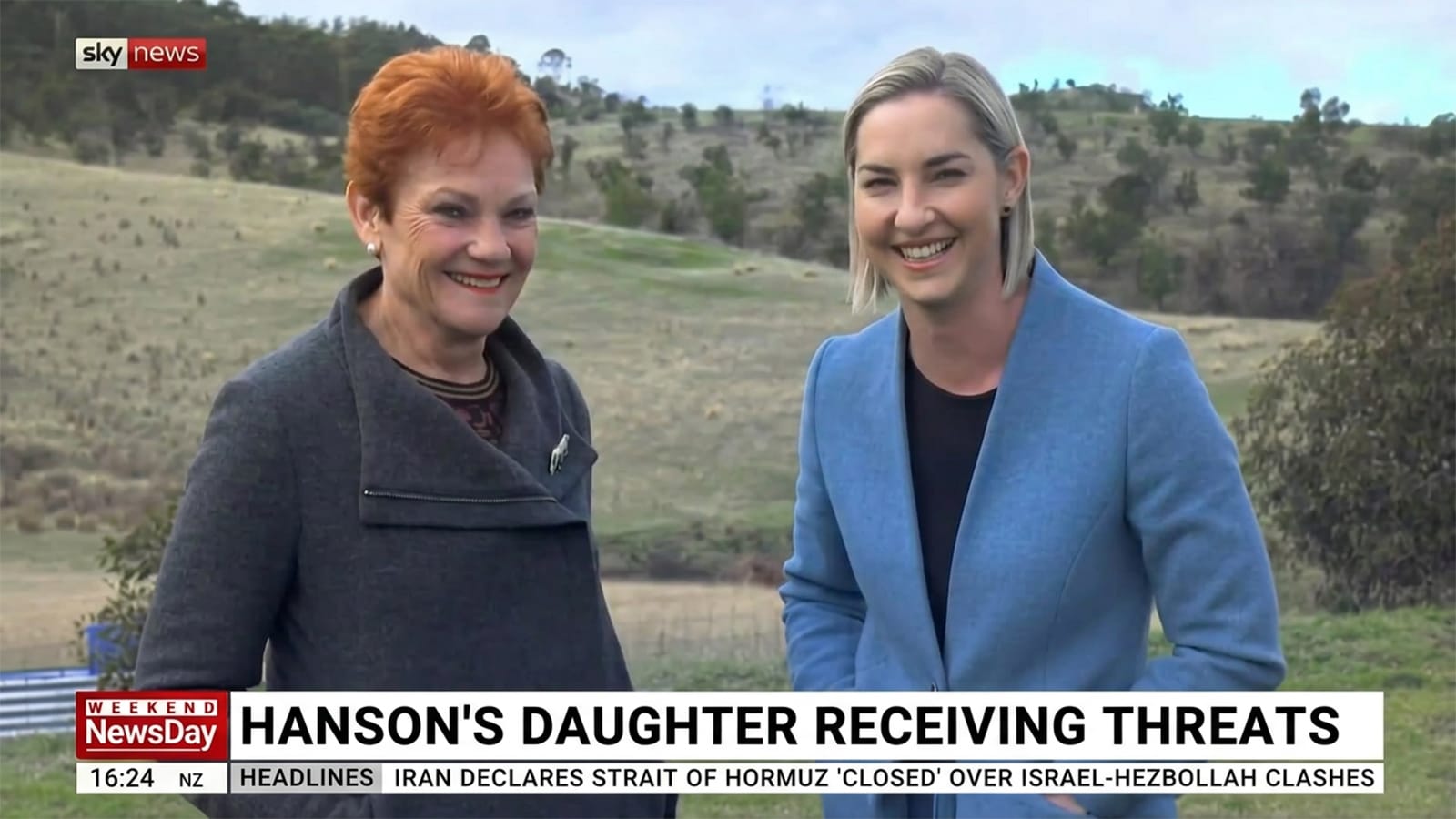
While Hastie has reportedly been approved for enhanced security measures, Pauline Hanson continues to seek increased protection following a series of threats directed at her and her family.
According to public statements from Hanson’s office, concerns have escalated in recent months.
Her chief of staff, James Ashby, has argued that the threats should warrant a higher level of protection. Hanson’s daughter, Senator Lee Hanson, has publicly claimed that threats have extended beyond Pauline Hanson herself and now affect multiple generations of the family.
Several incidents have attracted media attention.
Reports have included the detention of a man allegedly carrying knives near a venue where Hanson was staying during an election campaign, a protest-related security breach during a National Press Club appearance, and significant police deployments at public events she attended.
Security experts quoted in Australian media have suggested that Hanson may warrant additional protection based on the level of threats she faces.
Yet, as of now, no publicly announced upgrade comparable to Hastie’s has been confirmed.
Prime Minister Anthony Albanese has maintained that security decisions are made independently by law enforcement authorities rather than politicians.
The AFP has similarly declined to comment on individual cases.
That reality has created an uncomfortable political contrast.
One politician receives enhanced security while publicly criticizing One Nation.
The leader of One Nation continues requesting greater protection while arguing that threats against her are not being taken seriously enough.
Whether that contrast reflects differing threat assessments or simply the complexity of security decision-making remains unclear.
But politically, the optics are impossible to ignore.
Hastie’s Extraordinary Language
The controversy intensified further because of the language attributed to Hastie.
According to reports from inside the Coalition party room, Hastie declared:
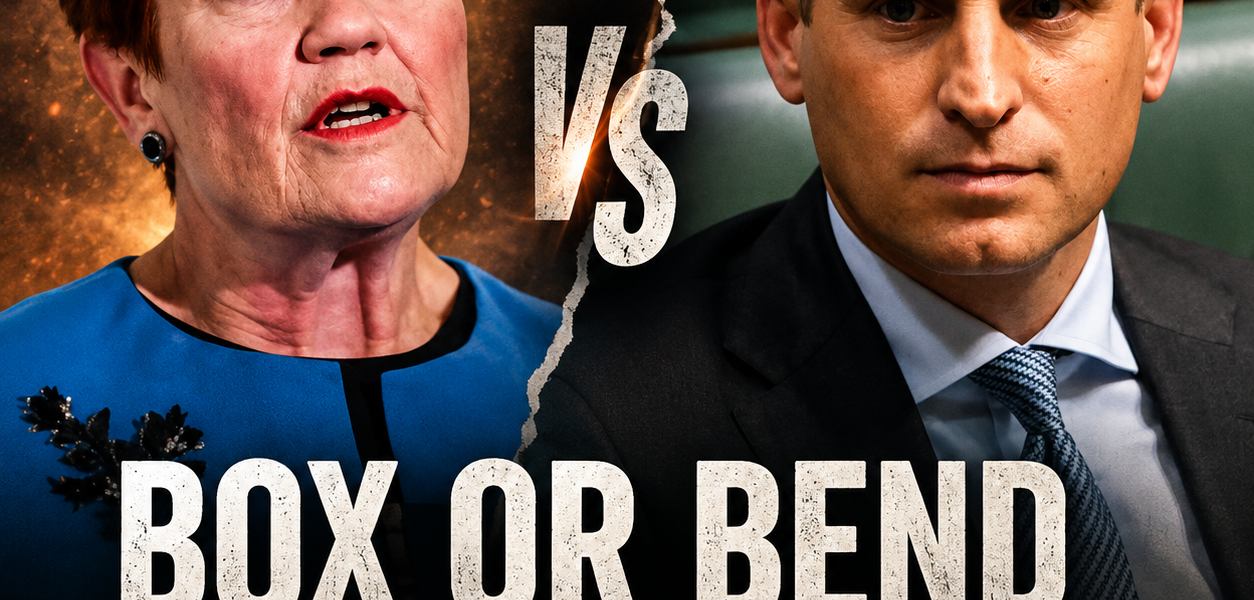
“I would rather get taken out in a box than bend the knee to One Nation.”
He was also reported to have said:
“I will never surrender to One Nation, and we will do them, and do them slowly.”
Such language is striking even by modern political standards.
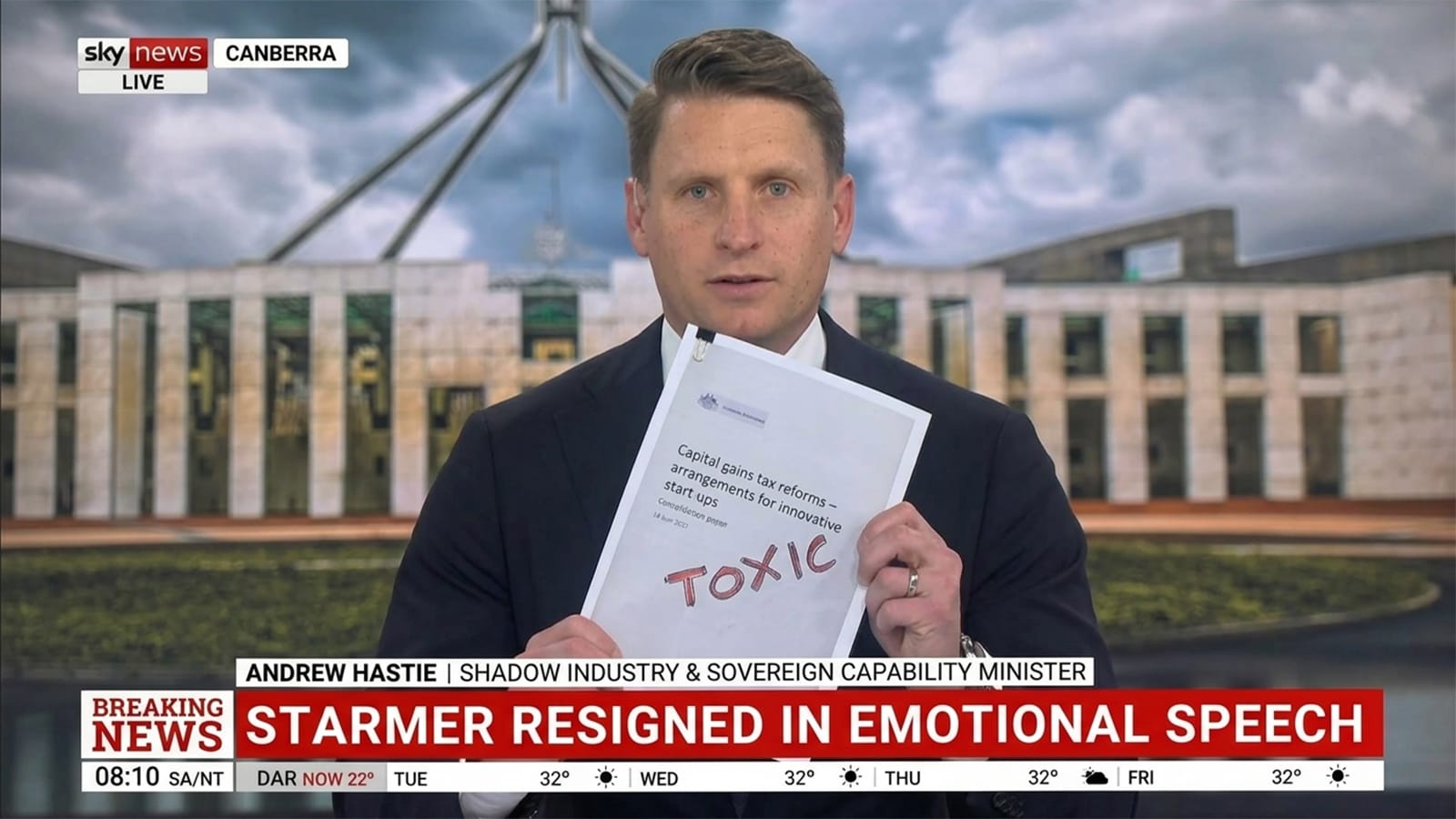
Australian politics has become increasingly combative over the past decade, but references to political warfare, surrender, and being “taken out in a box” elevate the rhetoric to a different level.
Those comments followed earlier remarks Hastie made during an interview with radio station 2GB.
In that appearance, he stated:
“If Pauline Hanson and James Ashby want war, I’m going to give them war.”
Taken together, the comments paint a picture of a politician who views One Nation not merely as a rival party but as a direct threat to the future of the Liberal Party and conservative politics more broadly.
The rhetoric also reflects growing frustration within Coalition ranks as One Nation continues making inroads among conservative voters who once reliably supported Liberal and National candidates.
The Roberts-Smith Factor
At the center of the conflict sits a highly controversial figure: Ben Roberts-Smith.
Roberts-Smith remains one of Australia’s most decorated soldiers and one of its most polarizing public figures.
In 2023, a Federal Court judge concluded that allegations published against Roberts-Smith by media organizations were substantially true on the balance of probabilities in a civil defamation case.
The judgment represented one of the most consequential legal defeats ever suffered by a prominent Australian public figure.
Andrew Hastie became involved in the matter because he was among numerous current and former military personnel who provided evidence during the proceedings.
As a result, he has become a target of criticism among some supporters of Roberts-Smith.
The story has become even more complicated because Roberts-Smith now faces criminal charges relating to alleged war crimes in Afghanistan.
He denies all allegations.
Importantly, he remains entitled to the presumption of innocence, and the criminal case has not yet been heard.
For many supporters, Roberts-Smith has become more than a legal case.
He has become a symbol.
Some view him as a decorated soldier unfairly targeted by institutions.
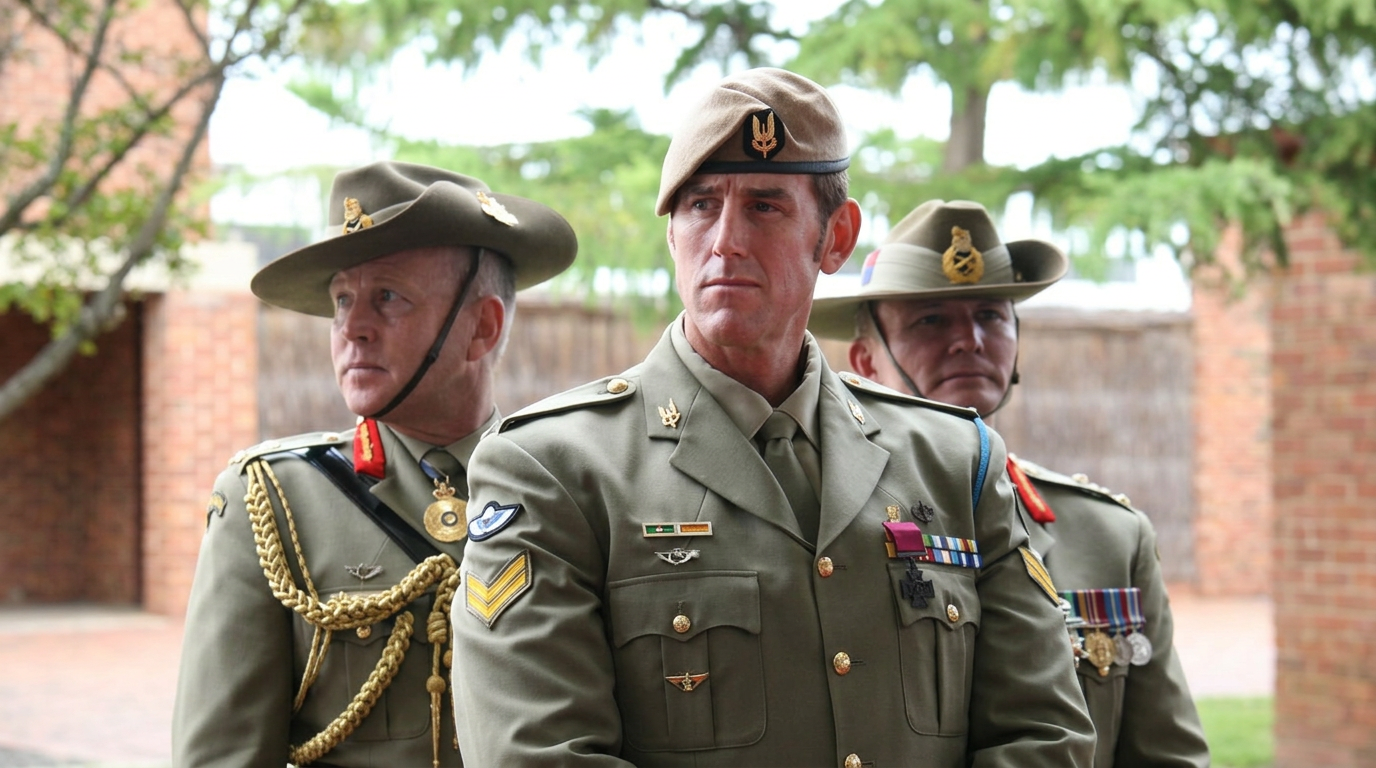
Others view the legal proceedings as evidence that no individual should be above scrutiny regardless of military achievements.
That divide has created powerful emotions that extend far beyond the courtroom.
One Nation’s Electoral Ambitions
While the security controversy dominates headlines, there is another political reality that may be driving much of the conflict.
One Nation is actively targeting Hastie’s electorate of Canning.
James Ashby has openly discussed the party’s intention to mount a serious challenge in the seat.
Western Australia has become an increasingly important battleground for conservative politics, and One Nation has identified several electorates where it believes it can significantly increase support.
Unlike the allegations regarding online campaigns, these ambitions are not disputed.
One Nation openly acknowledges its electoral strategy.
The party sees opportunities among voters dissatisfied with both major parties and increasingly frustrated by issues such as immigration, cost-of-living pressures, energy policy, and cultural debates.
For Hastie, therefore, One Nation represents both a political opponent and a strategic threat.
My Professional Perspective
This Story Is Not Really About Security
After covering political movements across Australia, Britain, and the United States for more than three decades, I believe many observers are focusing on the wrong aspect of this story.
The headline revolves around security.
The deeper story revolves around power.
Specifically, it revolves around who will control the future of Australia’s political right.
That struggle has been building for years.
The Liberal Party increasingly faces competition from multiple directions.
In urban areas, it loses support to independents and progressive candidates.
In regional and outer suburban areas, it loses support to parties such as One Nation.
This creates a strategic nightmare.
The Coalition is being squeezed from both sides simultaneously.
Hastie’s comments suggest he understands the danger.
His language does not sound like someone discussing a minor political rival.
It sounds like someone discussing an existential challenge.
The Real Meaning of the Roberts-Smith Divide
Most reporting focuses on Roberts-Smith as an individual.
The more important reality is what he represents.
For many Australians, particularly within parts of the conservative movement, Roberts-Smith has become a symbol of broader concerns about institutions.
Questions that animate his supporters often include:
- Can media organizations be trusted?
- Are military veterans being treated fairly?
- Do elites understand ordinary Australians?
- Has national pride become politically unfashionable?
Whether one agrees with those concerns is almost beside the point.
The political significance lies in the fact that these sentiments exist and continue attracting support.
One Nation has recognized that reality.
The Liberal Party is still struggling to determine how to respond.
Why Hastie’s Comments Matter
Politicians frequently attack opponents.
What made Hastie’s comments unusual was their emotional intensity.
Phrases such as “bend the knee,” “war,” and “taken out in a box” suggest a conflict that has moved beyond ordinary policy disagreement.
When senior politicians begin using language associated with existential struggles, it often signals deeper anxieties within their political movement.
That does not necessarily mean those anxieties are unjustified.
But it does indicate that something larger is happening beneath the surface.
The Question Nobody Is Asking
One question remains largely overlooked:
Why is One Nation gaining traction in areas where the Coalition once dominated?
Many political analysts focus on personalities.
The more important issue may be representation.
Large numbers of voters appear to feel that major parties are not adequately addressing concerns about:
- Immigration levels.
- Housing affordability.
- Cost-of-living pressures.
- National identity.
- Trust in institutions.
Whether those perceptions are accurate or not, they create political opportunities.
One Nation has been attempting to fill that space.
The Coalition is trying to prevent further erosion.
That battle may ultimately prove far more important than any single dispute involving security arrangements.
The Danger of Personalizing Political Conflict
Another concern is the increasing tendency to frame political disagreements as personal threats.
Modern democracies depend on fierce debate.
They become weaker when opponents are viewed primarily as enemies rather than competitors.
The AFP’s statistics show that threats against politicians have increased dramatically in recent years.
That trend is real and serious.
But political leaders also carry a responsibility to distinguish between legitimate political opposition and genuine threats.
Failing to maintain that distinction can deepen public distrust and make already polarized debates even more toxic.
Conclusion
At first glance, this appears to be a story about Andrew Hastie’s security upgrade and his dispute with Pauline Hanson’s One Nation.
In reality, it reveals something much larger.
It exposes a growing struggle for influence within Australia’s conservative movement.
It highlights the lasting political impact of the Ben Roberts-Smith saga.
It reflects rising tensions surrounding trust, national identity, and institutional authority.
And it underscores the increasingly hostile environment in which politicians now operate.
The unanswered questions remain significant.
Was Hastie’s security upgrade connected to specific threats that cannot be publicly disclosed?
Is One Nation truly uninvolved in the online hostility he describes?
Will Pauline Hanson ultimately receive enhanced protection of her own?
And perhaps most importantly, what does this conflict reveal about the future direction of conservative politics in Australia?
The immediate controversy will eventually fade.
The larger struggle almost certainly will not.
Because beneath the arguments about security, Roberts-Smith, and political rhetoric lies a far more consequential battle—one over who speaks for disaffected conservative voters, and who will shape the next chapter of Australia’s political right.
That is the story behind the story.
And its outcome could influence Australian politics long after today’s headlines disappear.