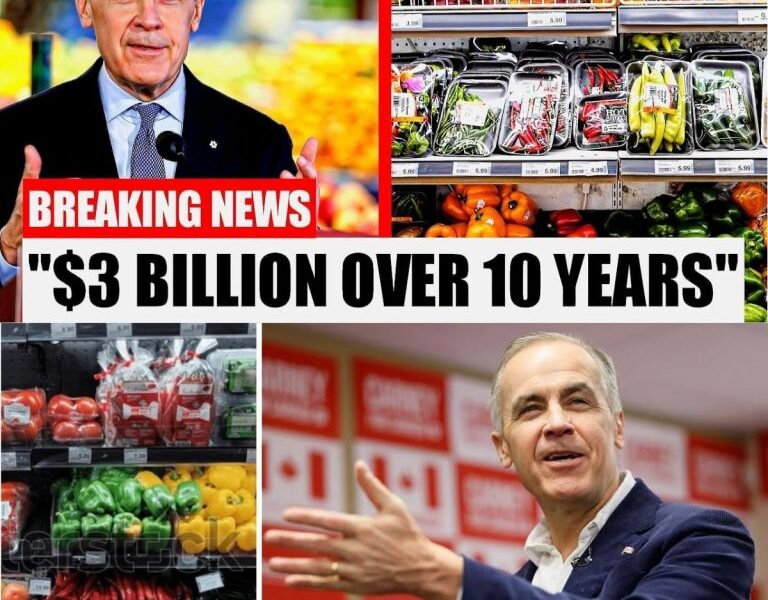
A Multibillion-Dollar Prescription: Mark Carney’s Food Strategy Faces the Reality of Checkout Counters. n1

A Multibillion-Dollar Prescription: Mark Carney’s Food Strategy Faces the Reality of Checkout Counters

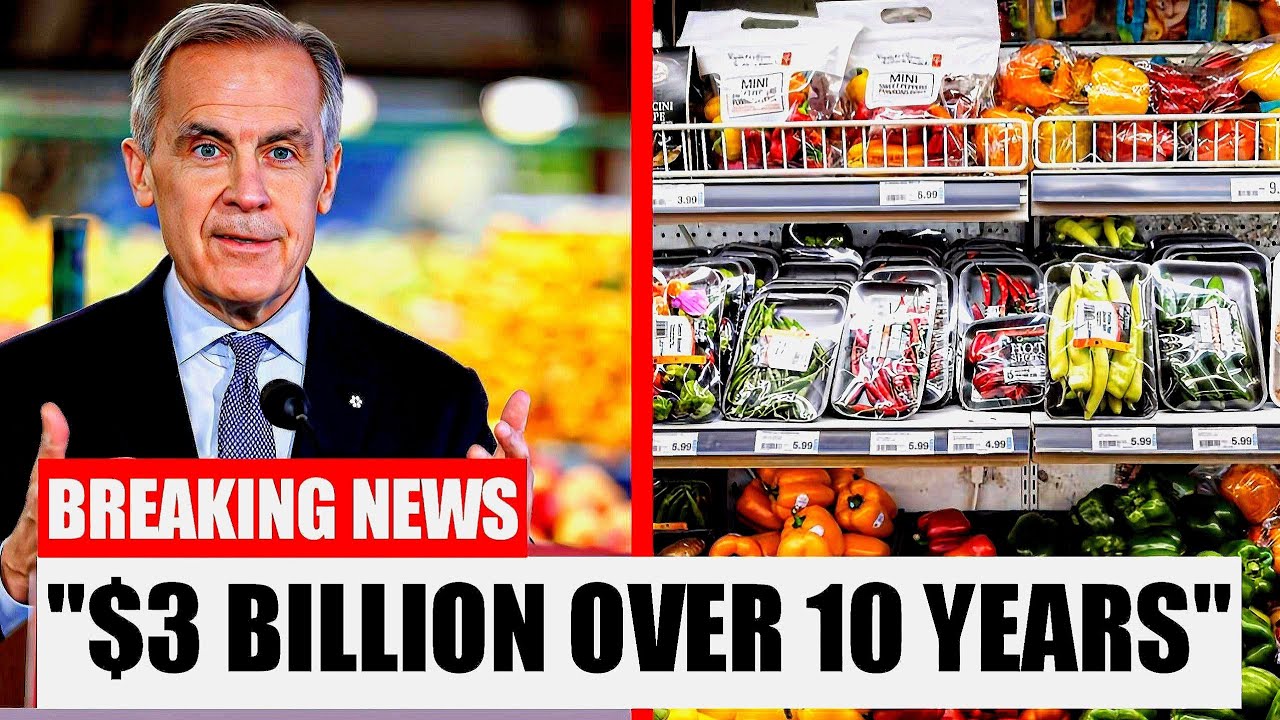
Amidst intense political pressure over the relentless escalation of daily living costs, Prime Minister Mark Carney has unveiled an ambitious federal intervention aimed at rewiring Canada’s troubled food supply chain.
Standing before the sprawling logistical backdrop of the Ontario Food Terminal in Etobicoke, the Prime Minister announced the nation’s first-ever National Food Security Strategy.
The comprehensive plan pledges an investment of more than $3 billion to establish a more affordable, sustainable, and structurally resilient domestic food system.
“We are an agricultural superpower, yet for most Canadians, it doesn’t feel like that at the checkout counter,” Mr. Carney observed, acknowledging a painful economic paradox.
The baseline data animating the government’s intervention is undeniably stark for the average household.
According to federal figures, the average Canadian family now spends approximately $10,000 annually on groceries, translating to a monthly burden of more than $800 just to maintain basic nutrition.
Driven upwards by a confluence of global shocks, pandemic-era disruptions, and domestic pressures, grocery prices have climbed nearly 35 percent since 2019.
Yet, beneath the headline-grabbing $3 billion figure lies a critical structural detail that has immediately drawn the skepticism of economic analysts.
The promised funding is not an immediate cash injection but is instead distributed across a lengthy ten-year horizon.
An annual breakdown reveals a allocation of roughly $300 million per year for the entire country, a sum that pale in comparison to the massive capital expenditures of private retail giants.
The strategy itself is built upon four primary policy pillars designed to address systemic bottlenecks from the farm gate to the retail aisle.
First among these objectives is a targeted effort to dismantle the extreme concentration of corporate power within the domestic grocery market.
Ottawa’s own strategy documents openly concede that just five dominant retail corporations control an astonishing 75 percent of the Canadian grocery market.
This high degree of market concentration grants an enormous amount of pricing power to a handful of executives while severely squeezing independent operators.
To counter this oligopoly, the plan dedicates $1 billion toward expanding regional food infrastructure, including terminals and distribution hubs.
The policy goal is to increase the number of independent grocers utilizing these public hubs by 15 percent within four years, allowing them to bypass the wholesale networks owned by their major competitors.
Additionally, the government is allocating nearly $130 million to the Competition Bureau to provide the regulatory teeth necessary to investigate and combat anti-competitive business practices.
For the everyday shopper, the Prime Minister promised a crackdown on surveillance pricing, pledging to amend privacy laws to prevent corporations from using personal consumer data to optimize profit margins.
The second and third pillars of the strategy turn inward toward domestic self-reliance, aiming to boost processing capabilities and year-round agricultural production.
Mr. Carney lamented that Canada frequently exports raw commodities, such as wheat and soybeans to nations like Thailand, only to pay to import the processed products back.
To remedy this manufacturing deficit, a new $1 billion finance fund will be channeled through Farm Credit Canada alongside smaller grants for equipment modernization.
Furthermore, a $750 million envelope is earmarked to dramatically expand greenhouse and hydroponic capacities, specifically targeting year-round fruit and vegetable cultivation in cold northern environments.
The final piece of the legislative package promises to slash the regulatory red tape that slows down approvals for essential farming inputs like seeds and fertilizers.
While agricultural trade groups have cautiously welcomed the long-term structural vision, the immediate political utility of the announcement remains transparent.
The policy rollout follows consecutive weeks of bruising exchanges in Parliament, where opposition leader Pierre Poilievre consistently hammered the administration over food inflation.
By framing food security as an issue of national sovereignty, the Carney government is attempting to shift the narrative from short-term mismanagement to long-term national resilience.
However, the fundamental question weighing on voters is whether this sprawling bureaucratic architecture will actually lower their grocery bill in the near future.
The economic consensus suggests that infrastructure grants, funding proposals, and regulatory overhauls take years, if not decades, to yield consumer-facing price reductions.
For a family struggling to balance their household budget this month, a new food terminal slated for construction by 2028 offers cold comfort.
Ultimately, while Mr. Carney has accurately diagnosed the structural illness of Canada’s consolidated food market, his ten-year prescription may simply move too slowly for an electorate demanding immediate relief.