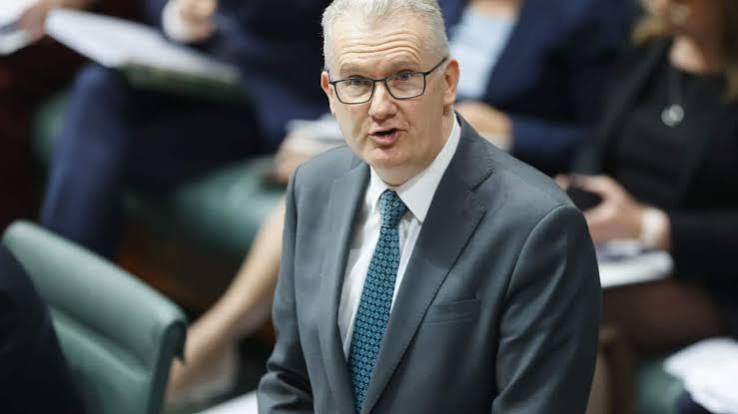
“Solution… or Pressure Point?” Tony Burke’s Migration Argument Sparks New Debate Over Australia’s Housing Crisis. u1

The Construction Paradox: Inside Australia’s High-Stakes Battle Over Migration, Housing, and National Identity
Australia’s current crisis did not emerge overnight; it is the culmination of decades of systemic policy misalignments, zoning bottlenecks, tax incentives favoring property speculation, and demographic shifts. Following the reopening of international borders after COVID-19 border closures, Australia experienced a sharp surge in net overseas migration. While this inflow cleared post-pandemic labor bottlenecks across hospitality, logistics, and healthcare, it coincided with an aggressive monetary tightening cycle by the Reserve Bank of Australia.
The result was a toxic economic brew: soaring mortgage rates, skyrocketing rents, a collapse in residential building approvals, and record-low rental vacancy rates hovering below 1 percent across major metropolitan centers like Sydney, Melbourne, and Brisbane. As ordinary Australians found themselves priced out of homeownership and pushed into hyper-competitive rental auctions, public sentiment toward immigration soured rapidly. Migration, once viewed as the bedrock of Australian prosperity, became the primary scapegoat for the nation’s shelter shortage.
The Main Events & Burke’s Intervention
The policy debate reached a boiling point following high-profile remarks delivered by Home Affairs Minister Tony Burke during an interview with Indian Link Media. Burke directly challenged the prevailing populist narrative that immigration is the core cause of the housing emergency.
Burke’s thesis is rooted in structural necessity: Australia is facing a profound shortage of skilled tradespeople and specialized professionals. The federal government has committed to an ambitious National Housing Accord target to construct 1.2 million new, well-located homes over five years. However, peak industry bodies, including Master Builders Australia, have repeatedly warned that the domestic labor pool is physically incapable of meeting these build rates without substantial overseas reinforcement.
Burke argued that curtailing skilled migration too aggressively would backfire spectacularly—stifling housing construction, slowing down major infrastructure projects, and paralyzing aged-care and hospital systems. While acknowledging that net overseas migration must be recalibrated downward from its post-pandemic peak—a reduction of roughly 45 percent already underway—Burke emphasized that migration policy must be surgical, prioritizing high-value, skill-targeted intake over blanket headcount restrictions.
                ┌─────────────────────────────────────────────────────────┐
                │            THE HOUSING & MIGRATION DILEMMA              │
                └────────────────────────────┬────────────────────────────┘
                                             │
                                 ┌───────────┴───────────┐
                                 ▼                       ▼
                     ┌───────────────────────┐ ┌───────────────────┐
                     │   CRITICS' ARGUMENT   │ │ GOVERNMENT POLICY │
                     └───────────┬───────────┘ └─────────┬─────────┘
                                 │                       │
                     ┌───────────┴───────────┐           │
                     ▼                       ▼           │
           ┌───────────────────┐   ┌───────────────────┐ │
           │ Immediate Demand  │   │ Strained Public   │ │
           │ Impact on Rent &  │   │ Infrastructure &  │ │
           │ Home Prices       │   │ Services          │ │
           └───────────────────┘   └───────────────────┘ │
                                                         │
                                 ┌───────────────────────┘
                                 │
                                 ▼
                     ┌───────────────────────┐
                     │ Skilled Migration Intake│
                     │ (Engineers, Trades,   │
                     │ Healthcare Workers)   │
                     └───────────┬───────────┘
                                 │
                                 ▼
                     ┌───────────────────────┐
                     │ Expanded Construction │
                     │ & Infrastructure      │
                     │ Capacity              │
                     └───────────┬───────────┘
                                 │
                                 ▼
                     ┌───────────────────────┐
                     │ Long-Term Increase in │
                     │ Housing Supply        │
                     └───────────────────────┘
Important People Driving the Narrative
-
Tony Burke (Minister for Home Affairs and Cyber Security): The primary architect of the Labor government’s managed migration stance. Burke maintains that strategic migration is an essential supply-side mechanism required to build homes and staff critical human services.
-
Angus Taylor & Coalition Leadership: Leading the Federal Opposition’s charge, demanding aggressive reductions in net overseas migration. The Coalition argues that the government’s intake levels outpace Australia’s civil infrastructure, driving up living costs and overwhelming suburban communities.
-
Pauline Hanson & One Nation: Pushing a hardline anti-immigration platform that resonates with voters who attribute urban congestion, rising crime, and housing unaffordability directly to foreign arrivals.
-
Peak Industry & Economic Bodies: Groups such as Master Builders Australia, the Housing Industry Association (HIA), and the Business Council of Australia (BCA) strongly endorse Burke’s core premise, emphasizing that acute worker deficits in masonry, carpentry, electrical engineering, and project management threaten to halt housing completions altogether.
Why India Is Central to the Equation
India has emerged as Australia’s single most significant source of skilled migrants, international students, and permanent settlers. Bilateral agreements between Canberra and New Delhi—including mutual recognition of qualifications and mobility frameworks—have streamlined pathways for Indian professionals in STEM, healthcare, construction management, and information technology.
The reliance on Indian professionals is particularly pronounced in regional healthcare and urban engineering. However, because India represents a highly visible demographic in Australia’s immigration statistics, it frequently becomes the focal point of public debate surrounding population growth, integration, and suburban expansion.
Key Facts and the Misinformation Battlefield
Amid this high-stakes policy debate, a wave of digital misinformation has swept across social platforms. Fact-checkers have repeatedly debunked viral posts alleging that the Albanese government planned to issue automatic citizenship or blanket permanent residency to all temporary visa holders.
Official Department of Home Affairs guidelines confirm that visa eligibility standards, health checks, character assessments, and points-tested pathways remain strictly intact. The government’s actual strategy focuses on replacing short-term temporary loopholes with targeted, permanent skilled channels—specifically designed to fill verified structural deficits rather than inflating temporary population numbers.
2. My Professional Perspective
Having tracked policy battles across multiple continents—from London’s post-Brexit labor panics to Washington’s perennial border fights—I have learned that when politicians debate immigration during an economic crisis, they are rarely revealing the whole picture. They focus on headcounts because headcounts are simple, intuitive, and politically weaponizable.
The media coverage surrounding Minister Burke’s statements has largely treated this issue as a partisan boxing match: Labor wants more skilled migrants; the Coalition wants fewer arrivals; voters are stuck in the middle paying $700 a week for a two-bedroom apartment. But this surface-level narrative masks a much deeper, structural truth about how modern economies function—and fail.
Here is the deeper side of the story that mainstream headlines have completely overlooked.

The Delusion of the “Headcount Fallacy”
The fundamental flaw in the public debate is what economists call the “Headcount Fallacy”—the naive assumption that an economy is a fixed pie where every new arrival simply takes a slice of housing, water, and road space.
If you remove 100,000 migrants from Australia’s annual intake tomorrow, logic suggests you immediately free up tens of thousands of rental properties. In the ultra-short term, that is mathematically true; demand at the rental counter eases marginally.
However, in a dynamic modern economy, population and production are inextricably linked. If those 100,000 missing people include civil engineers who sign off on drainage systems, crane operators who lift precast concrete walls, surveyor technicians, aged-care nurses who free up hospital beds, and bus drivers who keep transit grids functioning, the economic engine grinds to a halt.
Australia’s housing sector is currently suffering from acute structural sclerosis. According to Master Builders Australia, the country needs roughly 90,000 additional construction workers just to meet baseline demand, while over 24 percent of the current building workforce was born overseas. If Australia cuts off foreign trade skills under the guise of protecting housing, it commits economic self-sabotage: it shrinks the very workforce needed to build homes, causing housing supply to collapse even faster than demand drops.
                     ┌────────────────────────────────────────┐
                     │       THE MIGRATION CUT PARADOX        │
                     └───────────────────┬────────────────────┘
                                         │
                             ┌───────────┴───────────┐
                             ▼                       ▼
                   ┌───────────────────┐   ┌───────────────────┐
                   │ SHORT-TERM EFFECT │   │ LONG-TERM EFFECT  │
                   └─────────┬─────────┘   └─────────┬─────────┘
                             │                       │
                             ▼                       ▼
                   ┌───────────────────┐   ┌───────────────────┐
                   │ Temporary Ease in │   │ Severe Shortage of│
                   │ Rental Demand     │   │ Trades & Engineers│
                   └───────────────────┘   └─────────┬─────────┘
                                                     │
                                                     ▼
                                           ┌───────────────────┐
                                           │ Construction &    │
                                           │ Infrastructure    │
                                           │ Stalls Completely │
                                           └─────────┬─────────┘
                                                     │
                                                     ▼
                                           ┌───────────────────┐
                                           │ Housing Deficit   │
                                           │ Worsens Long-Term │
                                           └───────────────────┘
The Real Villain: Administrative Scarcity and Planning Paralysis
Why does a country with one of the lowest population densities on earth face a chronic shelter crisis?
Politicians find it conveniently easy to point finger across the Indian Ocean at skilled migrants arriving at Kingsford Smith Airport. It is far harder for those same politicians to admit that Australia’s housing crisis is an entirely self-inflicted domestic policy disaster.
For thirty years, state and local governments across Australia have treated land release and residential zoning as a revenue engine and a political weapon. Suburban councils, captured by entrenched “NIMBY” (Not In My Back Yard) voter bases, have systematically blocked medium-density housing developments, townhouses, and apartment complexes near transit hubs. Stamp duty taxes penalize mobility, while complex development assessment processes add tens of thousands of dollars and years of bureaucratic delays to every single home built.
When you inject population growth—whether native or foreign-born—into a hyper-regulated, artificial market where supply is legally restricted from expanding, prices do not just rise; they explode. Blaming skilled Indian engineers or nurses for high rents in Sydney or Melbourne is an intellectual sleight of hand designed to distract voters from decades of municipal failure, state tax gouging, and systemic planning paralysis.
The Skills Recognition Trap: The Bureaucratic Bottleneck
Here is an uncomfortable truth that neither the government nor the opposition openly discusses: Australia is actively bringing in skilled migrants, but its own regulatory cartels are preventing them from working in the trades they were brought in for.
Consider the reality facing an immigrant carpenter, electrician, or structural engineer arriving from overseas. They routinely face an eye-watering skills assessment process costing upward of $10,000 and taking between 12 to 18 months to complete. Licensing boards, occupational bodies, and trade unions—eager to protect domestic wage premiums—have established intricate regulatory hurdles that force fully qualified foreign tradespeople to work as Uber drivers, delivery workers, or retail clerks while site managers across the country are desperate for labor.
Tony Burke claims migration is the solution to building more houses. But unless the Albanese government takes on the domestic licensing cartels and streamlines qualification recognition, bringing in more skilled migrants will simply flood capital cities with over-qualified professionals working outside their fields, exacerbating housing demand without adding a single brick to the supply chain.
The Human Reality Behind the Numbers
In national security and economic journalism, it is easy to become numb to statistical models, visa quotas, and net overseas migration metrics. But behind every line item in Minister Burke’s policy framework is a human story that carries profound emotional weight.

Imagine a young Indian civil engineer who sells family assets in Punjab or Bengaluru to complete a master’s degree in structural design at an Australian university. They arrive in Adelaide or Brisbane, perform crucial structural calculations on commercial and residential sites, pay substantial income taxes, and contribute directly to Australia’s growth. Yet, when they scroll through social media or turn on the evening news, they hear political figures and talk-back radio hosts implying that their presence is destroying the Australian way of life and stealing homes from locals.
At the same time, picture a young Australian family in Western Sydney facing their third rent increase in 18 months, forcing them to consider moving into a caravan park or their parents’ garage because 50 people showed up to inspect an outdated two-bedroom unit. Their panic and anger are entirely legitimate.
This is the true tragedy of the current political discourse. It pits hard-working, highly qualified migrants against struggling, anxious citizens in a zero-sum war for basic human survival—shelter. Both are victims of a political class that used immigration to generate easy GDP growth for two decades while completely failing to build the civic infrastructure required to sustain it.
The debate ignited by Tony Burke is not merely a transient pre-election policy skirmish over visa caps or demographic targets. It is a moment of profound national reckoning for Australia.
For half a century, Australia marketed itself to the world as the “Lucky Country”—a vibrant, open, multicultural democracy where economic opportunity was matched by an unshakeable commitment to a fair go, quarter-acre blocks, and high living standards. But that social contract was built on an unstated assumption: that government would continuously plan, invest, and build alongside population growth.
That assumption has fractured. Australia does not suffer from a migration crisis; it suffers from a structural delivery crisis. Turning off the migration tap might offer brief political theater and temporary relief at suburban rental viewings, but it will leave hospitals understaffed, aged-care facilities unattended, and residential construction sites abandoned. Conversely, keeping the doors wide open without breaking down planning cartels, speeding up skills recognition, and funding massive public infrastructure will only deepen social division and housing stress.
Minister Burke is fundamentally correct on one point: Australia cannot build its future by retreating into isolationism. But until Canberra stops using skilled migrants as a quick GDP band-aid and starts dismantling the domestic bureaucratic machinery that makes building a home in Australia so agonizingly slow, the crisis will endure.
A Thought for Discussion:
If Australia continues to rely on skilled migrants to build its cities and care for its aging population, but refuses to reform the domestic planning rules and land-use systems that prevent housing supply from expanding, who is truly failing the nation—the newcomers arriving to help, or the leaders refusing to build?
Top News: Immigration Minister warns that migration cuts could make housing crisis ‘worse’
This broadcast features Home Affairs Minister Tony Burke outlining the government’s strategy on net overseas migration, explaining why targeted skilled migration remains essential to addressing Australia’s housing and economic shortages.