“$2 Million Per Person?” Australia’s ISIS Bride Debate Reignites as Angus Taylor Demands Answers. u1

The Hidden Price of Repatriation: Inside Australia’s High-Stakes ISIS Dilemma
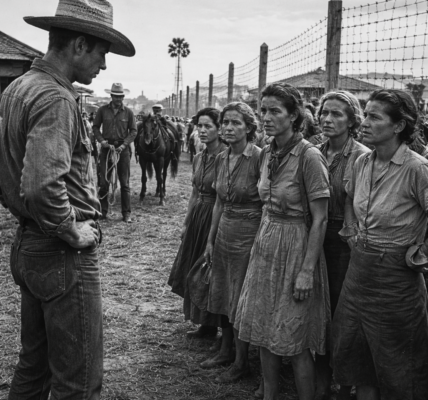
During the height of the Islamic State’s self-proclaimed caliphate between 2014 and 2018, thousands of foreign nationals traversed international borders to reach ISIS-controlled territory in Syria and Iraq. Among them were dozens of Australian women—often referred to in public discourse as “ISIS brides”—who married fighters, raised families, and lived under the regime.
Following the military defeat of ISIS, thousands of women and children were detained by Kurdish-led forces in squalid, high-security detention camps across northeastern Syria, most notably the al-Hol and Roj refugee camps. For years, the federal government in Canberra resisted calls for sweeping repatriations, citing severe security risks to Australian officials operating in Syrian conflict zones. However, legal duties and humanitarian pressures have gradually forced a managed trickle of returns.
The Main Events & Key Figures
The controversy exploded into a national security flashpoint following confirmation that several adult women and children had landed on Australian soil from the Middle East. Shortly after their return, law enforcement agencies took decisive legal action:
-
Criminal Prosecutions: Federal authorities formally charged multiple returnees. Charges leveled against individual women include entering a declared terrorist zone, membership in a terrorist organization, and severe criminal counts under international law relating to crimes against humanity and enslavement.
-
Angus Taylor’s Ultimatum: Federal Opposition Leader Angus Taylor launched a fierce attack on Prime Minister Anthony Albanese’s Labor administration. Taylor demanded complete public disclosure regarding the exact number of individuals expected to return, whether every returnee will face criminal indictment, and the total financial burden placed on taxpayers.
-
The Legislative Push: The Coalition, joined by Pauline Hanson’s One Nation party, has pushed for aggressive legislative amendments. Proposed measures include expanding foreign terrorist fighter exclusion orders, cancelling travel documents, criminalizing secondary assistance given to facilitate returns, and tightening post-release supervision rules.
The $2 Million Price Tag

Central to the opposition’s argument is the staggering cost of round-the-clock counter-terrorism surveillance. Security experts estimate that physical and technological monitoring of a single high-risk individual costs roughly $2 million annually.
Full-spectrum surveillance is not a simple police tail; it requires an extraordinary commitment of national security apparatus:
-
Physical Surveillance Teams: Rotating teams of Australian Federal Police (AFP) officers working 24-hour shifts.
-
Electronic & Technical Monitoring: Constant interception of communications, digital footprint tracking, and location monitoring.
-
Financial Tracking: Real-time auditing by financial intelligence units to track money flows.
-
Inter-Agency Coordination: Continuous risk assessments involving the Australian Security Intelligence Organisation (ASIO), state police forces, and federal intelligence analysts.
The Government’s Defense and Legal Reality
The Albanese government and senior ministers maintain that Australia operates under some of the most robust counter-terrorism laws in the democratic world. Government officials emphasize that law enforcement agencies act independently of political interference and that criminal charges depend entirely on admissible, court-tested evidence.
Under Australian constitutional law, a sovereign state cannot permanently exclude or exile its own citizens. Once an Australian national sets foot on domestic soil, the government must rely on the judicial system, control orders, temporary exclusion orders, or intensive law enforcement monitoring.
To truly understand what is unfolding in Canberra, you have to look beyond the theatrical posturing inside Parliament House. When political figures wave around a $2 million surveillance tag, they are utilizing a classic tactic of national security discourse: reducing an extraordinarily intricate legal and intelligence challenge into a simple arithmetic formula that triggers immediate public outrage.
Over three decades of covering counter-terrorism from the hallways of Langley to the courtrooms of the Old Bailey, I have seen this dynamic play out repeatedly. Here is the deeper side of the story that mainstream headlines fail to capture.
The Illusion of the “Clean Division”: Victim vs. Perpetrator
The political narrative presented to the public is alluringly binary: returnees are either innocent victims swept up by radicalized husbands, or dangerous ideological operatives who pose an imminent threat to suburban Australia.
The operational reality faced by intelligence officers on the ground is infinitely more shadowy.
In Syria’s camps, ideology and survival are inextricably intertwined. Some women actively engaged in ISIS’s brutal enforcement apparatus, enforcing religious compliance and operating within networks of human exploitation. Others were coerced, tricked, or trapped in an environment where resistance meant immediate execution.
When Australian intelligence agencies assess a returning individual, they are not evaluating a static personality; they are trying to untangle years of psychological trauma, radicalization, and survival strategies. Labeling them uniformly as “ISIS brides” minimizes the potential danger they may pose, while treating every returnee as an active terrorist agent ignores the legal thresholds required to prove criminal intent in a court of law.
The Evidentiary Nightmare of “Battlefield Evidence”
Why aren’t all returnees immediately sent to prison upon landing? The answer reveals the fundamental friction between intelligence gathering and criminal prosecution.
In a traditional criminal investigation, police collect forensic material, interview eyewitnesses, and review digital surveillance gathered under strict chain-of-custody rules. In a foreign war zone controlled by hostile militias and torn apart by years of bombardment, gathering admissible legal evidence is an absolute nightmare.
Consider what federal prosecutors must prove in an Australian court beyond a reasonable doubt:
-
They must prove the individual was present in a specific geographic area at a specific time.
-
They must prove active participation or membership in a listed terrorist organization.
-
For international crimes like enslavement, they must produce witnesses or documentation capable of surviving relentless cross-examination by defense counsel.
Much of the information collected by foreign intelligence agencies—such as battlefield intercepts, satellite reconnaissance, or informant reports—is classified. Introducing this material into a public courtroom risks burning sensitive intelligence sources or revealing foreign intelligence capabilities. As a result, law enforcement agencies often possess intelligence that leaves them 95% certain of a person’s involvement, but lack the unclassified, legally admissible evidence required to secure a criminal conviction.

This evidentiary gap is precisely where the $2 million surveillance bill is born. When prosecutors cannot put a suspect behind bars due to evidentiary constraints, ASIO and the AFP have no choice but to monitor them in the community. Surveillance is not a luxury; it is the national security system’s insurance policy against evidentiary limitations.
       ┌─────────────────────────────────────────────────────────┐
       │     RETURN OF CITIZENS FROM CONFLICT ZONES              │
       └────────────────────────────┬────────────────────────────┘
                                    │
                        ┌───────────┴───────────┐
                        ▼                       ▼
            ┌───────────────────────┐ ┌───────────────────┐
            │ Admissible Evidence?  │ │ No Admissible    │
            └───────────┬───────────┘ │ Evidence?         │
                        │             └─────────┬─────────┘
             ┌──────────┴──────────┐            │
             ▼                     ▼            ▼
   ┌───────────────────┐ ┌───────────────────┐ ┌───────────────────┐
   │ Criminal Charges  │ │ Specific Offences │ │ Continuous High-  │
   │ (Crimes Against   │ │ (Declared Zones,  │ │ Cost Surveillance │
   │ Humanity/Slavery) │ │ ISIS Membership)  │ │ ($2M/year per     │
   └───────────────────┘ └───────────────────┘ │ subject)          │
                                               └───────────────────┘
The $2 Million Math: Strategic Resource Allocation
Let us examine the $2 million figure itself. To the average taxpayer dealing with inflation and mortgage stress, spending millions of dollars on a single individual who traveled to support a brutal regime feels deeply offensive.
However, from an agency perspective, the financial cost is actually secondary to the resource strain.
A 24-hour physical surveillance detail on a single high-priority target requires between 18 and 24 trained operatives working in shifts. It requires dedicated mobile units, counter-surveillance spotters, intelligence managers, analysts, linguists, and legal teams.
Australia’s counter-terrorism pool is finite. Every team assigned to monitor a returning individual in suburban Melbourne or Sydney is a team taken off other pressing national security threats—whether that is foreign espionage, state-sponsored cyber intrusions, or domestic far-right extremism.
The Opposition’s critique taps into a real vulnerability: the risk is not just financial expenditure; it is the operational displacement of national security capabilities.
The Statelessness Trap and the Rule of Law
The Coalition and One Nation have advocated for measures that would effectively lock these individuals out of the country indefinitely. Politically, this plays exceptionally well to a public weary of national security risks.
Legally and internationally, however, pushing the problem away creates a dangerous precedent.
Australia is a signatory to international treaties that forbid leaving individuals stateless. More fundamentally, refusing to repatriate citizens transfers the burden of managing Australian national security risks onto non-state actors—such as the Kurdish-led Syrian Democratic Forces (SDF)—who run regional detention camps.
These camps are notoriously unstable. Security breakdowns, armed breakouts, and persistent radicalization inside al-Hol and Roj make them breeding grounds for a future iteration of ISIS. Leaving Australian citizens in these camps does not eliminate the risk; it merely defers it, allowing children to grow up in radicalized incubators outside the reach of Australian law enforcement.
From a constitutional standpoint, if a democratic nation can arbitrarily revoke the core right of citizenship—the right to return to one’s homeland—to avoid security costs or logistical burdens, the very legal foundation of citizenship is eroded.
The battle raging in Australia’s Parliament over returning ISIS-linked citizens is far more than a routine squabble over budget line items or election strategy. It represents a profound test of a modern constitutional democracy’s legal maturity.

It forces a free society to confront an uncomfortable truth: upholding the rule of law is rarely cheap, quiet, or popular.
┌────────────────────────────────────────────────────────────────────────┐
│                        THE TRIPLE TRILEMMA                             │
├────────────────────────┬───────────────────────┬───────────────────────┤
│  FINANCIAL & OPERATIONAL│     LEGAL INTEGRITY   │  NATIONAL SECURITY    │
├────────────────────────┼───────────────────────┼───────────────────────┤
│ Heavy burden on        │ Preserving rights of  │ Mitigating potential  │
│ law enforcement        │ citizenship and due   │ radicalization and    │
│ budget & personnel│ process         │ public risk           │
└────────────────────────┴───────────────────────┴───────────────────────┘
When a government takes back citizens who turned their backs on their own country, it does not do so out of sympathy or political weakness. It does so because a sovereign state must take responsibility for its own legal problems rather than dumping them onto foreign warzones. Prosecuting returnees where evidence exists, and deploying intensive surveillance where it does not, is the steep price a democratic nation pays to maintain both public safety and legal integrity.
The $2 million surveillance tag is a heavy pill for taxpayers to swallow. But the alternative—abandoning constitutional duty and allowing security threats to fester unmonitored in global lawless zones—carries a price tag that no democracy can ever truly afford.
A Thought for Discussion:
If a democratic nation strips away the fundamental rights of citizenship from its worst actors to save on security costs, does it ultimately protect its society—or does it dismantle the very legal principles that make that society worth protecting?
This news broadcast provides real-time coverage of the legal charges laid against returning Australian women, giving crucial visual and factual context to the ongoing political debate.