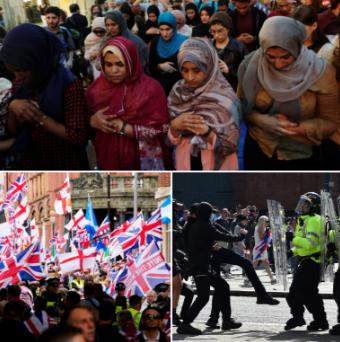
Rising Support for Restore Britain Signals Growing Public Concern Over Immigration and Cultural Change. n111

Restore Britain and the New Politics of Identity: Why a Rising Populist Movement Is Forcing Britain to Confront Difficult Questions
LONDON — A relatively new political movement is rapidly gaining attention across Britain, emerging as one of the most talked-about developments in the country’s increasingly fragmented political landscape.
The party, known as Restore Britain, has experienced a noticeable surge in support according to recent polling, membership claims, and growing online visibility. What began as a pressure group founded in 2025 by former Reform UK parliamentarian Rupert Lowe has evolved into a national political organization seeking to influence the future direction of British politics.
Its rise comes at a moment of extraordinary uncertainty.
Public trust in traditional political institutions has weakened. Immigration remains one of the most debated issues in national life. Economic pressures continue affecting households across the country. Questions surrounding national identity, integration, and social cohesion have become increasingly prominent in public discourse.
Restore Britain has positioned itself directly at the intersection of these concerns.
The party advocates policies focused on border security, reduced immigration, national sovereignty, cultural integration, and what it describes as the restoration of traditional British values.
Supporters argue that these positions reflect concerns long ignored by mainstream political parties.
Critics see something more troubling.
They warn that the movement risks encouraging division, stigmatizing minority communities, and fueling tensions at a time when Britain faces significant social and political challenges.
The debate surrounding Restore Britain has quickly become one of the most contentious discussions in modern British politics.
A Movement Built on Dissatisfaction
The emergence of Restore Britain did not occur in isolation.
Its growth reflects broader political currents that have been developing for years.
Across Britain, increasing numbers of voters have expressed dissatisfaction with established political parties. Many feel that governments of different political persuasions have failed to address issues they consider important, particularly regarding immigration, border control, housing pressures, public services, and cultural change.
Restore Britain has attempted to channel those frustrations into a coherent political movement.
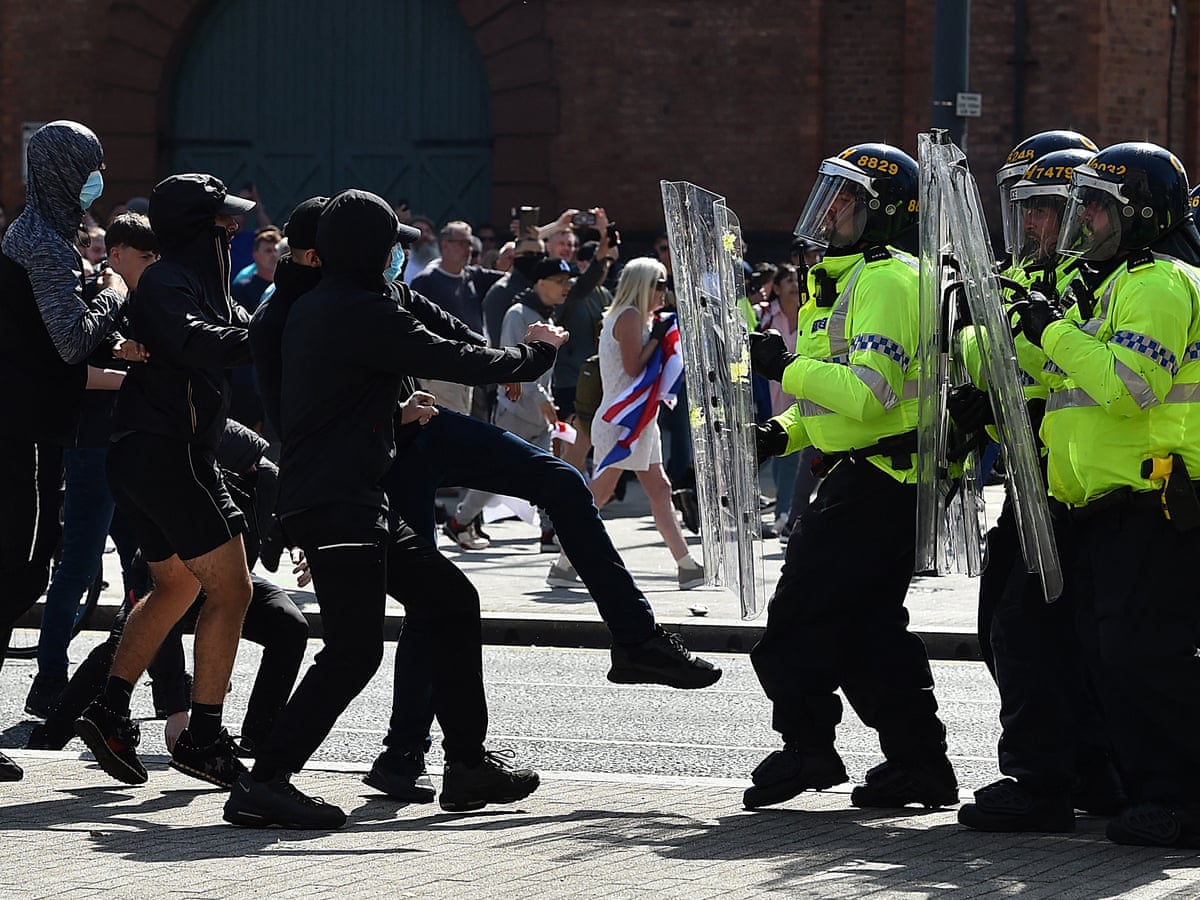
Party leaders argue that large-scale immigration has transformed communities faster than institutions can effectively manage. They claim that policymakers have prioritized ideological commitments over practical concerns relating to integration and social cohesion.
This message has resonated with segments of the electorate who feel disconnected from political decision-makers.
Supporters frequently describe the party as a corrective to what they view as decades of political avoidance.
Immigration at the Center
Perhaps no issue defines the movement more than immigration.
For decades, immigration has occupied a central position in British political debate.
Successive governments have promised reforms, introduced new policies, and attempted to balance economic demands with public concerns.
Yet polling consistently shows that immigration remains among the issues many voters care about most.
Restore Britain argues that existing approaches have failed.
Party representatives advocate stricter border controls, reduced migration levels, stronger deportation measures for foreign offenders, and clearer expectations regarding cultural integration.
Supporters contend that these policies are necessary to preserve social cohesion and maintain public confidence.
Opponents argue that such proposals often oversimplify highly complex issues involving labor markets, demographics, international obligations, economic growth, and human rights.
The disagreement reflects one of the deepest political divisions in contemporary Britain.
The Debate Over Integration
A significant portion of Restore Britain’s appeal stems from concerns regarding integration.
Supporters frequently point to cases involving extremist activity, community tensions, and failures of local governance as evidence that multicultural policies have not always worked as intended.
Some also reference historical scandals, including grooming gang investigations in places such as Rotherham and other towns, arguing that authorities were at times reluctant to confront sensitive issues.
These concerns have contributed to broader public debates about accountability, community relations, and institutional trust.
However, critics caution against drawing sweeping conclusions about entire communities based on the actions of a minority.
Britain’s Muslim population is diverse, encompassing people from numerous ethnic, cultural, and national backgrounds with a wide range of political views, occupations, and life experiences.
Community organizations, religious leaders, and many policymakers argue that broad generalizations risk unfairly stigmatizing millions of law-abiding citizens.
This tension lies at the heart of the national conversation.

How can legitimate concerns about integration, security, and social cohesion be discussed without unfairly targeting entire groups?
There is no easy answer.
Supporters See a Cultural Turning Point
Among supporters, there is a growing belief that Britain has reached a pivotal moment.
Many argue that discussions about national identity have been avoided or discouraged for too long.
They point to demographic changes, shifts in urban populations, evolving cultural norms, and increased diversity as developments requiring more open public debate.
For these voters, Restore Britain represents an opportunity to reassert what they view as core national values and cultural continuity.
They reject accusations of extremism and insist that concerns about immigration and integration are legitimate policy questions that deserve democratic discussion.
The movement’s supporters often frame themselves as participants in a broader cultural debate rather than a purely political campaign.
Critics Warn of Dangerous Narratives
Opponents view the situation very differently.
They argue that political movements centered heavily on identity and demographic concerns can unintentionally encourage suspicion toward minority communities.
Some analysts worry that rhetoric about “restoring” the country may be interpreted differently by different audiences.
Moderate supporters may see discussions about integration and border control.
More radical elements may interpret the same language in exclusionary ways.
This ambiguity has generated considerable scrutiny.
Critics also emphasize that many of Britain’s economic and social challenges cannot be explained solely through immigration.
Housing shortages, infrastructure pressures, productivity concerns, regional inequality, and public service challenges involve multiple factors extending far beyond migration policy.
From this perspective, simplistic explanations risk obscuring more complex realities.
Political Fragmentation Creates Opportunity
The growth of Restore Britain also reflects broader changes in British politics.
Traditional party loyalties have weakened significantly over recent decades.
Voters increasingly move between parties rather than maintaining lifelong political affiliations.
This fluidity creates opportunities for new political movements.
Issues that once remained on the political margins can quickly gain prominence when established parties appear unable to address public concerns.
The success of movements across Europe and North America demonstrates how rapidly political landscapes can change when dissatisfaction reaches a critical point.
Restore Britain is attempting to position itself within that broader trend.
Whether it succeeds remains uncertain.
My Professional Perspective
After three decades covering political realignments, populist movements, immigration debates, and cultural conflicts across Europe and North America, I believe the most important aspect of this story is not Restore Britain itself.
The deeper story is what its rise reveals about the state of modern Britain.
The Real Issue Is Confidence
Political movements rarely emerge from nowhere.
They usually grow because a significant number of citizens believe something important is missing from the existing political conversation.
That does not automatically mean their solutions are correct.
Nor does it mean every concern they raise is justified.
But it does mean policymakers should pay attention.
When voters repeatedly feel ignored, alternative political movements gain strength.
History demonstrates this pattern again and again.
The rise of Restore Britain should therefore be understood not merely as a story about immigration but as a story about confidence in institutions.
Many supporters appear convinced that traditional political structures are no longer adequately representing their concerns.
That perception alone has enormous political consequences.
Immigration Is a Proxy for Larger Anxieties
One of the most misunderstood aspects of modern politics is the tendency to treat immigration as a standalone issue.
In reality, immigration often functions as a symbol for broader concerns.
Economic insecurity.
Housing affordability.
Pressure on public services.
Community identity.
Political representation.
Trust in government.
National cohesion.
When citizens discuss immigration, they are often discussing several of these issues simultaneously.
This helps explain why debates become so emotionally charged.
People are not simply arguing about policy.
They are arguing about their vision of the country’s future.
The Danger of Simplification
At the same time, there is a danger in reducing complex national challenges to a single cause.
Immigration influences many aspects of society, but it is rarely the sole explanation for economic or social difficulties.
Countries succeed or struggle because of countless interacting factors.
Education systems.
Economic policy.

Housing supply.
Productivity.
Governance.
Infrastructure.
Global market conditions.
Demographic trends.
Political leadership.
Any movement that attributes nearly every challenge to one issue risks oversimplifying reality.
The most effective policy solutions usually emerge from acknowledging complexity rather than ignoring it.
Britain Faces a Defining Choice
The fundamental challenge facing Britain is not whether difficult conversations should occur.
They should.
Healthy democracies depend on open debate.
The challenge is ensuring those conversations remain grounded in facts, fairness, and a recognition of shared citizenship.
A society cannot function if legitimate concerns are dismissed.
Nor can it function if entire communities are unfairly blamed for problems they did not create.
Maintaining that balance may be one of Britain’s most important political tasks in the coming years.
Conclusion
The rise of Restore Britain represents more than the emergence of another political party.
It reflects a deeper national debate about identity, immigration, integration, representation, and trust.
Supporters see a movement finally willing to address concerns they believe have been ignored for decades.
Critics see a political force that risks deepening social divisions and encouraging simplistic narratives about complex problems.
Both interpretations contain elements that deserve serious consideration.
What cannot be denied is that the issues driving the party’s growth are real.
Questions about immigration.
Questions about cultural change.
Questions about national identity.
Questions about political accountability.
These debates have moved from the margins of British politics to its very center.
Whether Restore Britain ultimately becomes a major political force or a temporary expression of public frustration remains uncertain.
But its rise reveals something important.
A growing number of Britons are reconsidering assumptions that once seemed politically settled.
And as that reassessment continues, Britain finds itself confronting one of the defining questions of the twenty-first century:
How can a diverse democratic society preserve both social cohesion and individual freedom while navigating rapid cultural, demographic, and political change?
The answer may shape the future of British politics long after the current headlines have faded.