WHY POLAND’S APPROACH TO IMMIGRATION CONTINUES TO DIVIDE OPINION ACROSS EUROPE. n1

The Fortress at Europe’s Gate: Inside Poland’s High-Stakes Defiance of Brussels and the Rebirth of Sovereign Borders
On the eastern flank of the European Union, along the dense, primeval forests of the Białowieża, a quiet revolution in European geopolitics has reached its boiling point. For decades, the border dividing Poland from Belarus was little more than a line on a map—a quiet zone where thickets of pine and silver birch rolled across swampy lowlands, occasionally crossed by local timber trucks or wildlife. Today, that same frontier is defined by five-meter-high steel fences, razor wire, thermal imaging towers, and thousands of heavily armed Polish soldiers patrolling day and night under constant tactical alert.
The transformation of this quiet borderland began in earnest in the summer of 2021. What appeared initially as an unexpected surge of asylum seekers from the Middle East, North Africa, and South Asia soon revealed itself to be something far more calculated: a orchestrated campaign of hybrid warfare engineered by Belarusian dictator Alexander Lukashenko, with explicit backing from the Kremlin. State-sponsored travel agencies in Minsk and Across the Middle East advertised easy passage into the European Union. Flights were chartered, visas were rubber-stamped, and upon landing in Minsk, thousands of hopeful migrants were escorted directly by Belarusian state security officers to the Polish border fencing, handed wire cutters, and instructed to breach the frontier.
For Warsaw, this was never merely a humanitarian dilemma; it was a deliberate, weaponized effort to destabilize the nation’s security, test its defensive resolve, and fragment the European Union from within. In response, successive Polish administrations—from the conservative Law and Justice (PiS) government to the centrist pro-European coalition led by Prime Minister Donald Tusk—adopted an unyielding defense strategy. Physical barriers were erected, emergency exclusion zones were declared, and thousands of Border Guard personnel were deployed alongside military units.
The friction escalated dramatically in late 2024 and through 2025 as Warsaw took the controversial step of temporarily suspending the legal right to apply for international protection directly at the Belarusian border, renewing the measure periodically under strict emergency powers. By May 2026, the Polish Interior Ministry extended the temporary territorial suspension for another 60 days. Polish officials pointed to tangible results, claiming that successful illegal crossings had plummeted to zero in key sectors during the first quarter of the year. However, this border security policy has set Warsaw on a direct collision course with the European Union’s central institution in Brussels.
       POLAND'S BORDER & MIGRATION POLICY TIMELINE

   Summer 2021   ──────►  Minsk-engineered migration surge begins on eastern border

   2022 - 2023   ──────►  Construction of 186km steel fence & electronic surveillance

   Late 2024     ──────►  Prime Minister Donald Tusk proposes asylum right suspension

   March 2025    ──────►  Polish Parliament enacts formal suspension of asylum rights

   May 2026      ──────►  60-day extension of border asylum suspension announced

   12 June 2026  ──────►  EU Migration & Asylum Pact takes effect; Warsaw rejects relocation
Main Events: The Clash Over June 12, 2026
The simmering ideological and policy conflict between Warsaw and Brussels reached a critical nexus on June 12, 2026, the official effective date of the European Union’s landmark Migration and Asylum Pact.
Conceived over years of grueling negotiation, the EU Pact was designed to create a unified system across all 27 member states. It established standardized pre-entry screening, mandatory border asylum procedures, streamlined deportations for rejected applicants, and—most controversially—a “mandatory solidarity mechanism.” Under this system, member states far from border zones would be required either to accept relocated asylum seekers from frontline states like Italy, Greece, and Spain, or pay financial contributions (roughly €20,000 per rejected migrant) into a common central fund to support border operations elsewhere.
The reaction from Warsaw was immediate, unequivocal, and sharp. On the very day the pact took effect, the Polish Ministry of the Interior and Administration announced that Poland would refuse to accept any relocated migrants from other EU member states and would not bear any financial penalties or costs associated with non-compliance.
The Polish position was laid out by key government figures, including Deputy Interior Minister Maciej Duszczyk—the primary architect of Poland’s updated migration strategy—alongside Interior Minister Marcin Kierwiński and Minister-Coordinator of Special Services Tomasz Siemoniak. Minister Duszczyk declared that any mechanism weakening national sovereignty, compromising border integrity, or creating incentivizing “pull factors” for irregular migration was fundamentally unacceptable to the Polish state.
Warsaw made its operational intentions crystal clear: Poland will cherry-pick the Pact. It intends to implement only those specific provisions that reinforce external security—such as expedited return procedures, enhanced biometric database integration, and explicit legal recognition of “instrumentalized migration”. Provisions dictating mandatory quotas or coercive financial burdens, however, will be treated as non-binding mandates on Polish territory.
Key Figures and Facts
To understand the mechanics of this standoff, one must look at the primary actors and structural facts driving the crisis:
-
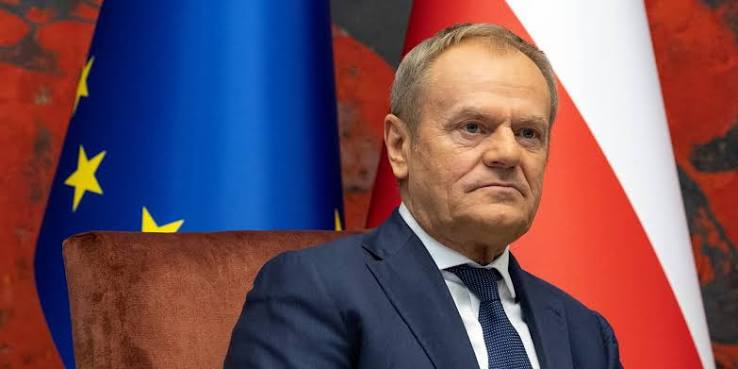
Prime Minister Donald Tusk: Once the President of the European Council and a darling of the Brussels political establishment, Tusk surprised international observers by taking a hardline stance on border control upon returning to power in Warsaw. Tusk argued that defending the nation’s territorial integrity is not an act of right-wing populism, but a fundamental prerequisite for democratic statehood.
-
Deputy Interior Minister Maciej Duszczyk: A respected academic turned policymaker, Duszczyk serves as the strategic mind behind Warsaw’s policy. He has forcefully argued before the European Commission that rules governing standard economic migration cannot be applied to state-sponsored hybrid warfare orchestrated by hostile foreign powers.
-
The Humanitarian Community and Helsinki Foundation for Human Rights (HFHR): Civil rights organizations and legal advocacy groups have challenged the government’s policy in domestic and international courts. They contend that suspending asylum rights violates the Polish Constitution, the 1951 Refugee Convention, and fundamental European human rights laws.
-
Key Operational Data:
-
Border Infrastructure: Poland has fortified over 186 kilometers of its border with Belarus using a 5.5-meter-high steel barrier equipped with thousands of motion sensors, thermal cameras, and night-vision equipment.
-
Asylum Suspension Impact: Following the enactment and subsequent extensions of asylum restrictions along the Belarusian sector, Polish Border Guard authorities reported a steep drop in successful irregular entries.
-
The Ukrainian Reality: Since Russia’s full-scale invasion of Ukraine in February 2022, Poland has hosted millions of Ukrainian refugees, providing full access to healthcare, education, and the labor market. Polish officials regularly cite this humanitarian contribution when rejecting accusations of xenophobia or selfishness from Western European allies.
-
My Professional Perspective
As a journalist who has covered conflicts, statecraft, and border crises across four continents over three decades, I have learned that the most consequential geopolitical battles rarely happen in the polished conference rooms of diplomatic summits. They occur in the mud, in the border posts, and in the quiet friction between cold law and hard reality.
When you strip away the political theater, the dispute over Poland’s migration policy is not merely a policy disagreement between Warsaw and Brussels. It is a fundamental struggle over the future identity of the European nation-state in the 21st century.
┌─────────────────────────────────────────────────────────────────────────┐
│                      THE THREE TRIANGULAR PRESSURES                     │
│                                                                         │
│                           WARSAW'S IMPERATIVE                           │
│                     [Territorial Integrity & Security]                  │
│                                   ▲                                     │
│                                  ╱ ╲                                    │
│                                 ╱   ╲                                   │
│                                ╱     ╲                                  │
│                               ╱       ╲                                 │
│                              ▼         ▼                                │
│       BRUSSELS' MANDATE ─────────────── HUMANITARIAN LAW                │
│     [EU Unity & Shared Burden]            [Geneva Convention Rights]    │
└─────────────────────────────────────────────────────────────────────────┘
What Important Details Have People Overlooked?
When Western news outlets report on Poland’s stance, they frequently frame it through a familiar political lens: a conservative or nationalist eastern state digging in its heels against progressive European norms. But this framing overlooks several crucial nuances:
1. The Death of the “Left-Right” Divide on Security
The most remarkable detail about Poland’s current border posture is that it is being enforced by Donald Tusk—a politician whose career was built on European integration and liberal democracy. When Tusk’s government endorsed the temporary suspension of asylum rights and rejected the EU Migration Pact’s relocation clauses, it sent a shockwave through Brussels. This is not the grandstanding of fringe populists; it is a consensus position shared across almost the entire Polish political spectrum. In Poland today, border security is viewed not as an ideological debate, but as an existential national imperative.
2. The Weaponization of Humanitarian Law
Western European legal frameworks were crafted in the aftermath of World War II, under the assumption that refugees were individuals fleeing state persecution who arrived at a border spontaneously seeking safety. What is happening on the Polish-Belarusian border is structurally different.
In my investigations into hybrid warfare, I have seen how non-state actors and authoritarian regimes exploit liberal legal systems against the states that honor them. Minsk and Moscow recognized that the Geneva Convention could be converted into a geopolitical lever. By funneling thousands of third-country nationals toward Polish border posts, the Lukashenko regime forced Warsaw into a tactical dilemma: either open the gates and accept an endless, unregulated stream of migrants, or enforce the border and face international condemnation for human rights violations. Poland chose the latter, concluding that adhering to traditional asylum processing in a hybrid war zone meant surrendering state sovereignty to hostile foreign regimes.
3. The Landmark Precedent of domestic Judicial Backing
A crucial turning point that received shockingly little international coverage occurred in late 2025, when a provincial administrative court in Białystok rejected a legal challenge brought by a Sudanese national who had been denied the opportunity to claim asylum after crossing illegally from Belarus. Supported by the Helsinki Foundation for Human Rights, the case was meant to strike down the government’s emergency restrictions.
Instead, Judge Barbara Romańczuk upheld the border guard’s actions, ruling that when migrants cooperate with hostile foreign regimes using “instrumentalization” tactics, they are engaging in an operation that threatens national security. The court noted that individuals who choose to enter through unauthorized forest routes controlled by state-backed smuggling operations rather than legal checkpoints cannot claim the standard protections of refugee law. Deputy Interior Minister Maciej Duszczyk hailed the ruling as proof that national defense and constitutional law can align against engineered migration.
What Deeper Meaning is Behind This Event?
To understand why this issue strikes such a deep chord within the Polish collective consciousness, one must look closely at historical memory.
Countries like France, Germany, the United Kingdom, and the Netherlands experienced extensive post-war immigration shaped by post-colonial ties, industrial labor needs, and economic integration. Poland’s history took a radically different path. For over four decades following World War II, Poland was locked behind the Iron Curtain under Soviet dominance. Its borders were not mere administrative lines; they were rigid enclosures imposed by foreign forces.
When Poles look at their eastern frontier, they do not see an abstract administrative zone. They see a border that was repeatedly erased, redrawn, and invaded over centuries of turbulent history—by Imperial Russia, Nazi Germany, and the Soviet Union.
Consequently, sovereignty for the average Polish citizen is not an academic term debated in university halls; it is a hard-won, fragile reality achieved only after immense historical sacrifice. The idea that a bureaucratic apparatus in Brussels can dictate who resides within Polish borders strikes directly at this historical nerve.
Furthermore, Poland’s unprecedented reception of over one million Ukrainian refugees since 2022 fundamentally disproves the narrative that the country is hostile to outsiders. Walk through the streets of Warsaw, Kraków, or Wrocław, and you will hear Ukrainian spoken in cafes, schools, and workplaces. Polish families opened their private homes to women and children fleeing Russian artillery without creating massive refugee camps.
This contrast forms the foundation of Warsaw’s argument to the world: Poland is not against sanctuary; Poland is against lawlessness. It is willing to offer shelter to those fleeing genuine aggression along its physical border, but it refuses to let foreign dictators or supranational bodies dictate its immigration policy.
Why Does This Story Matter Beyond Poland?
This conflict matters because Poland is serving as an early testing ground for a crisis that will inevitably confront the entire Western world over the coming decades.
We have entered an era defined by geopolitical instability, climate-driven displacement, and asymmetric warfare. Migration is no longer driven purely by organic economic or social factors; it is increasingly weaponized by strategic rivals seeking to exploit the vulnerabilities of open societies.
If the European Union cannot construct a coherent framework that distinguishes between genuine asylum seekers and state-engineered hybrid attacks, its legal structures risk becoming obsolete.
-
The Southern View: Frontline Mediterranean states like Italy, Greece, and Malta are understandably exasperated. They argue that geography forces them to bear an unfair share of arrivals from North Africa and the Middle East, and that European solidarity is meaningless if northern and eastern states refuse to share the burden.
-
The Eastern View: Poland and its Baltic neighbors contend that their border is not an internal European transit point, but the external perimeter of NATO and the EU. Forcing a nation that is actively holding off military and hybrid threats from Russia and Belarus to accept internal relocation quotas feels to Warsaw like a penalty for doing its job.
If Brussels attempts to force compliance through financial penalties or legal sanctions, it risks accelerating a dangerous political rift within the EU. It reinforces the narrative pushed by eurosceptic movements across the continent: that the European Union is an overreaching superstate that tramples on national democracy.
What Questions Remain Unanswered?
As an investigative reporter, my job is to look past political declarations and highlight the uncomfortable, unanswered questions that officials prefer to avoid:
-
The Human Cost in the Shadows: What becomes of the vulnerable individuals caught in the crossfire of this hybrid war? While Belarusian state agencies are undoubtedly exploiting these people, many are genuine victims of conflict, poverty, and deception. When Poland restricts asylum applications along the border wall, where do these human beings go? Reports from human rights observers indicate that many remain trapped in freezing forests, pushed back and forth between Belarusian security forces using physical violence and Polish border guards enforcing strict entry bans. How does a constitutional democracy maintain its moral standing while operating such exclusion zones?
-
The Enforcement Dilemma: How does Brussels intend to enforce the Migration Pact if multiple member states simply refuse to comply? If Poland, Hungary, and other nations refuse both relocation and financial contributions, does the European Commission launch infringement procedures? If so, does that risk creating a constitutional crisis that paralyzes European governance at the very moment unity is needed to counter aggression from Moscow?
-
The Slippery Slope of Emergency Exceptions: Poland’s temporary suspension of asylum rights is grounded in national emergency provisions. But at what point does a “temporary” emergency measure become a permanent state policy? If state-sponsored migration pressure continues for a decade, has the right to asylum along Europe’s eastern border effectively ceased to exist?
What Should Audiences Understand Beyond the Headline?
Beyond the fiery headlines of political defiance, audiences must understand that the global consensus on international human rights law is breaking down under the weight of 21st-century realities.
The post-1945 international architecture—including the Geneva Convention—was built on the premise of stable nation-states acting in good faith. It never anticipated a world where a state armed with nuclear weapons and its client dictator would import thousands of human beings from across the globe and use them as living projectiles against a neighboring border.
Poland’s response may appear cold, calculated, or unyielding to critics in Western capitals who live thousands of miles from the frontline. But from Warsaw’s vantage point, it is a pragmatic necessity. Poland is sending a clear signal to the world: a nation that loses control of its borders eventually loses the ability to govern itself.
Summary and Emotional Reflection
Standing near the perimeter fence in the dense quiet of the Białowieża forest, the high-stakes politics of Brussels and Warsaw fade into the stark realities of steel, wire, and soil. On one side of the barrier lie the quiet villages of Eastern Poland, where residents go about their lives in peace, protected by the heavy military presence patrolling the perimeter. On the other side lies a dark forest controlled by an authoritarian regime that views human lives as disposable instruments of political leverage.
Poland’s defiance of the EU Migration Pact on June 12, 2026, was not merely a rejection of bureaucratic quotas; it was a line drawn in the sand. It revealed the deep fault lines that threaten to divide Europe between those who view migration primarily through the lens of individual human rights and shared international obligation, and those who view it through the uncompromising lens of national defense and state survival.
Neither side in this debate is operating without reason.
-
The critics who warn against abandoning human rights at the border are defending the very values that make Western democracy worth protecting.
-
The Polish leaders who fortify the frontier are fulfilling the most fundamental duty of any sovereign government: keeping its citizens safe from external aggression.
The tragedy of this crisis is that both perspectives contain profound truths, yet they are increasingly incompatible in a world governed by asymmetric conflict.
A Final Thought-Provoking Question
As nation-states around the globe confront an era defined by hybrid warfare, mass migration, and shifting geopolitical alliances, Poland’s border posture forces us to ask a question that will shape the future of modern democracy:
When the legal frameworks designed to protect human dignity are deliberately weaponized by hostile regimes to undermine sovereign states, how can a free society defend its borders without destroying the foundational values it seeks to preserve?
Field Reporting & Multimedia Reference
For a deeper look into the legal, political, and strategic developments surrounding Poland’s border policy and its conflict with neighboring state apparatuses, see the detailed report on Poland’s decision to suspend asylum rights.
This footage provides critical context on Prime Minister Donald Tusk’s strategy and the direct geopolitical pressures exerted along the Polish-Belarusian frontier.