TOMMY ROBINSON AND RUPERT LOWE BACK MARLON WEST AS MANCHESTER MAYORAL RACE DRAWS ATTENTION. n1

The Shadow Over Greater Manchester: Trauma, Populism, and the Fight for a Broken System
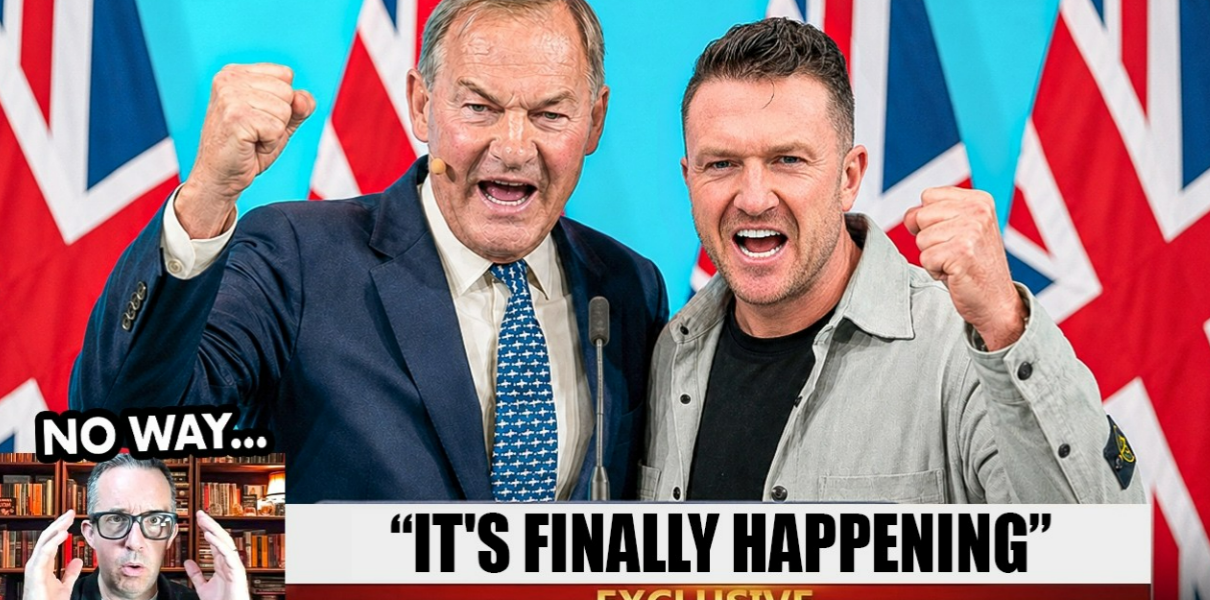
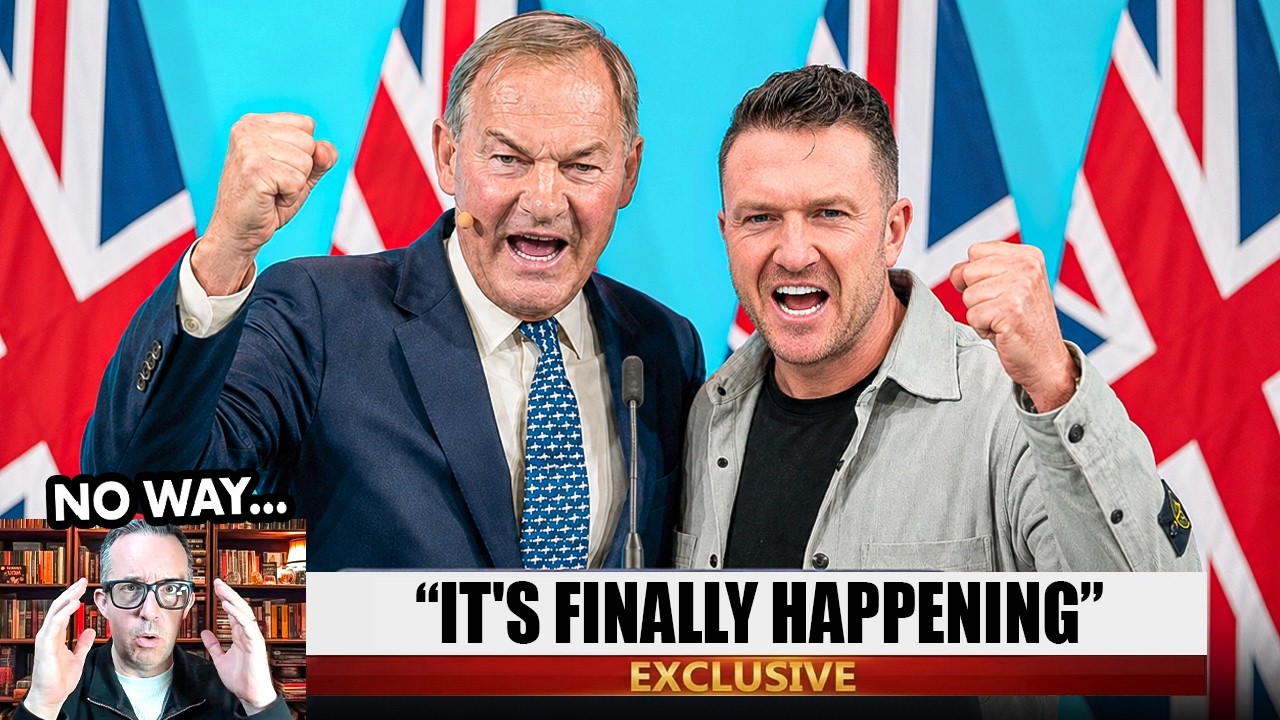
With voting underway in Greater Manchester’s high-stakes mayoral election, a volatile political coalition has rallied behind independent candidate Marlon West. Political commentator Tommy Robinson and former Reform UK MP Rupert Lowe have publicly endorsed West, framing his candidacy as a direct, grassroots assault on what they describe as a complacent and self-serving political establishment.
In a campaign video released on the eve of polling, Robinson portrayed West not as a career politician, but as a father forced into the political arena by systemic failure. West’s teenage daughter, Scarlett, was groomed and trafficked by child exploitation networks in Rochdale and across Greater Manchester—a horrific ordeal that West spent years fighting to expose while battling institutional apathy. Robinson argued that having witnessed “every flaw” inside Britain’s public protection services, West possesses the unique resilience, moral authority, and personal determination needed to force accountability onto institutions that have routinely failed vulnerable citizens.
The endorsement video featured sweeping critiques of local governance across England. The narrator asserted that long-established political dynasties and entrenched party machines have monopolized municipal power in major urban centers—including Manchester, Liverpool, Birmingham, Bradford, Bristol, and London. These entrenched structures, the video claimed, create systemic inertia that insulates local authorities from public scrutiny and makes it exceedingly difficult for political outsiders to break through. While representing political advocacy rather than verified administrative assessments, these claims strike at a growing current of voter frustration across Britain’s urban core.
West’s campaign platform combines fierce anti-establishment rhetoric with grassroots economic nostalgia. During a recent visit to a traditional municipal market alongside Rupert Lowe, West engaged with local stallholders to highlight the ongoing decline of historic trading hubs across Greater Manchester. West argued that traditional street markets historically served as vital civic anchors—spaces where independent micro-enterprises sustained local economies and fostered a cohesive neighborhood identity.
Small business owners on the tour voiced deep frustration, telling West that smaller commercial operations endure disproportionate regulatory and financial pressures compared to multinational corporations, despite serving as the lifeblood of local employment. Lowe echoed these concerns, championing a campaign pledge to legally protect cash transactions. Lowe argued that as banks and corporate retailers increasingly migrate toward card-only and digital payment models, lower-income residents and small independent traders face economic exclusion, making the preservation of physical cash a critical issue of economic freedom.
Public safety and urban order form another core pillar of West’s platform. Speaking from central Manchester, West pledged that if elected mayor, his immediate priority would be coordinating with Greater Manchester Police to drastically increase officer visibility in high-crime zones and areas plagued by open drug use, such as Piccadilly Gardens. West called for zero-tolerance enforcement against drug dealers and open-air drug consumption, insisting that criminal offenders must face direct prosecution and removal from public spaces to restore safety for families and local shoppers.
The campaign’s messaging extends beyond policing into a broader cultural critique of post-industrial British life. The video’s narrator lamented the erosion of traditional working-class neighborhood cohesion over recent decades, contrasting the vibrant street life, active market stalls, and mutual community support of past generations with what he characterized as contemporary urban isolation and civic decay. While these observations reflect a nostalgic interpretation of social transformation, they tap into deep-seated anxieties among long-term residents who feel alienated by rapid demographic and economic shifts.
Ultimately, the emotional core of West’s campaign remains tied to his family’s painful battle for justice. Supporters contend that the failure of police and social services to protect his daughter exemplifies a broader collapse in public sector duty. By converting personal grief into political activism, West’s allies argue he represents a rare alternative to a political class that has lost touch with the everyday realities of the people it governs.
As polling proceeds, the campaign has placed heavy emphasis on voter turnout. The campaign video concluded with an urgent appeal to disaffected voters, warning that entrenched municipal power will never yield unless citizens actively turn out to vote for independent alternatives. Whether West’s message can translate personal tragedy and local frustration into electoral victory remains to be seen, but his campaign has succeeded in forcing uncomfortable questions about institutional failure, public safety, and civic decline directly onto the regional ballot.
My Professional Perspective
The Weaponization of Personal Tragedy: When Institutions Fail
In three decades of covering political insurrections, civil unrest, and municipal collapses across the globe, I have learned that the most explosive force in politics is not ideological theory—it is the raw, unadulterated fury of a parent failed by the state.
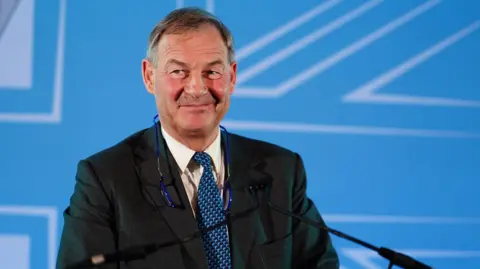
When you look at the political rise of Marlon West, you are not looking at a manufactured candidate sculpted by spin doctors or political action committees. You are looking at a former mental health nurse who spent three agonising years driving through the midnight streets of Greater Manchester searching for his groomed, trafficked teenage daughter because the authorities tasked with protecting her refused to act.
That level of personal trauma changes a human being. It strips away any remaining illusion that public institutions are inherently benevolent or self-correcting.
To understand why West’s candidacy carries such resonance in places like Rochdale, Oldham, and central Manchester, one must understand the profound scandal of the UK’s child sexual exploitation crises. Independent inquiries, including the damning reports authored by Baroness Louise Casey, revealed a horrific reality: for years, police forces, social services, and municipal councils turned a blind eye to organized grooming networks, driven in part by bureaucratic incompetence, institutional fear, and a catastrophic willingness to blame vulnerable young girls rather than their rapists.
When a father who lived through that nightmare stands up and says, “I know these institutions are broken because they broke my family,” he bypasses standard political debate. He is not offering a policy paper; he is offering a testimony.
For the political establishment, candidates like Marlon West are terrifying. You cannot intimidate them with standard political attack ads, and you cannot co-opt them with party patronage. They enter the arena with the absolute conviction of someone who has already faced the worst thing a parent can endure. The establishment views West as a disruptive populist; his supporters view him as a survivor taking a hammer to the wall that protected his child’s abusers.
The Discontent Coalition: Tommy Robinson, Rupert Lowe, and the Anti-System Alliance
The endorsement of Marlon West by both Tommy Robinson (Stephen Yaxley-Lennon) and Rupert Lowe offers a fascinating, highly instructive case study in the evolving architecture of British populism.
On paper, Tommy Robinson and Rupert Lowe inhabit entirely different political universes. Robinson is a lightning-rod street activist, a convicted provocateur whose roots lie in working-class counter-movements and digital agitation. Rupert Lowe is a wealthy former Member of Parliament, a businessman, and a polished figure from the reformist wing of right-leaning politics.
Yet here they are, sharing a platform to back an independent candidate for Mayor of Greater Manchester. What brings these disparate factions together?
It is the shared realization that Britain’s traditional two-party system is suffering from profound structural fatigue. For decades, cities like Manchester, Liverpool, and Birmingham have operated as virtual single-party enclaves under Labour control. When a single party holds uninterrupted municipal power for thirty or forty years, the boundaries between the party, the city council, the police authority, and local civil service begin to blur. Accountability suffocates.
       THE ERODING CYCLE OF MUNICIPAL TRUST

  [ Single-Party Dominance ]
               │
               ▼
  [ Institutional Inertia & Lack of Scrutiny ]
               │
               ▼
  [ Public Sector Failures (Safety, Exploitation, Infrastructure) ]
               │
               ▼
  [ Voter Disillusionment & Political Alienation ]
               │
               ▼
  [ Rise of Independent / Anti-Establishment Coalitions ]
This phenomenon creates a massive, under-represented political underclass—working-class voters who feel that local government treats them with patronizing indifference. When Tommy Robinson mobilizes his digital following and Rupert Lowe lends his institutional credibility, they are tapping into a reservoir of anger that extends far beyond standard left-right politics. They are building an “anti-system” coalition whose primary unifying principle is a desire to smash the status quo.

The challenge for this movement, however, lies in its volatility. While street-level populism can generate massive online engagement and passionate rallies, it also attracts intense media counter-attacks and institutional resistance. The establishment responds to coalitions of this nature not by engaging with their underlying grievances, but by seeking to marginalize them as dangerous or extreme.
The Battle for Piccadilly Gardens: Urban Decay and the War on Cash
Beyond the high-profile debate over grooming scandals, West’s campaign has hit a nerve by focusing on two seemingly mundane issues that shape daily working-class life: urban street crime and the preservation of cash.
If you walk through Piccadilly Gardens in central Manchester on any given afternoon, you do not need a degree in criminology to see that something has gone deeply wrong with public space management. Open-air drug dealing, anti-social behavior, and aggressive street harassment have transformed what should be a vibrant civic square into a symbol of public neglect.
When West talks about zero-tolerance policing and clearing drug dealers from city centers, his message resonates with residents who feel that basic law and order has been abandoned in favor of passive management. For years, British policing has shifted toward remote, bureaucratic models—logging crimes online, issuing reference numbers, and prioritizing digital surveillance over visible, foot-patrol officers. For a mother trying to walk her children through a city center, or a small trader whose shopfront is repeatedly targeted, the absence of visible police officers feels like an outright betrayal of the social contract.
Equally significant is the campaign’s focus on cash protection, championed by Rupert Lowe. To the prosperous, tech-savvy urban professional, a cashless society sounds like seamless modern convenience. But to a small market trader, an elderly pensioner, or a low-income worker operating on a tight budget, the rapid elimination of physical cash feels like a trap.
                       THE CASH VS. DIGITAL DIVIDE

    ┌──────────────────────────────────┬──────────────────────────────────┐
    │     Cash-Reliant Community       │      Digital-First System        │
    ├──────────────────────────────────┼──────────────────────────────────┤
    │  Direct control over budgeting   │  Merchant transaction fees (1-3%)│
    │  No transaction or service fees │  Dependency on banking tech      │
    │  Financial privacy & autonomy    │  Digital tracking & surveillance  │
    │  Accessible to unbanked/elderly  │  Excludes marginalized groups    │
    └──────────────────────────────────┴──────────────────────────────────┘
When local markets close and high street banks shutter their branches, the physical architecture of working-class community life is erased. By framing cash protection as an issue of civil liberty and local economic survival, West and Lowe have tapped into a quiet, pervasive fear: that modern Britain is being redesigned exclusively for corporate entities and financial institutions, leaving ordinary people behind.
The mayoral race in Greater Manchester is far more than a local election; it is a symptom of a profound crisis of faith in British democracy.
For millions of citizens living outside the prosperous bubbles of elite political life, public institutions no longer seem capable of fulfilling their most basic promises: keeping streets safe, protecting vulnerable children, supporting local businesses, and listening to the voices of ordinary taxpayers.
Marlon West’s campaign—fueled by personal tragedy, backed by controversial figures, and driven by a demands for systemic overhaul—is the direct result of that institutional failure. Whether or not he wins the mayoralty, his candidacy has exposed an undeniable truth: when the state fails to protect its children and abandons its civic spaces, the political fallout will eventually come due at the ballot box.
The fundamental question facing the political establishment in Manchester and beyond is simple, urgent, and profound:
Can traditional political structures reform themselves from within to rebuild broken public trust, or will disaffected citizens continue to burn down the existing system to make themselves heard?
For deeper coverage on the issues driving the Greater Manchester mayoral campaign, watch Marlon West’s Campaign for Manchester Mayor.
This report offers essential context on the grassroots campaign, detailing the personal experiences, policy proposals, and political dynamics shaping this pivotal election.