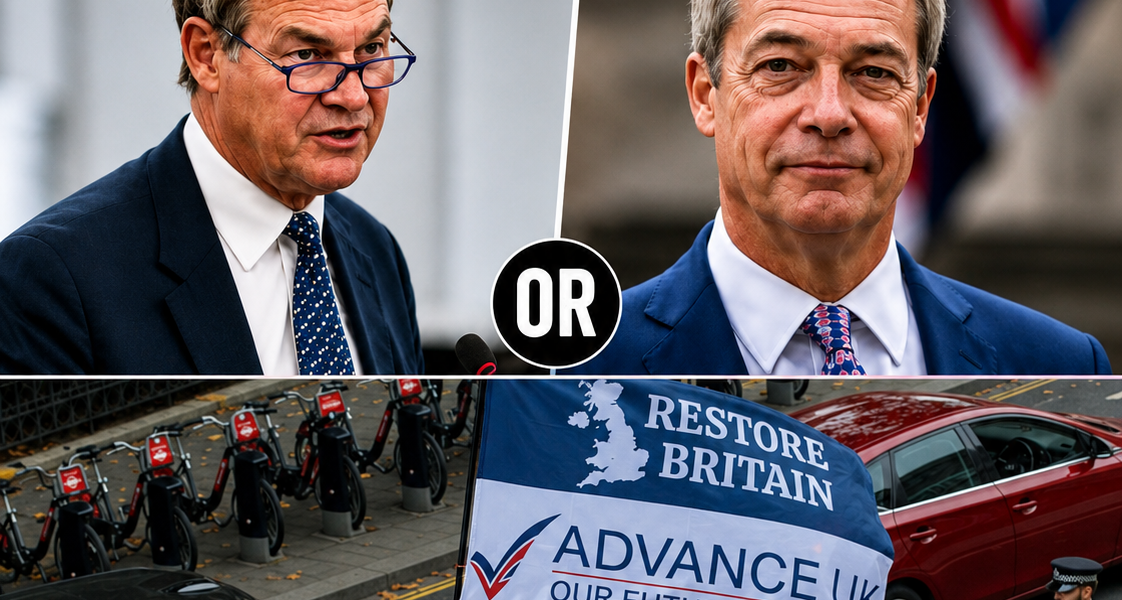
Thousands Join Pro-Restore Britain Facebook Groups Run From Pakistan And Bangladesh. n1

Investigation Reveals Pro–Restore Britain Facebook Groups Were Allegedly Run From Pakistan, Bangladesh, and Beyond
A new investigation has raised fresh concerns about the authenticity of political communities on social media after uncovering that several large Facebook groups supporting Rupert Lowe and his Restore Britain movement appear to have been administered by individuals based thousands of miles from the United Kingdom.
The findings, published through a joint investigation by the Institute for Strategic Dialogue UK (ISD UK) and PoliticsHome, suggest that what appeared to be grassroots political communities may, in some cases, have been part of a much broader online strategy aimed not at influencing politics directly, but at generating traffic, engagement, and ultimately revenue.
The investigation highlights an increasingly common phenomenon across social media platforms: political controversy becoming a commercial product.
Large Political Communities Built by Overseas Administrators
Researchers identified multiple Facebook groups presenting themselves as fan communities for Rupert Lowe and his political movement.
Together, these groups attracted tens of thousands of members, many of whom believed they were joining communities dedicated to discussing British politics, immigration, border security, and Restore Britain’s policies.

However, according to the investigation, many of the administrators behind these pages appeared to be located outside Britain.
Some administrators listed locations in Bangladesh, Pakistan, and the United States, raising questions about who was actually managing the discussions and why.
One group, “Rupert lowe fans,” created in February 2026, reportedly accumulated more than 28,000 members.
According to publicly visible Facebook profiles examined during the investigation, two of the group’s administrators appeared to be connected to Bangladesh, while another listed New York as her location.
Researchers also noted that two of the administrators appeared to be married.
Politics as a Tool for Engagement
The content shared inside these groups followed a recognizable pattern.
Some posts appealed to nostalgia, featuring images of familiar British brands such as Woolworths.
Others focused heavily on divisive political topics, particularly immigration, Islam, and national identity.
Members were frequently encouraged to participate through emotionally charged questions, including whether Muslim women wearing burqas should be banned or whether Muslims should be prohibited from holding public office.
Other posts compared Rupert Lowe with Reform UK leader Nigel Farage or invited users to discuss issues such as reopening local bank branches.
Researchers argue that this combination of cultural familiarity and controversial political topics was highly effective at generating comments, reactions, and shares—the forms of engagement that help Facebook groups grow rapidly.
A Sudden Transformation
Perhaps the investigation’s most striking discovery was what happened after many of these groups had already built substantial audiences.
Instead of continuing to discuss politics, some groups abruptly changed their names, branding, and purpose.
One group originally titled “Restore Britain Rupert lowe for pm” was renamed “Downloader Codes 2026.”
Political discussions disappeared almost overnight.
In their place appeared advertisements promoting Amazon Firesticks, download codes, technology services, and related products.
Researchers believe the original political content functioned primarily as a mechanism for attracting large numbers of British users before redirecting that audience toward commercial activity.
Remarkably, most members appeared to remain in the groups after the transition.
Only a handful publicly questioned why the community they had originally joined had suddenly become something entirely different.
More Than Politics
The investigation suggests that this strategy extends well beyond British politics.
Researchers identified similar behavior involving fan communities devoted to television programmes, including Clarkson’s Farm.
Those groups reportedly experienced the same pattern: attracting followers through popular content before later pivoting toward selling technology products or promoting commercial services.
This consistency led investigators to conclude that the underlying objective may have been financial rather than ideological.
Experts See a Growing Online Business Model
Siddharth Venkataramakrishnan, an analyst and editorial manager at ISD UK who conducted much of the research, described the phenomenon as part of a broader trend already visible across social media.
According to him, many online operators create politically charged, misleading, or emotionally provocative content simply because it attracts attention.
The politics itself, he argued, is often secondary.
Instead, controversy becomes a tool for building audiences that can later be monetized.
He also pointed to the irony that some Facebook groups sharing strongly anti-Muslim material appeared to be administered by individuals who themselves were apparently Muslim and living overseas.
Rather than viewing this as evidence of ideological motivation, he suggested it demonstrated how political content can become detached from genuine political beliefs and instead serve purely commercial objectives.
Once an audience has been assembled, administrators may pursue advertising revenue, promote questionable products, or potentially expose users to scams.
The Growing Market for Digital Communities
Technology experts say these findings reflect an expanding online economy built around buying, growing, and reselling digital communities.
Victoire Rio, executive director of the technology charity What To Fix, explained that operators frequently “warm up” Facebook pages by focusing on highly engaging political issues before later changing their purpose.
The goal, she suggested, may simply be to create valuable digital assets.
Groups with tens of thousands of active members can potentially be sold or repurposed for entirely different commercial activities.
From that perspective, political content becomes less an expression of ideology than an effective marketing strategy.
Rupert Lowe’s Expanding Online Presence
The investigation comes as Rupert Lowe continues to build one of the largest social media audiences among British political figures.
His official Facebook page reportedly has around 1.3 million followers, significantly exceeding many established party leaders.
He also maintains a substantial presence on X, where previous reporting has indicated he has generated tens of thousands of pounds through the platform since entering Parliament in 2024.
Importantly, the investigation does not allege that Lowe or Restore Britain created, managed, or coordinated the Facebook groups identified by researchers.
Instead, the findings concern unaffiliated groups that presented themselves as supporter communities while allegedly being administered by individuals outside the UK.
My Professional Perspective
The most revealing aspect of this investigation is not where the administrators lived.
It is why they were creating these communities in the first place.
For years, concerns surrounding online political manipulation have focused heavily on ideological influence, foreign interference, and disinformation campaigns.
This investigation points toward another increasingly important reality.
Sometimes politics is not the objective.
Politics is simply the bait.
Algorithms reward outrage.
Controversial political topics consistently produce higher engagement than ordinary conversation.
That engagement attracts followers.
Followers become digital assets.
Digital assets can then generate advertising revenue, promote commercial products, or even be sold to other operators.
In other words, political polarization itself has become a profitable business model.
The investigation also highlights a challenge confronting modern democracies.
Many users assume that online communities sharing their political views are authentic grassroots movements.
In reality, those communities may be operated by individuals with little interest in the political issues they discuss.
Their primary motivation may simply be maximizing clicks, comments, and revenue.
That distinction matters because it changes how misinformation, outrage, and political division spread online.
Rather than being driven solely by ideology, they may increasingly be fueled by economic incentives built into social media platforms themselves.
Conclusion
The ISD UK and PoliticsHome investigation does not merely reveal the existence of overseas-administered Facebook groups.
It illustrates how modern political discourse can be transformed into a commercial product.
Whether discussing immigration, national identity, or cultural debates, emotionally charged content attracts attention.
Attention builds audiences.
Audiences create financial opportunities.
As social media continues to shape democratic debate, one question becomes increasingly important:
When users encounter passionate political communities online, are they participating in genuine public discussion—or simply becoming customers in someone else’s business model?