
Sacred Spaces and Secular Stages: The Eviction of Sydney’s Queer Sanctuary
Background: Reclaiming the Deconsecrated Pews
In the heart of Sydney’s Central Business District stands the former St John the Evangelist Church on Kent Street. Built in 1858, this 158-year-old Gothic Revival sandstone structure has not held a religious service in nearly a century, having been deconsecrated in 1932. For the past seven decades, the building served as a beloved home for the arts, operating primarily as the Genesian Theatre.
In mid-2026, the building entered a controversial new chapter. Kat Dopper, the creative force behind the grassroots organization Heaps Gay, secured a temporary, one-year lease to transform the historic venue into a pop-up queer arts and nightlife hub. Originally branded as the Unholy Playhouse, the venue was envisioned as an inclusive, affordable refuge for independent artists, cabaret performers, and marginalized communities. To support this initiative, the New South Wales (NSW) state government, via Create NSW, backed the four-month cultural program with an AUD $100,000 public grant.
┌────────────────────────────────────────────────────────────────────────┐
│                        THE DE-ESCALATION CONCESSIONS                   │
├──────────────────────────────────────┬─────────────────────────────────┤
│        ORIGINAL PROGRAMMING          │        CONCEDED REVISIONS       │
├──────────────────────────────────────┼─────────────────────────────────┤
│  • Named "Unholy Playhouse."         │  • Renamed "Divine Playhouse."  │
│  • "Unholy Water" house gin.         │  • Scaled back direct biblical  │
│  • "Sunday Mass" unholy brunch.      │    marketing terminology.       │
└──────────────────────────────────────┴─────────────────────────────────┘
The bold branding instantly drew fierce backlash from Christian advocacy groups. In a bid to defuse rising tensions before the doors even opened, the organizers attempted to make major concessions: they renamed the venue Divine Playhouse, altered religious branding, and toned down several of their promotional materials.
The Spark: The First Rite and the Streets of Prayer
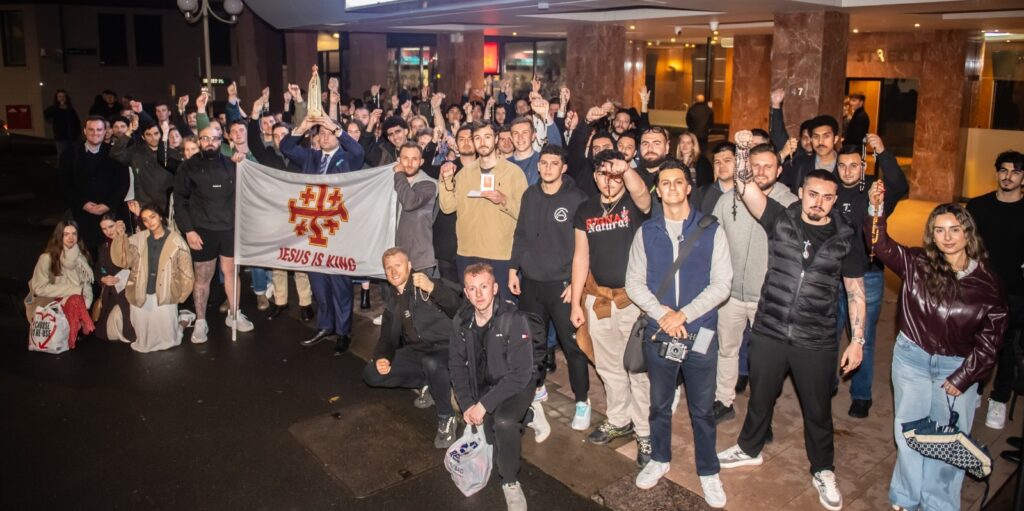
Despite these concessions, the opening night on Wednesday, July 8, 2026, was met with intense local friction. As guests arrived for the launch—an event attended by prominent local figures including NSW Arts Minister John Graham and Sydney Councillor Jess Miller—they had to navigate a vocal, peaceful demonstration of approximately 70 to 100 Christian protesters assembled on Kent Street.
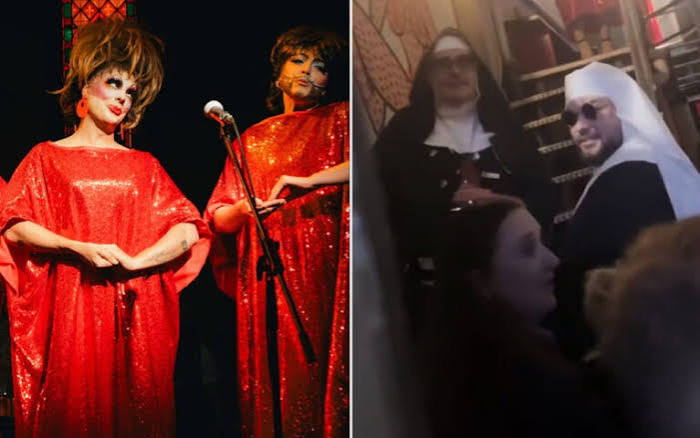
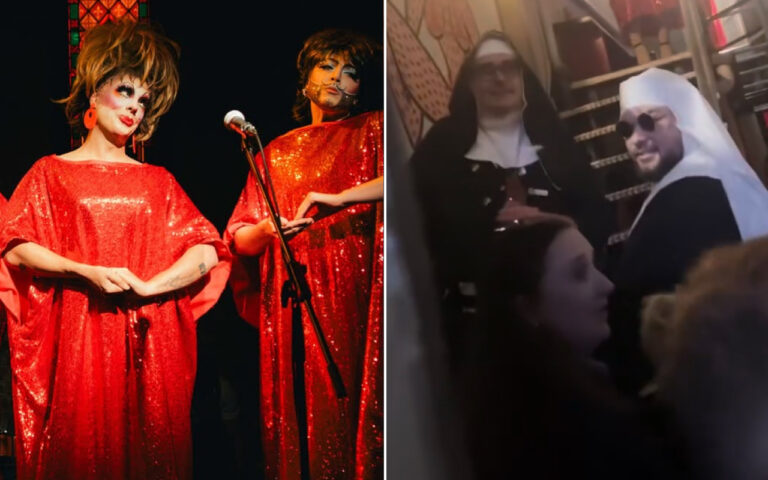
Organized by conservative Catholic and lay groups, including The Prodigal Sons and Fit for the Kingdom, the demonstrators prayed, chanted, sang hymns, and raised banners declaring “Jesus is King.” The protesters expressed profound outrage over the venue’s artistic lineup. The opening-night show, The First Rite, featured performers in sexualized “pig angel” suits and drag queens dressed as nuns. Tensions spiked further over the announcement of a planned late-night cabaret series and a comedy show billed to feature “Australia’s first-ever live, full-scale exorcism” in October.
While the New South Wales Police monitored the demonstration to prevent physical clashes, the event quickly became a national lightning rod.
The Eviction: “Offensive Trade” and the Landlord’s Ultimatum
The controversy escalated rapidly from the pavement to the courtroom. Within eight days of the opening, the venue’s landlords intervened directly, serving the organizers with an immediate breach of lease notice.
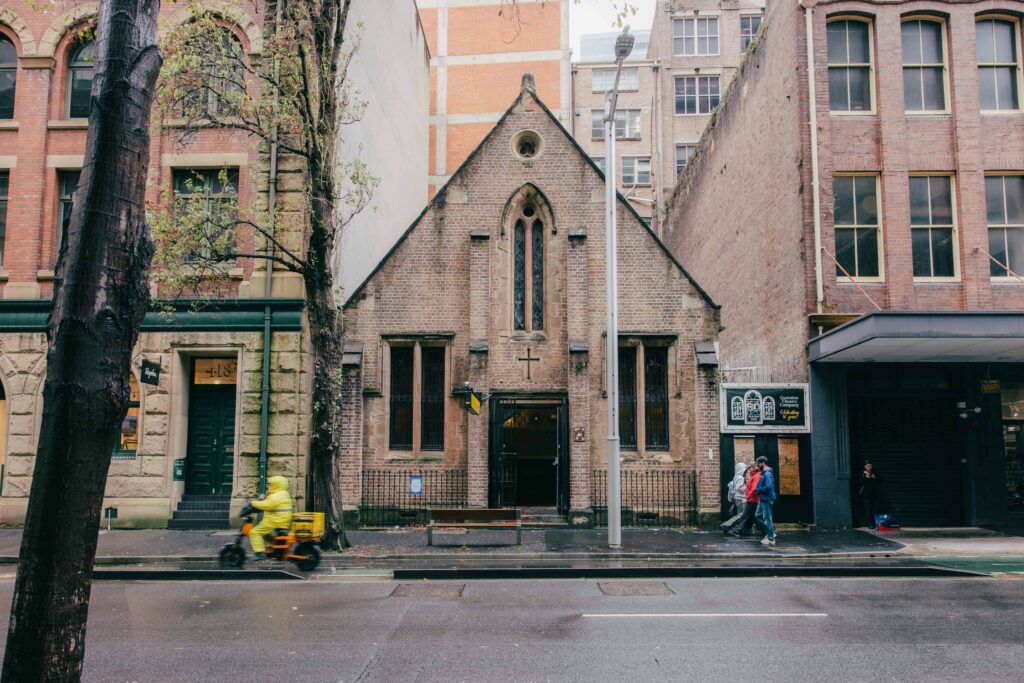
The legal notice warned the operators of Divine Playhouse to immediately “cease carrying on offensive trade” or face summary eviction from the heritage-listed property. The landlords’ legal counsel argued that the venue’s performances “insulted and mocked the sincerely held religious beliefs of millions of Christian Australians”. They further claimed that the property was exposing the public to danger by attracting ongoing, highly volatile street protests.
Left with no immediate legal shield and facing a two-day deadline, Divine Playhouse announced its sudden, indefinite closure on Wednesday, July 15.
The Backlash: Funding Audits and the “Double Standard”
The fallout of the closure quickly spread to the highest offices of the NSW government. Premier Chris Minns publicly intervened, stating that he found it “hard to believe” a former church was selected as the optimal location for this nightlife venture. Minns ordered an immediate investigation into how the $100,000 public grant was approved by Create NSW.
Concurrently, a spokesperson for the Catholic Archdiocese of Sydney welcomed the pushback, arguing that the taxpayer-funded mockery of sacred beliefs represented a glaring double standard in public arts funding:
“We’d simply ask the NSW Government to apply the same standard to all faiths. If mockery of another religion’s beliefs wouldn’t receive public funding, that’s a double standard worth explaining.”
As the organizers of Divine Playhouse launched an online petition and began exploring legal options to challenge the landlord’s breach notice, the protest groups announced they would return to the closed Kent Street venue on Friday for a follow-up prayer vigil, aiming to signal that desecration of Christian symbols would no longer be tolerated quietly in the public square.
My Professional Perspective
Having spent thirty years dissecting the socio-political flashpoints of urban centers, the sudden, forced closure of the Divine Playhouse in Sydney is a classic, deeply revealing cultural battle. To the casual observer reading the headlines, this is a straightforward dispute about taste, zoning, and religious respect: conservative Christians stood up against offensive drag shows in a former house of God, and the landlord restored order.
But if you peel back the layers of this confrontation, you find a far more complex and troubling story about the rapid shrinkage of urban creative spaces, the weaponization of commercial contract law, and a changing standard of secular tolerance in the modern West.
The Hidden Dimension: The Secular Sanctity of Deconsecrated Spaces
The core argument used to evict the Divine Playhouse hinges on the sacred history of the building. Yet, there is a massive, deliberate blind spot in this narrative. The building at 422-424 Kent Street has not been an active place of worship since the early years of the Great Depression. It has spent seven decades as a theater, hosting thousands of secular performances.
                     THE CYCLES OF PROPERTY VALUATION

  ┌──────────────────────────────────────────────────────────────────┐
  │                                                                  │
  ▼                                                                  │
Secular Theater (70 years) ──► Low-cost Queer Pop-up (Divine)        │
  ▲                                                                  │
  │                                                                  │
  │                                                                  │
  └── Landlord Eviction ◄── "Offensive Trade" / Threat of Protest    │
      (Luxury Redevelopment)   (A convenient mechanism to clear space)
The deeper side of the story, which remains largely unconsidered, is the role of commercial real estate. The City of Sydney is currently considering an application to redevelop this historic site into luxury apartments. For any landlord holding an asset destined for high-end residential conversion, a highly publicized, politically charged, taxpayer-funded queer arts venue is a liability.
The threat of conservative protests provided the landlord with the perfect, legally bulletproof escape hatch: the “offensive trade” clause.
In commercial leasing, “offensive trade” is a archaic legal term traditionally used to ban noxious, physically disruptive businesses—like abattoirs or chemical factories—that create severe environmental nuisances. By weaponizing this clause to apply to artistic content, the landlord and their legal team have established a dangerous precedent. If causing offense to a particular segment of the population can be legally classified as “offensive trade,” then any creative tenant in a rented space is suddenly vulnerable to summary eviction the moment their work draws a crowd of protestors.
The Unanswered Questions
As the doors of the Divine Playhouse remain locked, several critical questions demand direct investigation:
-
Will Create NSW demand the return of the $100,000 grant? If the state government claws back the funding under pressure from the Premier’s office, it signals that public arts funding is contingent not on artistic merit or community benefit, but on maintaining a political shield against conservative outrage.
-
What is the legal definition of “provocation” under NSW policing guidelines? During the opening night, police issued move-on directions to individuals. If peaceful prayer vigils are allowed to effectively block a licensed business’s operations, where does the law draw the line between a citizen’s right to protest and a business’s right to operate without harassment?
-
Why did the Catholic Archdiocese wait until 2026 to object to the building’s usage? The venue has hosted secular, sometimes highly irreverent theatrical performances for seventy years. Why did the church’s heritage suddenly become an urgent issue of “sacred dignity” only when a queer-focused organization took over the lease?
-
What are the long-term impacts of this closure on Sydney’s independent arts economy? The Divine Playhouse was programmed to support over 1,500 local artists, technicians, and independent promoters, pouring an estimated $650,000 into the local creative ecosystem. Who compensates these workers now that the venue has been shut down?
Beyond the Headline: The Hypocrisy of “Safe Spaces”
The most unsettling element of this entire dispute is the stark double standard exposed by the political reaction.
For years, politicians in Sydney have lamented the “death of the city’s nightlife,” promising to revive the night economy, protect cultural venues, and build inclusive spaces for marginalized communities. Yet, the moment the Divine Playhouse was targeted by a coordinated campaign from conservative religious groups, the state’s leadership immediately buckled.
Instead of defending the right of artists to exist and experiment in a city that is becoming increasingly unaffordable, Premier Chris Minns chose to validate the outrage, questioning the very location of the venue. This reveals a uncomfortable truth: in modern Australia, the political elite’s commitment to diversity and the “night economy” extends only as far as it is politically quiet. The moment a marginalized group’s expression of art collides with organized conservative faith, the state will consistently choose the path of least resistance, leaving independent artists to bear the financial and social fallout alone.
The shuttering of the Divine Playhouse is a sobering milestone in Sydney’s cultural evolution. It marks a moment where a coordinated, peaceful protest successfully utilized commercial property law to shut down a government-sanctioned queer sanctuary. It shows that even in a highly secular, modern metropolis, the shadows of the pulpit still hold immense, indirect power over the public square.
While the organizers of Heaps Gay scramble to find legal recourse and protect the livelihoods of hundreds of independent artists, the sandstone walls of Kent Street stand silent once more—a monument to a city that wants a nightlife, but lacks the stomach to defend the people who create it.
As we watch this latest front of the culture war unfold, we are left with a fundamental question that challenges the future of creative freedom in our cities:
If we allow the threat of public offense and religious discomfort to be weaponized as a legal lever for eviction, can we ever truly claim to have a free and diverse cultural landscape—or are we quietly returning to an era where the parameters of art are dictated by those who hold the keys and those who shout the loudest?