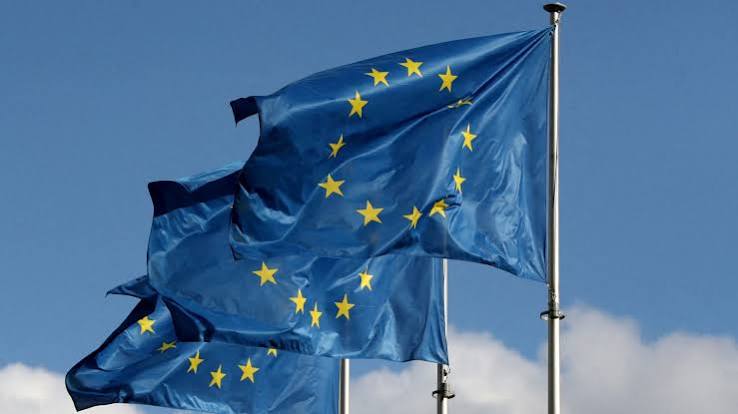

Right-Wing Surge Reshapes Europe: Are France and Germany Heading Toward a Break with Brussels?
The Alternative for Germany has achieved a historic state-election breakthrough, while France’s National Rally commands formidable support ahead of 2027. Yet predictions of an imminent EU collapse overlook the complex realities of European constitutional law and changing political strategies.
For decades, European politics rested on a single foundational assumption: whatever policy disagreements arose among the European Union’s 27 member states, France and Germany would remain the indispensable political centre holding the bloc together.
That assumption is now facing its sternest test.
Germany’s Alternative für Deutschland (AfD) has expanded far beyond the margins of mainstream politics, while France’s National Rally (RN) remains a dominant force as the country looks toward the 2027 presidential election.
These political movements differ in important ways, shaped by distinct electoral systems, political cultures, and constitutional frameworks.
Yet together, they raise a question increasingly debated from Berlin to Brussels: What happens to the European Union if nationalist and Eurosceptic parties become dominant political forces in both of its most influential member states?
The answer is considerably more nuanced than dramatic headlines suggest.
While credible evidence points to a major political shift capable of altering EU policy on migration, climate, trade, and sovereignty, current data provides no proof that either France or Germany is heading toward an automatic membership referendum or an imminent exit from the bloc.
Germany: The AfD Breakthrough Moves Beyond the Margins
The most striking recent electoral shock unfolded in Saxony-Anhalt.
Official preliminary results from the state election held on September 6 showed the AfD securing 43.8% of second votes, surging 23 percentage points ahead of its previous performance and eclipsing the CDU, which finished at 17.2%. Voter turnout reached 77.8%.
Those numbers explain why the result resonated far beyond eastern Germany. The AfD more than doubled its vote share to become the dominant party in the state legislature.
While regional dynamics in eastern Germany differ significantly from western states, national polling indicates the party’s broader ascent is no longer a localized phenomenon.
The September ARD-DeutschlandTREND survey, conducted by Infratest dimap among 1,319 eligible voters, placed the AfD at 27% nationally, ahead of the CDU/CSU at 21%, the Greens at 15%, the SPD at 13%, and the Left at 12%. Separate polling series compiled by Wahlrecht reflected similar strength, recording the AfD at 29% in multiple INSA polls throughout September.
This shifting landscape forces mainstream German parties into difficult coalition mathematics.
Even when excluded from government, the presence of a massive political force outside the traditional consensus exerts intense gravitational pull. Established parties frequently respond to electoral pressure by hardening their own stances on border controls, migration, public spending, and energy policy.
The EU Policy Dilemma: Confronting Brussels from Within
The policy implications for Brussels are profound, particularly given the AfD’s historical stance on European integration.
The party’s official platform calls for a fundamental restructuring of the EU structure, advocating for German withdrawal and the creation of a new European economic community if desired reforms are rejected.
However, translating this rhetoric into reality faces formidable constitutional hurdles. Article 23 of Germany’s Basic Law explicitly embeds the country’s participation in European integration into its constitutional architecture.
Unlike Britain, Germany lacks a routine federal mechanism for calling national referendums on broad policy questions. Any serious attempt at a “Dexit” would require complex constitutional amendments and unprecedented political battles.
France: The Evolution of the National Rally
While Germany confronts electoral fragmentation, France faces a high-stakes presidential contest in 2027.
President Emmanuel Macron cannot seek another consecutive term, and the race to succeed him has reshaped the political terrain. At the centre of the competition stands Marine Le Pen’s National Rally.
September polling data illustrates the party’s durability. Surveys conducted by OpinionWay, Ipsos BVA, and Cluster17 consistently place Le Pen’s first-round support between 30% and 34%. Alternative scenarios testing Jordan Bardella similarly show strong voter alignment.
Crucially, however, the National Rally has undergone a significant strategic evolution.
Marine Le Pen previously advocated for abandoning the euro and pursuing an abrupt exit from the European Union. Today, that objective has been replaced by a strategy of institutional transformation.
During the 2024 European election campaign, Jordan Bardella championed the concept of a “Europe of sovereign nations,” proposing to rewrite EU treaties from within, strengthen external borders, modify Schengen rules, and challenge centralized environmental regulations.
An RN-led government challenging EU rules from inside the bloc presents a fundamentally different operational challenge for Brussels than an immediate French withdrawal.
A Structural Shift Inside the European Parliament
The political transformation is already visible within the European Parliament.
Following the 2024 European elections, nationalist and Eurosceptic lawmakers secured substantial representation. The Patriots for Europe bloc emerged as the third-largest group in the 720-seat chamber with 84 seats, closely followed by the European Conservatives and Reformists with 78 seats.
While the centre-right European People’s Party (188 seats) and the centre-left Socialists & Democrats (136 seats) retain their parliamentary majority, the balance of legislative pressure has clearly shifted.
Migration and Economic Sovereignty as Battlegrounds
If a unifying force connects these disparate nationalist movements, it is immigration.
With external EU borders shared across national jurisdictions but political accountability remaining strictly domestic, tensions over asylum policy, border enforcement, and Schengen rules continue to mount.
Beyond migration, economic sovereignty is emerging as a critical dividing line. Nationalist parties increasingly challenge EU rules on state subsidies, industrial policy, and environmental mandates, such as the European Green Deal.
By demanding national vetoes, trade protectionism, and the repatriation of regulatory authority, these movements aim to shift the EU away from deepening integration and toward a looser confederation of sovereign states.
What Lies Ahead for the European Project?
Predictions of an imminent collapse of the European Union overlook the resilience of its institutional framework and the divisions among nationalist parties themselves, who frequently disagree on foreign policy, agricultural subsidies, and relations with NATO or Russia.
Yet Brussels is undeniably confronting a new political era.
The central debate within the European project is shifting away from how fast integration should proceed and moving directly toward how much power should be returned to national capitals.
As France and Germany navigate these powerful domestic currents, the future of the European Union may not be defined by sudden dissolution, but by a prolonged, intense struggle over its ultimate identity and purpose.
How do you think mainstream European leaders should respond to the rising political demand for greater national sovereignty?