
The Day Britain Stood Still: Remembering Queen Elizabeth II’s Historic State Funeral
Four years after a nation paused to bid farewell to its longest-reigning monarch, the historic state funeral of Queen Elizabeth II remains a defining moment of modern British history.
On September 19, 2022, Great Britain witnessed a morning unlike anything in its modern history.
Streets fell quiet, businesses closed, crowds gathered in their hundreds of thousands, and millions watched from their homes as Queen Elizabeth II made her final journey through London and Windsor.
For seventy years, she had been the constant figure at the centre of British public life.
Prime ministers came and went, governments changed, technology transformed everyday life, and generations grew from childhood into old age.
Through all of it, Elizabeth II remained Queen.
Then, on a September morning, the country came together for one final ceremony to mark the end of an era.
A Nation and the World Gather at Westminster Abbey
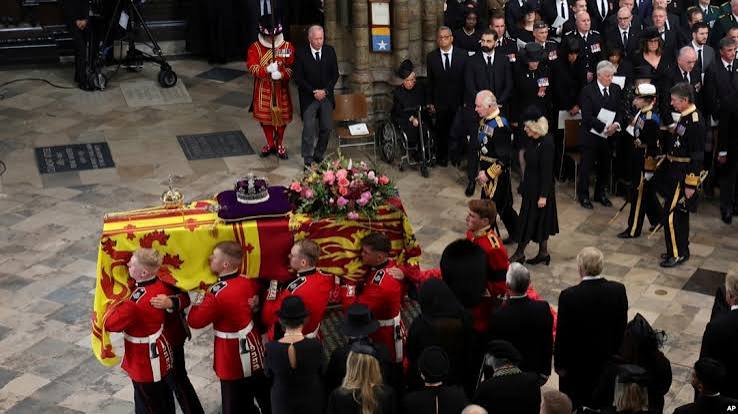
Her State Funeral was held at Westminster Abbey at 11am on Monday, September 19, 2022, eleven days after her death at Balmoral Castle at the age of 96.
The service brought together royalty, presidents, prime ministers, military personnel, community representatives, and ordinary members of the public in an extraordinary display of ceremony and remembrance.
Inside Westminster Abbey, approximately 2,000 people waited to pay their respects.
The congregation was assembled from across Britain, the Commonwealth, and the wider world, featuring foreign royal families, heads of government, and recipients of the Victoria Cross and George Cross.
Almost 200 people recognised in the Queen’s Birthday Honours were also present, including individuals honoured for community volunteering and pandemic contributions.
Westminster Abbey had been deeply woven through Elizabeth II’s life.
She married Prince Philip there on November 20, 1947, and her coronation took place there on June 2, 1953.
Her final visit to the Abbey while alive occurred in March 2022 for a Service of Thanksgiving for Prince Philip. Now, she was returning one last time.
The Historic Procession Through London
Earlier that morning, the lying-in-state at Westminster Hall formally ended at 6:30am after days of enormous queues through London.
At 10:44am, the Queen’s coffin was carried from the Palace of Westminster and placed on the Royal Navy’s State Gun Carriage.
Ninety-eight Royal Navy sailors pulled the carriage, while another 40 walked behind to act as brakes, continuing a tradition stretching back more than a century.
Immediately behind the coffin walked King Charles III, accompanied by members of the Royal Family.
For the millions of onlookers, the grandeur of the monarchy and the intimacy of family grief occupied the exact same metres of road.
Military detachments from Britain and the Commonwealth took part as the procession moved slowly past the Queen Victoria Memorial toward Wellington Arch, watched by crowds who had waited through the night.
Music, Silence, and the Sound of a Lonely Piper
The service inside Westminster Abbey was conducted by the Dean of Westminster, while the Archbishop of Canterbury delivered the sermon, and Prime Minister Liz Truss read from the Gospel of John.
Music repeatedly connected the funeral with earlier moments in the Queen’s life, including the hymn The Lord’s My Shepherd, which had also been sung at her wedding in 1947.
Following the Last Post, Britain fell silent for two minutes.
Countless individual acts of remembrance merged into a single national moment as ordinary life paused across the country.
Then came the singing of the National Anthem, carrying an unfamiliar change for most Britons: replacing God Save the Queen with God Save the King.
One of the funeral’s most haunting images followed when the Sovereign’s Piper, Pipe Major Paul Burns, played the traditional lament Sleep, dearie, sleep.
As the sound faded inside the ancient abbey, the piper walked away, transforming a grand state occasion into an unexpectedly personal farewell.
The Journey to Windsor and the Farewell of Personal Companions
From Wellington Arch, the coffin was transferred to the state hearse and driven to Windsor.
As the procession approached Windsor Castle along the Long Walk, large crowds awaited, alongside two unexpected figures that captured global attention.
The Queen’s fell pony, Emma, stood patiently beside the route, accompanied by her two remaining corgis, Muick and Sandy.
Their presence underscored the personal passions of Elizabeth Alexandra Mary Windsor, who had loved horses and dogs throughout her life.
The imagery reminded millions that the monarch who possessed crowns and constitutional powers was also an individual deeply devoted to her animals.
The Committal and the End of an Era
At St George’s Chapel in Windsor, the Committal Service shifted the atmosphere further toward a family farewell.
Before the coffin was lowered, the instruments of sovereignty that had rested on it—the Imperial State Crown, the Orb, and the Sceptre—were formally removed by the Crown Jeweller.
Moments later, the Lord Chamberlain broke his Wand of Office and placed it upon the coffin, symbolizing the end of his service to the sovereign.
That evening, a private burial service took place in the King George VI Memorial Chapel, where the Queen was laid to rest beside her father, her mother, her sister Princess Margaret, and her husband, Prince Philip.
For seventy years, Britain had known only one sovereign, navigating the end of empire, technological revolutions, and immense social change under a single constant figure.
As the streets reopened and ordinary life resumed under a new King, the historic day closed a chapter that had defined modern British life for generations.
How do you think Queen Elizabeth II’s remarkable longevity shaped the modern identity of the British monarchy?