Imagine opening an old photograph and discovering a world that has almost completely disappeared. A woman pushing a baby carriage designed to protect against poisonous gas. A man experimenting with an unusual bicycle. A room filled with telephone operators connecting calls by hand. And, among these curious scenes, a photograph of a Hiroshima survivor whose body still carried the consequences of the atomic bombing two years after the attack.
These are not simply unusual pictures collected for entertainment. They are fragments of human history, preserving inventions, customs, ambitions and tragedies that are difficult to imagine today. Some make us smile. Others leave us with questions. And a few remind us that behind every extraordinary photograph lies a human story that deserves to be understood.
The collection brings together more than 130 vintage photographs from public archives and historical collections. Its selection changes whenever the page is refreshed, allowing different images and videos to appear. But beyond the novelty of discovering another photograph, there is a much deeper reason to explore these visual records: they reveal how unpredictable, inventive and sometimes unsettling everyday life could be in the past.
The earliest photographs in the collection remind us that photography itself was once a demanding technical achievement.
Today, taking a picture requires little more than reaching for a smartphone. In the nineteenth and early twentieth centuries, however, photography involved specialized equipment, carefully prepared materials and a considerable amount of patience.
Early photographers worked with processes that required precise preparation and controlled exposure. Depending on the photographic method, preparing a plate, arranging the subject and producing a finished print could involve several complicated stages.
Portrait photography was particularly different from what we know today. People often had to remain still for extended periods, and formal portraits were carefully arranged. Clothing, posture, facial expressions and even the objects surrounding a subject could communicate social standing and personal identity.
Consider the Edwardian portrait of a person wearing a wide-brimmed hat. At first glance, it may seem like a simple fashion photograph. But it also offers a glimpse into the visual culture of an earlier generation.
Hats were not merely practical accessories. They were important elements of public appearance, and their shapes, materials and decorations often reflected changing fashions and social expectations.
A single portrait can therefore preserve more than someone’s appearance. It can provide clues about the period’s clothing traditions, photographic conventions and ideas of personal presentation.
The same curiosity applies to the unusual man wearing what appears to be early television glasses with antennas. The image immediately raises questions about the relationship between technology and popular imagination.
Before modern television became an ordinary household experience, the possibility of receiving moving images at home fascinated inventors and the public alike. Early experiments in television involved mechanical and electronic systems that looked remarkably different from today’s screens.
Not every technological experiment became successful. Some devices were impractical, others were overtaken by better inventions, and many disappeared without leaving much behind.
That is what makes unusual technological photographs so interesting. They document not only successful inventions but also the paths that innovation explored before reaching familiar forms.
Sometimes, an unsuccessful experiment tells us just as much about an era as a famous breakthrough.
The photographs of unusual bicycles and experimental vehicles belong to this same tradition.
During the early development of personal transportation, inventors explored different ways to improve speed, balance, comfort and mechanical efficiency. The resulting machines could look strange by modern standards.
Large wheels, unconventional frames and unusual proportions were part of a period when the bicycle and automobile were still evolving.
The giant-wheeled vehicle shown in the collection also reflects the adventurous spirit of early motoring. Engineers and inventors were experimenting with mechanical designs, hoping to find practical solutions to the challenges of movement.
Not every design survived.
Some became historical curiosities. Others contributed ideas that would eventually influence more practical machines.
The history of invention is rarely a straight line from one brilliant idea to another. It is full of experiments, abandoned concepts and unexpected discoveries.
And photographs allow us to see some of those forgotten attempts.
Another image in the collection takes us into a vintage telephone switchboard room.
Before automated telephone exchanges became widespread, connecting a telephone call could require the physical work of an operator. Switchboard rooms contained rows of equipment, cables and connection points through which operators directed calls.
A person wishing to contact another subscriber could depend on an operator to establish the connection manually.
This was a very different experience from modern communication, where messages travel across networks almost instantly.
The switchboard photograph captures an important stage in the history of telecommunications. It reminds us that the convenience of modern communication developed through decades of technical progress and human labor.
Behind the equipment were workers who performed repetitive tasks requiring concentration and familiarity with the system.
Many of these occupations have since disappeared or changed beyond recognition.
Yet the photographs preserve evidence of the people who made earlier communication networks function.
There is also a fascinating contrast between the strange inventions and the more serious images in this collection.
One photograph shows a woman with a gas mask pushing a specially designed protective baby carriage. The image is particularly striking because it combines two subjects that normally belong to very different worlds: the vulnerability of infancy and the threat of chemical warfare.
During the twentieth century, the possibility of aerial attacks and chemical weapons created considerable anxiety among civilian populations in Europe.
In the years surrounding the Second World War, civil-defense organizations promoted protective equipment, including gas masks for adults and specialized arrangements intended to protect babies.
Britain, in particular, developed protective equipment for infants because ordinary gas masks could not simply be fitted to very young children.
The sight of a mother or caregiver pushing a baby in such an apparatus reveals how deeply the possibility of war could enter everyday civilian life.
A baby carriage is normally associated with peaceful family routines. In this photograph, however, it becomes a symbol of a society preparing for dangers that ordinary families had little control over.
It is a disturbing contrast, but an important historical one.
The photograph does not need an invented story or dramatic dialogue to communicate its significance. Its visible subject already tells us something about the atmosphere of uncertainty that surrounded civilian life during the era.
Another photograph shows a baby in a wire cage suspended outside an apartment window.
To modern viewers, the scene can appear almost unbelievable. Why would anyone place an infant in a structure hanging outside a building?
Such photographs are often associated with historical discussions about infant outdoor-air cages, devices that were marketed to some urban families during the early twentieth century.
The idea was connected to contemporary beliefs about fresh air, sunlight and child health. In crowded cities, where families sometimes lived in apartments with limited outdoor space, some people considered these devices a way to expose babies to fresh air.
The practice looks alarming by present-day standards, particularly when viewed from the perspective of modern child-safety expectations.
But understanding the photograph requires examining the beliefs and circumstances of the period rather than judging it without context.
It is a reminder that ideas about health, childcare and acceptable risks have changed significantly over time.
Not every unusual historical practice was universally accepted, and a photograph alone cannot establish how common a particular device was. Nevertheless, it offers a fascinating starting point for exploring the history of urban life and changing approaches to parenting.
The collection also includes images of circus performers, daring stunts and people deliberately behaving strangely for the camera.
Before television and digital entertainment became dominant, public performances played an important role in popular culture.
Circuses, vaudeville theatres and travelling entertainment shows attracted audiences with acrobatics, comedy, music and spectacular physical performances.
Photography helped preserve these moments and allowed images of performers to circulate beyond the places where they appeared.
Some entertainers became widely recognized, while many others remained largely unknown outside their local audiences.
Their photographs reveal a world in which entertainment depended heavily on live performance, public gatherings and the ability to attract attention.
The same spirit of experimentation can be seen in early aviation.
At the beginning of the twentieth century, powered flight was still a developing technology. The possibility of flying had moved from an ambitious dream toward a practical engineering challenge.
Early aviators faced problems involving stability, control, engine reliability and the basic construction of aircraft.
Their machines often looked fragile compared with modern airplanes. Yet the experiments represented an important transformation in human transportation.
A photograph of an early aircraft is therefore more than an image of an unusual machine. It captures a moment when people were exploring a form of movement that would eventually reshape travel, commerce and warfare.
The early decades of aviation were marked by extraordinary ambition, but also by uncertainty. Progress required repeated testing, technical improvements and the willingness to learn from failure.
These photographs help us appreciate how unfamiliar the future once looked to the people who were building it.
But among all these curious inventions and unusual scenes, one photograph changes the atmosphere of the collection completely.
It shows the back of a man who survived the atomic bombing of Hiroshima. The photograph was taken in 1947, two years after the United States dropped an atomic bomb on the Japanese city on August 6, 1945.
The image is not simply an example of unusual historical photography. It is a record of the human consequences of one of the most consequential events of the Second World War.
The bombing destroyed enormous parts of Hiroshima and caused catastrophic loss of life. Those who survived faced a range of injuries and long-term health consequences. Some suffered severe flash burns, while others experienced the effects of radiation exposure.
The photograph of the survivor’s scarred back was part of a wider visual record documenting the physical consequences of the atomic bombing. TIME’s historical archive identifies the image as a 1947 photograph by Carl Mydans, showing a Japanese survivor displaying scars two years after the attack.
TIME+1
There is something especially difficult about the passage of time represented in this photograph.
Two years had passed since the explosion, but the consequences had not disappeared. The war had ended, yet for many survivors, the experience continued through physical suffering, medical treatment and the challenge of rebuilding their lives.
The image also raises an important question about historical photography: What responsibility do we have when looking at photographs of people who experienced extraordinary suffering?
It is easy to treat unusual images as objects of curiosity. But photographs of survivors should never be reduced to visual spectacles.
The person in the frame was not simply an example of the destructive power of a weapon. He was an individual who had survived an event that permanently changed the history of his city and country.
The photograph deserves to be viewed with dignity and historical understanding.
The atomic bombing of Hiroshima also reminds us that the end of a war does not necessarily mean the end of its consequences. Cities can be reconstructed, buildings can be replaced and economic activity can eventually return. But the experiences of survivors cannot simply be erased.
The collection’s quieter photographs offer another way of approaching this same idea.
Consider the image described as a young Robert standing beside his father. The accompanying caption emphasizes that Robert was only thirteen years old, while the unusual difference in their apparent heights makes the photograph particularly surprising.
Without additional archival identification, however, it is not possible to establish the identities of the individuals or independently confirm the circumstances described in the caption.
Even so, the photograph illustrates an interesting characteristic of old portraits: perspective, posture, camera positioning and physical proportions can sometimes make familiar relationships appear unexpectedly different.
A picture may invite an immediate interpretation, but careful examination reminds us that appearances are not always sufficient evidence.
The same principle applies to the other unidentified photographs in the collection.
Several are described only as rare vintage photographs, without detailed information about their subjects, dates or locations. These images may contain valuable historical details, but their stories cannot responsibly be reconstructed without further evidence.
A photograph of an unidentified street, for example, might preserve architectural features that help historians determine its location. An image of an unfamiliar machine might lead to an investigation of old patents or industrial records.
Even a partially visible advertisement could provide clues about the businesses and products of an earlier generation.
This is why historical archives are so important.
They preserve original photographs alongside descriptions, dates, photographer information and other documentation that can help establish context.
The National Library of Medicine, for example, maintains historical photographic material documenting the medical consequences of the Hiroshima bombing, including flash burns and keloid scars. Such collections demonstrate how photographs can serve as both historical records and evidence for understanding the human consequences of major events.
circulatingnow.nlm.nih.gov+1
The photographs in this collection also demonstrate how much everyday life has changed.
A telephone switchboard that once represented modern communication is now a historical artifact. A strange bicycle that might once have attracted curious spectators has become an example of forgotten mechanical experimentation.
Protective baby equipment reveals the anxieties of an earlier generation, while unusual portraits preserve fashions and social conventions that no longer dominate everyday life.
Some images are entertaining because they show how differently people approached familiar problems. Others are fascinating because they document inventions that never became part of ordinary life.
And some are important because they preserve experiences that should not be forgotten.
There is a remarkable contrast between the photographs of experimental machines and the image of the Hiroshima survivor. One represents humanity’s desire to invent and improve its world. The other reminds us that technological progress can also produce consequences of extraordinary human cost.
Together, they reveal something important about the history of the modern age.
The same century that witnessed remarkable developments in transportation, communication, engineering and medicine also experienced two devastating world wars and the introduction of nuclear weapons.
Progress and destruction existed side by side.
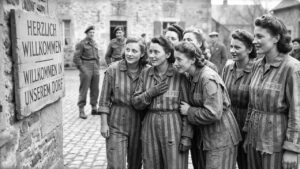
Historical photographs make that contradiction visible in ways that written descriptions sometimes cannot.
They show us the excitement surrounding new inventions, the changing appearance of cities, the ordinary routines of families and the lasting consequences of conflict.
Yet the most important lesson may be that no photograph should be judged only by how strange, beautiful or shocking it appears.
Its real significance depends on the story behind it.
The more we learn about the people, places and circumstances represented in an image, the more meaningful that image becomes.
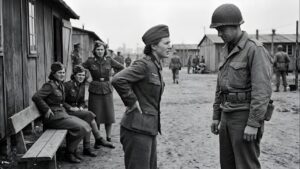
This is also why collections of historical photographs should be treated as starting points for discovery rather than complete historical accounts. Captions need verification, unidentified subjects should remain unidentified until reliable evidence emerges, and reconstructed explanations should never be confused with original archival documentation.
More than 130 photographs can offer countless opportunities to explore the past, but each one deserves attention in its own right.
Some will reveal forgotten technology. Others will uncover details of everyday life. A few may lead us toward important historical events that deserve much deeper examination.
And occasionally, a single photograph will remind us that behind the apparent simplicity of an old image lies a story of extraordinary human endurance.
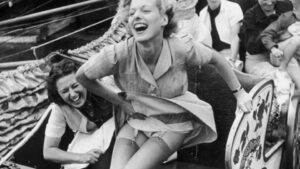
Looking at these photographs, I am struck by how much the past has left behind. The inventions may be obsolete, the fashions may seem unusual, and entire streets may have vanished. But the people remain visible through the images they left behind.
For me, that is the greatest value of historical photography. It allows us to remember not only what humanity invented and accomplished, but also what ordinary people experienced along the way.
If you could learn the complete story behind just one photograph in this collection, which would you choose: the mysterious baby carriage, the unusual inventions, the forgotten family portraits or the Hiroshima survivor’s photograph? And why?
“Some content was generated using AI tools (including ChatGPT) and edited by the author for creativity, storytelling, and historical illustration purposes. Historical facts and key details should be verified against reliable historical sources. Any AI-generated or reconstructed visuals are intended for illustrative purposes and should not be interpreted as original historical photographs or archival evidence.”