
CROSSING CONTINENTS: The Hanson–Farage Meeting and the Rise of a Global Political Trend
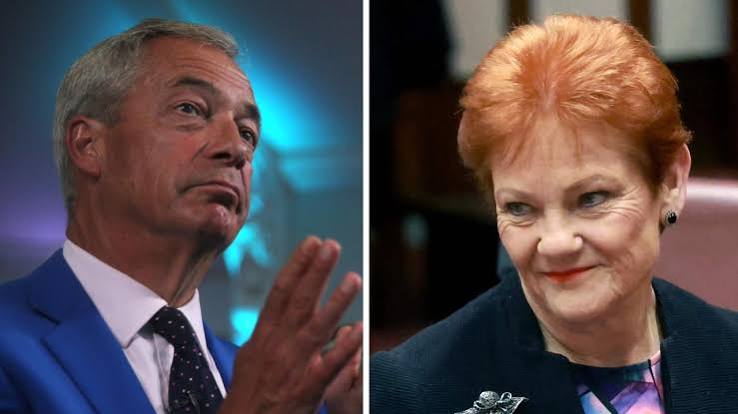
In a development that has drawn attention across two continents, it has been confirmed that One Nation leader Pauline Hanson will travel to London to hold talks with Reform UK leader Nigel Farage. Described by both sides as an opportunity to “compare notes and share experiences,” the meeting brings together two of the most recognizable figures outside the traditional political establishment in Australia and the United Kingdom.
The gathering comes at a moment when both leaders are experiencing a resurgence in public support. In Britain, Nigel Farage—long associated with the campaign to leave the European Union—has seen his Reform UK party climb steadily in opinion polls, positioning itself as a major challenger to the main parties on issues including immigration, energy costs, and government spending. In Australia, Pauline Hanson’s call for a “complete reset” of national priorities has struck a chord with voters frustrated by rising living costs, housing shortages, and concerns over how the country is managing growth and identity.
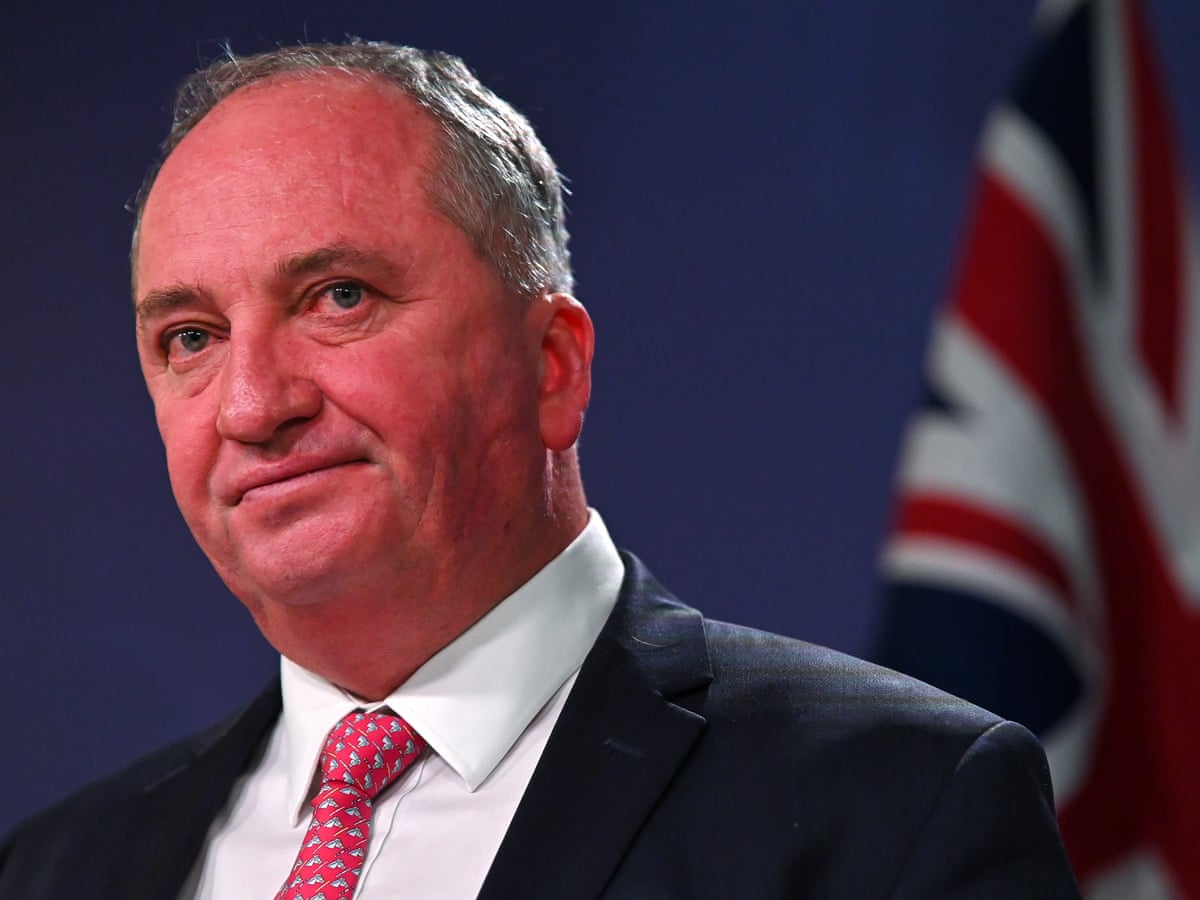
Senior Nationals figure Barnaby Joyce summed up the view of many observers, describing the meeting as “very sensible.” “Both leaders have tapped into concerns that millions of people feel,” he said. “Whether you agree with their solutions or not, there is value in understanding how different countries are tackling similar problems.”
The shared challenges facing both nations are clear: in the UK and Australia alike, voters are grappling with inflation, high energy bills, pressure on healthcare and education systems, and debates over how much immigration is sustainable. Both countries have also seen growing questioning of long-standing political consensus, with more citizens looking for alternatives to the parties that have held power for decades.
Supporters see the meeting as part of a wider shift. They argue that across Europe, North America, and beyond, there is a growing movement of parties and leaders who believe mainstream politics has become disconnected from ordinary people. They suggest that by exchanging ideas, Hanson and Farage can strengthen their messages and develop approaches that work in different national contexts.
Critics, however, urge caution. They point out that while the concerns may sound similar, the circumstances are very different. Australia’s geography, economy, migration history, and legal system are distinct from those of the UK. They warn that importing political strategies or slogans from one country to another risks oversimplifying complex issues and ignoring local realities. Some also question whether the meeting will produce any concrete policy proposals, or whether it will serve mainly as a symbolic show of unity to raise the profile of both leaders.
Whatever the outcome, the meeting is already making headlines. It signals that debates once seen as purely domestic—about borders, sovereignty, and the cost of living—are increasingly becoming part of a global conversation. And it raises a key question: are we seeing the emergence of a shared political vision across Western nations, or simply a coincidence of frustration?
Having covered politics in both Australia and the UK for many years, I have watched how similar patterns of public dissatisfaction have played out in different ways. The meeting between Pauline Hanson and Nigel Farage is interesting not just for what it might achieve, but for what it reveals about the times we live in.
1. The Common Ground: Frustration with the Status Quo
The most obvious link between the two leaders is that they both speak to a sense that the system is no longer working for everyone. In both countries, wages have struggled to keep up with rising prices, housing has become unaffordable for many young people, and public services feel stretched. There is also a shared feeling among many voters that decisions are being made by political and economic elites who do not understand or prioritize their daily lives.
This frustration is real and widespread. It explains why both Hanson and Farage have been able to build support despite being outside the traditional government structure. They offer a clear alternative, even if their specific solutions differ.
2. The Differences: Context Matters
However, it is important not to overstate the similarities. Australia and the UK face very different realities:
- Migration: The UK is a densely populated island nation with a long history of migration from its former colonies and neighboring Europe. Australia is a vast continent with a much smaller population, where migration has been central to its growth since the Second World War. The challenges of integration and infrastructure are not the same.
- Economy: Australia’s wealth is built largely on natural resources and exports, while the UK’s economy is more focused on finance, services, and trade within Europe.
- National Identity: Both countries have diverse populations, but the history and pace of change have followed different paths.
As a result, a policy that sounds plausible in one country may not work in the other. Sharing ideas is one thing; copying them without adaptation is quite another.
3. Symbolism vs. Substance
Political meetings between leaders of similar movements are often as much about image as they are about policy. For Hanson, meeting Farage—who is well-known internationally—raises her profile beyond Australia and reinforces the idea that her concerns are part of a global trend. For Farage, it shows that his message resonates far beyond British shores.
But the real test will come later. Will this meeting lead to detailed policy exchanges, or will it remain a photo opportunity and a statement of shared outlook? In politics, symbolism can be powerful, but it does not deliver lower energy bills or more affordable housing.
4. A Sign of the Times
Perhaps the most important point is that this meeting is part of a larger pattern. Across the Western world, traditional political divisions—left versus right—are being joined by a new divide: between those who want to maintain the existing system and those who want fundamental change. This is not just about right or left; it is about whether the way things have been done for the last 30 years still works.

Leaders like Hanson and Farage have positioned themselves as the voice of that demand for change. Their meeting shows that they recognize they are part of something bigger than their own national borders.
The meeting between Pauline Hanson and Nigel Farage is unlikely to rewrite the rulebook of politics overnight. But it is a milestone. It confirms that the issues driving their support are not isolated problems in one country—they are shared challenges that many nations are struggling to solve.
We have learned that while voters in Australia and the UK face similar frustrations, the solutions must be tailored to each country’s unique history and circumstances. We have seen that in an age of global communication, political ideas travel faster and further than ever before. And we have been reminded that every political movement, no matter where it starts, must eventually answer the same question: Can we turn criticism of the status quo into practical improvements for people’s lives?
Whether this meeting leads to closer cooperation, shared policy ideas, or simply a stronger sense of common purpose remains to be seen. But one thing is clear: the conversation it represents is not going away. It is part of a larger debate about what kind of societies we want to build in the decades ahead—societies that are open but secure, prosperous but fair, and true to both their history and their future.