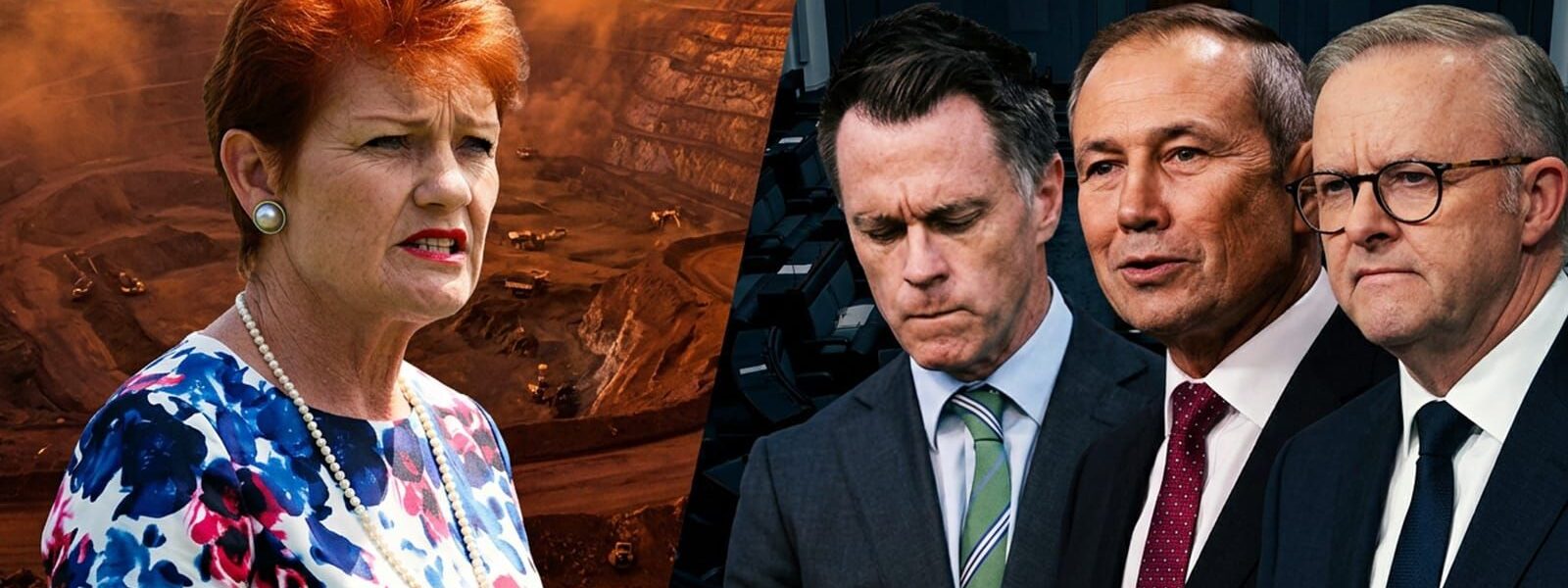
Pauline Hanson Tells Eastern States to Start Mining Instead of Draining WA’s GST Share. u1

The $23 Billion Fault Line: Inside Australia’s Broken GST Compromise
Across the arid expanse of the Pilbara, heavy haul locomotives over a mile long snake toward coastal export terminals loaded with iron ore. The wealth extracted from these red-dirt open pits does more than sustain Western Australia’s resource-driven economy; it anchors the federal balance sheet in Canberra.
Yet underneath this economic engine lies a political and structural conflict over Australia’s Goods and Services Tax (GST). What was conceived as a national tax distribution system has fractured into an escalating contest between resource-rich Western Australia and the populous eastern states.

+---------------------------------------------------------------------------------------------------+
|                                 THE ESCALATING FISCAL ARCHITECTURE                                |
+---------------------------------------------------------------------------------------------------+
|                                                                                                   |
|   1. Horizontal Fiscal Equalisation (HFE)                                                         |
|      Managed by the Commonwealth Grants Commission (CGC). Distributes GST revenue to ensure       |
|      every jurisdiction can deliver equivalent public services.                                   |
|                                                                                                   |
|   2. The 2015-16 Crisis Point                                                                     |
|      Surging mining royalties drove WA's assessed share down to approximately 30 cents per dollar |
|      under standard equalisation formulas.                                                        |
|                                                                                                   |
|   3. The 2018 Legislative Intervention                                                            |
|      • Legislated a strict relativity floor (rising to 75 cents in 2024-25).                      |
|      • Introduced the "Standard State Benchmark" tied to NSW or Victoria.                         |
|      • Enacted the "No Worse Off" federal guarantee, funded via Commonwealth income tax.          |
|                                                                                                   |
|   4. The 2026 Productivity Commission Interim Findings                                            |
|      Original 2018-2025 Commonwealth cost estimate: ~$5 Billion                                   |
|      Actual Commonwealth cost through 2024-25:      ~$23 Billion (A fourfold expansion)           |
|                                                                                                   |
+---------------------------------------------------------------------------------------------------+
The Investigation and the Cost Explosion
The flashpoint reignited following the release of the Productivity Commission Interim Report on GST Distribution Reforms. While the original 2018 legislation enacted under then-Treasurer Scott Morrison mandated a formal review by December 2026, the specific terms of reference were formally issued by Federal Treasurer Jim Chalmers on September 24, 2025. Chalmers explicitly instructed the Commission to examine long-term fiscal sustainability and present options evaluating funding arrangements with and without Commonwealth top-ups.
The Commission’s 116-page findings revealed that the 2018 policy architecture has deviated sharply from its original financial projections. Initially estimated to cost the Commonwealth roughly $5 billion by 2024–25, the cumulative top-up bill surged to nearly $23 billion—more than four times the initial forecast.
Cost Projection vs. Reality (to 2024-25)
Projected Cost: [ $5 Billion  ]
Actual Cost:    [ $23 Billion                                           ]
Under the traditional Horizontal Fiscal Equalisation (HFE) framework administered by the Commonwealth Grants Commission, GST revenues are distributed to ensure all states possess the fiscal capacity to provide equivalent public services. Because Western Australia’s mining royalties, payroll receipts, and land taxes expanded rapidly, the state’s untied share under the traditional formula plummeted to roughly 30 cents on the dollar by 2015–16.
To stabilize this decline, the 2018 reforms introduced three interconnected mechanisms:
-
The Relativity Floor: A guaranteed minimum return on GST distributions, established at 70 cents per dollar in 2022–23 and increased to 75 cents in 2024–25.
-
The Standard State Benchmark: An equalisation target indexed to the stronger of New South Wales or Victoria, rather than the highest-performing state (Western Australia).
-
The “No Worse Off” Guarantee: An open-ended federal commitment guaranteeing that no state or territory receives less funding than it would have under the pre-2018 system, funded directly from federal income and company tax revenue rather than the core GST pool.
The financial gap widened because initial 2018 modelling assumed iron ore prices would moderate over time. As commodity prices and export volumes remained resilient, Western Australia’s assessed share under the traditional formula remained low, continually triggering substantial Commonwealth top-up payments to prevent shortfalls in eastern jurisdictions.
In 2024–25, Western Australia received funding equivalent to 113% of its assessed fiscal needs under the legislated floor, while other jurisdictions stood at 98% prior to Commonwealth interventions. Equalizing all jurisdictions to that 113% benchmark would cost Commonwealth taxpayers an estimated $47 billion annually.
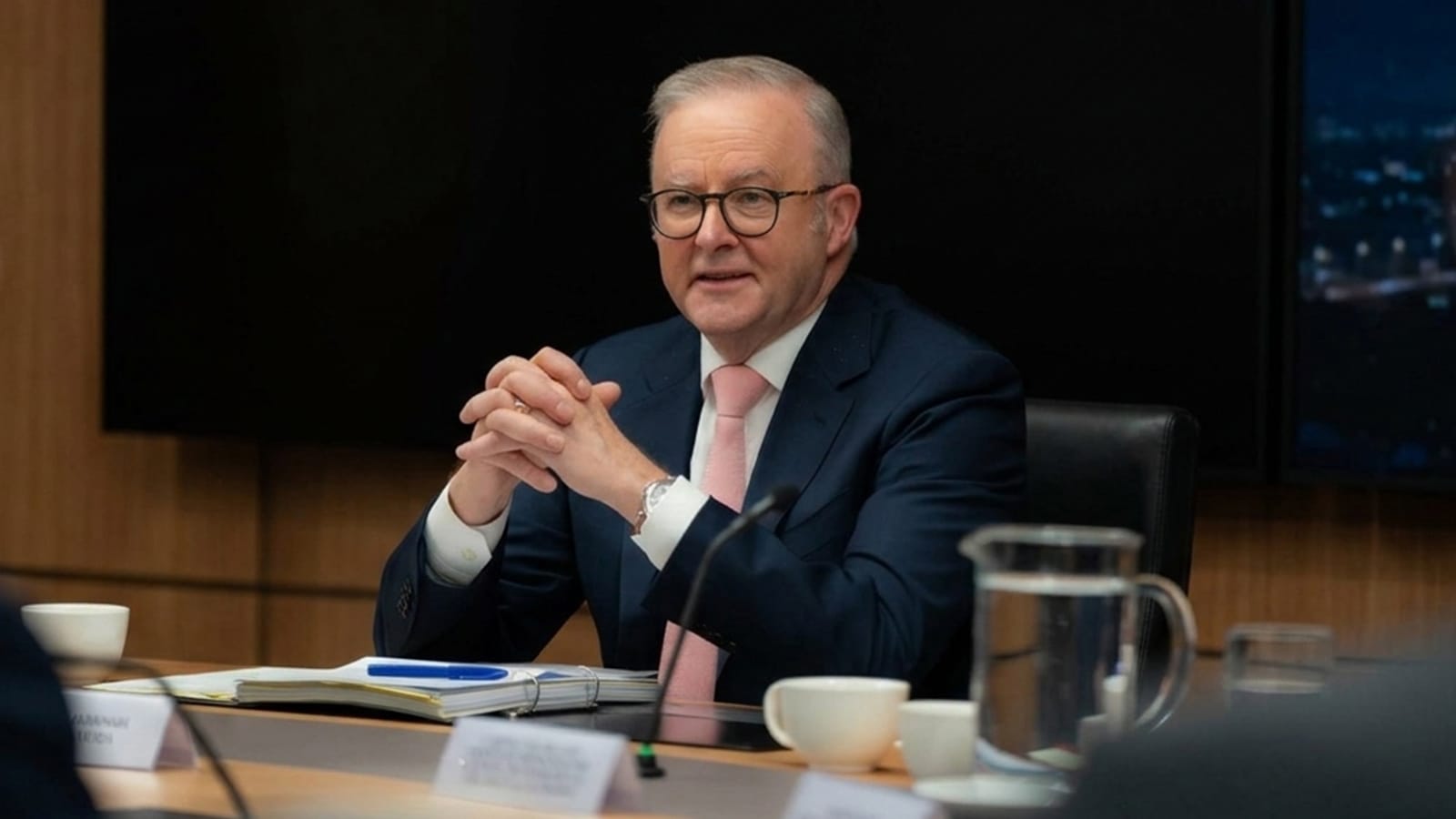
Productivity Commission Deputy Chairman Alex Robson pointed out that the current structure requires approximately $6 billion annually in federal top-up outlays, warning that higher resource prices could escalate these liabilities further. Commissioner Angela Jackson highlighted the systemic divergence, noting that the model creates asymmetric outcomes where resource windfalls in Western Australia do not reduce its floor allocations in the same manner applied to other jurisdictions.
The Inter-State Standoff
The Commission’s interim report outlined potential pathways forward: returning to the pre-2018 equalisation model while directing the Grants Commission to address single-state dominance effects directly, or replacing structural adjustments with transparent federal grant programs.
The recommendations triggered immediate political friction:
-
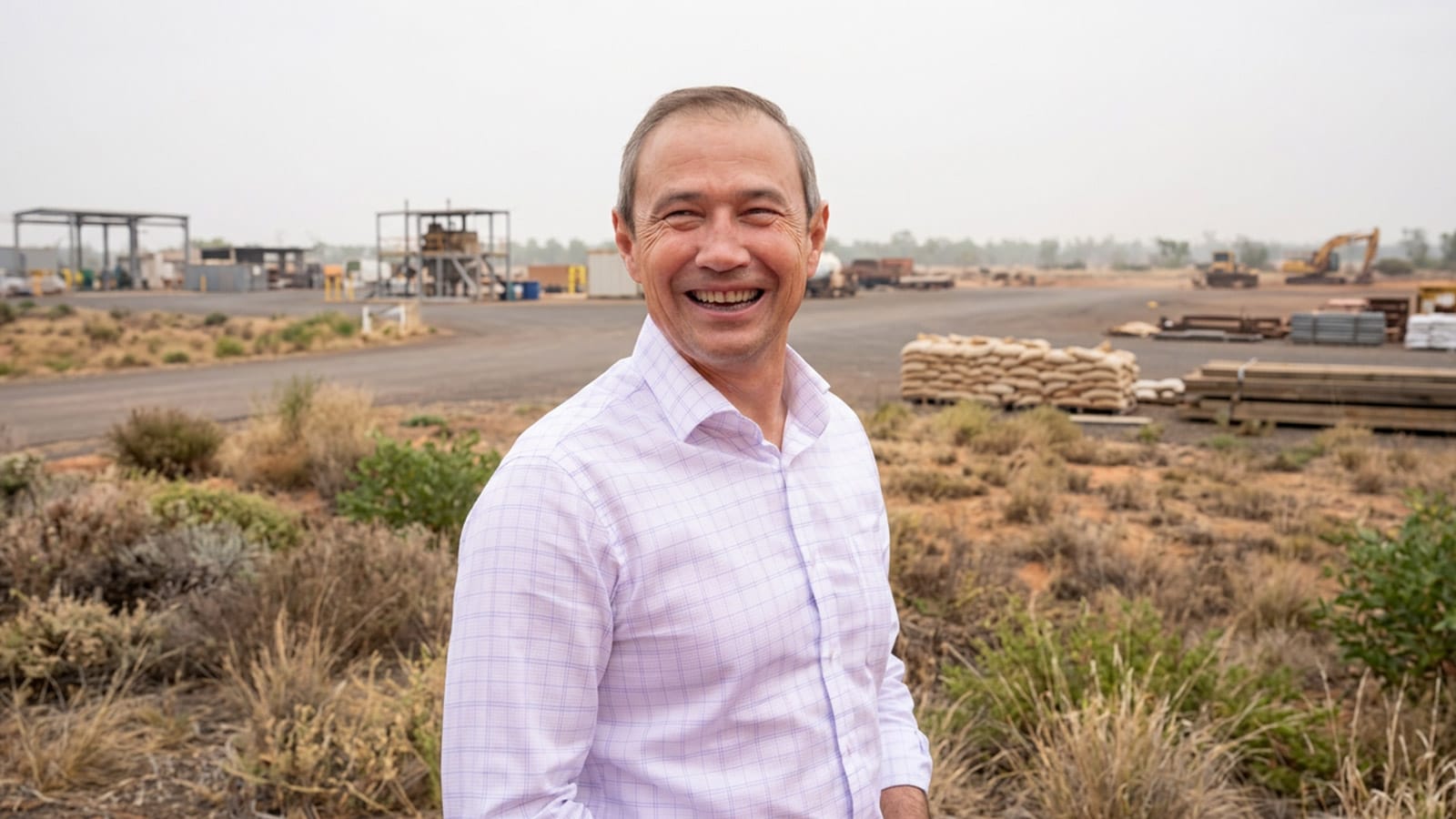
Western Australia: Premier Roger Cook rejected the findings, characterizing the report as fundamentally flawed and asserting assurances from Prime Minister Anthony Albanese that the 75-cent floor remains protected. WA Treasurer Rita Saffioti emphasized that WA continues to redistribute an estimated $11 billion in resource royalties across the federation annually.
-
Eastern Jurisdictions: New South Wales Premier Chris Minns criticized the current disparity, comparing WA’s resource revenue advantages to a petrostate economy. NSW Treasurer Daniel Mookhey labeled the system an unsustainable burden, while Victorian Treasurer Colin Brooks indicated that terminating the “No Worse Off” guarantee would create an immediate $1.8 billion budgetary shortfall for Victoria.
-
Canberra & Crossbench: Federal Treasurer Jim Chalmers reaffirmed the government’s stated policy position of maintaining the floor, while opposition figures including Senators Michaelia Cash and Andrew Hastie pledged to resist alterations. One Nation Leader Pauline Hanson argued that eastern jurisdictions must reform their domestic resource and energy policies rather than relying on federal redistribution funded by WA wealth.
My Professional Perspective
1. The Deliberate Architecture of Fiscal Camouflage
Behind the sharp rhetoric between premiers lies a core structural reality: the 2018 GST reform was not an enduring structural solution, but a political compromise designed to defer conflict.
By inserting the “No Worse Off” guarantee, policymakers avoided confronting the zero-sum nature of the GST pool. Instead of forcing a transparent national debate on how resource rents should be distributed within a federation, Canberra severed the link between GST collections and horizontal fiscal equalisation. By shifting billions in equalization costs onto general income tax revenues, the true cost of regional balance was obscured from ordinary taxpayers.
2. The Perverse Incentive Trap
The fundamental challenge of Horizontal Fiscal Equalisation is its balance between shared equity and economic incentives. When a system heavily discounts the returns of states that develop primary industries while buffering those that curtail resource development, it creates subtle structural disincentives.
Federations thrive on dynamic balance: stronger states support weaker ones during localized downturns, but individual jurisdictions must maintain incentives to build their own tax bases. When equalisation mechanisms become overly complex or dependent on federal subsidies, they risk rewarding fiscal inertia while breeding regional resentment.
3. Sovereign Risk, Commodity Volatility, and the 2030 Horizon
Australia’s fiscal architecture remains deeply exposed to global commodity markets. The $23 billion cost expansion was driven almost entirely by resilient bulk commodity prices. However, relying on indefinite mining booms to mask structural federal deficits is inherently risky.
With the legislated “No Worse Off” transitional payments slated to expire by 2029–30, Australia faces an impending structural reckoning. If the guarantee lapses without broader reform, the resulting funding cliff will shift directly onto state budgets, forcing abrupt decisions between service cuts, local tax increases, or permanent federal intervention.
+---------------------------------------------------------------------------------------------------+
|                                  THE 2029-30 FISCAL JUNCTION                                      |
+---------------------------------------------------------------------------------------------------+
|                                                                                                   |
|   Option A: Allow Guarantee to Lapse (2029-30)                                                    |
|   --> Costs shift from Commonwealth to non-WA state budgets.                        |
|   --> Severe revenue adjustments for NSW, Victoria, Tasmania, and SA.                             |
|                                                                                                   |
|   Option B: Permanently Legislate the Federal Top-Up                                              |
|   --> Institutionalizes a multi-billion dollar annual charge on federal income taxpayers.|
|   --> Permanently disconnects state spending from state revenue generation.                       |
|                                                                                                   |
|   Option C: Comprehensive Federal-State Tax Reform                                                |
|   --> Overhaul the Grants Commission formulas for dominant resource states.         |
|   --> Address vertical fiscal imbalance across all tiers of government.                           |
|                                                                                                   |
+---------------------------------------------------------------------------------------------------+
Local Electoral Information
For residents tracking local governance and representation, independent non-partisan resources provide official details on state electoral administration and district status:
-
Official enrollment updates, district maps, and voting options are available directly through the Western AustralianElectoral Commission.
-
District boundaries and representative profiles can be referenced via the Parliament of Western Australia Electorate Directory.
The recurring clashes over the GST are a symptom of Australia’s unresolved vertical fiscal imbalance: states hold constitutional responsibility for vital public services like healthcare, education, and infrastructure, yet the Commonwealth commands the dominant share of broad-based revenue collection. Scott Morrison’s 2018 policy bought temporary political peace by utilizing general federal revenue, but it created an escalating financial liability that the nation can no longer ignore.
Can a modern federation sustain genuine national equity without undermining the economic incentives of its most productive regions—or has Australia’s reliance on temporary fiscal fixes merely delayed an unavoidable reckoning?