
Fault Lines in the Republic: Convoys, Crises, and the Fracturing of Ireland’s Civic Peace
The Crucible: When the Roads Became the Front Line
For decades, the Republic of Ireland stood in the European imagination as a resilient outpost of political moderation—a society whose historical memory of emigration, swift economic modernization, and deep-seated social consensus appeared to inoculate it against the volatile populist convulsions sweeping Britain, France, Germany, and the Mediterranean.
That consensus has fractured.
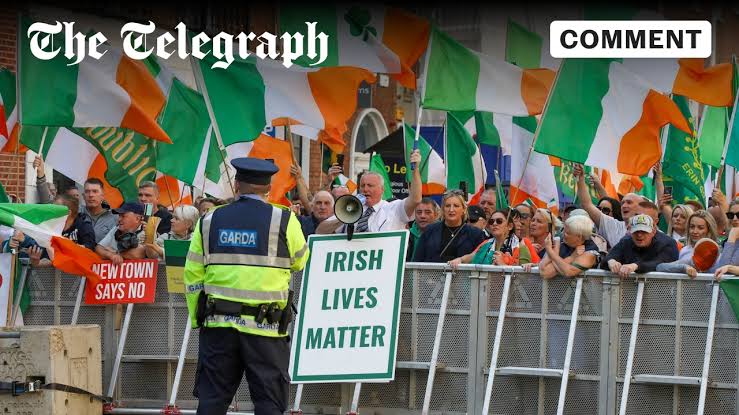
Over recent months, the thoroughfares of Dublin, arterial motorways, and critical energy corridors across the island have transformed into battlegrounds of civic disruption and populist rage. The transformation of O’Connell Street—the historic spine of the capital, framed by the General Post Office and monuments to Irish independence—from a commercial artery into a recurring staging ground for barricades and demonstrations marks a distinct inflection point in modern Irish political history.
┌─────────────────────────────────────────────────────────────────────────────┐
│                      ANATOMY OF DISRUPTION: KEY FLASHPOINTS                 │
├──────────────┬──────────────────────────────────────────────────────────────┤
│ April        │ Nationwide fuel-price vehicle convoys and blockades. Heavy   │
│              │ agricultural machinery chokes Dublin, Galway, and Cork.      │
├──────────────┼──────────────────────────────────────────────────────────────┤
│ Whitegate    │ Demonstrators blockade Ireland's sole crude refinery in Cork.│
│ Crisis       │ Taoiseach Micheál Martin denounces action as "sabotage."     │
├──────────────┼──────────────────────────────────────────────────────────────┤
│ Late April   │ An Garda Síochána executes mass clearance operations; hundreds│
│              │ of public order officers clear O'Connell Street and depots.  │
├──────────────┼──────────────────────────────────────────────────────────────┤
│ June         │ Major anti-immigration march moves on Leinster House;       │
│              │ severe transport shutdowns, perimeter security deployed.     │
├──────────────┼──────────────────────────────────────────────────────────────┤
│ Cross-Border │ Fatalities and stabbings spark violent riots in Belfast;     │
│ Contagion    │ public transit set ablaze; protests spread across UK cities. │
├──────────────┼──────────────────────────────────────────────────────────────┤
│ 2026 Outlook │ Garda Commissioner Justin Kelly prepares nationwide security │
│              │ apparatus ahead of Ireland's EU Council Presidency.          │
└──────────────┴──────────────────────────────────────────────────────────────┘
The initial flashpoint erupted when a grassroots coalition of hauliers, farmers, and rural transport operators mounted coordinated nationwide vehicle convoys. Prompted by compounding inflation, carbon tax hikes, and the looming expiration of emergency excise duty reductions on diesel and petrol, hundreds of articulated lorries, flatbed trucks, and high-horsepower agricultural tractors rolled out from regional hubs in Kerry, Donegal, Wexford, and the Midlands, converging on the state’s commercial centers.
The disruptions rapidly moved past standard demonstrative marching. In Dublin, convoys choked the arterial routes feeding the Port Tunnel and the M50 ring road. In Galway, agricultural machinery brought urban circulation to a standstill.
The standoff reached a critical threshold in County Cork at the Whitegate refinery—the Republic’s sole crude oil processing facility, responsible for supplying over a third of the nation’s refined transport fuels and heating oil. Hauliers and independent operators established rolling physical blockades across access routes, preventing fuel tankers from loading and departing.
Within forty-eight hours, the logistical strain cascaded through national supply chains. Gardaí and logistical trade federations issued urgent warnings: the siege of distribution hubs was strangling the replenishment of commercial filling stations, jeopardizing animal feed deliveries to rural dairy herds, halting food supply runs to supermarkets, and delaying emergency healthcare workers attempting to reach regional hospitals.
The state’s political leadership responded with uncharacteristic severity. Taoiseach Micheál Martin intervened directly, addressing the nation to condemn the blockade of Whitegate not as a conventional labor demonstration, but as an intolerable threat to vital economic survival.
“The deliberate strangulation of national energy infrastructure is not protected civic assembly; it is an act of economic sabotage that endangers the livelihoods, food supplies, and medical security of ordinary citizens across this country.”— Taoiseach Micheál Martin
Faced with a systemic threat to fuel security, the Department of Justice and senior police command abandoned protracted backchannel negotiations in favor of active public-order enforcement.
An Garda Síochána mobilized hundreds of tactical officers, specialized towing contractors, and public-order units across Dublin, Cork, and Galway. In a pre-dawn operation along O’Connell Street, officers physically cleared heavy haulage cabs and agricultural machinery that had seized the boulevard, arresting key organizers and establishing secure perimeters around critical logistics hubs.
                              THE DIVERGENT DRIVERS OF UNREST
                                             │
         ┌───────────────────────────────────┼───────────────────────────────────┐
         ▼                                   ▼                                   ▼
   Agrarian & Rural                    Urban Housing &                    Sovereignty &
   Economic Strain                    Public Services                      Immigration
 ────────────────────               ───────────────────                 ─────────────────
 • Spiraling fuel & diesel costs    • Severe structural housing         • Resistance to the EU
 • Green transition regulations       deficit and rent inflation          Migration & Asylum Pact
 • Rural-urban political divide     • Strain on local health clinics    • Anti-establishment and
 • Expiration of tax reliefs          and elementary schooling            nationalist narratives
The Convergence: The Intersection of Immigration and Civic Anger
Yet, as the diesel smoke cleared from O’Connell Street, the underlying friction did not abate. Instead, it metabolized into a broader, more contentious ideological struggle. The logistical infrastructure of protest—the communication networks, online chat groups, and shared sense of disenfranchisement—found common cause with a rapidly accelerating anti-immigration movement.
By June, the focus of unrest shifted from economic input costs to national identity, asylum policy, and demographic change. In Dublin, thousands marched from the Parnell Monument down O’Connell Street toward Leinster House, the seat of the Oireachtas (Irish Parliament). The scale of the demonstration forced the total shutdown of central public transit corridors, requiring steel crowd-control barriers and multiple lines of riot-equipped Gardaí to protect government buildings.
The composition of these crowds defied simplistic categorization. The demonstrators represented a fractured tapestry of Irish society:
-
Working-Class Communities: Residents from urban areas such as East Wall, Ballymun, and Finglas, contending that under-resourced public services, oversubscribed primary care clinics, and an acute housing shortage were being pushed past breaking capacity by the rapid placement of International Protection applicants in repurposed office parks and modular centers.
-
Agrarian and Small-Town Collectives: Rural citizens protesting against decisions made by distant government departments in Dublin, citing a lack of local consultation when hotels and community amenities were contracted as state accommodation centers.
-
Sovereignty Campaigners: Broad coalitions opposing Ireland’s formal adoption of the European Union’s new Migration and Asylum Pact, framing the international treaty as an unconstitutional surrender of national border sovereignty.
-
Extremist Fringes and Conspiracists: Factions advancing unsubstantiated replacement theories, xenophobic rhetoric, and direct challenges to the legitimacy of democratic institutions.
While the June demonstrations remained largely non-violent due to intensive policing, the atmosphere crackled with volatility. Skirmishes with counter-protesters and targeted confrontations with frontline Gardaí signaled that immigration had become the lightning rod for a vast reservoir of diffuse social anxiety.
The Cross-Border Current: Belfast and the Transnational Network
The volatile dynamic on the streets of Dublin cannot be understood in isolation from the broader archipelago. In Northern Ireland, simmering tensions erupted with ferocious intensity in Belfast following a high-profile violent stabbing.
Within hours of the incident, digital channels amplified rumors regarding the nationality and asylum status of the suspect. Several hundred people—many masked in balaclavas and waving national and regional flags—converged on commercial and residential districts.
The demonstration quickly degraded into urban rioting:
-
Commercial premises and public waste bins were ignited.
-
A municipal transit bus was hijacked and incinerated in middle-class neighborhoods.
-
Translink suspended public bus and rail services across vast swaths of the city.
-
Police Service of Northern Ireland (PSNI) Land Rovers were attacked with petrol bombs, fireworks, and masonry.
                    THE TRANSNATIONAL CONTAGION PIPELINE

      [Algorithmic Velocity: Telegram, X, TikTok, Signal]
                               │
            ┌──────────────────┴──────────────────┐
            ▼                                     ▼
   [Belfast Street Unrest]              [Dublin Assembly]
   • Anti-migrant riots                 • O'Connell Street blockades
   • Public transit arson               • Leinster House standoffs
            │                                     │
            └──────────────────┬──────────────────┘
                               ▼
        [British Mainland Spillovers: Manchester, London]
        • Shared tactical handbooks and cross-border talking points
        • Coordinated livestream fundraising and rapid mobilization
The unrest in Belfast did not remain confined to the North. Within days, parallel demonstrations, localized skirmishes, and solidarity gatherings erupted in parts of England and Scotland.
This cross-border contagion laid bare the contemporary mechanics of modern street protest. Social media algorithms, real-time encrypted messaging apps, and short-form video streaming platforms have effectively abolished the political barriers between the Republic of Ireland, Northern Ireland, and the wider United Kingdom. An altercation recorded on a smartphone in Dublin is packaged, distributed, and consumed in Belfast or Birmingham within minutes, serving as instant fuel for disparate local grievances.
The High-Stakes Horizon: The 2026 EU Council Presidency
These escalating demonstrations have arrived at an exceptionally sensitive time for the Irish state. The Republic is operating in the international spotlight as it prepares and manages its crucial tenure at the helm of the European project.
═══════════════════════════════════════════════════════════════════════════════
                 IRELAND’S 2026 EU PRESIDENCY: CORE COMMITMENTS
═══════════════════════════════════════════════════════════════════════════════
 Term: July 1 – December 31, 2026
 Operational Footprint: 22 informal ministerial summits, 250+ policy conferences
 Trio Partners: Lithuania and Greece
 Strategic Mandate: European Competitiveness, Security Policy, Rule of Law
═══════════════════════════════════════════════════════════════════════════════
From July 1 through December 31, 2026, Ireland holds the rotating Presidency of the Council of the European Union, leading the legislative and diplomatic agenda for all 27 member states. With hundreds of bilateral meetings, ministerial summits, and international delegations descending on Dublin Castle and regional venues, the Irish government faces the task of projecting stability, administrative competence, and institutional leadership.
                     STATE SECURITY & LEGAL FRAMEWORK
                                     │
         ┌───────────────────────────┴───────────────────────────┐
         ▼                                                       ▼
  An Garda Síochána                                  Department of Justice &
  Command Architecture                                  Legislative Policy
 ─────────────────────                              ─────────────────────────
 • Led by Commissioner Justin Kelly             • Enforcement of critical
 • Strategic high-readiness public order units         infrastructure protection laws
 • Advanced digital counter-disinformation monitoring • Implementation of EU Migration Pact
 • Ring-fenced security for 250+ EU summits        • Streamlined asylum determinations
Heading the state’s security apparatus is Garda Commissioner Justin Kelly, the seasoned counter-terrorism and serious organized crime specialist who took command of An Garda Síochána in late 2025. Kelly and his leadership team have made it clear that while peaceful assembly remains protected, deliberate attacks on critical transport nodes, fuel networks, or diplomatic corridors during the European Presidency will be met with decisive operational containment.
2. My Professional Perspective
===============================================================================
                     MY PROFESSIONAL PERSPECTIVE
       Investigative Analysis | By a 30-Year Foreign Correspondent
===============================================================================
The Death of the “Irish Exception”
In my three decades covering political breakdowns across the globe—from the collapse of industrial consensus in the American Rust Belt to the Yellow Vest blockades in rural France—I have watched political establishments succumb to a dangerous delusion: the belief that their country is culturally immune to the populism afflicting its neighbors.
For twenty years, international political scientists treated Ireland as an extraordinary anomaly. Despite enduring one of the most brutal austerity programs in modern European history following the 2008 banking crash, Ireland produced no far-right parliamentary bloc, no mass anti-immigrant street movement, and no sustained anti-systemic riots. The governing parties, Fine Gael and Fianna Fáil, maintained a revolving duopoly of power, flanked by a social-democratic opposition.
What we are witnessing today on O’Connell Street and across the provinces is not a temporary aberration. It is the sudden, unvarnished death of the Irish Exception.
┌─────────────────────────────────────────────────────────────────────────────┐
│                 THE ILLUSION VS. REALITY OF IRISH STABILITY                 │
├────────────────────────┬────────────────────────────────────────────────────┤
│ THE ESTABLISHMENT VIEW │ Ireland is uniquely protected by historical memory │
│                        │ of emigration, high GDP growth, and social ease.   │
├────────────────────────┼────────────────────────────────────────────────────┤
│ THE MATERIAL REALITY   │ Extreme domestic wealth inequality, a generational │
│                        │ housing lockout, and brittle public services.      │
├────────────────────────┼────────────────────────────────────────────────────┤
│ THE TRIGGER EVENT      │ Abrupt demographic shifts colliding with total     │
│                        │ regulatory failure in domestic housing markets.    │
└────────────────────────┴────────────────────────────────────────────────────┘
The myth of Irish immunity was built on a superficial reading of economic indicators. While headline GDP figures soared on the back of multinational pharmaceutical and Silicon Valley corporate accounting, the lived material reality for ordinary citizens deteriorated in basic, structural ways.
The political class mistook quiet endurance for permanent consent. When the dam broke, it did not break through an established political party; it broke along the roads, across the bridges, and in the direct action of citizens who concluded that institutional channels were closed to them.
The Hidden Engine: Housing, Not Ideology, as the Ultimate Catalyst
The single greatest analytical mistake made by international observers—and by domestic politicians looking for simple answers—is viewing the recent unrest purely through the lens of racial animus or imported right-wing ideology.
Those dark currents exist, and their presence is undeniably growing. But they are the symptoms, not the engine. The true, unyielding engine of Irish civil unrest is the total failure of the domestic housing market.
                           THE VICIOUS STRUCTURAL CYCLE

     ┌──────────────────────────────────────────────────────────────┐
     │ 1. Chronic Housing Undersupply & Institutional Investor Buy-Up│
     └──────────────────────────────┬───────────────────────────────┘
                                    ▼
     ┌──────────────────────────────────────────────────────────────┐
     │ 2. Entire Generation Locked Out of Ownership; Rents Skyrocket │
     └──────────────────────────────┬───────────────────────────────┘
                                    ▼
     ┌──────────────────────────────────────────────────────────────┐
     │ 3. State Repurposes Rural Hotels & Urban Centers for Asylum  │
     └──────────────────────────────┬───────────────────────────────┘
                                    ▼
     ┌──────────────────────────────────────────────────────────────┐
     │ 4. Working-Class Communities Feel Deprived of Local Resources│
     └──────────────────────────────┬───────────────────────────────┘
                                    ▼
     ┌──────────────────────────────────────────────────────────────┐
     │ 5. Economic Frustration Weaponized into Street Mobilization │
     └──────────────────────────────────────────────────────────────┘
Consider the cold demographics of modern Ireland. An entire generation of young and working-class citizens has been priced out of property ownership. Rents in Dublin, Cork, and Limerick consume 50 to 70 percent of net average wages. Adult children in their late twenties and thirties live trapped in their childhood bedrooms.
Into this structural powder keg stepped the geopolitical shocks of the mid-2020s: the arrival of more than 100,000 Ukrainian refugees fleeing Russian bombardment, alongside a sharp increase in international protection applicants from Africa, the Middle East, and South Asia.
When a government that spent a decade insisting it could not build social housing overnight suddenly manages to requisition hotels, office blocks, and sports halls within weeks to fulfill international legal obligations, the contrast is politically explosive.
To the struggling haulier, the factory worker who cannot afford rent, or the mother waiting five years for a pediatric health assessment, the state’s message feels clear: the system can act with speed and capital for everyone except its own citizens.
This sentiment is the raw material that bad actors exploit. Xenophobia did not create this crisis; a dysfunctional housing market provided the dry kindling, and government administrative tone-deafness struck the match.
The Anatomy of the New Blockade: Why Machines Beat Marches
As an investigative journalist who covered the Canadian Freedom Convoy in Ottawa and the French Gilets Jaunes outside Paris, I recognize the tactical evolution unfolding in Ireland.
The era of traditional, placard-wielding street marches organized by trade union secretariats is fading. We have entered the era of the heavy machinery blockade.
┌─────────────────────────────────────────────────────────────────────────────┐
│                       THE LOGISTICAL CHOKEPOINT ADVANTAGE                   │
├───────────────────────┬─────────────────────────────────────────────────────┤
│ ASYMMETRIC IMPACT     │ Ten 20-ton tractors can shut down an entire city    │
│                       │ center faster than 10,000 marching pedestrians.     │
├───────────────────────┼─────────────────────────────────────────────────────┤
│ REMOVAL COMPLEXITY    │ Heavy agricultural vehicles require specialized,    │
│                       │ heavy-recovery operators—many of whom refuse towing │
│                       │ contracts out of solidarity or intimidation fears.  │
├───────────────────────┼─────────────────────────────────────────────────────┤
│ INFRASTRUCTURE VULN.  │ Modern economies depend entirely on just-in-time    │
│                       │ deliveries; closing one refinery (Whitegate) starves│
│                       │ the national supply chain within 72 hours.          │
└───────────────────────┴─────────────────────────────────────────────────────┘
When farmers and hauliers take their working tools—multi-ton tractors, combine machinery, and forty-foot articulated lorries—onto public roadways, they change the nature of public-order policing.
A crowd of pedestrians can be dispersed with tear gas, public-order batons, and mounted units. A perimeter of twenty-ton John Deere tractors locked bumper-to-bumper across an oil refinery terminal gate or an international port entrance presents an immense physical engineering dilemma for police command.
By taking control of Ireland’s logistics choke points, modern protest movements have discovered asymmetric leverage. They understand that a complex, just-in-time island economy cannot tolerate seventy-two hours of disrupted diesel flow without facing grocery shortages, public transit shutdowns, and agricultural disaster.
The tractor has become the premier political weapon of the 21st-century working class—a mobile, armored barricade capable of forcing prime ministers to choose between immediate economic paralysis and high-risk paramilitary-style police intervention.
The Unanswered Investigative Questions
As Ireland enters an uncertain geopolitical period, several investigative questions remain unanswered:
-
The Disinformation Architecture: Who is funding and coordinating the cross-border digital mobilization between extremist networks in London, Belfast, and Dublin? Are algorithmic amplification networks being aided by foreign state-sponsored intelligence actors intent on destabilizing an EU Presidency host?
-
The Intelligence Failure: Why did An Garda Síochána and state intelligence fail to anticipate the logistical coordination of the Whitegate refinery blockade, allowing critical infrastructure to remain paralyzed for days before a response was mounted?
-
The Post-Presidency Political Realignment: What happens to Irish electoral politics once the street movement inevitably fields independent, anti-establishment candidates across every rural and working-class constituency in the next general election cycle? Will the traditional parties survive a populist fracturing?
The images of tractors lining O’Connell Street and smoke rising from barricades outside fuel depots are not isolated anomalies. They are the warning lights of a society navigating severe, overlapping transformations.
Economic pressures are accelerating. Demographic realities are shifting. The global green transition is imposing heavy costs on rural food and transport producers, while financialized capital markets place the basic dignity of secure housing out of reach for a generation.
At the same time, the historic social contract between citizen and state—the unwritten promise that working hard and obeying the law guarantees a stable home, reliable public services, and a government that listens—has frayed.
An Garda Síochána, under Commissioner Justin Kelly, can deploy tactical units, clear motorways, and arrest organizers. The state can fortify Dublin Castle to host European ministers behind cordons of steel and riot police.
Yet no police service, no matter how skilled or well-equipped, can permanently police away social exhaustion, economic anxiety, and broken trust.
When a democratic government relies exclusively on public-order enforcement to handle working-class despair, it buys short-term quiet at the price of long-term legitimacy. If mainstream leaders refuse to build houses, protect rural livelihoods, and engage with public concerns over how rapidly communities are reshaped, they leave the field wide open to those who peddle fear and hostility.
Ireland is not collapsing. Its institutions are durable, its economy retains immense latent strength, and its people possess an enduring instinct for decency and solidarity. But the Republic stands at a historic crossroads.
The critical question for the leaders in Dublin—and for watching governments across the European capitals—is as urgent as it is uncomfortable:
When the working people of an open democracy conclude that their voices are ignored at the ballot box and heard only when they block the roads, can the state restore faith in its institutions before the politics of the street completely tears the social fabric apart?