
Channel Tensions Rise Over Reported Plan by Anti-Immigration Activists to Confront Migrant Boats
Reports that anti-immigration activists are considering taking their own vessels to sea to disrupt migrant dinghies have sparked fears of a dangerous maritime clash in the English Channel.
Fears of a dangerous confrontation in the English Channel are growing following reports that anti-immigration activists are considering taking their own vessel to sea to disrupt or confront migrant dinghies travelling toward Britain.
The reported plan has immediately intensified an already bitter national debate over irregular migration, border enforcement, and the limits of political protest.
Supporters of tougher immigration controls may view the proposal as a dramatic response to years of frustration over small-boat crossings.
Critics, however, warn that civilian attempts to intervene in one of the world’s busiest shipping routes could put migrants, protesters, and professional rescue crews in serious peril.
What Is Known About the Reported Maritime Plan?
Important details remain unclear regarding the reported initiative.
Authorities and journalists have not yet verified precisely which individuals would participate, what type of vessel they intend to use, or what specific tactics they mean by “stopping” migrant boats.
Those uncertainties matter immensely.
There is a vast legal and practical difference between sailing into the Channel to stage a symbolic protest, observing migrant boats from a safe distance, and physically attempting to block, board, tow, or redirect a crowded inflatable dinghy.
The latter possibilities would raise severe legal, humanitarian, and maritime safety questions.
Until now, the vast majority of anti-immigration protest activity has taken place firmly on land—outside accommodation facilities, near ports, or in town centers.
Taking that campaign directly onto the waters of the Channel would represent a significant and volatile escalation.
Why the English Channel Is an Extremely Dangerous Environment
The appeal to activists is easy to understand in the context of ongoing political debates.
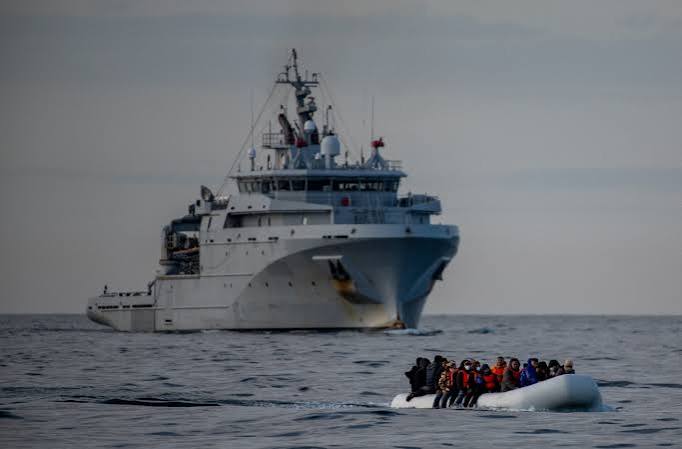
Images of small boats crossing from northern France have become a defining symbol of Britain’s immigration argument.
For campaigners who believe successive governments have failed to secure the border, travelling into the Channel can be framed as direct action.
However, the sea operates under entirely different rules than a demonstration outside Parliament.
A street protest can usually be separated, managed, or contained by police forces.
At sea, a single miscalculation can cost lives within minutes.
The English Channel is an exceptionally challenging maritime environment.
Large commercial container ships routinely pass through its narrow shipping lanes, weather conditions can deteriorate rapidly, and powerful currents make small inflatable boats inherently unstable.
Many migrants attempting the crossing possess limited maritime experience and lack adequate safety equipment.
Adding another civilian vessel deliberately attempting to interfere with their journey could create catastrophic, unpredictable consequences.
If activists approach a migrant dinghy too closely, passengers might panic, shift weight to one side, or alter course suddenly, destabilizing the vessel and risking punctures or drownings.
The Legal and Humanitarian Questions
The proposal also forces a confrontation with fundamental legal principles.
If protesters intend merely to sail in international or British waters while displaying political banners, their actions would raise one set of regulatory issues.
If they intend to physically interfere with another vessel, the situation becomes a criminal and operational emergency.
Private citizens do not acquire law-enforcement powers simply because they believe the government is failing to enforce immigration rules effectively.
Border enforcement at sea requires trained authorities operating under strict legal powers, safety protocols, and international maritime law.
Furthermore, a vital humanitarian principle dictates that anyone facing imminent danger at sea must not be placed at greater risk.
Whether a migrant’s eventual asylum claim is accepted or rejected by the legal system, that determination cannot safely be resolved through an unregulated confrontation between political activists and passengers on an inflatable boat.
Risks to the Protesters Themselves
The physical danger would not be limited to migrants crossing the Channel.
Activist groups taking an unsuitable vessel into busy commercial waters could easily find themselves in distress and requiring emergency rescue.
Operating safely at sea demands professional knowledge of navigation, marine communications, weather forecasting, and collision regulations.
A protest boat surrounded by commercial cargo traffic, Border Force cutters, lifeboats, and small migrant craft would place an intolerable burden on rescue organizations already dedicated to preserving life at sea.
This dynamic introduces an obvious irony.
A mission intended to protest the societal costs of irregular migration could easily end with British emergency services spending public resources rescuing the protesters themselves.
Why Activists Believe Direct Action Is Necessary
The political frustration driving such proposals cannot be dismissed as a minor fringe phenomenon.
Public dissatisfaction over persistent small-boat crossings remains high across Britain.
Governments have repeatedly pledged to reduce irregular migration, dismantle people-smuggling networks, and strengthen bilateral cooperation with France.
Yet boats continue to arrive on British shores.
For some campaigners, each successful crossing is viewed as definitive proof that conventional state policy has failed.
They argue that Britain possesses a border in theory but lacks the political will to enforce it in practice.
From that perspective, direct action is seen as political theatre designed to expose government weakness and demand immediate change.
Even if activists never physically intercept a single boat, the visual impact of their vessel operating in the Channel could generate substantial online attention, which may be a primary objective.
A Major Test for Authorities
If the reported plan develops into an actual attempt to launch a protest vessel, British authorities will face a delicate operational balancing act.
Citizens retain fundamental rights to political expression and peaceful assembly.
Preventive state action requires a solid legal basis rather than mere disagreement with the protesters’ political views.
Simultaneously, maritime and law-enforcement agencies have a statutory duty to protect navigation, maintain public order, and prevent criminal acts.
Officials will need to assess what organizers genuinely intend to do, distinguishing between symbolic demonstrations and unlawful physical obstructions.
What happens next as tensions rise around Channel crossings?