Behind the Velvet Rope: Nigel Farage, the Undercover Sting, and the Fragile Facade of Reform UK. n1

Behind the Velvet Rope: Nigel Farage, the Undercover Sting, and the Fragile Facade of Reform UK
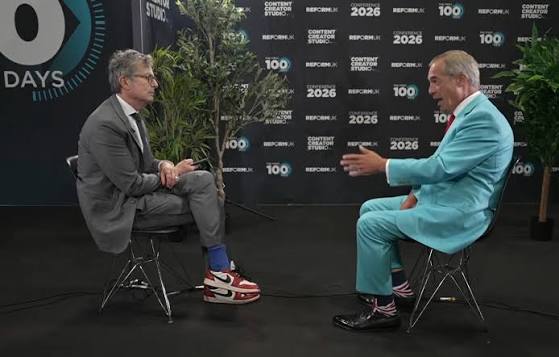
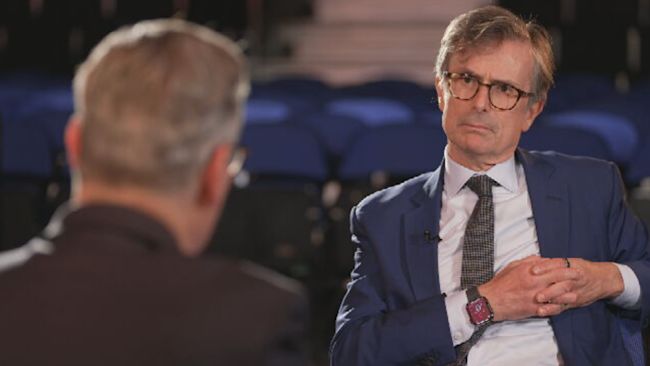
BIRMINGHAM — Beneath the spotlights of the National Exhibition Centre in Birmingham, where Reform UK had gathered to project the polished image of a government-in-waiting, party leader Nigel Farage found himself cornered not by policy dissenters, but by the relentless, forensic questioning of veteran ITV political editor Robert Peston.
The television interrogation followed a devastating sting operation broadcast by Channel 4 News, produced in collaboration with the investigative group Verbatim. Undercover reporters posing as representatives and family members of a wealthy American financier had secretly recorded two of Farage’s most trusted operators: Dan Jukes, his long-time personal aide and communications confidant, and James Orr, a Cambridge divinity academic serving as Reform’s head of policy.
In the covert recordings, Orr and Jukes appeared to discuss circumvention routes around strict UK electoral laws that prohibit political donations from foreign nationals. Tactics discussed included routing hundreds of thousands of pounds through a UK-based relative and funding £32,500 in targeted opinion polling via overseas channels to generate favorable broadsheet coverage without declaring the underlying financial source.
Within twenty-four hours of the broadcast, both Orr and Jukes had stepped down pending an internal inquiry, leaving Farage facing the cameras to defend the very culture of the movement he leads.
The Encounter and the “Shambles” Charge
Peston opened the interview with a blunt evaluation of the party’s administrative maturity:
“Nigel Farage, you’ve had five years creating Reform UK. It’s still a bit of a shambles, isn’t it?”
Farage pushed back immediately on the timeline, insisting he had only reclaimed operational control of the party two years prior. He pointed to Reform’s parliamentary breakthroughs, surging membership rolls, and the scale of its Birmingham conference as evidence of growing institutional muscle.
“I’ve recruited top people and I promise you, I am turning this into a professional outfit,” Farage maintained. “That doesn’t mean that things won’t go wrong. It doesn’t mean that sometimes people will misbehave, and that’s human nature.”
When Peston pointed out that Farage had just been forced to sacrifice two of his closest lieutenants, noting that an aspiring prime minister must demonstrate far greater organizational control, Farage pivoted. He framed the scrutiny as the price of political disruption:
“We are living in a complainant society. I am reported to a regulatory authority or the police or something like that virtually every single week.”
Peston dismissed the deflection:
“This is a cheap conspiracy theory. What’s at issue is whether you’re running the party properly.”
The Clacton Lunch and “Loose Pub Talk”
The interview turned acutely perilous when Peston pressed Farage on his own personal presence in the sting footage. Covert video had captured the Reform leader meeting the faux donors over oysters and champagne in his seaside constituency of Clacton.
In the video, when the undercover operative posing as a UK-based son explained that his foreign-based father would send him the money to donate directly, Farage was recorded asking whether the arrangement had been vetted.
Peston challenged Farage’s instincts:
“When I saw the undercover filming of you, in a really friendly way, talking to people who were trying to persuade you it would be okay for illicit American money to be funnelled through some British bloke, I’m just thinking to myself: why didn’t you just tell them to hop off?”
Farage insisted he had immediately probed the legality of the arrangement:
“Because I asked them. I asked them and my people, and you see it in the video: ‘Is this all above board? Has this all been checked out?’”
He claimed he was entering the room at the tail end of an ongoing dialogue, having been told the prospective funding was being handled via a legitimate London-based global family trust.
When Peston pressed him on why Jukes was recorded boasting that Reform had previously utilized similar channels to receive funds, Farage declared he was “100% confident” that no illicit foreign money had ever entered the party’s accounts, dismissing his right-hand man’s recorded claims as nothing more than “loose pub talk” from an aide trying to impress a wealthy contact.
“What happened was injudicious at best,” Farage conceded. “What was said was injudicious at best. It’s subject to an investigation.”
The Pattern of Scrutiny
Peston refused to treat the episode as an isolated misstep, placing it alongside a series of regulatory inquiries into Reform’s finances:
-
A Metropolitan Police investigation into £500,000 in donations provided by businesswoman Fiona Cottrell.
-
A parliamentary standards investigation into an unregistered £5 million personal gift to Farage from Thailand-based cryptocurrency investor Christopher Harborne.
-
The current assessments by both the Electoral Commission and the Metropolitan Police following the Channel 4 broadcast.
Farage admitted to the toll the persistent battles were taking, revealing that members of his family had repeatedly begged him over the summer to “walk away” from public life. Yet he insisted he had never come close to quitting, affirming that there was “no question” he would lead Reform UK into the next general election.
2. Professional Analysis & Personal Perspective
My Professional Perspective
I have spent thirty years covering the mechanics of political power across Westminster, Washington, and Europe. During those decades, you learn that political scandals fall into two distinct categories: transactional indiscretions, which burn bright and fade with the news cycle; and structural exposures, which peel back the curtain on how an entire movement actually operates behind closed doors.
The interview between Robert Peston and Nigel Farage belongs firmly to the second category.
The public debate has naturally fixated on the theater: the sting, the undercover cameras, the champagne in Clacton, and Farage’s familiar routine of blaming the media and the “establishment”. But to look only at the theatrical surface is to miss the far more consequential reality unfolding beneath it.
The deeper story here is that Reform UK’s defining asset—its rapid, personalized, anti-bureaucratic structure—has collided with the legal and operational architecture required of a serious political party.
What Details Have People Overlooked?
In dissecting the fallout from this investigation, the political press has largely overlooked three critical details that speak directly to Farage’s operational methodology:
-
The Nature of Dan Jukes’ Role: Farage attempted to downplay Jukes’ comments as “loose pub talk” by an errant staffer, with some party figures characterizing him as little more than a bag-carrier. This is an absurd misdirection. Dan Jukes has been Farage’s shadow for more than a decade. In small, insurgent parties, the personal aide is not a functionary; they are the gatekeeper. Jukes managed Farage’s travel, his access, his media timing, and his private communications. To suggest that Jukes’ statements were mere freelance bragging ignores the reality that in Farage’s orbit, loyalty and proximity are absolute. Jukes spoke with the perceived authority of the man himself.
-
The Weaponization of “Independent” Polling: The sting revealed that £32,500 had already been paid by the fake donors to commission public opinion polls that subsequently generated front-page headlines in broadsheet newspapers. This is a critical regulatory blind spot. Electoral law strictly limits donations to parties and candidates, but the gray market of privately funded, third-party polling deployed to shape media momentum is poorly policed. Farage brushed this off as standard practice across politics, but it illustrates how modern populist movements manufacture news narratives without triggering formal campaign spending limits.
-
The Corporate Shell Structure: Unlike the Labour or Conservative parties, which are unincorporated associations owned by their memberships, Reform UK was founded as a private limited company, with Nigel Farage as its majority shareholder. While the party has taken steps to transition toward a traditional membership model, its internal culture remains that of an executive startup. Compliance, governance, and institutional gatekeeping were treated as secondary annoyances to agility and media cut-through.
The Deeper Meaning: The Mirage of the Professional Machine
The real revelation of the Peston interview is the failure of Farage’s “professionalization” project.
For the past two years, Farage has promised his followers and potential institutional donors that Reform had outgrown its unruly, chaotic roots. The party claimed it was vetting candidates, establishing regional networks, and hiring elite operators to replace the fringe activists of its early incarnations. The hiring of James Orr—a Cambridge scholar connected to influential right-wing networks in the United States, including figures orbiting JD Vance and Peter Thiel—was intended to serve as proof that Reform was attracting intellectual gravitas.
Instead, the undercover footage demonstrated that the intellectual vanguard was operating with the same reckless disregard for convention as the street-level campaign.
When James Orr was filmed at Claridge’s boasting that “the reality is we could easily get away with it if we wanted to,” he was not speaking like a Cambridge theologian or a serious policy director. He was speaking the language of a high-risk startup trying to bend regulatory boundaries to accelerate market share.
This exposes the fundamental paradox of populist insurgencies: the very qualities that make them electorally dangerous to the establishment—disregard for rules, impatience with process, and reliance on charismatic personal authority—are the exact traits that make them incapable of stable institutional governance.
[ Charismatic Leader-Centric Startup ]
                   │
                   ▼
  [ Contempt for Bureaucracy & Due Process ]
                   │
                   ▼
[ Regulatory Gray Zones & Corner-Cutting Culture ]
                   │
                   ▼
 [ Inevitable Compliance & Governance Collapse ]
Why This Story Matters
This confrontation matters because Britain’s political system is fracturing along lines never before seen in modern parliamentary history.
With the Conservative Party demoralized and fragmented after their historic 2024 defeat, and the governing Labour Party struggling under economic stagnation and fiscal pressures, Reform UK is no longer an eccentric fringe. It is actively bidding to become the primary opposition force in the country, with aspirations of capturing Downing Street.
When a party reaches that threshold of national influence, its internal culture ceases to be an internal matter. It becomes a matter of national security and constitutional integrity.
If Reform UK cannot detect an undercover sting orchestrated by reporters posing as American donors, how would a Reform administration protect the British state from sophisticated foreign intelligence operations, sovereign wealth influence campaigns, or hostile foreign capital?
Farage’s defense that he was “not listening” or was simply “coming in at the end of the process” is an admission that undercuts his core political pitch. You cannot ask the British public to hand you the keys to the state apparatus while simultaneously pleading that you are too busy or too detached to notice your closest aides discussing illicit foreign money over lunch.
What Questions Remain Unanswered?
As regulatory bodies examine the Channel 4 footage, several vital questions remain unanswered:
-
The Precedent Claim: In the undercover video, Dan Jukes appeared to indicate that foreign money had previously been routed through UK intermediaries to support party activities. If this was merely “pub talk,” why would an experienced communications operative invent a specific criminal scenario to an unverified donor? Will the Metropolitan Police compel party records to verify whether any historic donations matched this conduit method?
-
The £5 Million Question: How does Farage reconcile his claim of strict adherence to political funding rules with the ongoing parliamentary inquiry into the £5 million sum provided by Christopher Harborne? Where is the definitive line between personal financial gifts and political party operations in an organization built around a single individual?
-
The Internal Purge: Are James Orr and Dan Jukes permanent casualties of this affair, or has Farage temporarily parked them until the media cycle turns? Statements from party leadership have already contradicted each other, with party chair Lee Anderson claiming they have gone for good, while deputy leader Richard Tice declined to rule out their return.
Beyond the verbal sparring on television, the public must confront what this says about the alternative government being marketed to them.
The interview between Robert Peston and Nigel Farage laid bare the central vulnerability of modern populist politics.
It is remarkably easy to stand in exhibition centers, rail against systemic failures, and promise to sweep away bureaucratic inertia with sheer personal will. It is far harder to construct an organization that respects the dull, unglamorous, but vital laws that safeguard a democracy from corruption and illicit influence.
Farage’s instinct to portray every investigation, regulatory inquiry, and journalistic question as a malicious establishment conspiracy is wearing thin. Political enemies will always seek advantage, but it was not the Labour Party or Whitehall mandarins who sat in Claridge’s boasting about evading donation laws; it was Farage’s handpicked policy chief. It was not the mainstream media that introduced fake American donors to the party leader; it was his closest confidant.
Nigel Farage has spent three decades successfully challenging the British political settlement. But as he stands on the threshold of genuine political power, he faces a challenge that charismatic speeches and talkback radio cannot solve.
The question that will ultimately determine Reform UK’s fate is not whether Nigel Farage can continue to disrupt the political landscape.
The question is: Can a movement that treats institutional rules with contempt ever be trusted to govern the very institutions it seeks to rule?