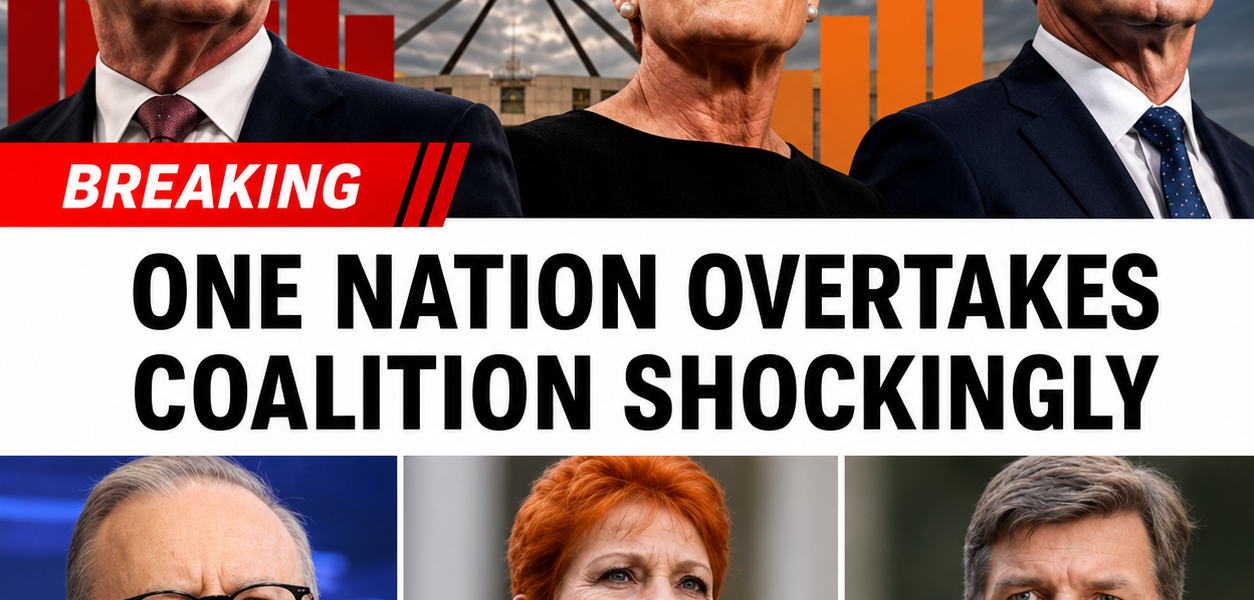
AUSTRALIA’S POLITICAL LANDSCAPE JUST SHIFTED — And Canberra Is Paying Attention. u1

AUSTRALIA’S POLITICAL LANDSCAPE MAY BE SHIFTING — NEW MODELLING FUELS DEBATE OVER ONE NATION’S RISE AND THE FUTURE OF THE MAJOR PARTIES
For generations, Australian federal politics has been defined by a relatively stable contest between Labor and the Coalition. Elections often produced swings in support, leadership changes, and shifting parliamentary majorities, but the overall structure of the political system remained remarkably consistent. Smaller parties and independents occasionally influenced outcomes, yet government was overwhelmingly formed by one of the two traditional major political blocs.
That long-standing assumption is now facing renewed scrutiny.
Fresh electoral modelling has sparked widespread discussion after suggesting that Australia’s political map could look dramatically different if current voting trends were replicated at the next federal election. While polling experts caution that such projections should not be interpreted as election forecasts, the modelling has nevertheless intensified debate about whether Australia is entering a period of political realignment unlike anything seen in recent decades.
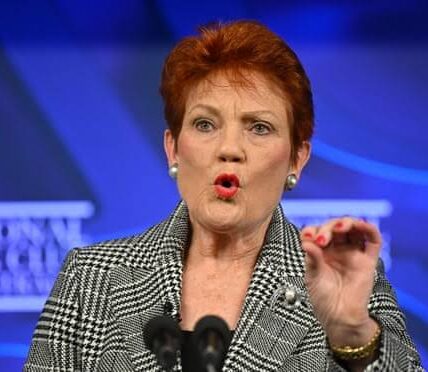
According to modelling conducted by RedBridge Group and Accent Research, Labor could potentially lose a significant number of seats under one scenario, while Pauline Hanson’s One Nation could dramatically expand its parliamentary presence. Some scenarios generated headlines by suggesting One Nation could theoretically secure as many as 53 seats, although analysts stressed that such figures represent modelled outcomes based on assumptions rather than predictions of what will actually occur on election day.

Even the more conservative interpretations of the modelling suggest that Australia’s political landscape is becoming increasingly fragmented.
A Protest Vote—or Something More?
Australian politics has experienced waves of voter dissatisfaction before.
Economic downturns, leadership instability, rising living costs, and debates over immigration have all produced periods where voters turned away from the major parties. Historically, however, disappointed voters often shifted from Labor to the Coalition or vice versa.
Today, analysts increasingly argue that a different pattern is emerging.
Rather than moving between the two major parties, many Australians appear willing to consider alternatives altogether. Independent candidates, regional parties, and minor parties have all benefited from growing public frustration over issues including housing affordability, inflation, energy prices, migration, taxation, and confidence in political institutions.
One Nation has positioned itself squarely within that environment.
Founded by Pauline Hanson in the late 1990s, the party has consistently argued for lower immigration, stronger border controls, greater national sovereignty, and policies aimed at reducing cost-of-living pressures. Although often controversial, the party has maintained a loyal support base while periodically expanding its appeal during times of economic uncertainty.
The latest modelling suggests that this broader anti-establishment mood may be creating new political opportunities.
Understanding the Seat Projections
The headline numbers attracted immediate attention because of their scale.
Some modelling scenarios suggested Labor could lose up to 18 seats, while the Coalition could experience an even sharper decline under particular assumptions. One Nation, meanwhile, emerged as the principal beneficiary in several projected contests.
However, electoral experts emphasize that seat modelling differs fundamentally from opinion polling.
Opinion polls measure voter intentions at a particular moment, usually based on a representative sample of respondents.
Seat projections, by contrast, combine polling data with assumptions about regional voting patterns, preference flows, demographic changes, and historical electoral behavior.
Small changes in statewide support can produce disproportionately large changes in seat projections, particularly in closely contested electorates.
For that reason, analysts caution against interpreting the highest-end scenarios literally.

Instead, the modelling is perhaps more useful as an illustration of how rapidly Australia’s electoral map could change if voter dissatisfaction continues growing.
Why Cost of Living Dominates the Political Debate
Economic concerns remain at the center of Australia’s current political discussion.
Mortgage repayments have risen substantially following higher interest rates.
Rental costs remain elevated in many cities.
House prices continue placing home ownership beyond the reach of many younger Australians.
Electricity, insurance, groceries, and household expenses have all become major concerns for families trying to manage increasingly tight budgets.
These pressures affect voters across traditional political boundaries.
Some blame global inflation, supply-chain disruptions, and international instability.
Others argue domestic policy decisions have worsened existing problems.
Regardless of where responsibility is placed, affordability consistently ranks among the issues Australians identify as most important.
Political parties across the spectrum recognize that reality.
Labor points to tax relief, energy rebates, housing initiatives, and broader economic management.
The Coalition argues stronger fiscal discipline and different policy settings would improve confidence.
One Nation presents itself as offering a more fundamental break from existing policy approaches.
The modelling suggests those competing narratives are reshaping voter behavior.
Immigration Returns to the Forefront
Immigration has once again become one of Australia’s most contested political issues.
Supporters of lower migration argue that rapid population growth places additional pressure on housing supply, infrastructure, healthcare, education, and transport systems.
They believe migration levels should better reflect Australia’s capacity to accommodate new arrivals while maintaining living standards.
Business groups, universities, and many economists offer a different perspective.
They argue migration helps address workforce shortages, supports economic growth, and offsets demographic challenges associated with an ageing population.
Many also caution that Australia’s housing shortage cannot be explained by migration alone, pointing instead to planning constraints, supply limitations, and years of underinvestment in housing construction.
These competing arguments increasingly shape election campaigns.
One Nation has consistently argued for substantially lower migration levels, allowing the party to occupy a distinctive position on one of the country’s most politically sensitive issues.
Housing Affordability Remains a Defining Challenge
Housing has become another central battleground.
For younger Australians, purchasing a first home has become increasingly difficult.

Higher borrowing costs, rising deposits, and limited housing supply continue affecting affordability despite recent policy initiatives.
Renters face similar challenges.
Vacancy rates remain low across many regions, contributing to sustained upward pressure on rental prices.
Governments at both federal and state levels have introduced various housing programs, planning reforms, and supply initiatives.
Critics argue these measures have yet to produce sufficient improvement.
Supporters counter that expanding housing supply takes time and requires cooperation across multiple levels of government.
Whatever the explanation, housing affordability continues influencing political attitudes far beyond traditional economic debates.
The Coalition’s Own Challenge

While Labor faces pressure from dissatisfied voters, the Coalition confronts its own strategic questions.
Some conservative commentators argue the Liberal Party has struggled to clearly distinguish itself from Labor on several major policy areas.
Others believe internal divisions have complicated efforts to present a unified alternative government.
This environment has created opportunities for parties positioned further outside the political mainstream.
If voters conclude that neither major party adequately addresses their concerns, support for smaller parties may continue expanding.
That possibility has become one of the central themes emerging from recent political analysis.
Can One Nation Translate Support Into Seats?
Winning public attention and converting support into parliamentary representation are not necessarily the same challenge.
Australia’s preferential voting system rewards parties capable of attracting not only primary votes but also preference flows from other candidates.

Campaign organization, candidate quality, fundraising capacity, and local campaigning all play significant roles in determining electoral outcomes.
Political history contains numerous examples of parties polling strongly at particular moments before ultimately winning fewer seats than anticipated.
Conversely, well-organized parties can outperform expectations by concentrating resources in carefully selected electorates.

For One Nation, expanding beyond its traditional areas of strength would require sustained organisational capacity as well as continued voter momentum throughout a lengthy election campaign.
Polls Are Snapshots—Not Results
Political analysts routinely remind voters that opinion polling measures current sentiment rather than future outcomes.
Campaign debates, policy announcements, economic developments, leadership performances, and unforeseen events can all influence voter attitudes before ballots are cast.
Seat modelling introduces additional uncertainty because it relies upon assumptions about how swings will occur across individual electorates.
As a result, today’s projections should be viewed as scenarios rather than predictions.
Nevertheless, repeated polling showing increased support for minor parties indicates that Australia’s political environment is becoming more competitive and less predictable than in previous decades.
A Broader International Trend
Australia is not alone in experiencing growing electoral fragmentation.
Across several democratic countries, traditional political parties have faced increasing competition from newer movements promising to challenge established institutions.
Economic anxiety, housing affordability, immigration, trust in government, and cultural identity have become recurring themes in many of these political shifts.

While each country’s circumstances differ, analysts increasingly compare Australia’s evolving political landscape with developments elsewhere.
Whether those comparisons ultimately prove accurate remains uncertain, but they highlight broader questions about how democracies respond during periods of prolonged economic pressure.
What Happens Next?

The coming months will determine whether current polling trends represent temporary frustration or a more lasting political transformation.
Labor will likely continue emphasizing economic stability, housing initiatives, and targeted cost-of-living relief.
The Coalition faces pressure to sharpen its policy alternatives while rebuilding support among conservative voters.
One Nation will seek to convince Australians that it offers a credible alternative rather than merely a vehicle for protest votes.
Ultimately, elections are decided by voters—not opinion polls, modelling exercises, or political commentary.
Still, the latest projections have served an important purpose.

They have reminded Australia’s political establishment that public dissatisfaction appears broader than many anticipated.
They have highlighted the growing influence of issues such as housing affordability, migration, energy prices, and household finances.
And they have reinforced a reality that few in Canberra can afford to ignore.
Australia’s political system is becoming more fragmented, more competitive, and less predictable.
Whether that produces a historic electoral realignment or simply another temporary shift in voter sentiment will become clear only when Australians cast their ballots.
Until then, the debate surrounding the country’s political future is likely to remain every bit as dynamic as the polling that reignited it.