ANDY BURNHAM’S POLLING MOMENT PUTS A NEW QUESTION AT THE HEART OF BRITISH POLITICS: CAN PERSONAL POPULARITY SURVIVE PUBLIC PESSIMISM?. n1

The Phantom Mandate: Inside Britain’s Peculiar Politics of Popularity and Pessimism
A quiet paradox is haunting British politics, exposing a widening fault line between the personal appeal of individual leaders and the pervasive sense of national decline.
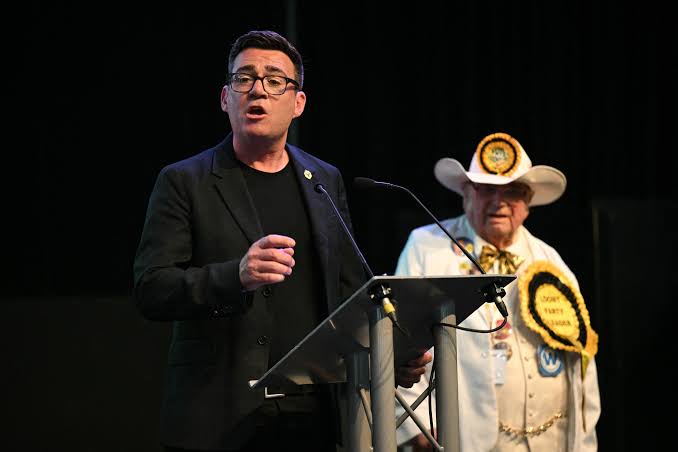
Recent polling data from Opinium reveals an unmistakable anomaly: Andy Burnham, the Mayor of Greater Manchester, has surged into consistently favorable territory, commanding personal approval ratings that sharply outpace most frontline politicians in Westminster. The numbers have reignited intense speculation across political circles, raising questions about whether Burnham’s brand of regional, populist-tinged social democracy offers a blueprint for the Labour Party’s long-term survival.
Yet beneath these surface-level metrics sits a profound, structural contradiction. While voters express clear, personal goodwill toward Burnham, broad public sentiment regarding the actual direction of the United Kingdom remains overwhelmingly bleak.
                       THE WESTMINSTER DIVIDE
  ┌─────────────────────────────────────────────────────────────┐
  │                                                             │
  │   [ Andy Burnham: High Personal Approval / Regional Trust ]  │
  │                              │                              │
  │                              ▼                              │
  │                 THE DELIVERY GAP / TIME CLOCK               │
  │                              ▲                              │
  │                              │                              │
  │   [ National Public Sentiment: Persistent Economic Anxiety] │
  │                                                             │
  └─────────────────────────────────────────────────────────────┘
The data reflects a fractured electorate: citizens are willing to like a politician personally, even as they harbor zero faith that the broader system can fix their most basic daily struggles.
The divergence between Burnham’s personal standing and the national mood highlights several core dynamics across Britain’s economic and civic landscape:
-
The Regional Executive vs. The Westminster Machine: As Mayor of Greater Manchester, Andy Burnham has operated outside the direct crossfire of the House of Commons. By concentrating on tangible, devolved portfolios—integrating the regional bus network into the publicly regulated “Bee Network,” pushing local housing initiatives, and directly advocating for Northern infrastructure—Burnham has built an executive identity rooted in place rather than parliamentary rhetoric.
-
The Lingering Cost-of-Living Shock: Despite macroeconomic data showing top-line inflation cooling from historic peaks, cumulative price increases remain permanently baked into everyday living costs. British households face elevated grocery bills, high energy tariffs, steep mortgage renewals, and soaring private rents. Official statistical improvements have not translated into perceived financial relief.
-
Public Service Strain and Healthcare Bottlenecks: The National Health Service (NHS) remains burdened by persistent waiting lists, while local municipal councils across the country face severe budgetary distress. Basic public infrastructure—from transit reliability to social care access—continues to struggle under legacy structural deficits.
-
The Border and Immigration Dilemma: Migration policy remains a central pressure point. The electorate continues to draw sharp distinctions between structural labor demands in critical sectors (healthcare, construction, hospitality) and visible enforcement challenges along the English Channel. This unresolved dynamic fuels both progressive frustration and right-wing populist mobilization through parties like Reform UK and the rebuilding Conservatives.
-
The Fragility of Political Capital: Modern polling demonstrates that while high personal ratings grant a political figure temporary patience, they do not insulate against long-term delivery failure. The gap between “I like him” and “My family’s daily life is actually improving” represents the definitive boundary where political momentum either solidifies or collapses.
1. The Overlooked Reality: The “Mayoralty Shield” and Devolved Insulation
In three decades of covering elections, political collapses, and institutional crises from Washington to London and Canberra, I have watched countless rising stars mistake regional affection for a national mandate. The narrative surrounding Andy Burnham’s strong polling numbers frequently misses a foundational structural truth: mayoral offices operate as political clean rooms.
A regional mayor is structurally insulated from the brutal, zero-sum trade-offs that inevitably destroy national leaders.
When you sit in Whitehall or Downing Street, every decision demands an immediate loser:
-
If you raise the defense budget, you must trim domestic programs or increase borrowing.
-
If you grant public-sector pay demands, you risk fueling fiscal targets or raising taxes.
-
If you set national immigration caps, you clash with university funding models and agricultural labor supplies.
A city-region mayor, by design, rarely manages national macroeconomic trade-offs, fiscal monetary policy, defense posture, or foreign diplomacy. Burnham has utilized this institutional design with exceptional tactical skill.
When local transit improves—such as the yellow buses of the Bee Network rolling through Manchester under capped fares—the mayor gets the credit. When national funding for major infrastructure is delayed or canceled, the blame is placed directly onto central government in London.
This dynamic is not an indictment of Burnham’s competence; he is one of the most effective political communicators of his generation. Rather, it is a crucial context for his popularity. The moment a devolved leader crosses the threshold into national governance, the protective shield dissolves. The electorate ceases to evaluate them as a local champion fighting an indifferent capital and begins judging them as the custodians of national decline.
2. The Deeper Meaning: Emotional Substitution in an Age of Exhaustion
What is truly happening when voters give high marks to a prominent politician while simultaneously telling pollsters that their country is sliding backward?
This dynamic represents emotional substitution.
                   THE ANATOMY OF MODERN PUBLIC OPINION
  ┌───────────────────────────────┬───────────────────────────────┐
  │   TRADITIONAL GOVERNANCE      │     MODERN PUBLIC DISPOSITION │
  ├───────────────────────────────┼───────────────────────────────┤
  │ Policy Proposals              │ Perceived Authenticity        │
  │ Ideological Loyalty           │ Emotional Empathy             │
  │ Westminster Procedure         │ Visible Proximity / Place     │
  │ Statistical Indicators        │ Lived Household Experience    │
  └───────────────────────────────┴───────────────────────────────┘
After more than a decade marked by austerity, Brexit gridlock, pandemic disruptions, institutional scandals, and an aggressive inflation shock, the British electorate is experiencing deep civic exhaustion. Voters do not believe that any political manifesto holds a magic wand to resolve structural productivity stagnation or fix local council finances overnight.
Consequently, public evaluation shifts away from technocratic policy papers toward perceived character and cultural proximity:
-
Burnham sounds like a person speaking in a room rather than a script read from a dispatch box.
-
His North-West cadence, plain-spoken cadence, and willingness to break with official party lines provide voters with an emotional release valve.
-
Liking Andy Burnham costs a disillusioned voter nothing. It requires no commitment to Labour’s national economic plan, nor does it demand belief that public services will suddenly recover.
It is an endorsement of a posture—a collective sigh from an electorate desperate for someone in authority who simply sounds like they understand the grocery receipt sitting on the kitchen table. But relying on emotional substitution is an inherently volatile strategy. Goodwill built on empathy rather than delivered prosperity is a loan, not an asset, and the interest on that loan compounds daily.
3. Why This Story Matters: The Fragile Architecture of Hope
The tension between Burnham’s personal numbers and Britain’s systemic pessimism matters because modern democracies cannot function indefinitely on borrowed charisma.
Consider the baseline reality confronting an ordinary working family in urban or post-industrial Britain today. When inflation drops from 10% down to 2%, the price of butter, bread, and electricity does not roll back to 2020 levels; it simply stops accelerating as quickly. For a household that saw its monthly energy bill double and its mortgage rate jump from 1.8% to 5.2%, macroeconomic stabilization feels like an academic abstraction.
       INFLATION RATE vs. CUMULATIVE PRICE BURDEN
   Price Level
       ▲
       │                                     ══════════════ [Current Elevated Plateau]
       │                                ╱
       │                           . - '  <-- "Inflation Slows" (Prices stabilize HIGH)
       │                     . - '
       │                . - '
       │           . - '  <-- Rapid Inflation Shock
       │     . - '
       │────'
       └───────────────────────────────────────────────────► Time
         (Past Low Baseline)
When politicians point to economic charts to declare recovery, it creates a psychological chasm between the governing class and the governed:
-
The Statistical Metric: “Inflation has returned to target; growth is stabilizing.”
-
The Lived Reality: “I have less disposable income at the end of the month than I did five years ago.”
-
The Resulting Cynicism: “The people running the country are either disconnected or deceitful.”
This breakdown in shared reality is where political volatility originates. If a popular figure like Burnham is eventually brought into central leadership or elevated as the answer to national problems, but the underlying material conditions remain unchanged, the subsequent disillusionment will be twice as severe.
When voters lose faith in technocrats, they turn to communicators. When they lose faith in empathetic communicators, they turn toward radical disruption.
4. The Unanswered Questions
Behind the daily cycle of polling reports and Westminster strategy memos, several foundational questions remain unaddressed by both political analysts and party leadership:
-
The Delivery Horizon: Exactly how much time does personal popularity buy? If living standards, real wages, and NHS access do not visibly improve within a 24-to-36-month window, does an empathetic politician’s approval rating slowly erode, or does it collapse precipitously?
-
The Scale-Up Vulnerability: Can Burnham’s regional political model—which relies heavily on local identity, public transit branding, and municipal consensus—survive translation to national policies where every constituency has competing priorities?
-
The Structural Fiscal Trap: If national productivity remains low and demographic pressures continue to drive up healthcare and pension liabilities, can any political leader deliver visible improvements without enacting deep tax hikes on the exact voters who currently view them favorably?
-
The Protest Consolidation: If the gap between personal popularity and systemic pessimism remains wide, how quickly can insurgent forces—most notably Reform UK on the right or regionalist/independent movements on the left—convert that national pessimism into targeted electoral breakthroughs?
5. What Readers Must Understand Beyond the Headline
The essential lesson from this dynamic extends beyond British party politics. We are witnessing a structural decoupling of the Messenger from the System.
| Metric | Traditional Interpretation | Modern Reality |
| High Personal Approval | “The electorate supports the party’s platform and trusts the government.” | “The electorate finds this individual relatable compared to deeply unappealing alternatives.” |
| Declining National Confidence | “A temporary dip caused by external economic shocks.” | “A permanent, deep-seated skepticism that institutional politics can deliver basic security.” |
| Electoral Stability | “Popular figures create durable, multi-year governing coalitions.” | “Approval is highly conditional and evaporates the moment hard fiscal choices hit the household.” |
Headline polling metrics often flatter political figures while masking the fragility underneath. A 10-point lead in personal likability is not a mandate for governance; it is an umbrella in a gathering hurricane. If the structural machinery of the country—its clinics, its classrooms, its transport links, and its weekly paychecks—continues to run on empty, the umbrella will eventually be torn away.
The emergence of Andy Burnham’s positive polling against a backdrop of deep national pessimism is not a triumph of political strategy; it is a symptom of a nation searching for reassurance in an unstable era. Britain is presenting its leaders with a conditional transaction: voters are willing to extend personal goodwill to those who sound authentic, speak with directness, and acknowledge their lived realities.
Yet personal warmth is no substitute for material security. The clock is ticking on whether political goodwill can be converted into tangible, working public services, stable mortgages, and affordable lives.
No individual approval rating can permanently outrun a public that feels its society is slipping backward. In an age of mounting fatigue and broken promises, can any political figure truly fix the foundations of a struggling nation—or are we simply choosing our favorite faces to preside over the decline?