History is usually remembered through the moments someone decided were important enough to preserve. Kings were painted, generals were photographed, battles were documented, political leaders were carefully posed, and major events were recorded for future generations. But beyond that official record existed another history—quieter, less polished, and often completely undocumented. It survived in family albums, forgotten boxes, private collections, and photographs tucked away in places no historian expected to find them. These rare images do not necessarily show the famous moments of the past. Instead, they reveal the people who lived between those moments. And once we begin looking closely, an uncomfortable question emerges: how much of history have we learned without ever seeing the lives that actually filled it?
A child laughing in a nineteenth-century street may tell us something that a formal portrait never could. A group of factory workers sharing a meal during a break can reveal more about working life than a paragraph describing industrialization. A family gathered around an unfamiliar new invention can capture the excitement of technological change before that invention became ordinary.
These moments were rarely intended to become history.
That is precisely what makes them valuable.
Formal photographs often tell us how people wanted to be remembered. Candid photographs sometimes reveal how they actually lived.
The difference can be subtle.
A carefully posed family portrait shows everyone sitting upright, dressed in their best clothing, looking toward the camera. It presents order. It presents dignity. It creates a version of family life that is carefully controlled.
A spontaneous photograph may show someone laughing, a child looking away, a worker wiping their hands, or a person caught halfway through an ordinary task.
Suddenly, history becomes less formal.
It becomes human.
This is one of the most striking qualities of rare old photographs. They can strip away the distance created by textbooks and timelines. Instead of seeing “people in the nineteenth century,” we see an individual child. Instead of “industrial workers,” we see several tired people sharing food. Instead of “technological modernization,” we see a family staring curiously at a machine they have never seen before.
The categories become faces.
And faces are difficult to keep distant.
Perhaps nowhere is this clearer than in photographs showing the meeting of old and new.
Imagine a small village road in the early twentieth century. A horse-drawn cart moves along the dirt road while a newly introduced automobile approaches from the opposite direction. The two vehicles belong to different technological worlds, yet they occupy the same physical space.
For the people standing nearby, this was not a historical metaphor.
It was simply their reality.
The old had not disappeared.
The new had not completely arrived.
They existed together.
This is something photographs reveal particularly well because they freeze contradictions that written history sometimes separates into different chapters.
One chapter tells us about horse transportation.
Another tells us about automobiles.
A photograph can put both on the same road.
The same phenomenon appears in traditional markets where older forms of dress, commerce, and craftsmanship existed alongside imported goods and new advertisements. A single street could contain centuries of cultural continuity and signs of rapidly approaching change.
This is how modernization actually looked.
Not like a clean replacement.
More like layers.
Old habits remained while new possibilities appeared around them.
People adapted selectively.
Some embraced new technologies.
Others resisted them.
Many simply used whatever was practical.
And for a time, all of these choices existed side by side.
That makes such photographs valuable records of transition.
They show that societies rarely move from one era into another all at once.
The people living through change do not experience it as a textbook chapter.
They experience it as a new machine arriving in town.

A different kind of advertisement appearing above a shop.
A new vehicle sharing the road.
A familiar tradition becoming slightly less common.
A young person adopting a fashion their parents do not understand.
Change enters ordinary life quietly before historians later give it a name.
But perhaps the most overlooked subjects in historical photography are the workers.
Modern civilization is often remembered through the people who designed its technologies or led its institutions. Engineers receive recognition. Industrialists become famous. Political leaders receive monuments.
The workers who physically built much of the modern world are easier to overlook.
Rare photographs can correct that imbalance.
Construction workers standing high above a city.
Miners emerging from underground.
Factory workers gathered around machinery.
Railway crews beside newly completed tracks.

People carrying materials, operating tools, repairing machines, or simply stopping for a moment to eat.
These images reveal the physical reality behind abstract words such as “industrialization” and “urban development.”
A city skyline did not rise by itself.
Railways did not build themselves.
Factories did not operate without workers.
Mines did not produce materials without people entering them.
Every major transformation required human labor.
One famous type of early twentieth-century photograph shows workers sitting on steel beams high above a developing city during a lunch break, apparently without the safety equipment we would expect today.
The image can seem almost unbelievable from a modern perspective.
But the most important detail may not be the height.
It is the workers themselves.
They are not merely symbols of danger.
They are colleagues.
They are eating.
They are resting.
They are sharing a moment.

The photograph reveals camaraderie alongside the risks and hardships of industrial labor.
That complexity matters.
It is easy to turn historical workers into either heroic symbols or victims.
Real people were usually more complicated.
They could be exhausted and proud.
They could fear their work and depend upon it.
They could complain about conditions and still laugh with colleagues during a break.
A photograph can hold several of those realities simultaneously.
It does not have to choose between them.
The same principle applies to cultural traditions.
Some photographs preserve ceremonies and customs that have since changed or disappeared.

A rural European wedding from the late nineteenth century, for example, may show elaborate regional clothing that today survives primarily in museums, historical reenactments, or carefully preserved family collections.
The clothing is visually striking.
But beyond its appearance lies something more important.
It represents identity.
The people wearing those clothes were not dressing for a museum.
They were participating in a living tradition.
For them, the clothing may have been connected to family, community, geography, age, status, or ritual.
Decades later, the same garments can appear exotic.
That transformation tells us something about cultural change.
Traditions rarely vanish because everyone suddenly decides they are meaningless.
They change because circumstances change.
Cities grow.
People move.
New fashions spread.
Economic conditions shift.
Generations interpret old customs differently.

A photograph can capture a tradition just before it begins to transform.
The same is true of festivals.
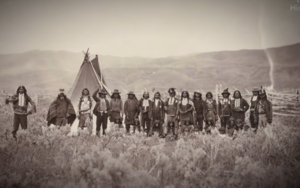
A photograph from South America showing a celebration shaped by both Indigenous and colonial influences can reveal something that a simple label such as “traditional festival” cannot.
Cultures rarely exist in isolation.
They interact.
They borrow.
They resist.
They adapt.
They create new forms from old ones.
The resulting traditions may contain layers of history that are invisible unless we know where to look.
A photograph freezes one moment of that process.

It shows us not an untouched ancient culture, but a living society continuously changing.
That is one reason historical photographs should not be treated merely as nostalgic objects.
They are evidence of transformation.
They show what was disappearing.
They show what was emerging.
And sometimes they reveal combinations that official histories overlook.
War photographs create another kind of intimacy.
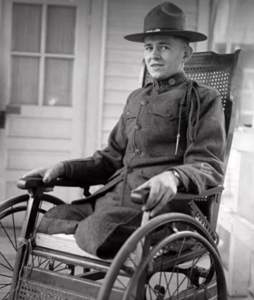
A young soldier photographed before departing for World War I may appear awkward in his uniform, perhaps smiling uncertainly toward the camera.
The image is simple.
There may be no battlefield.
No explosion.
No dramatic scene.

Just a young person dressed for a war that will soon become one of the defining catastrophes of the century.
That makes the photograph difficult to forget.
The uniform tells us something about the historical moment.
The face tells us something about the person.
And the space between those two things is where the emotional weight lies.
History often describes wars through campaigns, commanders, territories, and casualty figures.
Those details are essential.
But they can make war feel abstract.
A photograph of one young soldier restores the individual scale.
He was not born as a soldier.
He had a life before the uniform.

Family.
Friends.
Habits.
Plans.
Perhaps fears.
Perhaps excitement.
Perhaps uncertainty.
The photograph cannot tell us everything.
But it reminds us that every historical number once represented an individual life.
Other photographs challenge assumptions about social change.
A woman in the 1920s wearing trousers and holding a tool can appear striking to modern viewers because clothing often becomes a shorthand for social expectations. Yet such an image should not automatically be treated as proof that society had already completely changed.

It is more useful to see it as evidence that the boundaries were more complicated than a simple timeline suggests.
Women did not suddenly begin challenging traditional roles at one precise historical moment.
Change happened unevenly.
Some women worked in occupations considered unconventional.
Some adopted clothing that challenged expectations.
Others maintained traditional roles.
Different communities changed at different speeds.
Photographs allow us to see these contradictions rather than flattening them into a single narrative.
That is one of the greatest strengths of visual history.
A photograph can contradict a generalization without necessarily disproving the broader historical pattern.
The past was diverse.
People did not all behave identically because they happened to live in the same decade.
This becomes especially obvious when photographs move away from famous places and into ordinary spaces.

A tenement apartment.
A neighborhood barbershop.
A remote classroom.
A crowded alley.
A small shop.
A worker’s changing room.
A family kitchen.
These are places that rarely become famous.
Yet they were where most history actually happened.
A photograph inside a tenement apartment may reveal cramped living conditions, but it may also show how families organized their limited space. Furniture, clothing, cooking equipment, children’s possessions, and household arrangements can all provide clues.
A barbershop in a segregated neighborhood can reveal both the restrictions imposed by society and the importance of community spaces.
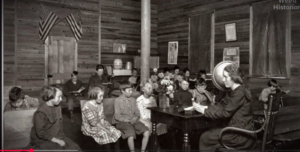
A remote schoolhouse can show educational inequality while also revealing children’s curiosity and the dedication of teachers working far from major cities.

A crowded alley filled with children can communicate the texture of urban life in a way that statistics cannot.
The numbers might tell us how many people lived in a city.
The photograph shows us where those people actually lived.
That distinction is profound.
Statistics describe scale.
Images reveal experience.
Neither is sufficient alone.
Together, they allow a richer understanding.
The growth of digital archives has changed this relationship dramatically.
For much of modern history, access to photographs depended on physical location. A family album remained inside a house. A local museum collection could be viewed only by visitors. A historical society might possess hundreds of photographs that few people outside the region ever saw.
Digitization has weakened those boundaries.
A photograph once stored in a private collection can potentially reach viewers across the world.
A forgotten image can be identified by someone thousands of miles away.

A person may recognize a building, uniform, street, or relative that historians had never been able to identify.
This democratization of historical material has created extraordinary opportunities.
But it has also created new problems.
Images can lose their original captions.
Dates can be changed.
Locations can be misidentified.
Photographs can be edited or cropped.
Stories can be attached to them without evidence.
The internet makes photographs easier to discover.
It does not automatically make the stories surrounding them more accurate.
That is why caution remains essential.
A rare photograph should not be considered automatically authentic simply because it looks old.
Nor should an image be dismissed because its story sounds unfamiliar.
The photograph itself is only the beginning.

Who created it?
When?
Where?
Why?
What evidence survives outside the image?
Has the original negative been examined?
Does another copy exist?
Can the people, clothing, buildings, or objects be independently identified?
These questions do not make historical photographs less exciting.
They make them more meaningful.
Because the goal is not to turn every mysterious photograph into a sensational story.
The goal is to understand what it can actually tell us.
And sometimes what it tells us is surprisingly modest.
A photograph may reveal how people dressed.

How they worked.
How they traveled.
How children played.
How families spent their evenings.
How communities celebrated.
How technology entered daily life.
Those details may not overturn history.
But they make history more complete.
Perhaps that is the greatest value of rare photographs that never made it into textbooks.
They remind us that history is not simply a list of major events.
It is a tapestry woven from millions of small moments.
A worker eating lunch.

A child laughing.
A couple standing together.
A family examining a new machine.
A bride wearing traditional clothing.
A teacher watching children in a remote classroom.
A soldier smiling before leaving home.
None of these moments alone changed the world.
But together, they reveal the world that people actually inhabited.
And that world was far more complicated than the clean narratives we often inherit.
The past was not one uniform experience.
It was a collection of different lives unfolding simultaneously.
Some people experienced prosperity while others struggled.
Some embraced technology while others remained dependent on older methods.
Some challenged social expectations while others defended them.
Some communities preserved traditions for generations.

Others changed rapidly.
All of them were living in the same broad historical period.
That complexity is easy to lose when history is compressed into a timeline.
Photographs restore some of it.
They slow us down.
They ask us to look at details that a paragraph might pass over.
Who is standing in the background?
What is written on the sign?
What is hanging on the wall?
What tools are being used?
What is missing?
What does the clothing suggest?
Why are people positioned where they are?
What might have happened immediately before the shutter clicked?

And what happened afterward?
We may not always find the answers.
But the questions themselves are valuable.
Because a photograph is not the whole story.
It is a doorway.
Behind it lies a world that existed beyond the frame.
Sometimes we can reconstruct that world through documents, archives, newspapers, oral histories, and other photographs.
Sometimes we cannot.
Sometimes the people remain anonymous.
Sometimes the location disappears.
Sometimes the event was never documented again.
And sometimes that single surviving photograph is all that remains.
That possibility gives old images a quiet gravity.

The people inside them were not necessarily important by the standards of their own time.
They may never have expected strangers to see their faces.
They were simply living.
Yet decades later, we can look back at them and recognize something deeply familiar.
A smile.
A tired expression.
A moment of curiosity.
A group of friends sharing food.
Children inventing games.
People adapting to a changing world.
The technology may be obsolete.
The buildings may have disappeared.
The clothing may look strange.
But the human experience remains recognizable.

Perhaps that is why rare historical photographs can feel so powerful.
They do not merely show us what the past looked like.
They remind us what it felt like to be alive inside it.
And perhaps the greatest lesson is not that history has hidden secrets waiting to shock us.
It is that history has always contained more lives, more contradictions, and more ordinary moments than any textbook could possibly preserve.
Every photograph gives us only a fragment.
But sometimes a fragment is enough to make an entire era feel real.
So the next time an unfamiliar old photograph appears on a screen, it may be worth stopping before scrolling past.
Look at the people.
Look at the background.
Look at the objects they are holding.
Look at the things that seem too ordinary to matter.
Because somewhere inside those forgotten details may be the part of history we were never taught to look for.

Not the history of kings and generals.
Not the history of monuments and battlefields.
But the history of people simply trying to live their lives while the world around them changed.
And perhaps that is the history we should have been looking at all along.
Some content was generated using AI tools (including ChatGPT) and edited by the author for creativity, storytelling, and historical illustration purposes. Historical facts and key details should be verified against reliable historical sources. Any AI-generated or reconstructed visuals are intended for illustrative purposes and should not be interpreted as original historical photographs or archival evidence.