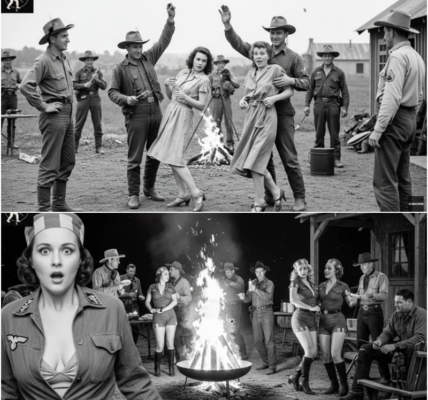
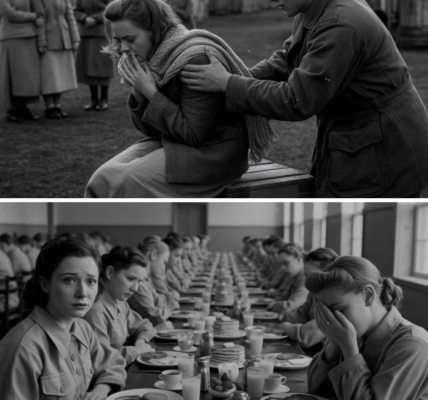
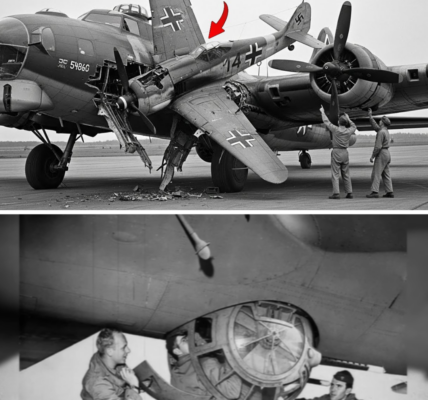
A collection calling itself “100 UNBELIEVABLE Vintage Photos They Didn’t Want You to See” has appeared online, immediately provoking the kind of reaction that old photographs rarely receive. The title promises hidden history, suppressed evidence, strange encounters, and images allegedly kept away from the public for decades. But behind that dramatic claim lies a more complicated question: are these photographs genuinely revealing something that was deliberately concealed, or are they simply fragments of the past whose stories have been distorted by the mystery surrounding them?
The collection reportedly spans nearly a century, from the 1880s through the 1970s. Its images are said to include political figures caught away from official ceremonies, scientific experiments that never became famous, cultural events that received little attention, and unusual scenes whose meanings are difficult to determine from the photographs alone.
That mixture is precisely what makes such collections irresistible.
A historical photograph can feel like a piece of evidence.
It has a date, a physical surface, identifiable faces, recognizable buildings, and objects that appear to anchor it to a particular moment. Unlike a written claim, a photograph seems to show us something directly.
But photographs can also mislead.
A picture can be genuine while its caption is wrong. A real photograph can be placed in the wrong year. An authentic image can be presented without the circumstances that explain it. A photograph can even be cropped in a way that dramatically changes how viewers interpret the scene.
That is why the title of this collection raises as many questions as the images themselves.
Who exactly are “they”?
Was anyone actually trying to hide these photographs?
Or did some simply disappear into private collections, neglected archives, forgotten newspaper files, and family albums?
The distinction matters.
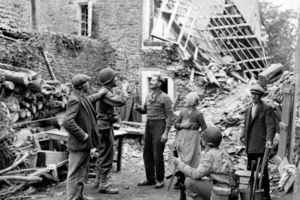
History contains many genuine examples of records being restricted, lost, suppressed, censored, or simply neglected. But not every obscure photograph is evidence of deliberate concealment.
Sometimes history forgets something for much less dramatic reasons.
An archive may lack funding.
A collection may change ownership.
A newspaper may close.
A photograph may lose its identifying information.
A family may store an album for generations without realizing its significance.
A government record may remain inaccessible because of administrative restrictions rather than because someone is protecting a secret.
The truth can be far less cinematic than the conspiracy.
And yet, sometimes the mystery is real.
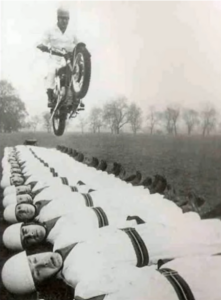
One photograph reportedly included in the collection is said to show Victorian-era explorers posing beside an artifact that appears inconsistent with established archaeological timelines. On its own, such an image would be extraordinary.
But extraordinary claims require extraordinary scrutiny.
What exactly is the artifact?
Where was the photograph taken?
Who took it?
When was the original negative produced?
Does the photograph exist elsewhere?
Are the people in it identifiable?
Was the object later found to be a modern replica?
Could the caption have been attached decades after the photograph was created?
Without answers to questions like these, the photograph remains intriguing—but not proof of an altered historical timeline.
That distinction is easy to lose when an image is presented online.

A photograph can create an immediate emotional reaction before we have had time to investigate it.
The eye sees.
The imagination fills in the gaps.
And suddenly an ambiguous image becomes a story.
The same problem appears in another alleged photograph involving a famous inventor and a prototype that was supposedly never publicly acknowledged.
The image may be genuine. The prototype may be genuine. The inventor may even be correctly identified.
But none of those facts automatically proves that the invention was deliberately hidden.
There could have been countless reasons for an unfinished machine to remain obscure. It may have failed. It may have been abandoned because it was too expensive. It may have been impractical. Its inventor may have moved on to another project.
Innovation is full of dead ends.
History tends to remember the successful inventions.
Photographs sometimes preserve the failures.
And those failures can be just as fascinating.

Perhaps this is one reason “forbidden” or “hidden” photographs have such power online. They turn uncertainty into narrative. Instead of seeing a forgotten prototype, viewers are encouraged to see a secret invention. Instead of an unidentified artifact, they see evidence of a suppressed discovery.
The photograph has not changed.
The story around it has.
That difference becomes even more important when we consider how quickly vintage photographs now travel across the internet.
An image can be uploaded by one person, copied by another, cropped by a third, given a dramatic caption by a fourth, translated into another language, and eventually reposted thousands of times.
By then, the original context may be completely gone.
The photograph remains.
The provenance disappears.
This is one of the great paradoxes of digital historical culture.
Technology has made more historical photographs visible than ever before, while simultaneously making it easier for their identities and contexts to become confused.
A picture can become famous while its actual history becomes harder to find.

The collection’s lack of detailed attribution therefore becomes one of its most important characteristics.
Who selected the photographs?
From which archives did they come?
Were the original negatives examined?
Are the dates independently documented?
Are the captions based on archival records, or are they interpretations created by the curator?
And why are some images anonymous?
These questions do not automatically discredit the collection.
They simply determine how much confidence we should place in its claims.
A photograph without provenance can still be historically valuable.
It can reveal clothing.
Architecture.
Transportation.
Technology.
Social behavior.
Landscape.

Even without knowing exactly who took it, we may learn something from what appears inside the frame.
But its unknown origin should remain part of the story.
Uncertainty should not quietly become certainty.
That principle is especially important with images that appear to show impossible or highly unusual events.
Consider a photograph reportedly showing soldiers smiling beside an unidentified object that resembles what modern viewers might call a UFO.
The image is immediately compelling.
The uniforms suggest a military context.
The object appears unusual.
The soldiers seem remarkably relaxed.
And the mind begins asking questions.
What was the object?
Where was it found?
Was it experimental technology?
A weather device?
A military prototype?
A staged photograph?
A later addition?

Or simply an object whose shape has been misunderstood?
The photograph alone may not answer any of those questions.
Yet the absence of an answer is precisely what makes the image so effective.
Mystery thrives in empty spaces.
Historical investigation works differently.
It tries to fill those spaces with evidence.
This tension between curiosity and verification is at the heart of the entire phenomenon.
People want history to surprise them.
Historians want claims to survive scrutiny.
Those goals are not necessarily opposed.
In fact, they can work together.
A mysterious photograph can be the beginning of an investigation rather than the end of one.
That is how forgotten images sometimes become valuable historical discoveries.
An apparently ordinary photograph may contain a building that no longer exists. A background figure may later be identified as an important person. A date written on the back may connect the photograph to an event that was poorly documented elsewhere.
The discovery does not need to overturn history to be meaningful.
Sometimes it simply adds another piece to the puzzle.
The idea of “hidden history” also has a long cultural appeal.

People have always been fascinated by things that seem to have been left out of the official story. Old photographs are especially effective because they appear tangible. A written conspiracy can be dismissed as speculation, but a physical photograph feels different.
It seems to say:
This happened.
But photographs do not speak that clearly.
They show us what was in front of the camera.
Everything beyond the frame remains invisible.
And sometimes the most important information is outside the frame.
A crowded street photograph from the 1920s may appear ordinary until someone recognizes a building in the background. A billboard may advertise a product that was never released. A vehicle may reveal a technological experiment that received little attention.
Such details can genuinely change how we understand a moment.
But they require investigation.
The supposed unreleased product, for example, might not indicate corporate suppression at all. It might have been an unsuccessful prototype, a regional advertisement, a temporary campaign, or simply a product that existed briefly before disappearing.

Again, the ordinary explanation does not necessarily make the photograph less interesting.
In fact, it can make it more interesting.
The history of failure is still history.
The history of abandoned ideas is still history.
The history of things that almost happened can be just as revealing as the history of things that did.
This is where the collection can be understood without accepting every dramatic claim surrounding it.
The photographs may not prove that powerful organizations systematically hid an alternative version of history.
But they can demonstrate something more defensible and perhaps more fascinating:
the historical record is incomplete.
Millions of photographs have been produced since photography became widespread. Only a fraction have survived. An even smaller fraction have been properly catalogued, digitized, and made available to the public.
Every archive contains gaps.
Every family collection contains forgotten faces.

Every newspaper morgue contains images that may never have been digitized.
And countless photographs have simply disappeared.
Fire destroys them.
Water damages them.
Neglect ruins them.
Families throw them away.
Archives lose funding.
Digital files become unreadable.
Sometimes the photograph survives but the name disappears.
Sometimes the name survives but the image is lost.
History is partly the story of what remains.
It is also the story of what did not.

That makes the anonymous images in this collection particularly haunting.
A famous photograph comes with a built-in explanation.
An anonymous one leaves us standing in front of a locked door.
We can see the person.
We can see the room.
We can see the clothing.
We can see the moment.
But we may never know the life behind it.
Who was the young woman?
Why was the photograph taken?
Who was standing just outside the frame?
What happened to the family?
Did they preserve copies?

Did anyone remember the event decades later?
Questions like these cannot always be answered.
And that is not a failure of history.
It is a reminder of its limits.
The temptation in online collections is to solve every mystery.
Every unknown person must become famous.
Every strange object must become evidence.
Every missing explanation must become a conspiracy.
But sometimes the most honest conclusion is simply:
We do not know.
That phrase may sound less exciting than “they tried to hide this,” but it is often far more intellectually honest.
And strangely enough, uncertainty can make an image more compelling.
A photograph that raises a question without immediately answering it encourages viewers to look more carefully.
It turns the audience from passive consumers into investigators.

The same principle applies to the examples of supposedly suppressed cultural events.
Perhaps an event really was censored.
Perhaps it was simply poorly documented.
Perhaps the surviving photograph was never considered important at the time.
Perhaps the people who took it did not realize that future generations would find the scene remarkable.
The image alone cannot always tell us which explanation is correct.
Context matters.
Records matter.
Provenance matters.
And sometimes the investigation remains unfinished.
That is especially relevant when photographs are described as “unbelievable.”
The word itself shapes perception.

Before viewers even see the image, they have been told that it is extraordinary.
They begin looking for something extraordinary.
A normal object can suddenly appear mysterious.
An unusual shadow becomes evidence.
A distant figure becomes a celebrity.
A technical device becomes a secret machine.
The caption can influence what the photograph appears to say.
This is why historical literacy requires more than recognizing old clothing or identifying a famous face.
It requires asking who created the image, why it was created, how it was preserved, and how its present-day meaning was constructed.
The photograph has a history too.
There is the moment captured inside the frame.

Then there is everything that happened to the photograph afterward.
Who owned it?
Where was it stored?
Who copied it?
Who published it?
Who captioned it?
Who changed the caption?
Who uploaded it?
Those layers can sometimes be more revealing than the original image itself.
Perhaps that is the real lesson hidden inside this mysterious collection.
Not that someone necessarily possesses a secret archive capable of overturning history.
But that our access to history is always mediated by survival, selection, preservation, and interpretation.
We see what survived.
We study what was preserved.
We remember what was reproduced.

And increasingly, we encounter history through whatever images happen to circulate online.
That means we should remain curious without becoming gullible.
A strange photograph deserves attention.
A remarkable photograph deserves investigation.
A controversial photograph deserves scrutiny.
But none of them deserves automatic belief simply because its caption promises a secret.
The collection’s most intriguing images may eventually be authenticated.
Others may be misidentified.
Some may turn out to be hoaxes.
Some may be genuine photographs whose stories have been exaggerated.
And others may remain permanently unresolved.
That uncertainty does not destroy the value of the collection.
It may actually be the most honest part of it.
Because history is not a completed photograph.
It is a reconstruction.
Piece by piece.
Document by document.
Image by image.
Sometimes the evidence fits neatly together.
Sometimes it contradicts itself.

Sometimes an apparently insignificant photograph becomes important decades later.
And sometimes an image that appears to promise a world-changing revelation turns out to be something much more ordinary.
But even then, the photograph has taught us something.
It has shown us how easily a story can grow around an image.
It has reminded us that mystery is not the same thing as proof.
And it has revealed just how much of the past remains outside the frame.
Perhaps that is what makes these “unbelievable” photographs worth examining.
Not because every image proves that someone wanted history hidden.
Not because every strange object represents lost technology.
Not because every unidentified face belongs to someone important.
But because every photograph is a surviving fragment of a world that once existed beyond our view.
Some fragments will answer questions.
Some will create new ones.
Some will be verified.
Some will be debunked.

And some may remain mysteries for as long as the photograph survives.
The most fascinating question, then, may not be who “they” were or what secret they supposedly tried to conceal.
It may be something much simpler:
How much of history is still sitting somewhere in an attic, archive, basement, private collection, or forgotten hard drive—waiting for someone to look closely enough to realize that it matters?
Some content was generated using AI tools (including ChatGPT) and edited by the author for creativity, storytelling, and historical illustration purposes. Historical facts and key details should be verified against reliable historical sources. Any AI-generated or reconstructed visuals are intended for illustrative purposes and should not be interpreted as original historical photographs or archival evidence.