
Viral Showdown Claims Mask the Real Political Divide Surrounding Senator Fatima Payman
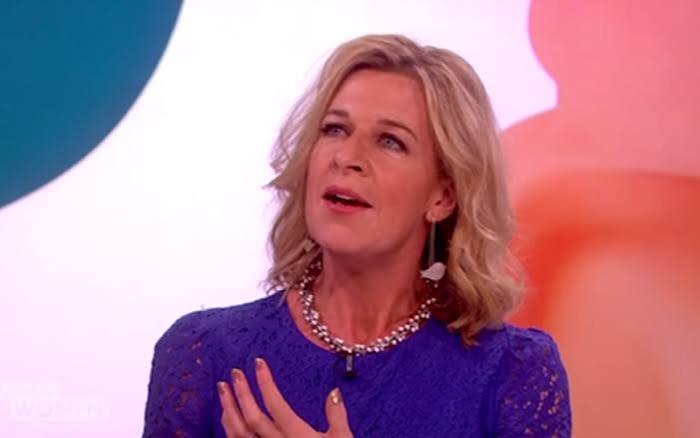
A dramatic video claiming to show a fierce television showdown between British commentator Katie Hopkins and independent Senator Fatima Payman has ignited social media, exposing how easily manufactured political narratives can overshadow complex public debates in Australia.
A viral video making the rounds across social media has once again thrust independent Australian Senator Fatima Payman into the center of a fierce online firestorm.
The circulating material presents an explosive narrative: British commentator Katie Hopkins supposedly dismantles Payman point by point during a tense television appearance, leaving studio audiences stunned as the exchange escalates into an intense confrontation.
However, fact-checkers have found no reliable Australian source confirming that this specific television showdown ever took place, nor that the quoted lines were actually spoken.

That distinction matters immensely in a digital environment where fabricated political quotes and AI-generated imagery involving Payman have been repeatedly documented.
Yet, the widespread traction of the unverified video reveals something far more significant than a piece of viral media: it highlights the deep, ongoing cultural and political divisions surrounding one of Australia’s most polarizing independent lawmakers.
From Rising Labor Star to Independent Crossbencher
To understand why Fatima Payman remains such a magnetic target for both intense criticism and fierce loyalty, it is necessary to examine her rapid and turbulent political trajectory.
Born in Afghanistan, Payman migrated to Australia with her family in 2003. In 2022, at just 27 years of age, she was elected to the Senate representing Western Australia, becoming the first Australian federal parliamentarian to wear a hijab.
Initially, her rise was championed by the Australian Labor Party as a powerful symbol of modern, multicultural representation.
That relationship fractured irrevocably in 2024 when Payman crossed the Senate floor in defiance of the Albanese government over the official recognition of a Palestinian state.
Suspended from Labor’s caucus and subsequently resigning from the party, she moved to the crossbench.
The decision transformed her overnight from a conventional government backbencher into a high-profile independent political figure, drawing praise from supporters who viewed her as principled and sharp condemnation from critics who questioned her adherence to party loyalty.
The Digital Machine and Manufactured Controversies
The recent viral claims involving Katie Hopkins are part of a broader pattern of online manipulation targeting Payman.
Australian Associated Press (AAP) FactCheck has repeatedly documented fabricated political quotes and synthetic imagery circulating across platforms like Facebook, TikTok, and X.
These fabrications have included invented statements regarding national policy and sophisticated AI-generated images depicting Payman making gestures she never performed.
In early 2025, Payman also faced intense scrutiny and issued an apology after an interview with Iran’s state-owned Press TV was published, during which she appeared to praise conditions for women in Iran—a remark she later stated did not reflect her views and occurred due to unfamiliarity with the interviewer’s affiliation.

These incidents demonstrate how quickly a politician’s words can be stripped of context, amplified by algorithms, or entirely manufactured to fuel outrage on digital networks.
Why the Clash Resonates With the Australian Electorate
Even though the specific Hopkins showdown lacks verification, the narrative resonates because it taps into a much larger ideological battle over Australian identity.
Payman currently centers her political platform on issues such as housing affordability, cost-of-living pressures, government transparency, and support for underrepresented communities.
Her supporters view her as a refreshing antidote to stale, party-dominated politics—a voice willing to challenge establishment orthodoxy.
Conversely, her critics argue that her rapid pivot toward populist branding and high-profile activism prioritizes symbolism over substantive policy competence.
This tension creates fertile ground for commentators like Katie Hopkins, whose controversial history in Australia—including her high-profile 2021 deportation following hotel-quarantine breaches—makes her a natural lightning rod for debates over free speech, immigration, and cultural change.
What the Phenomenon Reveals About Modern Political Discourse
The rapid spread of unverified confrontations highlights a growing vulnerability in modern democratic discourse: the line between political journalism and digital entertainment is increasingly blurred.
When sensational thumbnails and dramatic headlines promise a decisive political takedown, online audiences are often primed to believe what aligns with their preexisting biases.

For critics of the political establishment, viral anti-establishment clashes feel authentic. For supporters of progressive representation, such attacks appear as coordinated efforts to undermine a young independent politician.
Ultimately, the controversy surrounding the alleged Hopkins-Payman showdown is less about a single television exchange and more about who gets to define political credibility in contemporary Australia.
What Happens Next in Payman’s Political Career
As Payman continues to build her independent platform outside the major party structures, she remains a prominent fixture in national debates spanning foreign policy, multiculturalism, and parliamentary standards.
The ongoing cycle of viral claims and fact-checking corrections suggests that public scrutiny over her actions will not abate anytime soon.
Whether voters ultimately judge her by her legislative output, her policy proposals, or her ability to disrupt traditional party discipline remains to be seen.
What is certain is that in an era where digital content can easily outpace verified facts, political figures who challenge the established order will continue to navigate a turbulent intersection of real-world politics and online spectacle.
How do you think social media platforms and the public should evaluate dramatic political videos and claims that lack official verification?