
Anatomy of an Outrage Machine: The Truth, the Fakes, and the Battle Over London’s Soul
The digital terrain of modern political discourse is rarely a forum for sober debate. More often, it resembles a feedback loop designed to reward maximum friction, where cultural anxieties, partisan hostility, and manipulated media collide.
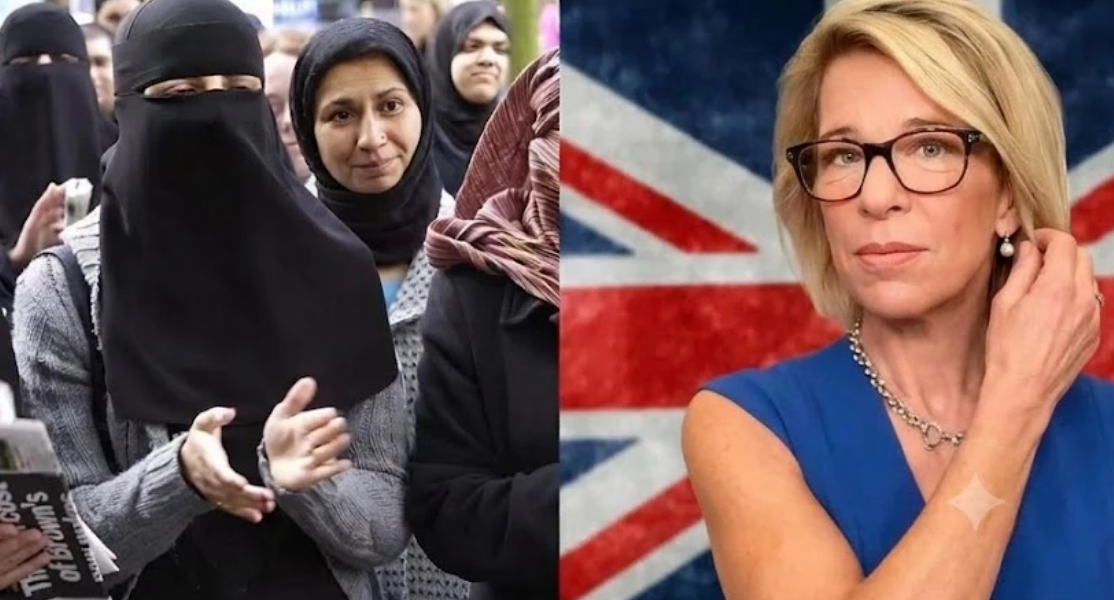
Few fault lines illustrate this dynamic more starkly than the recurring clashes between right-wing commentator Katie Hopkins and London Mayor Sadiq Khan. A fresh wave of social media vitriol has brought issues of immigration, religion, urban crime, national identity, and free expression back into the spotlight.
Behind the viral outrage, however, lies an increasingly blurry line between genuine political conflict, incendiary rhetoric, and completely manufactured disinformation.
The antagonism between Katie Hopkins and Sadiq Khan is not new; it spans nearly a decade.
Khan, who has served as Mayor of London since 2016, is one of the most prominent Muslim politicians in the Western world. As the head of the Greater London Authority, he oversees strategic planning for housing, transport policy, and the budget and oversight of the Metropolitan Police through the Mayor’s Office for Policing and Crime (MOPAC).
========================================================================
KEY CHRONOLOGY: THE HOPKINS–KHAN DISPUTE & DISINFORMATION TIMELINE
========================================================================
March 2017    | Hopkins addresses a conference in the U.S., branding Khan
              | the "Muslim mayor of Londonistan" and attacking British Islam.
------------------------------------------------------------------------
June 2019     | Following a wave of violence in London, Hopkins coins the term
              | "stab-city"; Donald Trump amplifies her attack on Khan.
------------------------------------------------------------------------
June 2020     | Hopkins is permanently banned from Twitter for violating
              | hateful-conduct rules (later reinstated under new ownership).
------------------------------------------------------------------------
November 2023 | Synthetic deepfake audio falsely portrays Khan dismissing
              | Armistice Day; police assess risk of serious public disorder.
------------------------------------------------------------------------
March 2026    | Fact-checkers at Full Fact debunk viral AI-generated images
              | claiming Hopkins confronted Muslim MPs at the Commons dispatch box.
------------------------------------------------------------------------
July 2026     | Hopkins livestreams from Moygashel, Northern Ireland, beside
              | an anti-mosque bonfire effigy, directing slurs at Khan.
========================================================================
Hopkins, a former reality television contestant turned far-right political commentator, built an international following by styling herself as a provocateur unafraid of “political correctness”. Her rhetoric has repeatedly crossed into open hostility toward Muslims, leading to libel settlements and social media bans—including a permanent suspension from Twitter in 2020 under its former hateful conduct policy, which was subsequently reversed after changes in platform ownership.
The Main Events: Real Incidents vs. Fabricated Claims
The recent flare-up stems from a mix of documented public appearances and unverified viral assertions.
In July 2026, Hopkins traveled to the village of Moygashel in County Tyrone, Northern Ireland. The location was already the subject of regional controversy due to an Eleventh Night loyalist bonfire topped with a replica of a mosque alongside slogans targeting “radical Islam” and border checks. Hopkins livestreamed from the site, using coarse, derogatory language aimed directly at Sadiq Khan.
Around the same time, however, a series of sensational claims gained traction across low-credibility websites, aggregator pages, and hyper-partisan accounts:
-
The “Radical Islamist Influence” Assertions: Several widely shared posts claimed Hopkins had published a formal exposé accusing Khan of serving as an operative for extremist Islamic networks. No credible media outlet corroborated the existence of such an investigation or authentic transcript.
-
Allegations of Criminal Charges: Other posts circulated quotes claiming Hopkins demanded immediate criminal prosecution against Khan over fabricated municipal financial scandals.
The Problem of Synthetic and Manipulated Media
This flurry of unverified claims follows a distinct pattern of deepfakes and artificial media targeting both individuals:
-
The Commons Fabrication (March 2026): According to an investigation by independent charity Full Fact, viral posts claimed Hopkins had strode into the House of Commons and unleashed an explosive speech at the despatch box against Muslim Members of Parliament. The post featured images showing her speaking in the chamber. As Full Fact documented, Hansard (the official parliamentary record) contained zero record of any such speech, Parliament was in recess at the claimed time, and the images were generated by artificial intelligence.
-
Synthetic Content Involving Khan: Khan has similarly been the target of synthetic manipulation. A widely circulated video earlier in 2026 was modified to make it appear as though the Mayor was attacking the Prime Minister over policing around political rallies. In an earlier episode, synthetic deepfake audio imitating Khan’s voice nearly triggered public disorder ahead of Remembrance weekend.
When you spend three decades reporting on political polarization across Britain, Europe, and the United States, you learn that every viral outrage story operates on two distinct tiers: the performative spectacle presented on the surface, and the structural incentive machine grinding away underneath.
1. What Important Details Have People Overlooked?
The general audience consumes this story as a localized brawl—an outspoken conservative pundit insulting a progressive city leader. What gets lost in the noise is the industrialization of political disinformation.
We have entered an era where political commentators no longer need to say something extreme for that extreme statement to influence public sentiment. Because Katie Hopkins has an established history of using aggressive phrases—such as labeling London “Londonistan” in 2017 or “stab-city” in 2019—the audience’s cognitive defense mechanism is effectively disarmed.
When a synthetic post attributes an explosive speech in the House of Commons or an unsubstantiated corruption charge to her, viewers accept it because it feels entirely plausible within the established narrative. Plausibility has replaced verifiability.
+----------------------------------------------------------------------+
|                     THE HYPER-PARTISAN FEEDBACK LOOP                 |
|                                                                      |
|  [Real Rhetorical Outrage] ---> [Algorithmic Amplification]         |
|             ^                                 |                      |
|             |                                 v                      |
|  [Erosion of Public Trust] <--- [Fabricated / AI Content Injected]   |
+----------------------------------------------------------------------+
2. What Deeper Meaning Lies Behind This Event?
At its core, this controversy is not about an insult hurled in Northern Ireland; it is about how modern political discourse conflates legitimate administrative accountability with existential sectarian identity.
Sadiq Khan’s administration has real, measurable policy impacts that warrant intense democratic scrutiny:
-
Public Safety & Crime: Serious youth violence, knife crime rates, and community trust in the Metropolitan Police require ongoing journalistic investigation and policy debate.
-
Urban Infrastructure & Transport: Policies like the expansion of the Ultra Low Emission Zone (ULEZ) have driven deep economic and political debates among working-class Londoners and suburban commuters.
-
Housing and City Planning: London’s housing crisis remains one of the steepest challenges facing the UK economy.
However, invoking terms like “Londonistan” shifts the arena from policy accountability to religious sectarianism. By substituting hard critiques of policing statistics or environmental taxes with broad assertions about a Mayor’s faith, critics weaponize religious identity to frame municipal governing challenges as an existential cultural takeover.
3. Why Does This Story Matter?
This conflict matters because it demonstrates the dangerous conflation between Islam as a diverse faith and Islamism as a political movement.
Extremism and terrorism are serious national security threats that require rigorous law enforcement and policy responses. But when commentators reduce an entire religious minority to a security risk, it poisons the public sphere. When elected officials are delegitimized purely on the basis of their religious background, democratic participation itself is undermined.
4. What Questions Remain Unanswered?
-
Platform Responsibility vs. Speed: How do major digital platforms reconcile the lag between when a fabricated post is published and when fact-checkers like Full Fact can formally debunk it?
-
Legal Frameworks for AI Disinformation: As illustrated by previous deepfake audio incidents involving public officials, current legal definitions around defamation, harassment, and public order remain ill-equipped to address synthetic media generated anonymously.
-
The Cost to Civil Scrutiny: How do municipal leaders face robust, tough-minded questioning on their performance when legitimate criticism is routinely crowded out by bad-faith identity attacks and viral falsehoods?
Modern political culture frequently treats public discourse as a zero-sum contact sport. In the recurring clashes surrounding Katie Hopkins and Sadiq Khan, we witness how authentic disagreements over crime, integration, and free expression are easily overtaken by synthetic outrage and algorithmic opportunism.
When viral lies replace documented facts, it is not just the reputations of public figures that suffer; it is the capacity of citizens to make informed judgments about the people who govern them. Democratic scrutiny requires a shared foundation of reality—where policies are evaluated by evidence, statements are checked against transcripts, and leaders are judged by their decisions rather than their faith.
Question for Reflection
As generative AI and algorithmic feeds make fabricated controversies indistinguishable from reality at first glance, how can citizens protect their right to hold elected officials accountable without falling into the trap of manufactured outrage?