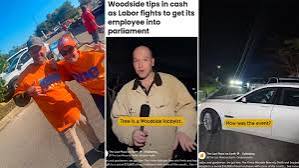
Labor volunteer booted from pre-poll as PM Albanese flies in for $10,000 donor dinners/ u1

Fractured Lines in Secret Harbour: The Ugly Altercation, Corporate Ties, and High-Stakes Politics Reshaping Western Australia
The Flashpoint at the Pre-Poll Booth
On a tense weekend morning outside the early voting center in Port Kennedy, what began as routine political friction spiraled into a volatile confrontation that reverberated across Western Australia’s political landscape.
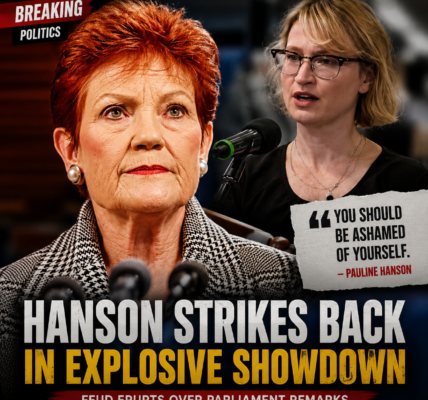
According to a firsthand account published by independent political commentary outlet Politi-CALL, a volunteer for Pauline Hanson’s One Nation approached senior booth supervisors following an intense verbal exchange. The female volunteer reported that a 21-year-old Australian Labor Party booth worker confronted her directly, allegedly saying:
“You English are disgusting, go back to England because you’re on stolen land.”
When the woman replied, “But you are here,” the young man allegedly responded, “Yeah, and I’m ashamed.”
The confrontation reportedly escalated when the volunteer attempted to steer the discussion toward global travel, prompting the worker to look her up and down before asking derisively whether she had “ever been on a treadmill.”
Witness accounts corroborated the altercation, describing earlier incidents where the same volunteer had allegedly heckled opposing party workers, labeling them “uneducated bigots” and complaining about their presence.
When confronted by site coordinators, the young Labor worker denied making the statements. However, faced with corroborating witness statements, booth organizers acted swiftly: the volunteer was formally escorted off the grounds and banned from returning to the polling facility.
The Candidates and Immediate Repercussions
The emotional fallout reached Labor candidate Georgia Tree directly at the booth site. The One Nation volunteer approached Tree to report the incident. According to the volunteer’s account, Tree listened with empathy and offered an immediate personal apology for the behavior displayed on the frontline of her campaign.
+-----------------------------------------------------------------------------------+
|                            KEY FIGURES IN THE CONTEST                             |
+----------------------+------------------------------------------------------------+
| Georgia Tree         | WA Labor Candidate; former ministerial advisor & Woodside  |
|                      | Energy employee contesting the seat.                       |
+----------------------+------------------------------------------------------------+
| Luke Herdegen        | Pauline Hanson's One Nation Candidate; local gym owner.   |
+----------------------+------------------------------------------------------------+
| Ryan Robertson       | Liberal Party Candidate; City of Rockingham Councillor.   |
+----------------------+------------------------------------------------------------+
| Anthony Albanese     | Prime Minister of Australia; federal Labor leader.         |
+----------------------+------------------------------------------------------------+
The incident ignited swift backlash online, where commentators highlighted perceived hypocrisy in party messaging. Only days prior, state Labor social media accounts had published material criticizing One Nation’s stance on women’s rights. Critics and community observers noted the jarring contrast between public messaging and the alleged personal body-shaming directed at a female opponent at an active polling venue.
Shadows on “Millionaire’s Row”: Private Access vs. Public Engagement
As volunteers clashed on the pavement in Port Kennedy, federal political dynamics cast an enormous shadow over the local race. Prime Minister Anthony Albanese arrived in Perth for a string of private, high-dollar party fundraising gatherings.
Independent media outlet The Last Place on Earth tracked the Prime Minister’s movements, capturing footage of his departure from an exclusive estate in an enclave colloquially known as “Millionaire’s Row.” The report detailed entry fees reaching $10,000 per plate for private access to the nation’s top executive.
                                 THE DUAL REALITY

      [ Grassroots Electorate ]                     [ Exclusive Fundraisers ]
  Port Kennedy Early Voting Center              Private Estates & Executive Dinners
  - Heated volunteer clashes                    - $10,000-per-head entry fees
  - Local infrastructure debates                - Mining & resources lobby executives
  - Cost-of-living community pressures          - Closed-door political access
Among the attendees documented leaving the private dinner was Aaron Morey, chief executive of the Chamber of Minerals and Energy of Western Australia—the state’s peak resources lobby. While private political fundraising is fully permitted under state and federal law, the imagery of senior ministers mingling behind private gates drew sharp criticism from rival campaigns.
One Nation candidate Luke Herdegen and independent candidate Brett Murrell publicly questioned the Prime Minister’s schedule, challenging him to visit local shopping strips and meet everyday residents rather than confining his itinerary to exclusive fundraising circles.
The Corporate Nexus: Employment Claims and Disclosure Scrutiny
Simultaneously, scrutiny intensified surrounding Georgia Tree’s professional ties to the resources sector. Prior to securing preselection, Tree served as an advisor to federal Resources Minister Madeleine King before taking up a role with energy corporation Woodside Energy in 2026.
Reporting from Western Australian energy and resources publication Boiling Cold revealed that Woodside had contributed $12,100 to state party accounts during the campaign period, as recorded in transparency filings managed by the Western Australian Electoral Commission. Opponents seized on the disclosures, demanding clarity regarding whether Tree had severed active corporate employment ties prior to seeking public office.
The Electoral Landscape: High Stakes on the Southern Coast
The legislative district of Secret Harbour—formerly encompassing much of the Warnbro electorate south of Perth—was triggered following the sudden parliamentary resignation of long-serving member and former cabinet minister Paul Papalia.
                 SECRET HARBOUR BY-ELECTION AT A GLANCE
+------------------------------------+---------------------------------------------+
| Electorate Profile                 | Outer-suburban coastal district taking in   |
|                                    | Golden Bay, Karnup, Port Kennedy & Warnbro. |
+------------------------------------+---------------------------------------------+
| Historical Baseline                | Held on an 11.5% margin; previously saw a   |
|                                    | 19.8% swing during the 2025 general poll.   |
+------------------------------------+---------------------------------------------+
| Ballot Size                        | Historic field of 16 nominated candidates.  |
+------------------------------------+---------------------------------------------+
| Official Information Portal        | Western Australian Electoral Commission     |
+------------------------------------+---------------------------------------------+
With 16 certified candidates contesting the ballot paper—the largest field ever assembled for a Western Australian state by-election—the political landscape has fractured significantly. Campaign spending disclosures revealed Labor marshaling upwards of $650,000 into local advertising, digital campaigns, and literature, contrasting sharply with One Nation’s reported grassroots budget of approximately $48,000.
For electors seeking verified details on voting eligibility, postal voting procedures, and polling locations, the Western Australian Electoral Commission provides official guides and electorate boundaries.
2. My Professional Perspective
What the Headlines Missed: The Microcosm of a Broken Civic Contract
Over three decades covering elections across Canberra, Westminster, and Washington, I have learned that the health of a democracy is rarely measured in the polished acoustics of a television studio. It is revealed on the pavement outside pre-poll centers, where party volunteers hand out flyers in the rain, and in the quiet boardrooms where donor access is traded behind closed doors.
What unfolded at Port Kennedy is not merely an isolated case of bad campaign etiquette. It is a diagnostic symptom of a widening cultural and economic chasm dividing modern political institutions from the communities they seek to represent.
                             THE THREE-TIER CHASM

 [ 1. The Pavement ]  ───>  Ideological polarization, venomous rhetoric, and identity warfare.
 [ 2. The Narrative ] ───>  Curated party slogans, high-budget advertising, and tactical messaging.
 [ 3. The Reality ]   ───>  Corporate lobbying, executive fundraising dinners, and institutional inertia.
The Anatomy of the Pavement Clash
Consider the nature of the verbal assault at the booth. The alleged remarks—blending historical guilt (“stolen land”), xenophobic displacement (“go back to England”), and personal physical cruelty (“ever been on a treadmill”)]—reveal how ideological echo chambers warp young political operatives.
When political engagement is reduced to online outrage algorithms, young activists begin to treat ideological opponents not as neighbors with differing priorities, but as caricatures deserving of total personal degradation. The venom directed at a grassroots volunteer reflects how weaponized identity politics can dissolve basic human decency.
The Two-Tiered Political Economy
While young volunteers exchange insults on the frontlines, party leadership operates in an entirely different stratosphere. The juxtaposition between the Secret Harbour pavement and the $10,000-a-head dinner on Millionaire’s Row captures the central dilemma of contemporary parliamentary politics.
       A Tale of Two Campaigns:

       Grassroots Voter                        Executive Donors
       ----------------                        ----------------
       • Cost-of-living pressures              • Private access to decision-makers
       • Delayed rail infrastructure (Karnup)  • Direct lobbying on resource policy
       • Daily frontline volunteer friction    • High-dollar policy influence
The issue is not whether attending a donor dinner breaks an electoral statute—it does not. The issue is structural access. Working-class families dealing with grocery bills and mortgage payments cannot purchase an evening of conversational access with the head of government. Energy conglomerates and mining lobby groups can.

When a candidate arrives with active corporate ties to a multinational energy producer while the party collects corporate donations, voters naturally question whose voices will carry weight once the ballots are counted.
                    UNANSWERED QUESTIONS IN THE DISTRICT

  1. Corporate Disentanglement:
     Has the governing party established clear, documented protocols to manage
     potential conflicts of interest regarding energy and resources legislation?

  2. The Rise of Minor Parties:
     Does the record 16-candidate ballot reflect localized disaffection or a wider
     structural rejection of traditional two-party domination?

  3. Campaign Standards & Accountability:
     What concrete measures are campaign directors taking to de-escalate toxic
     conduct among frontline volunteer corps?
The battle for Secret Harbour is far more than a routine contest for an outer-suburban electorate. It stands as a compelling mirror held up to contemporary Western democracy.
On one side stands the institutional machinery: hundreds of thousands of dollars in campaign war chests, elite fundraising dinners, and polished corporate transitions. On the other side sits a divided public square: a crowded field of sixteen candidates, disaffected voters weary of decade-old infrastructure promises, and volunteers trading insults on the asphalt outside early voting booths.
When political parties allow their grassroots rhetoric to rot into cruelty while their leadership retreats behind private gates with corporate lobbyists, the bond between governor and governed frays at its foundation. Elections come and go, margins swing, and seats change hands. But when everyday voters conclude that power answers only to wealth while culture wars distract the rest, the ultimate casualty is civic trust itself.
Official Voter Resources
Residents seeking information regarding electoral rolls, candidate lists, and voting arrangements can consult authorized independent resources:
-
For voting rules, accessibility services, and official updates, visit the Western Australian Electoral Commission.
-
For federal democratic governance, electoral boundaries, and parliamentary information, review the Australian Electoral Commission and the Parliament of Western Australia.
A Question for Discussion:
When party leaders prioritize high-dollar donor access while grassroots campaigns fracture into personal hostility, what concrete institutional reforms can restore genuine representation for everyday communities?