
Satire or Incitement? Inside the Legal and Political Firestorm Over the ABC’s Gina Rinehart Skit
Background: The Line Between Public Satire and Personal Vilification
In July 2026, Australia’s public broadcaster, the Australian Broadcasting Corporation (ABC), found itself at the center of a national legal and political crisis. The controversy erupted following the broadcast of a short satirical film on Race Around the World—a revived talent showcase platform designed to highlight emerging Australian filmmakers.
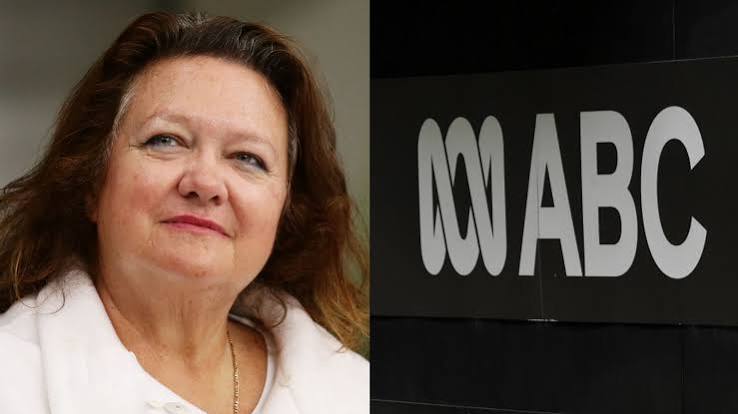
The four-minute entry, titled A Very Relaxing Video and produced by contestant Kate McGuinness, featured a graphic voiceover targeting mining magnate Gina Rinehart, Executive Chairman of Hancock Prospecting and Australia’s wealthiest individual. The segment concluded with explicit language describing violent physical assault and bodily mutilation framed under the guise of anti-capitalist revolutionary rhetoric.

What began as an obscure segment rated M for coarse language quickly escalated into a high-stakes standoff between the billionaire’s corporate empire, senior federal cabinet ministers, and the national broadcaster’s leadership.
========================================================================================
                      THE ESCALATION OF THE ABC RINEHART CONTROVERSY
========================================================================================
JULY 12, 2026                  JULY 23, 2026                  JULY 31 - AUGUST 2, 2026
--------------------           --------------------           --------------------------
• Skit airs on ABC's           • Hancock Prospecting writes   • Hancock serves legal notices
  Race Around the World          demanding program removal,     to ABC Board members.
  featuring graphic voiceover.   apology, and internal inquiry. • Federal ministers condemn
• Rated M for language.        • ABC refers to Ombudsman.       the skit as "revolting."
========================================================================================
Main Events: Legal Notices, Executive Warnings, and Ministerial Condemnation
The aftermath of the broadcast developed through three distinct phases: institutional defense, corporate legal action, and bipartisan political rebuke.
-
Initial Broadcast and Editorial Stance: When concerns were first raised, the ABC initially stood behind the segment, maintaining that the content was “editorially justifiable” within the context of cartoonish, satirical comedy.
-
Creator Apology: Following mounting public backlash, creator Kate McGuinness issued a formal statement via the ABC expressing regret for the offense caused:
“My writing is cartoonish and always satirical. Unfortunately, jokes do not land with everyone. Its purpose was never to be taken literally. I apologize to anyone I’ve offended.”
-
Hancock Prospecting Legal Intervention: Dissatisfied with the response, Hancock Prospecting formally served legal notices on ABC Chair Kim Williams AM, Deputy Chair Lisa Caffery, and Managing Director Hugh Marks. The legal letters placed the executive team on notice regarding detailed allegations of serious civil and criminal law contraventions, demanding the immediate removal of the material from ABC iView platforms.
-
Federal Government Reprimand: Senior members of the Albanese government publicly broke with the national broadcaster. Health Minister Mark Butler described the segment as “rubbish” and “pretty revolting,” asserting that such material had no place on public or commercial television. Communications Minister Anika Wells categorized the broadcast as “unacceptable,” joining Western Australian Premier Roger Cook, who condemned the language as entirely inappropriate.
+---------------------------------------------------------------------------------------+
|                          KEY STAKEHOLDERS & LEGAL POSITIONS                           |
+-----------------------------------+---------------------------------------------------+
| PARTY                             | STANCE & ACTION TAKEN                             |
+-----------------------------------+---------------------------------------------------+
| Gina Rinehart / Hancock           | Issued formal legal notices alleging civil &      |
| Prospecting                       | criminal breaches; demanded complete takedown.    |
| ABC Leadership                    | Referred matter to internal Ombudsman; initially  |
| (Williams, Caffery, Marks)        | defended segment as editorially justifiable.      |
| Federal Government                | Health & Communications Ministers publicly        |
| (Butler, Wells)                   | condemned content as "revolting" & "unacceptable."|
| Segment Creator                   | Issued public apology; insisted language was      |
| (Kate McGuinness)                 | "cartoonish satire" not meant to incite violence. |
+-----------------------------------+---------------------------------------------------+
My Professional Perspective: The Breakdown of Editorial Guardrails and the Weaponization of Satire
Having reported on media ethics, defamation law, and state-funded broadcasting for thirty years, analyzing this collision reveals a phenomenon far more concerning than a simple lapse in creative judgment.

This episode exposes a systemic failure within the ABC’s editorial vetting hierarchy, accompanied by a growing distortion in modern comedy where visceral hostility is increasingly substituted for genuine political commentary.
========================================================================================
                       THE TRIANGLE OF INSTITUTIONAL DRIFT
========================================================================================

                               [ PUBLIC BROADCASTER ]
                               /                    \
                              /                      \
    Loss of Editorial        /                        \ Public Taxpayer Funding
    Vetting Integrity       /                          \ & Statutory Obligations
                           v                            v
          [ EXTREME CREATIVE SATIRE ] <----------> [ CORPORATE & LEGAL POWER ]
                                  Mutual Escalation & Litigation
========================================================================================
1. The Breakdown of Internal Quality Assurance
What mainstream coverage has overlooked is the operational question of how a broadcast script containing explicit descriptions of physical mutilation cleared pre-transmission legal and editorial checks.
Public broadcasters operate under strict statutory charters requiring adherence to community standards, harm minimization, and editorial impartiality. For an entry on a flagship showcase program like Race Around the World to be approved, recorded, edited, compliance-checked, and published to streaming platforms without an internal flag being raised points to a dangerous disconnect between operational staff and executive oversight.
+---------------------------------------------------------------------------------------+
|                       EDITORIAL COMPLIANCE AUDIT TRAIL                               |
+-----------------------------------+---------------------------------------------------+
| STANDARD ABC VETTING PROTOCOL     | OBSERVED FAILURE IN THIS CASE                     |
+-----------------------------------+---------------------------------------------------+
| 1. Script & Content Review        | Failed to flag explicit descriptions of violence  |
| 2. Legal Pre-Broadcast Assessment | Misjudged defamation & criminal breach risks      |
| 3. Pre-Transmission Compliance    | Assigned standard 'M' rating without content edits|
| 4. Complaints Handling Response   | Initial refusal to remove content; delayed review |
+-----------------------------------+---------------------------------------------------+
2. The Deeper Shift: From Political Critique to Dehumanization
Political satire has a rich history in Western democracy, serving to hold the powerful to account through wit, exaggeration, and irony. However, a distinct shift occurs when satire moves from attacking an individual’s power, decisions, or influence to describing graphic physical harm against their person.
When creative writing relies on explicit imagery of physical violence targeting a specific private citizen—regardless of their wealth or public standing—it ceases to function as political commentary. It adopts the language of targeted vilification. The insistence by the creator that the piece was merely “cartoonish” reveals an increasing cynicism among modern content producers, who assume that framing extreme hostility as “satire” provides immunity from civil or ethical standards.
                               THE SATIRE vs. VILIFICATION SCALE
                                               │
                 ┌─────────────────────────────┴─────────────────────────────┐
                 ▼                                                           ▼
     LEGITIMATE POLITICAL SATIRE                                GRAPHIC PERSONAL TARGETING
  • Focuses on decisions, wealth, & policy                    • Focuses on physical body & violence
  • Uses irony, hyperbole, & absurdity                        • Employs crude, violent imagery
  • Challenges institutional authority                        • Dehumanizes the targeted individual
3. The Political Realignment: Why the Government Intervened
The rapid and public condemnation from senior Labor ministers—such as Mark Butler and Anika Wells—is highly revealing. Historically, left-leaning or center-left governments are hesitant to publicly reprimand the national broadcaster, preferring to maintain distance to preserve editorial independence.
+---------------------------------------------------------------------------------------+
|                         THE CABINET'S RISK CALCULUS                                   |
+-------------------------------+-------------------------------------------------------+
| POLITICAL RISK                | MOTIVATION FOR PUBLIC REBUKE                          |
+-------------------------------+-------------------------------------------------------+
| Alienating Public Broadcaster | Reasserting commitment to basic broadcast standards   |
| Appearing Pro-Billionaire     | Preventing impression that state-funded media is      |
|                               | weaponized against private citizens                   |
| Legal Exposure                | Distance the executive government from ABC liability  |
+-------------------------------+-------------------------------------------------------+
The Albanese government recognized that defending or ignoring the segment posed an immediate threat to the ABC’s institutional standing. By explicitly calling the content “rubbish” and “revolting,” ministers sought to protect the broadcaster’s broader funding and credibility from accusations of systemic bias and reckless editorial management.
4. Unanswered Questions Facing the ABC Leadership

As the internal Ombudsman conducts a formal review, several critical questions remain unanswered:
-
Who signed off on the broadcast? Which specific executive producers and compliance officers reviewed the final edit of A Very Relaxing Video prior to its nationwide transmission?
-
Why was the response delayed? Why did it require formal legal threats against individual board members from Hancock Prospecting for the ABC leadership to refer the matter to its internal Ombudsman?
-
What are the implications for public funding? How will this editorial failure impact the ABC’s ongoing charter negotiations and public trust, particularly among regional and resource-sector communities who view the national broadcaster with existing skepticism?
A Powerful Summary
The firestorm surrounding the ABC’s Gina Rinehart skit is not a story about thin-skinned public figures or sensitive comedians. It is a case study in the collapse of editorial standards inside a public institution.
By airing graphic, violent prose disguised as avant-garde satire, the ABC breached its foundational obligation to provide measured, responsible broadcasting. The unanimous condemnation from corporate leaders, regional premiers, and federal cabinet ministers underscores a firm reality: public funding demands public accountability.
Emotional Reflection
A healthy democracy requires a fierce, independent, and courageous public broadcaster. It requires artists who challenge power, question wealth, and hold the establishment to account.
However, when artistic expression degenerates into vulgar personal cruelty, it degrades the culture it claims to critique. When state-funded media platforms allow targeted cruelty to pass as clever satire, they do not speak truth to power—they simply undermine the credibility of independent journalism.
A Thought-Provoking Question
As media organizations navigate an increasingly polarized cultural landscape, this controversy leaves us with an essential question:
When public broadcasters allow graphic personal hostility to mask itself as political satire, are they expanding artistic freedom—or are they dismantling the very standards that justify their public trust?