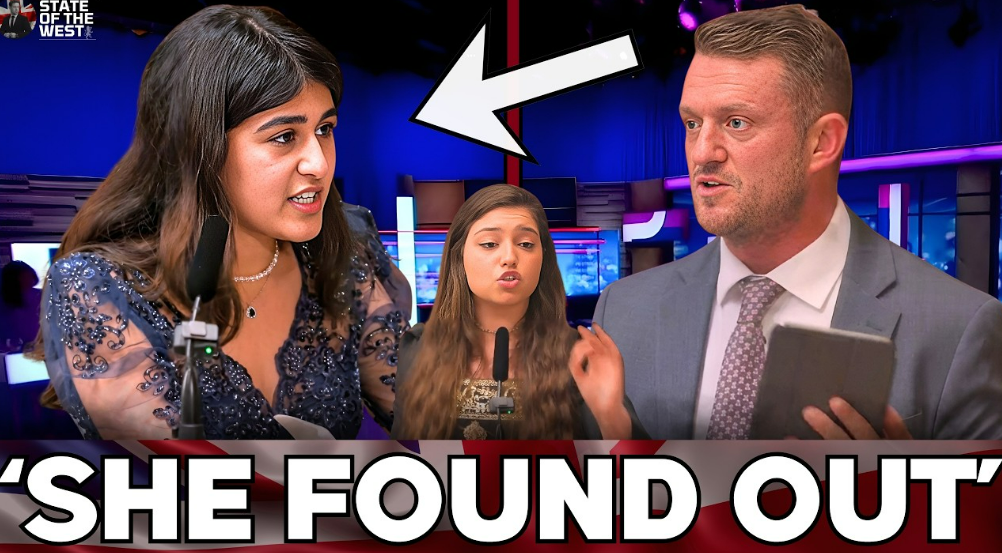
Right-wing activist Tommy Robinson (real name Stephen Yaxley-Lennon) sparked intense controversy and protests during a highly charged debate at the Oxford Union regarding whether Islam is compatible with Western values. n1

The Oxford Union Crucible: Free Speech, Extremism, and the Battle Over Islam in the West
Background: The Stage and the Standoff
For over two centuries, the Oxford Union has stood as one of the world’s premier debating societies—a historic, wood-paneled amphitheater on St. Michael’s Street that has hosted heads of state, Nobel laureates, and controversial public figures alike. Marketed as the ultimate “bastion of free speech,” the Union’s prestige relies on its willingness to confront the most polarizing issues of the day.
Yet, few debates in recent memory carried the volatile charge of the motion brought to the floor on a tense evening in Oxford: “This House believes the West is right to be suspicious of Islam.”
                     THE OXFORD UNION DEBATE FRAMEWORK

            Motion: "The West is Right to be Suspicious of Islam"
                                     │
         ┌───────────────────────────┴───────────────────────────┐
         ▼                                                       ▼
   PROPOSITION                                             OPPOSITION
   • Stephen Yaxley-Lennon ("Tommy Robinson")             • Arwa Elrayess (Union President)
   • Laurence Fox                                         • Abdullah Al-Andalusi
   • Jonathon Sacerdoti                                   • Michael Dowards ("Brother Dowie")
   • Student Speakers                                     • Jacob Rees-Mogg & Student Speakers
         │                                                       │
         └───────────────────────────┬───────────────────────────┘
                                     ▼
                            DEBATE OUTCOME:
                      Motion Defeated (57 to 41)
The headline speaker for the proposition was Stephen Yaxley-Lennon—far better known by his pseudonym, Tommy Robinson. Co-founder of the English Defence League (EDL) and a convicted felon with a decades-long history of anti-Islamic street agitation, Robinson arrived at Oxford shortly after being detained at Heathrow Airport under counter-terrorism powers following a trip to Russia.
Outside the hall, the scene was chaotic. Hundreds of anti-fascist, student, and Muslim community demonstrators lined the perimeter barricades erected by Thames Valley Police. Chants of “Nazi scum off our streets!” and “This isn’t debate, you’re spreading hate!” echoed down St. Michael’s Street. Police forces struggled to maintain control as protesters attempted to breach the security barriers. Inside, the chamber—normally built to accommodate over 400 audience members—was eerily sparse, with fewer than 100 spectators managing to pass through security checkpoints for a debate that was delayed nearly three hours, finally getting underway close to 10:00 PM.
Main Events: The Clash Inside the Chamber
The proceedings opened with an immediate confrontation over the physical and symbolic reality of Robinson’s presence. Oxford Union President Arwa Elrayess, a Palestinian student from Gaza, had faced immense public criticism from student societies, faith leaders, and local politicians for authorizing the invitation.
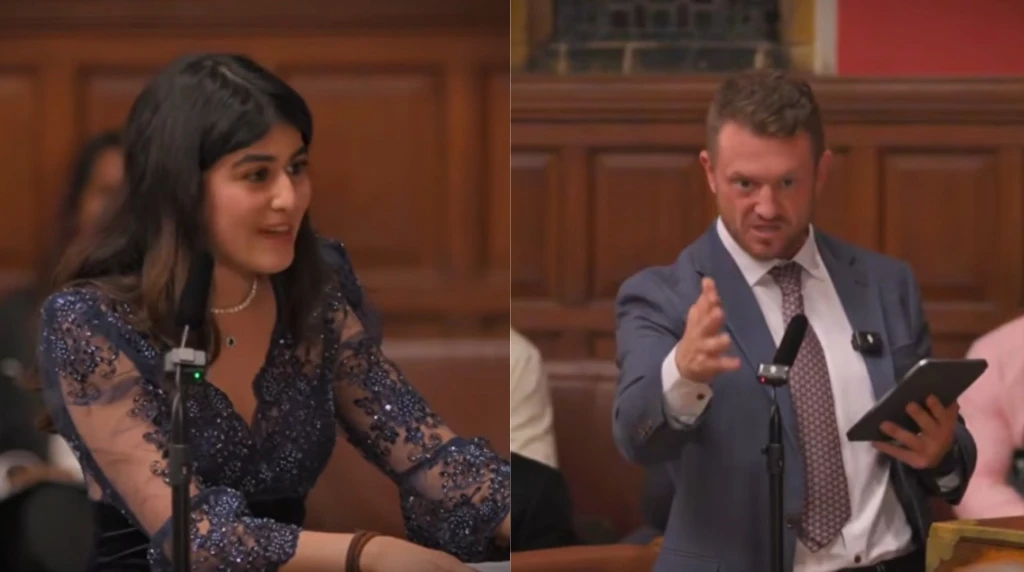
Student speaker Aisha Khan introduced the opposition panel and delivered a piercing opening volley directed straight at Robinson:
“Stephen, there is a crowd outside rioting against you tonight, and without the protection and generosity of a Muslim Palestinian president and a largely South Asian executive committee, you would be quite literally cooked.”
                     THE DEBATE'S CENTRAL PARADOX

        Outside Venue                          Inside Chamber
   ┌──────────────────────┐               ┌──────────────────────┐
   │ Mass Protests &      │               │ Protected Platform   │
   │ Hostile Crowds       │  ───────►     │ Granted by Muslim    │
   │ Threatening Security │               │ Palestinian Leader   │
   └──────────────────────┘               └──────────────────────┘
              │                                      │
              └──────────────────┬───────────────────┘
                                 ▼
                     ROBINSON'S RHETORICAL TURN:
      Claims external hostility proves his thesis that Islam
       is fundamentally incompatible with Western democracy.
Rather than being derailed by Khan’s remark, Robinson seized upon it to establish the foundation of his argument. He commended Elrayess for defending free speech despite intense political backlash, using her platform to frame his entire thesis. The hostility outside the building, Robinson argued, was not an indictment of his provocations, but empirical proof of his core claim: that Islamic tenets and Western liberal democratic norms are fundamentally irreconcilable.
Key Debates: Homosexuality, Sharia, and Scriptural Literalism
During his allotted time at the dispatch box, Robinson shifted from political posturing to aggressive theological cross-examination, targeting classical Islamic jurisprudence regarding sexuality and civil law.
-
The Treatment of Homosexuality: Robinson highlighted that four out of the five major traditional schools of Islamic jurisprudence (Fiqh) historically endorse capital punishment for homosexual acts. He pointed directly to contemporary state practice in Muslim-majority nations—including Iran, Saudi Arabia, and Afghanistan—as real-world executions of these classical doctrines.
-
The Opposition Challenge: Opposition speaker Abdullah Al-Andalusi challenged Robinson to cite specific, explicit Quranic verses mandating the execution of gay individuals.
-
Robinson’s Pivot: Refusing to engage in textual nuance, Robinson deflected: “You don’t need to convince me mate, you need to convince the eight Islamic countries that are killing them… go have your argument with Hamas, go have your argument with ISIS.”
-
-
Extramarital Sex and Corporeal Punishment: Turning to penal codes, Robinson cited Surah An-Nur (Quran 24:2), which prescribes 100 lashes for illicit sexual intercourse (Zina). He further raised the topic of stoning to death (Rajm) for adultery found in Hadith traditions, referencing a widely circulated 2023 seminar conducted by an imam at the Green Lane Mosque in Birmingham that detailed historical methods of execution.
┌────────────────────────────────────────────────────────────────────────────┐
│                       KEY THEOLOGICAL CONFRONTATIONS                       │
├──────────────────────┬─────────────────────────────┬───────────────────────┤
│ Topic                │ Robinson's Argument         │ Opposition Counter    │
├──────────────────────┼─────────────────────────────┼───────────────────────┤
│ LGBTQ+ Rights        │ Cites capital punishment in │ Demands explicit      │
│                      │ 8 Muslim nations; claims 4  │ Quranic text; notes   │
│                      │ of 5 legal schools endorse  │ geopolitical context  │
│                      │ the death penalty.          │ vs. lived faith.      │
├──────────────────────┼─────────────────────────────┼───────────────────────┤
│ Penal Codes (Zina)   │ Points to Surah 24:2        │ Accuses Robinson of   │
│                      │ (100 lashes) & stoning in   │ misquoting texts,     │
│                      │ Hadith literature.          │ cherry-picking, and   │
│                      │                             │ ignoring context.     │
├──────────────────────┼─────────────────────────────┼───────────────────────┤
│ Religious Consistency│ Demands Muslims explicitly  │ Challenges Robinson   │
│                      │ renounce violent ancient    │ on whether Orthodox   │
│                      │ scriptures.                 │ Jews must renounce    │
│                      │                             │ Leviticus texts.      │
└──────────────────────┴─────────────────────────────┴───────────────────────┘
-
The Pushback on Cherry-Picking: Opposition panelist Michael Dowards (a Muslim convert known online as “Brother Dowie,” who hails from Robinson’s hometown of Luton) accused Robinson of hyper-focusing on extreme textual interpretations while deliberately ignoring the millions of British Muslims working as doctors, nurses, and charity volunteers. When challenged on whether he would demand Orthodox Jews or traditional Christians similarly denounce violent punishments contained in the Old Testament or Levitical law, Robinson summarily dismissed the comparison: “I’m not here to talk about Jewish law… I think you’re confused at which debate you’re at.”
Important People & Outcome
The debate showcased a stark contrast between panelists:
-
Stephen Yaxley-Lennon (“Tommy Robinson”): Proposition speaker framing Islam as an existential threat to Western liberty.
-
Arwa Elrayess: Oxford Union President and Palestinian student who upheld the platforming of controversial figures while opposing his views.
-
Abdullah Al-Andalusi & Michael Dowards: Opposition debaters dismantling Robinson’s theological interpretations and highlighting Muslim civic contributions.
-
Laurence Fox & Jacob Rees-Mogg: High-profile political figures taking opposing sides on the broader societal implications of religious integration.
After three hours of intense, often chaotic argument, the Oxford Union assembly cast their votes. The motion was defeated by a vote of 57 to 41. While the proposition lost on the floor, the event exposed deep fractures surrounding free speech, integration, and religious identity across modern Britain.
As a journalist who has spent three decades covering civil unrest, ideological movements, and parliamentary politics across Europe and North America, I have watched the nature of public discourse transform. What transpired inside the Oxford Union was not merely an academic exercise; it was a microcosm of a profound crisis facing Western liberal democracies.
To view this event simply as a victory or defeat on a parliamentary scorecard is to miss the far more intricate, dangerous mechanics at play.
Overlooked Detail 1: The Tactical Weaponization of “Free Speech Asymmetry”
The most sophisticated maneuver executed at St. Michael’s Street was not a debate point—it was Tommy Robinson’s tactical inversion of the Union’s security apparatus.
Consider the optics: a notorious far-right activist, protected from a furious mob outside by police barricades and hosted by a Muslim Palestinian student from Gaza. In classic debater terms, Aisha Khan’s opening statement was intended to expose Robinson’s hypocrisy. But to a seasoned observer of populist rhetoric, Robinson’s response was a masterclass in judo politics.
                    THE RHETORICAL JUDO MECHANISM

  1. Hostility Outside ──►  2. Police Protection ──►  3. Robinson's Framing
  (Hundreds protesting      (Barricades & Muslim     ("See? I require armed
   on St. Michael's)         Union Leadership)        guards to speak about
                                                      this religion.")
By thanking Union President Arwa Elrayess for defending his right to speak, Robinson instantly reframed his position from that of an aggressor to that of a persecuted truth-teller. He transformed the physical security required to keep him safe into living evidence of his central claim: that criticizing Islam requires armed security in a Western city. This “free speech asymmetry”—where the host’s generosity is converted into the guest’s proof of concept—is a weapon that far-right agitators have perfected in the digital age.
Overlooked Detail 2: The Mirror-Image Mechanics of Scriptural Literalism
Throughout the three-hour debate, an ironic structural reality emerged: Tommy Robinson and Islamic fundamentalists read religious texts in precisely the same way.
Both the far-right agitator and the religious extremist rely on an unyielding, hyper-literalist reading of historical scripture. Both reject centuries of theological evolution, context, legal nuance, and reformer scholarship.
                    THE LITERALIST CONVERGENCE

       Far-Right Agitators               Religious Extremists
    (e.g., Tommy Robinson)                  (e.g., ISIS/Hamas)
              │                                    │
              └──────────────────┬─────────────────┘
                                 ▼
                     SHARED HERMENEUTIC MODEL:
             • Zero context or historical evolution.
             • Rejection of modern allegorical reform.
             • Absolute insistence that 7th-century texts
               dictate 21st-century civic behavior.
When Robinson listed verses from Surah An-Nur or cited classical Hadith punishments, he presented these texts as fixed, operational instruction manuals for every practicing Muslim in Britain today. When opposition speakers like Abdullah Al-Andalusi or Michael Dowards attempted to contextualize these passages within historical Islamic jurisprudence or modern civil law, Robinson brushed them aside.
For Robinson’s narrative to work, Islam must remain a monolith. The moment one acknowledges that 1.9 billion believers navigate their faith through diverse cultural, secular, and allegorical frameworks, the premise that “the West must be suspicious of all Muslims” collapses.
Overlooked Detail 3: The Gap Between Academic Elite Platforms and Street Realities
There is a profound disconnect between the high-minded debate chambers of Oxford and the working-class streets of towns like Luton, Belfast, or Romford.
Inside the Union, student debaters trade Latin phrases, parliamentary gestures, and point-of-order technicalities. Outside on the streets, the consequences of this rhetoric are measured in real-world fear, hate crime statistics, and community division.
┌────────────────────────────────────────────────────────────────────────────┐
│                    THE DUAL REALITIES OF PUBLIC DEBATE                     │
├───────────────────────────────┬────────────────────────────────────────────┤
│ The Oxford Union Chamber      │ The Street-Level Reality                   │
├───────────────────────────────┼────────────────────────────────────────────┤
│ Controlled parliamentary rules│ Rising religious hate crimes in the UK     │
│ and intellectual sparring.    │ (nearly 45% targeting Muslims).    │
├───────────────────────────────┼────────────────────────────────────────────┤
│ Abstract philosophical        │ Mosque attacks, arson, and physical        │
│ exercises on "suspicion."     │ intimidation in local communities.│
├───────────────────────────────┼────────────────────────────────────────────┤
│ Content clipped for 30-second │ Algorithmic outrage fueling real-world     │
│ social media viral moments.   │ civil unrest and street riots.  │
└───────────────────────────────┴────────────────────────────────────────────┘
When an institution like the Oxford Union platforms a figure whose reputation was built on street-level anti-Muslim activism, it operates under the assumption that intellectual debate acts as a disinfectant. But in the modern media ecosystem, 3-hour nuanced debates are instantly fragmented into 30-second outrage clips for TikTok, X, and YouTube. Robinson did not come to Oxford to win the vote among 98 students in the room; he came to harvest high-status video footage inside a prestigious institution to validate his brand to millions online.
Deeper Meaning: The Failure of Centrist Integration Models
Why does this story matter so deeply today? Because it highlights the complete breakdown of traditional, centrist frameworks for managing multicultural integration and free speech in Western Europe.
For decades, political leaders assumed that economic integration would automatically produce cultural assimilation. Events like the Oxford Union debate demonstrate that cultural and ideological questions cannot be swept under the rug of economic policy.
-
The Liberal Dilemma: How does an open society handle ideas, movements, or religious doctrines that may hold illiberal views on individual rights, sexuality, and gender?
-
The Populist Exploitation: How does a democratic society prevent political opportunists from converting legitimate debates about integration into blanket hostility against minority populations?
By refusing to have honest, nuanced conversations about scriptural reform, integration challenges, and civic values in mainstream forums, the political center leaves a vacuum that figures like Tommy Robinson are all too eager to fill.
Unanswered Questions
As an investigative analyst watching this spectacle unfold, several fundamental questions remain unanswered:
-
The Responsibility of Elite Platforms: Does inviting provocateurs to prestigious academic halls serve the public interest by exposing flawed arguments, or does it merely lend institutional credibility to hate rhetoric?
-
The Path for Modern Religious Reform: How do traditional faith communities articulate a compelling vision of modern civic integration that directly addresses and rejects archaic corporeal punishments without feeling forced into defensive posture?
-
The Limits of Free Speech: In an era where online rhetoric directly translates into physical street riots and violence, where does the boundary lie between protected political speech and dangerous incitement?
Summary of a Divided Nation
The debate at the Oxford Union ended with a formal vote rejecting suspicion of Islam. Yet, the three hours of bitter exchange inside the chamber—and the chanting crowds trapped behind police barricades outside—reflected a society deeply at odds with itself. The event laid bare the fault lines of modern Britain: a nation struggling to balance its commitment to absolute free speech with the imperative to protect minority communities from hostility and prejudice.
Emotional Reflection
Standing outside St. Michael’s Street as the night air cooled, watching young Muslim students walk past police riot vans while protesters chanted into megaphones, one felt a profound sense of exhaustion.
For minority communities, these debates are never purely academic exercises—they touch upon personal safety, dignity, and belonging. For working-class communities feeling left behind, the grievances raised about culture and security feel urgent and unaddressed. And for the democratic institution itself, the line between fostering intellectual truth and hosting a televised spectacle grows thinner by the day.
Britain does not lack for loud voices, fiery rhetoric, or debating halls. What it desperately lacks is a shared space where difficult questions about faith, culture, and liberty can be discussed with honesty, empathy, and mutual respect, rather than weaponized for political theater.
A Final Question for the Reader
As Western democracies navigate an increasingly polarized world, we must ask ourselves a question that goes to the heart of our democratic future:
How can a free society defend its open public square without allowing that same platform to be used to dismantle the trust and mutual tolerance that keep a diverse nation together?