
The Pressure Valve: Inside Australia’s Crucible of Population, Housing, and Political Fracture
1. The News Story
In the early morning light of suburban Sydney, the queue forms long before the real estate agent arrives to turn the key. Dozens of people—young families holding paperwork, international students checking their phones, single professionals looking visibly weary—stand in a line that stretches down the block. They are all here for a fifteen-minute viewing of a modest two-bedroom apartment. Across Melbourne, Brisbane, and Perth, identical scenes play out every weekend.
Australia’s post-pandemic migration surge has brought the nation to a socio-economic inflection point. What was once a broadly bipartisan policy pillar—the steady, managed intake of overseas workers and students to fuel economic expansion—has erupted into one of the most contentious political battles in modern Australian history.
At the center of the storm is a deceptively simple question: How much immigration is too much?
                     AUSTRALIA'S MIGRATION & HOUSING PUZZLE

       +-----------------------------------------------------------------+
       |                  POST-PANDEMIC BORDER REOPENING                |
       |             (Catch-up surge in temporary visa holders)          |
       +-----------------------------------------------------------------+
                                       |
                                       v
       +-----------------------------------------------------------------+
       |                   NET OVERSEAS MIGRATION (NOM)                  |
       |  • FY 2022–23 Peak: ~538,000                                     |
       |  • FY 2023–24 Shift: ~429,000                                    |
       |  • FY 2024–25 Level: ~306,000                                    |
       +-----------------------------------------------------------------+
                                       |
                   +-------------------+-------------------+
                   |                                       |
                   v                                       v
    +------------------------------+       +------------------------------+
    |    ECONOMIC DEPENDENCIES     |       |    INFRASTRUCTURE STRAIN     |
    |  • $50B+ Education Sector    |       |  • Vacancy Rates < 1.0%      |
    |  • Healthcare & Aged Care    |       |  • Rapid Rent Inflation      |
    |  • Construction Workforces   |       |  • Suburban Service Pressure |
    +------------------------------+       +------------------------------+
                                       |
                                       v
       +-----------------------------------------------------------------+
       |                  POLITICAL POLICY & REFORM                      |
       |  • Visa fee increases & student enrolment caps                  |
       |  • Debate between aggregate GDP growth vs. per-capita reality   |
       +-----------------------------------------------------------------+
The Surge and the Strain
The numbers tell a story of sudden, historic movement. Following two years of closed borders during the COVID-19 pandemic—a period that saw nearly 400,000 temporary visa holders leave the country—Australia reopened its doors. The resulting influx broke previous records. Net Overseas Migration (NOM) reached an unprecedented peak of 538,000 in the 2022–23 financial year, before beginning a gradual decline to 429,000 in 2023–24 and roughly 306,000 in 2024–25.

The composition of these arrivals was predominantly temporary:
-
International Students: Representing the largest single cohort, arriving to resume higher education after years of remote learning or delayed travel.
-
Temporary Skilled Workers & Working Holiday Makers: Recruited to fill severe labor shortages across agriculture, hospitality, aged care, and technical trades.
-
Permanent Migrants: Remaining relatively stable, anchored around statutory caps of 185,000 to 195,000 annually.
However, this rapid demographic influx collided directly with an existing domestic bottleneck: a chronic, long-term shortage of residential housing.
Rental vacancy rates in major capital cities plummeted below 1.0%—a threshold considered by urban planners to represent extreme market stress. Median rents rose sharply, in some outer-suburban corridors jumping by double-digit percentages year-over-year. The consequences spread beyond housing into broader daily infrastructure. Suburban roads, regional public transit systems, public hospital emergency departments, and primary school enrollments felt the cumulative pressure of a population growing faster than local infrastructure could expand.
“It isn’t about xenophobia; it’s about basic arithmetic,” remarked one independent economic observer during a parliamentary inquiry. “When you add hundreds of thousands of consumers of shelter in a calendar year, and your construction sector is physically incapable of delivering equivalent front doors, the market clears through price spikes and social dislocation.”
The Political Crucible
The political battle lines in Canberra have hardened rapidly.
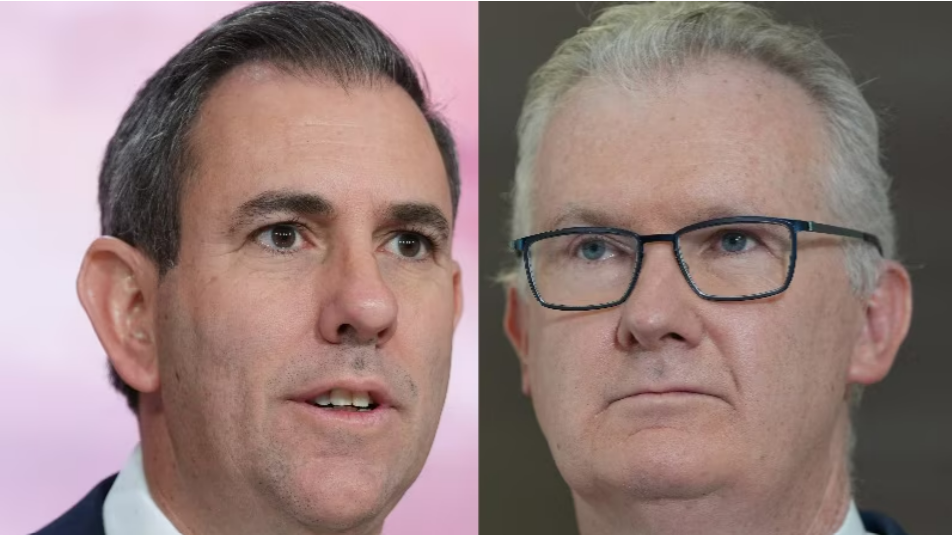
The Albanese Labor Government—led by Prime Minister Anthony Albanese, Treasurer Jim Chalmers, and Home Affairs Minister Tony Burke—has repeatedly argued that the migration spike was not the result of loose policy, but rather a temporary, post-pandemic “catch-up” wave. Federal officials emphasize that temporary visa holders fill crucial vacancies in understaffed sectors like aged care, disability support, and construction, while international education serves as Australia’s fourth-largest export industry, pumping tens of billions of dollars directly into the national economy.
To temper public anxiety, the government introduced a suite of policy adjustments:
-
Raising English-language requirement benchmarks for student and post-study work visas.
-
Increasing the minimum financial savings required for international student visa applicants.
-
Doubling international student visa application fees.
-
Proposing caps on new international student enrolments across universities and vocational colleges.
Yet these adjustments have satisfied few.
The Federal Opposition, led by Peter Dutton, has accused the government of driving a “Big Australia” agenda by default, arguing that runaway migration numbers have directly fueled the cost-of-living crisis and made the dream of home ownership impossible for a generation of young Australians. Conservative and populist voices, including Senator Pauline Hanson’s One Nation, have pressed for more aggressive measures: slashing net intake figures, enforcing strict economic contribution tests, and forcing businesses to focus on training domestic workers rather than relying on overseas labor.
Mainstream economists find themselves caught in the middle. The Reserve Bank of Australia (RBA) and Federal Treasury have acknowledged that while high migration expands aggregate Gross Domestic Product (GDP) and mitigates wage-push inflation in understaffed industries, it simultaneously generates sharp demand-side pressures in housing and localized services.
┌─────────────────────────────────────────────────────────────────────────┐
│                      THE DUAL PERSPECTIVE ON MIGRATION                  │
├─────────────────────────────────────────────────────────────────────────┤
│ ECONOMIC ARGUMENT (PRO-MIGRATION)   │ CAPACITY ARGUMENT (CRITICS)       │
├─────────────────────────────────────┼───────────────────────────────────┤
│ • Prevents severe labor shortages   │ • Exacerbates acute housing gaps  │
│ • Drives aggregate GDP growth       │ • Suppresses per-capita GDP       │
│ • Funds higher education ($50B+)    │ • Strains public infrastructure   │
│ • Restructures aging demographics   │ • Escalates local rental costs    │
└─────────────────────────────────────┴───────────────────────────────────┘
2. Professional Analysis & Personal Perspective
My Professional Perspective
As a journalist who has spent three decades tracking geopolitical shifts, demographic movements, and economic policy across four continents, I have watched the “migration debate” play out in dozens of capitals. From London’s post-Brexit labor realignments to Ottawa’s recent, painful recalibration of its foreign student intake, the narrative arc is strikingly familiar.
Yet Australia’s current crisis carries distinct structural features that are often missed in daily political reporting. Beyond the press releases, talking points, and talk-radio outrage, there is a deeper, more uncomfortable narrative at play—one that reveals how a nation’s structural economic design can quietly turn against its own citizens.
Here is the story behind the headlines that many people have never considered.
                  THE HIDDEN STRUCTURAL MECHANICS

  1. THE SCAPEGOAT ILLUSION
     International students targeted (6% of rental market) ──► Conceals broader planning failures.

  2. THE PER-CAPITA RECESSION
     Aggregate GDP numbers stay positive ──► Masking individual living standard declines.

  3. TAX POLICY vs. DEMOGRAPHICS
     Negative gearing & CGT discounts ──► Turn homes into speculative wealth assets.

  4. FEDERAL-STATE DISCONNECT
     Canberra controls visa taps ──► States bear land, school, & hospital burdens.
1. The Scapegoat Illusion: Why the Student Debate is a Policy Red Herring
The most striking aspect of the current discourse in Canberra is the obsessive political focus on international students. Both major political parties have converged on international education as the primary lever to demonstrate policy control. Increasing visa fees, tightening savings criteria, and proposing university enrolment caps are presented to voters as decisive interventions to fix the housing crisis.
The underlying data, however, paints a very different picture.
Independent property market analyses, including research by Mandala Partners and the Student Accommodation Council, reveal that international students account for roughly 6% of the national private rental market. Nearly 40% of international students reside in purpose-built student accommodation (PBSA), university halls, or homestay arrangements—entirely outside the private rental market that ordinary Australian families compete in.
          WHERE INTERNATIONAL STUDENTS LIVE

  [==================== 39% ====================]  [====== 6% ======]  [=========== 55% ===========]
  Purpose-Built Accommodation / Campus / Other    Private Rentals      Shared / Family / Other
Modeling suggests that capping international student visas would reduce metropolitan rental prices by a marginal $5 per week. In exchange for this minimal relief, the policy risks stripping billions of dollars from Australia’s higher education sector—a sector that uses international tuition revenues to fund fundamental scientific research, cross-subsidize domestic student teaching, and support over 200,000 domestic jobs.
Why, then, do politicians focus so heavily on students?
Because targeting temporary student visas is politically easy. Students do not vote in Australian elections. They do not have corporate lobbies or industrial unions protecting their immediate political interests. Framing the housing crisis as an “unprecedented student influx” provides policymakers with an external target, diverting public attention away from decades of domestic policy inaction on housing supply, land zoning, and tax reform.
2. The Great Australian Paradox: Per-Capita Recession vs. Top-Line Growth
To understand why the public mood in Australia has soured so dramatically despite low unemployment figures, one must examine a metric that rarely makes the evening news broadcasts: per-capita GDP.
For decades, Australian Treasury officials have relied on population growth as an economic growth strategy. When hundreds of thousands of new consumer units enter an economy each year, total spending increases. More groceries are purchased, more utility bills are paid, more transport tickets are validated. On paper, top-line national economic output expands, allowing ministers to announce that the country has avoided a formal technical recession.
                     THE PER-CAPITA DIVERGENCE

    Economic Output
         ^
         |             /  Aggregate GDP (Top-line growth stays positive)
         |            /
         |           /
         |----------/-----------------------------------------
         |         /
         |        /    Per-Capita GDP (Individual prosperity shrinks)
         |       / \
         |      /   \
         |     /     \________________________________________
         +---------------------------------------------------> Time
For the individual resident, however, the real-world experience is entirely different. While aggregate GDP may tilt upward, per-capita GDP has experienced prolonged contraction.
When a nation expands its population faster than its productive capital stock—its roads, rail lines, power grids, schools, and housing stock—the quality of life for the individual resident declines. You sit longer in traffic. You wait longer to see a bulk-billing doctor. You pay a higher percentage of your take-home pay to secure basic shelter.
The public is experiencing what economists term “capital shallowing.” The Australian electorate is not responding to xenophobia; it is reacting to a tangible decline in individual purchasing power and daily livability. The nation has grown its total economic footprint by adding more people, rather than by becoming more productive, innovative, or efficient.
3. The Unspoken Structural Driver: Tax Settings and the Asset Economy
The most significant omission from the political debate over immigration is the role played by domestic tax settings in creating the housing shortage.
Blaming incoming migrants for high home prices ignores a key historical reality: Australia’s housing market was severely distorted long before the post-COVID border reopening. For more than two decades, federal tax structures—specifically the combination of negative gearing and a 50% Capital Gains Tax (CGT) discount—have encouraged domestic investors to treat residential housing primarily as a speculative vehicle for wealth accumulation rather than as essential civic infrastructure.
                          THE HOUSING FEEDBACK LOOP

  +-----------------------+        +-----------------------+        +-----------------------+
  |    Tax Incentives     |        | Capital Accumulation  |        | Construction Bottleneck|
  | (Negative Gearing /   | ────►  | Investment capital    | ────►  | Focus shifts to existing|
  |  CGT Discount)        |        | bids up existing stock|        | assets, not new supply|
  +-----------------------+        +-----------------------+        +-----------------------+
                                                                                │
                                                                                v
  +-----------------------+        +-----------------------+        +-----------------------+
  | Acute Housing Shortage| ◄────  | Migration Influx      | ◄────  | High Land Costs &     |
  | Rental stress & social|        | Adds immediate demand |        | Planning Delays       |
  | pressure              |        | to a rigid market     |        |                       |
  +-----------------------+        +-----------------------+        +-----------------------+
These tax settings channeled trillions of dollars of domestic capital into bidding up the prices of existing residential property, rather than expanding new construction supply. When this pre-existing structural deficit met a post-pandemic surge in population, the market broke at its weakest point: the rental sector.
Furthermore, the construction industry itself is caught in a self-reinforcing trap. Building firms face high material costs, complex local council planning delays, and severe shortages of skilled tradespeople. Paradoxically, Australia needs skilled migrant workers—carpenters, electricians, plumbers, and engineers—to build the very housing required to relieve market pressures. Yet, because housing is scarce, accommodating those needed workers temporarily intensifies rental competition.
It is a policy loop of Australia’s own making: an economy that requires migration to solve its supply bottlenecks, but lacks the infrastructure flexibility to absorb those migrants when they arrive.
4. The Federal-State Disconnect
In my thirty years covering international governance, I have rarely seen a more profound structural mismatch than the one embedded in Australian federalism.
In Canberra, the Federal Government holds absolute constitutional authority over immigration policy. It sets visa quotas, controls border checkpoints, and determines intake profiles. It collects the majority of personal and corporate income tax revenues generated by new arrivals.
                    THE FEDERAL-STATE JURISDICTIONAL GAP

      CANBERRA (Federal Government)         STATES & TERRITORIES (Local Delivery)
  ┌─────────────────────────────────┐      ┌─────────────────────────────────┐
  │ • Controls visa quotas          │      │ • Must build schools & hospitals│
  │ • Sets migration settings       │  VS  │ • Manages land release & zoning │
  │ • Collects income tax revenue   │      │ • Operates public transit       │
  │ • Enjoys top-line tax windfalls │      │ • Absorbs local infrastructure  │
  └─────────────────────────────────┘      └─────────────────────────────────┘
Conversely, the physical consequences of migration fall entirely on state and territory governments. State capitals like Sydney (NSW), Melbourne (VIC), and Brisbane (QLD) are responsible for building schools, maintaining public hospitals, funding road networks, expanding public transit, and managing local land zoning.
When federal migration settings shift, state governments are left to deal with the immediate logistical consequences, often with years of lag time in infrastructure funding grants. There is no automated mechanism in Australian governance that forces federal immigration targets to align with state-level housing completions or hospital capacity. The policy right hand rarely coordinates with the infrastructure left hand.
5. The Human Cost: Living in the Margin
Behind the macro-economic charts and parliamentary debates are individual lives caught in the machinery of an uncoordinated policy framework.
                         THE HUMAN IMPACT SPECTRUM

       EXISTING RESIDENTS                       NEW ARRIVALS
  ┌───────────────────────────┐           ┌───────────────────────────┐
  │ • Priced out of ownership │           │ • High visa application   │
  │ • Experiencing rental     │   VERSUS  │   fees ($1,600+)          │
  │   stress                  │           │ • Facing public hostility │
  │ • Strained daily public   │           │ • Used as economic        │
  │   services                │           │   shock-absorbers         │
  └───────────────────────────┘           └───────────────────────────┘
On one hand, there is the young Australian family forced to relocate two hours away from their workplace because their rent was increased by $200 a week. There is the essential worker—a nurse or paramedic—who can no longer afford to rent anywhere near the hospital where they work night shifts.
On the other hand, there is the international student who saved their family’s life savings to pay a $1,600 visa application fee, only to arrive in a foreign country and find themselves blamed by local politicians for a housing crisis they did not create. They live in overcrowded shared apartments, navigate complex work-hour restrictions, and face growing public hostility despite making vital financial contributions to Australia’s educational institutions.
Both groups are victims of the same underlying failure: a nation that welcomed rapid demographic growth without building the foundational infrastructure needed to sustain it.
3. Conclusion
The immigration debate currently unfolding across Australia is not a transient political dispute that will vanish after the next election cycle. It represents a fundamental test of how modern nations manage growth, social equity, and economic identity in a post-pandemic world.
┌─────────────────────────────────────────────────────────────────────────┐
│                      THE STRATEGIC CHOICE AHEAD                         │
├─────────────────────────────────────────────────────────────────────────┤
│                                                                         │
│   OPTION A: AD-HOC REACTIONARY CAPS                                     │
│   • Scapegoats temporary migrants & international students              │
│   • Protects legacy tax distortions in the residential housing market   │
│   • Results in long-term economic stagnation and lost export revenue    │
│                                                                         │
│                                  OR                                     │
│                                                                         │
│   OPTION B: STRUCTURAL NATION-BUILDING                                  │
│   • Aligns federal migration settings with state housing targets        │
│   • Reforms domestic tax incentives that drive housing speculation      │
│   • Invests in productive capacity, infrastructure, & skills training   │
│                                                                         │
└─────────────────────────────────────────────────────────────────────────┘
For decades, Australia’s story has been one of extraordinary migration success. Waves of post-war European arrivals, followed by generations of migrants from Asia, the Middle East, and South America, built the physical, cultural, and economic foundations of modern Australia. The nation’s multicultural fabric is not merely a political slogan; it is an economic reality that has delivered sustained prosperity and cultural dynamism.
However, historical success does not confer immunity from future planning failures.
To reduce this complex issue to simplified political rhetoric—whether it is the slogan “Stop the Boats” on one side or an uncritical defense of endless growth on the other—does a profound disservice to the nation. Australia does not suffer from having too many migrants; it suffers from having too little vision in its planning, too little courage in its tax policy, and too little coordination between its levels of government.
If Australia is to preserve its social contract—a promise that hard work guarantees secure shelter, accessible healthcare, and a better life for the next generation—its leaders must look beyond short-term visa caps. They must address the structural core of the problem: tax settings that prioritize property speculation over housing construction, federal-state disconnects that starve communities of infrastructure, and an economic model that relies on population volume rather than genuine productivity growth.
Without those structural reforms, cutting visa numbers will offer little more than temporary political theater, while the underlying pressures remain unaddressed.
A Question for the Reader
As nations across the Western world confront identical strains on housing, healthcare, and infrastructure, Australia’s journey serves as a global case study.
Has immigration become an easy political target for structural economic failures that governments have spent decades avoiding, or has the sheer speed of global population mobility simply outpaced the physical capacity of modern nation-states?
Share your thoughts below. Keep the debate focused on evidence, economic realities, and long-term policy solutions.