
Why Captured American Privates Knew More Than German Lieutenants
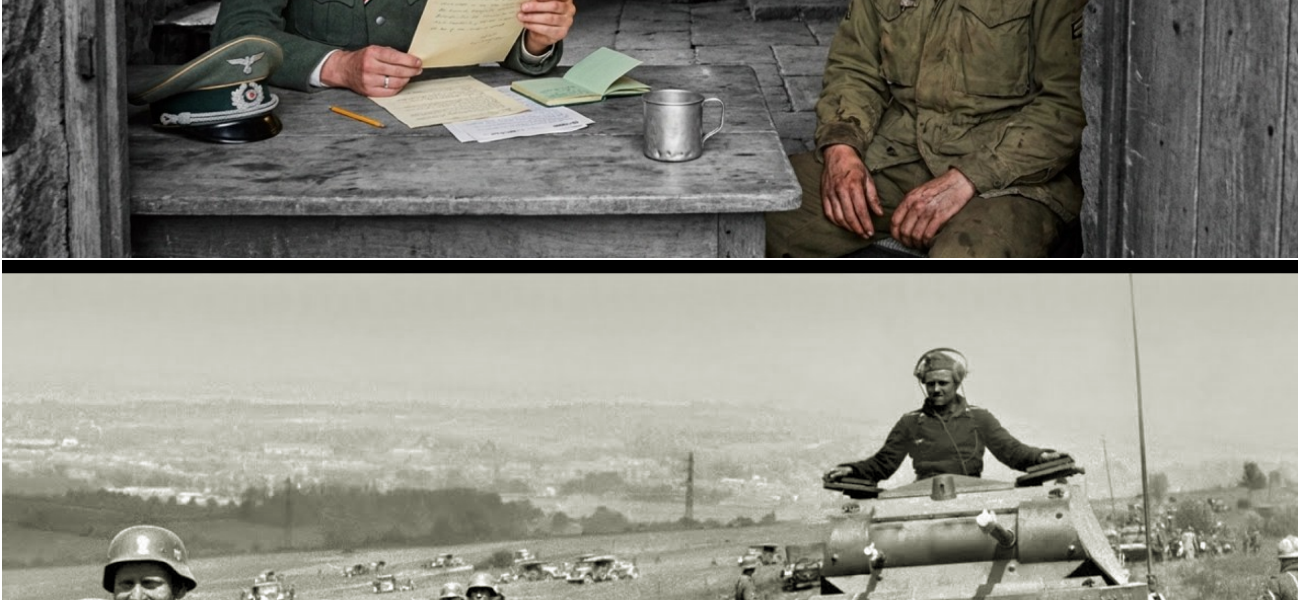
On July 11th, 1944, in a stone farmhouse three miles behind the German line south of Satlow, a Vermached intelligence officer sat across a table from a 20-year-old American private. The American had been captured 6 hours earlier during a patrol gone wrong in the Hedro country. He was from the 29th Infantry Division.
He had mud on his face and a torn sleeve, and he had been a soldier for 11 months. The German officer followed standard procedure: name, rank, serial number. The American gave all three and stopped talking. But the officer already had a problem, and it had nothing to do with this particular prisoner. Over the previous 5 weeks, since the Allied landings at Normandy, German intelligence sections across the front had been processing captured Americans by the hundreds.
Most gave only name, rank, and serial number as they’d been trained, but some talked. Under stress, under exhaustion, under the strange relief of being alive and out of the hedgeros, some talked, and what came out of their mouths disturbed the Germans far more than any tactical secret.
A private first class from the first infantry division captured near Komal had described not only his own platoon’s objective, but the objective of the company to his left, the battalion’s phase line for the day, and the name of the regiment’s commanding officer. A rifleman from the fourth division taken near Leah Dupwi had explained which unit was supposed to be on his flank and what they were supposed to do when they reached a certain road.
A corporal from the second armored, 21 years old, a former grocery clerk from Michigan, had sketched the route his platoon was supposed to take and then without being asked had described the route the platoon next to his was supposed to take. These were not officers. These were not NCOs. These were privates, enlisted men at the lowest rung of the American army.
And they knew things in the Vmacht. A gapa, the equivalent of a private first class, would not know his company’s objective. He would know his squad leader order. Move there, fire there, hold there. The why was not his business. The plan of the neighboring platoon was not his concern.
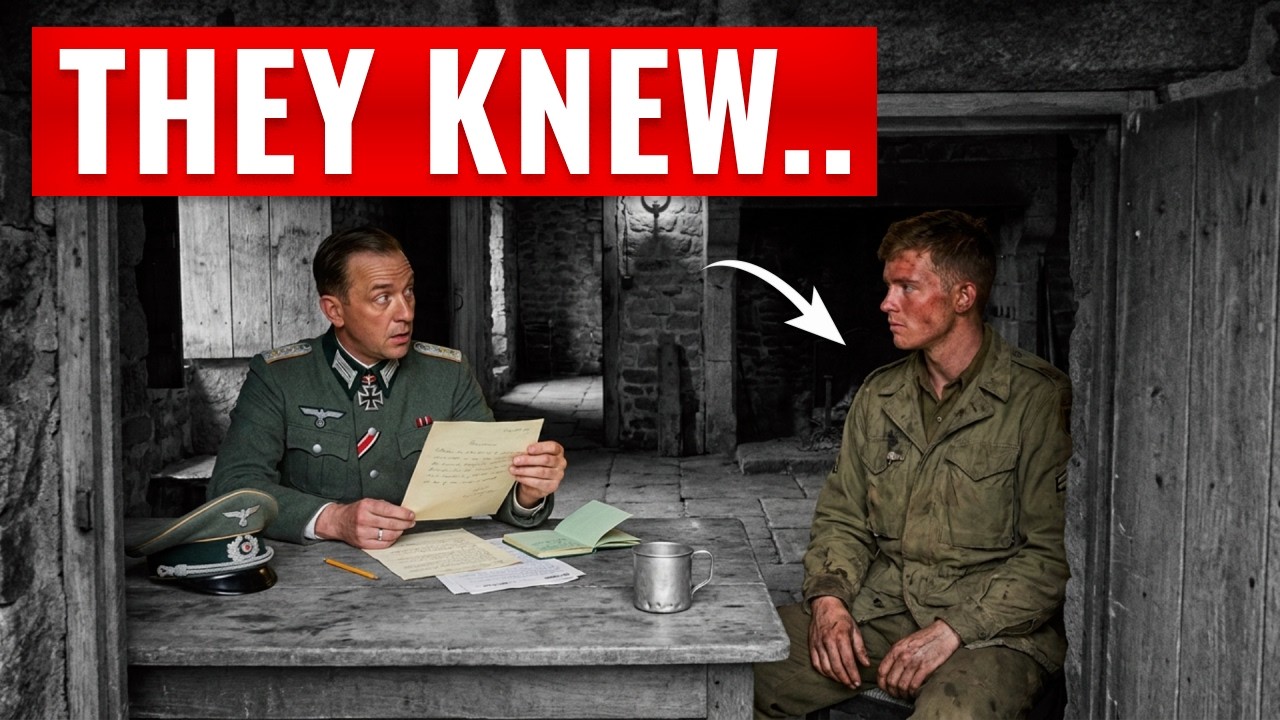
The battalion’s mission was information reserved for officers and often only senior officers. A German litant, a lieutenant might know his company’s task and a rough outline of the battalion’s intent. But the details that these American privates were casually describing in the German army, that was the world of helpman’s and majors, captains and above.
Something was wrong with the American army or something was very very right. If the story of what American soldiers carried into battle, not just in their rifles, but in their heads, matters to you, a like and subscribe help it reach the people who want to hear it. Here is what the German intelligence officers could not know, sitting in their stone farmhouses with their notebooks and their prisoners.
They were not witnessing a security failure. They were witnessing the signature of a completely different philosophy of war. A philosophy built not in the trenches of the Western Front or the lecture halls of the Cregs Academy, but in the training camps of Louisiana, the Carolas, and the California desert, where between 1942 and 1944, the United States Army did something that no major military in history had attempted at that scale.
They told every soldier the plan. Not a summary, not a vague sense of direction. The actual plan with objectives, phase lines, unit boundaries, and the task of the units on either side. They briefed it with maps. They briefed it with sand tables, three-dimensional terrain models built from dirt and sticks and string right there in the field where a sergeant would walk his squad through every step of the operation, pointing at a pile of sand and saying, “This is the hill.
This is the road. This is where second platoon will be. This is where we cross. They briefed it so thoroughly that a private who had been a high school student 14 months earlier could describe the operation with the fluency of a staff officer. Remember that because the reason they did this will turn out to be the most important thing in this story.
And it has nothing to do with trust and nothing to do with democracy and nothing to do with the things you might assume. The reason is darker, more practical, and more brutal than any of those. And it was born from a catastrophe that the United States Army studied very carefully.
But before we get there, you need to understand what was sitting on the other side of that table. Not the prisoner, but the system that produced the interrogator. Because the German army’s approach to information wasn’t stupidity. It was doctrine. It was deliberate. And for 4 years across Poland, France, North Africa, and Russia, it had worked.
The question is why it stopped working. And the answer starts not in a farmhouse in Normandy, but in a classroom in Berlin 15 years before the war began. In 1929, in a lecture hall at the academy in Berlin, a German staff officer stood before a class of 40 future commanders and said something that would define how the Vermach fought for the next 16 years.
The exact words have not survived, but the doctrine he was teaching has because the German army wrote it down, debated it, refined it, and drilled it into every officer candidate who passed through its gates. The doctrine was called Alfrag’s tactic, and in the next decade, it would become the most celebrated command philosophy in military history. The idea was elegant.
A commander tells his subordinate what to achieve, not how to achieve it. Take that hill. Secure that crossing. Block that road. The subordinate officer is free to choose his own method based on what he sees on the ground. He doesn’t wait for detailed instructions. He doesn’t radio back for permission. He reads the situation, makes a decision, and acts. This was revolutionary.
In the French army, a captain waited for orders from his colonel before moving a platoon. In the British Army, operations were choreographed from above with timetables and phase lines that left little room for improvisation. The German system gave its officers something neither the French nor the British trusted their officers with, the freedom to think.
And it worked spectacularly. In May of 1940, German Panza divisions punched through the Arden and reached the English Channel in 10 days. French generals waiting for reports to travel up the chain and orders to travel back down were making decisions about positions their troops had abandoned 2 days earlier.
German lieutenants seeing an undefended bridge seized it without asking. German captains finding a gap in the French line drove through it at 40 km an hour while their own headquarters was still marking yesterday’s positions on the map. But hold that picture in your mind because buried inside this brilliant system was a structural choice that nobody questioned in 1940 and that would quietly become a catastrophe by 1944. Alfrag’s tactic trusted officers.
It did not trust enlisted men. The freedom to think, to interpret, to improvise, that was an officer’s privilege. The Gapright, the Oberright, the Sodat, the men who carried the rifles and fed the machine guns and dug the positions, they received something very different. They received orders, short, specific, unambiguous.
Move here, fire there, hold this. The German enlisted man was the best trained trigger puller in the world. He could field strip an MG42 in the dark. He could dig a fighting position in frozen ground faster than any American. He could march 30 km with 60 lb and fight at the end of it. But ask him what his company was trying to accomplish today and he would stare at you.
Ask him where the platoon on his left was headed and he would not know. Ask him why his battalion was attacking this particular village instead of the one 2 km north and the question itself would make no sense to him. That was the litant’s concern. The litant knew. The feldvable the platoon sergeant might know a piece of it.
The geto knew his job and nothing more. This was not an accident. This was not laziness. This was philosophy. The German military tradition stretching back through the Prussian reforms of the early 1800s drew a sharp line between those who decided and those who executed. Officers were educated to think. Enlisted men were trained to perform.
The academy taught tactics, operational art, wargaming, independent decision-making. The recruit depot taught obedience, discipline, weapons handling, physical endurance. Two separate worlds producing two separate species of soldier joined by a chain of command that flowed strictly downward. And for the first 3 years of the war, the cost of this division was invisible because the officers survived.

In Poland, German officer casualties were modest. In France, the campaign was so fast that losses barely registered. Even in North Africa, Raml’s officer corps remained largely intact. The system hummed. The officers carried the plan in their heads. The enlisted men executed with precision and the machine rolled forward.
Now, pay attention to this number because it changes everything that comes after. Between June of 1941 and December of 1943, 30 months on the Eastern Front, the Vermach lost approximately 60,000 officers killed, wounded, or captured. 60,000. That is not a typing error. To put it in proportion, the entire German officer corps at the start of the war numbered around a 100,000.
By the end of 1943, the Vermacht had burned through more than half an equivalent of its entire pre-war officer strength. And the men replacing them were younger, less experienced, and trained in abbreviated courses that bore little resemblance to the yearslong education their predecessors had received. Every one of those officers had been a node in the information network.
Every one of them had carried the plan, the why behind the orders. When a company commander was killed on the Eastern Front, he didn’t just leave behind a gap in the chain of command. He left behind a platoon of soldiers who knew how to fight but did not know what they were fighting for today in this field at this hour. The felt vable could keep them shooting, but he could not tell them where to go next because nobody had told him.
The German army saw this happening. They documented it. They wrote reports about units freezing in place after losing their officers. They noted platoon that held positions long after the tactical situation demanded withdrawal. Not out of courage, but because no one left alive had the authority or the information to make the call.
And 3,000 miles away on a different continent, a different army was watching. Not the Eastern Front directly, but the casualty patterns, the afteraction reports, the lessons that filtered through neutral observers and intelligence channels. The United States Army was building itself from almost nothing.
And it was building fast. And its planners had a question that would reshape the entire war. The question was simple. What happens when the plan dies with the officer carrying it? Their answer was something the Vermacht never considered and it started with a disaster of their own. On February 19th, 1943, in a narrow pass in the mountains of western Tunisia, the education of the United States Army began with a lesson delivered in German.
Raml’s Africa Corps hit the American second corps at Casarine Pass with two panzer divisions and supporting infantry. What happened over the next three days was not a battle. It was a disintegration. American units broke. Not all of them. Some fought hard and well, but enough of them broke that the word reached Washington and London and produced something close to panic.
A battalion of the 168th Infantry Regiment, surrounded and cut off, surrendered nearly whole. Tanks from the first armored division were committed peace meal and destroyed in detail. Artillery batteries displaced without orders. Infantry companies retreated without knowing where they were retreating to or who was supposed to be covering them.
The Americans lost roughly 6,300 men in 3 days, killed, wounded, and captured. More than 200 tanks destroyed or abandoned. It was the worst defeat the United States Army would suffer in the European theater. But the number that mattered most was not in the casualty reports. It was in the afteraction reviews that followed. the brutal, unflinching self-examinations that the American army, to its lasting credit, forced itself to conduct even while the humiliation was still fresh.
The reviews identified many failures. Poor coordination between armor and infantry, inadequate reconnaissance, commanders too far from the front. But one finding appeared in report after report from battalion level up to core and it said something that would change the way the American army fought for the rest of the war.
Soldiers did not know what they were supposed to do. Not in the tactical sense. They knew how to fire their weapons, how to dig in, how to move under fire. In the institutional sense, privates did not know the objective of their platoon. Platoon did not know the objective of their company. Companies did not know how they fit into the battalion’s plan.
When the German attack hit and communications collapsed, which happened in the first hours because communications always collapse, soldiers had no frame of reference. They could not improvise because they did not know what they were improvising toward. They could not fall back to a secondary position because nobody had told them there was one.
They could not link up with the unit on their flank because they did not know who was on their flank or where that unit was supposed to be. They were in the most precise sense of the word lost. Not geographically, positionally. They did not know where they stood in the larger picture. And so when the picture shattered, they had no way to reassemble even their corner of it.
Here is the fact that connects Casarine to that farmhouse interrogation room in Normandy 16 months later. Keep it. The American army did not respond to Cassarine by replacing its generals, although it did that too. famously putting Patton in command of second corps. It responded by changing what it told its soldiers. The institutional conclusion driven by officers who had watched units dissolve not from cowardice but from ignorance was stark.
If every man in the squad does not know the plan, then the plan dies with the first officer killed. And officers, as the Eastern Front was demonstrating to the Germans at that very moment, die in large numbers. The solution was not complicated. It was radical. brief every soldier.
Not a pep talk, not a general speech about fighting for freedom. The actual operational plan, objective, route, phase lines, who is on your left, who is on your right, what happens if the lieutenant goes down, what happens if the sergeant goes down after him, where you rally, what the fallback position looks like, what the company is trying to accomplish, and how your squad fits into it.
The vehicle for this was the five paragraph field order, a format that had existed in army doctrine since before the war, but had been applied inconsistently and often only at officer level. After Casarine, it was driven down, down past the company, down past the platoon, down to the squad. The squad leader, a sergeant, sometimes a corporal, a man who in the German army would never have seen a battalion operations map, now stood in front of his 12 men and delivered a briefing that in the Vermacht would have been classified information. And the tool
that made it real was dirt, sand tables, terrain models, crude field-built, assembled in 20 minutes from whatever was available. sand, rocks, sticks, torn pieces of map, lengths of string for roads, pebbles for buildings. A sergeant would scrape out a rectangle of earth, build a miniature landscape of the objective, and walk his squad through the operation step by step. This is us.
This is the objective. This is second squad. They go left. We go right. If we lose contact, rally here. If I’m hit, Corporal Davis takes over. If Davis is hit, Henderson takes over. Henderson, you know the route. Henderson knew the route. He was a private first class. He was 20 years old.
Eight months ago, he’d been stocking shelves in a hardware store in Pennsylvania. And now he could describe an operation with more clarity than a German Feldv who had been in uniform since 1939. This is what the German intelligence officers were encountering in Normandy. Not a breach in American security. Not loose-lipped soldiers giving away secrets.
They were encountering the output of a system that had been deliberately redesigned in the field under fire between February and June of 1943 to make every single soldier a carrier of the plan. But the sand table was only the delivery mechanism. The thing that made the whole system possible, the reason it worked, the reason a 20-year-old private could absorb and retain a battalion level operation was something the German army had never built and could not have built.
Not because it lacked intelligence or resources, because it lacked a particular kind of sergeant. In the German army, a sergeant was a technician of violence. He knew weapons. He knew fieldcraft. He knew how to keep men alive under artillery and how to make them move when every nerve in their bodies said stop. He was a career professional, often a man who had served 6, 8, 10 years before the war, and he was respected for his competence.
The German Feder could run a platoon in combat as well as any sergeant in the world, but he was not a teacher. That sounds like a small distinction. It is not. It is the hinge on which the entire story turns. The German NCO received the officer’s order, absorbed it, and translated it into immediate commands for his men.
Move, fire, dig, displace. The translation went from operational language to physical action. What was lost in that translation was everything above the squad’s task, the context, the reasoning, the larger picture. Not because the fed veil was incapable of understanding it, because the system did not consider it his role to pass it on.
His men needed to execute, not to understand. Understanding was the officer’s domain. The NCO was the transmission belt between the officer’s brain and the soldier’s body. The American system built a different animal. In 1942, as the United States Army expanded from a force of less than 200,000 to an army of over 8 million, it faced a problem that no military had ever confronted at that scale.
It needed to turn civilians into soldiers in weeks, not years. Factory workers, farm boys, school teachers, truck drivers, men who had never held a rifle, never read a map, never slept in the rain, had to become combat effective infantry in 16 weeks of basic training. And the men who would train them, lead them, and keep them alive in combat were not career professionals with a decade of service.
They were other civilians promoted fast, learning on the job. By 1943, NCOs’s made up nearly 40% of the American enlisted force. By the end of the war, it was 50%. Half the army carried sergeant stripes. And these men, by necessity, became something the German system never produced at scale. combat instructors who lived with their squads.
Think about what that means in practice. In a German infantry company, the officer planned, the NCO enforced, and the soldier performed. Three layers, three functions, strictly separated. In an American infantry company, the sergeant planned at squad level, briefed at squad level, and led at squad level. He built sand tables.
He drew maps in the dirt. He stood in front of his men and said, “Here is what we are doing tomorrow. Here is why. Here is what happens if it goes wrong and here is what you do if I am not here to tell you. That last part, here is what you do if I am not here, was not an afterthought. It was the center of gravity.
There was a phrase that circulated through American training doctrine, not always written in the manuals, but repeated by instructors at Fort Benning and in the replacement training centers across the country. Every man a leader. It sounded like a slogan. It was an engineering specification. The American army was building a system where the loss of any single node, any officer, any NCO would not collapse the network.
Information had to be distributed because the people carrying it were going to die. Now, here is where the two systems collide and where the cost of the difference becomes visible not in doctrine manuals, but in bodies. Picture two infantry companies on the same day, June 6th, 1944. One American, one German.
Both are about to be hit by something that will destroy their chain of command within the first hour. The American company lands on Omaha Beach. It is E company, 16th Infantry Regiment, First Infantry Division, the Big Red One. The landing craft drops its ramp 200 yd from the shore. Within the first 10 minutes, the company commander is dead.
The executive officer is wounded and drowning. Two of the three platoon leaders are hit before they reach the shingle, the low bank of stones that is the only cover on the beach. The company in any conventional sense has been decapitated. But the sergeants know the plan. Staff Sergeant Philip Stretchic from E company does not wait for an officer to tell him what to do.
He knows what the company was supposed to accomplish. He knows the exit draws, the gaps in the bluffs that lead off the beach. He knows which draw his platoon was assigned. He gathers whoever he can find, men from his platoon, men from other platoon, men from other companies who have drifted in the chaos, and he starts moving toward the draw.
Not because someone ordered him to, because he knows the plan, and he knows that the plan does not die with the captain. Stretch’s group breaches the wire at the base of the bluff. They start climbing. Other small groups led by other sergeants and corporals who also know the plan do the same thing at other points along the beach.
These are not coordinated attacks. There is no one left alive with the authority to coordinate them. They are independent actions by men who share a common understanding of what needs to happen. And that shared understanding is enough. By the end of the day, E Company’s survivors are on top of the bluff. They have taken the position that was assigned to them in the operations order.
The officers who wrote that order are almost all dead or wounded. The men who carried it out are sergeants and privates who attended a sand table briefing in a marshalling area in southern England 72 hours earlier. Across the same beach in the German defensive positions, a mirror image drama is playing out, but it ends differently.
The German garrison at Omaha, elements of the 352nd Infantry Division is fighting hard and well. Their machine guns are doing exactly what they were positioned to do. But the naval bombardment and the chaos of the assault are taking officers, too. And when a German strong point loses its officer, something happens that the Americans on the beach cannot see, but will benefit from enormously in the hours that follow.
The strong point keeps firing, but it stops adapting. And that difference between a position that fights and a position that thinks is about to decide the battle. On Omaha Beach, the German strong points were models of defensive engineering, interlocking fields of fire, concrete imp placements angled to rake the water line, pre-registered mortar targets covering every yard of open sand.
The 352nd Division had been in position long enough to rehearse, to calibrate, to know exactly where every round would land. And in the first hours of June 6th, the system performed exactly as designed. American casualties on the beach were staggering. But a defensive system is not a machine. It is a network of decisions.
And decisions require people who are authorized to make them. When naval gunfire began hitting the bluffs inaccurately at first, then with increasing precision as destroyers moved dangerously close to shore, German positions started taking casualties of their own. Not catastrophic losses, not at first, but specific losses. An officer here, a senior NCO there.
The men who knew which strong point was supposed to shift fire if the Americans concentrated at a certain draw. The men who could order a counterattack platoon to move from reserve to plug a gap. The men who understood how the seven strong points covering Omaha were supposed to work together as a system.
The enlisted men in those positions kept fighting. They were German soldiers, disciplined, brave, well-trained on their weapons. A machine gunner does not need an officer to tell him to keep firing at men crossing open ground. But when the situation changed, when the Americans stopped coming straight up the beach and started filtering through gaps, when small groups appeared at unexpected angles, when the pattern of the assault shifted from a frontal wave to a dozen small infiltrations, the positions that had lost their officers did not adjust.
They could not adjust. The information required to adjust where the neighboring positions were, what the reserve platoon was supposed to do, which draw was the primary concern and which was secondary had lived inside the officer’s head, and the officer was dead. Think about what this means from the German perspective.
Each strong point was still lethal. Each one was still killing Americans, but they were killing Americans according to a plan that no longer matched reality. They were firing at beach sectors where the assault had already moved past. They were covering draws that the Americans had already breached.
They were a clock with every gear still turning, but the hands had stopped. Now hold that image and come back to the stone farmhouse, back to the interrogation table, because what happened next reveals something about the collision of these two systems that neither side fully understood at the time.
Throughout the summer of 1944, German divisional intelligence officers, the IC sections, compiled interrogation reports and forwarded summaries up the chain to core and army headquarters. These reports contained a recurring observation that shows up in multiple German intelligence documents from the Normandy campaign. The observation stripped to its core was this.
American enlisted prisoners display an unusual degree of awareness of their unit’s mission and the missions of adjacent units. In the German intelligence framework, this created a puzzle. If a captured gerriter told you he knew the battalion’s objective, one of two things was true. Either the man was lying, feeding you disinformation, which was a known Allied tactic, or something was wrong with American operational security.
The idea that a competent army would deliberately brief its privates on battalion level operations did not fit any model the German intelligence system recognized. It was like a chess player discovering that his opponent had shown his entire game plan to the pawns. Why would anyone do that? Some German intelligence officers concluded it must be disinformation.
If a private knows this much, he was told these things precisely so that when captured, he would feed the enemy false information. This interpretation made sense within the German framework. It was logical, internally consistent, and completely wrong. Others filed the observation without interpretation. It was simply noted as a characteristic of American prisoners, a curiosity, not a clue to a fundamentally different philosophy of war, which is what it actually was.
And here is the layer that changes the meaning of everything you have heard so far. The American army’s decision to brief every soldier was not only a combat survival mechanism. It was not only about replacing fallen leaders. It had a second consequence that the men who designed the system may not have fully anticipated, but that the battlefield revealed with brutal clarity.
It made the American army a learning organism at every level. When a sergeant briefs his squad on the battalion plan, he is not just distributing information downward. He is creating 12 men who can observe the battlefield with context. A private who knows that second platoon is supposed to be on his left flank can report accurately, specifically when second platoon is not there.
A rifleman who knows the company objective can recognize when the situation on the ground no longer matches the plan. He cannot change the plan, but he can report the discrepancy. And in the American system, that report travels up fast because the American army built a reporting culture where information from the bottom was expected, not merely tolerated.
In the German system, a gloaer who saw something unexpected had one option. Tell his squad leader who told the felt who told the officer if the officer was alive. If the officer was dead, the observation often died with the chain. The information had nowhere to go. The American private knowledge was not a vulnerability. It was a sensor network.
150,000 sensors spread across Normandy. Each one capable of recognizing when reality diverged from the plan because each one knew what the plan was. The Germans were fighting an army that could see with a 100,000 eyes. They were fighting it with an army that could see only through its officers. And by the summer of 1944, those officers were dying faster than Berlin could replace them.
But the ultimate test of the American system was not Normandy. Normandy was the proof of concept. The test, the moment when the entire philosophy would either vindicate itself or collapse, came 6 months later in a frozen forest on a morning when the American army lost something it had never lost before. It lost surprise. On December 16th, 1944, at 5:30 in the morning, 200,000 German soldiers attacked through the Arden Forest on an 80m front.
Three German armies, fifth Panzer, Sixth Panzer SS and Seventh Army hit four American divisions that were either resting after heavy fighting or were brand new to combat. The Americans had no warning. Allied intelligence had missed the buildup entirely. The weather was terrible. low clouds, fog, freezing rain, which grounded the Allied air forces that had ruled the skies since Normandy.
Radio communications collapsed within hours. Wire lines were cut by the barrage. Unit boundaries dissolved. Entire regiments were overrun before their commanders knew the attack had begun. This was not a scenario that any sand table briefing had prepared anyone for. And that is precisely why the bulge is the test that matters.
In Normandy, the American system had proven it could survive the loss of officers within a known plan. At Omaha, sergeants and privates carried out the operation that dead captains had briefed them on. The plan existed. The men who knew it executed it. That was impressive, but it was in a sense the easier version of the problem.
The Arden destroyed the plan itself. There was no operation to execute. There were no phase lines to reach. The carefully briefed objectives of every company and battalion in the Arden sector became meaningless in the first hours because the situation they described no longer existed. The American army on the morning of December 16th was an organism that had been punched in the brain.
Not just decapitated at the company level, disoriented at every level simultaneously. And what happened next is the thing that the German command from Hitler down to the divisional commanders never adequately explained to themselves. The Americans held. Not everywhere, not immediately. The 106th Infantry Division, green and badly positioned, lost two regiments.
Nearly 7,000 men captured in one of the worst American surreners of the war. Units broke. Positions were overrun. The first 48 hours were chaos, confusion, and in some places, genuine panic. But across the rest of the front, something else was happening. something that looked from the German side like organized resistance, but could not have been organized because there was no one left to organize it.
Small groups of American soldiers, squads, half platoon, fragments of companies that had been scattered by the barrage were making decisions. Not following orders because there were no orders. Not executing a plan because the plan was gone. making decisions on their own about where to fight, where to fall back, and critically where to block.
At road junctions throughout the Arden, clusters of Americans set up defensive positions not because a colonel told them to, but because the men in those clusters understood from months of briefings and sand table exercises what mattered in a defensive situation. Crossroads matter. High ground matters. Bridges matter.
If the enemy is attacking with armor, he needs roads. And if you block the roads, you slow the armor. And if you slow the armor, you buy time for the system to recover. Nobody briefed these men on the defense of the Arden. But the habit of being briefed, the habit of understanding terrain, of thinking about objectives, of knowing what matters and why, had become something deeper than knowledge of a specific plan.
It had become a way of seeing the battlefield. A private who has spent months being told why his squad is going to this hill instead of that hill. Who has stood in front of sand tables and heard his sergeant explain how the company fits into the battalion and how the battalion fits into the regiment.
That private has been trained without anyone using the word to think operationally. He may not know the term. He may not be able to articulate it. But when he arrives at an unmarked crossroads in the Ardans with six other soldiers and no officer and no radio and no orders, he does something that a German griefer in the same situation almost certainly would not do.
He looks at the terrain and makes a judgment about where to fight. The German offensive was designed for speed. The Panzer spearheads needed to reach the Muse River crossings within 48 hours. Every hour of delay reduced the odds of success. And across the Ardan at dozens of nameless crossroads and ridgeel lines and bridge approaches, those Rs were being stolen, not by battalions executing a coordinated defense, but by handfuls of men who understood enough about war to improvise one. Now look at the other side. The
German soldiers in the Ardan offensive were by any tactical measure good. Many were veterans. The SS Panzer divisions were among the best equipped formations in the Vermacht. But the offensive plan conceived by Hitler, modified by his generals, pushed down through army and core to division was briefed in the German way.
Officers knew the objectives. NCOs knew the routes. Enlisted men knew the direction of advance and their immediate tasks. When the plan worked, when the roads were open, the Americans were retreating, and the spearheads were ruling, this was sufficient. But when the plan stopped working, when a crossroads that was supposed to be undefended turned out to have a handful of Americans with a bazooka and a machine gun, the German system stuttered.
A German Panzer crew halted at a blocked junction could fight. They could call for support if the radio worked. They could try to push through, but they could not easily reroute because the driver did not know the alternative roads. The commander did not know which routes the neighboring column was using, and the information needed to make that decision lived at battalion or regiment, not in the turret.
The American crossroads groups were fragile. A single tank could have destroyed most of them. But the German spearheads did not know that. They encountered resistance and had to assume it was organized. They lost time probing, flanking, calling for artillery. And each hour lost was an hour gained by the American system, which was even in its shattered state, doing what it did better than any army in the world.
It was recovering, reorganizing, feeding information upward from a thousand small groups who could see the battlefield and describe what they saw, building a new picture from the bottom up. And in a headquarters in Verdun, a general who understood this system better than anyone alive was about to bet everything on it. On December 19th, 1944, in a stone barracks in Verdun, Eisenhower met with his senior commanders.
The mood in the room was grim. The Arden front was fractured. Two American divisions were effectively destroyed. The Germans were advancing toward the Muse. Some officers were openly discussing the possibility of a general withdrawal. Eisenhower looked at the room and said something that only a man who trusted his army to its roots could say.
He said this was not a disaster. This was an opportunity. The Germans had come out of their fortifications and put their best remaining divisions in the open where they could be cut off and destroyed if the Americans could move fast enough. Then he turned to Patton and asked how quickly Third Army could disengage from its current attack in the Zsar, turn 90° north, and hit the German flank in the Arden.
Patton said 48 hours. The room thought he was joking. Turning an entire army, three full divisions, over a 100,000 men with all their tanks and artillery and supply trains 90° in the middle of winter on icy roads in 48 hours was not a maneuver. It was by any conventional military standard impossible. Patton did it in less.
And the reason he could do it is the reason this entire story exists. Patton had not waited for Eisenhower’s order. Days before the Verdun meeting, when the first reports of the German attack came in, Patton had told his staff to begin planning three contingency options for a turn north. His staff had briefed those options down through core to division.
Division had briefed to regiment, regiment to battalion. By the time Eisenhower gave the order, Patton’s battalion commanders already knew which roads they would use. Company commanders had already briefed their platoon leaders. Platoon leaders had already walked their sergeants through the movement plan. When the word came move, it did not have to travel down a chain of comprehension.
It traveled down a chain of confirmation. Every level already understood what was about to happen and why. The order was not an instruction. It was a trigger. Imagine that same order in the German system. Army commander tells core. Core tells division. Division creates a movement plan. Division tells regiment.
Regiment briefs battalion. Battalion briefs company, the first level where enlisted men are involved. And the company commander tells his platoon leaders who tell their NCOs’s who tell their men, “We are moving north.” Why? Not your concern. When now, where exactly? Follow the vehicle in front of you.
The German system could execute this. The Vermacht had conducted brilliant operational maneuvers throughout the war. But the speed of comprehension was different. When an American column hit an unexpected roadblock or a bombed bridge, which happened constantly in the Arden, the sergeant at the front of the column understood the larger objective well enough to find an alternate route.
When a German column hit the same obstacle, it stopped and waited for an officer to make the decision because the men in the trucks did not know where they were going in the operational sense. They knew the road, they did not know the reason. Patton’s 90° turn relieved Baston on December 26th and cracked the southern shoulder of the Bulge.
It was one of the most remarkable feats of operational agility in the history of warfare. Militarymies still teach it. What they often fail to teach is that it was made possible not by Patton’s genius alone, but by 10,000 sand table briefings in frozen fields conducted by sergeants who understood that their privates needed to know the plan.
because tomorrow those privates might be the only ones left to execute it. Now step back from the battlefield, step back from the sand tables and the five paragraph orders and the crossroads and the frozen forests because there is one more layer to this story and it is the one that the German intelligence officers in their farmhouse interrogation rooms never reached.
The layer that explains not just how the American system worked, but why it could exist at all. The United States Army of 1944 was in ways that its own soldiers rarely articulated, a mirror of the society that produced it. America in the 1930s and4s was a country that ran on distributed decision-making.
A factory foreman in Detroit made production decisions without consulting the CEO. A farmer in Kansas decided what to plant, when to harvest, how to price his crop. A small town mayor handled local crises without waiting for the governor’s permission. The American civilian economy was a vast network of independent actors making decisions with imperfect information.
And the system worked not because every decision was correct, but because the cost of a wrong decision at the bottom was small and the speed of a thousand parallel decisions was enormous. The American army inherited this instinct when it built its briefing system. When it pushed information down to the private, it was not copying a foreign doctrine.
It was doing what American society already did, trusting the man at the bottom with enough information to act. The risk was that he might act wrongly. The reward was that he would act at all. The German army was the mirror of a different society, a society where information flowed upward, decisions flowed downward, and the man at the bottom waited.
This was not unique to the Nazi period. It reached back through the Kaiser’s army, through the Prussian reforms, through two centuries of a military culture that drew its strength from obedience, from precision, from the assumption that the man at the top knew best, and the man at the bottom needed only to execute. For 4 years, that assumption had been adequate.
German officers were superb. German planning was meticulous. German execution was fast and violent and often brilliant. But the assumption contained a flaw so fundamental that it could only be revealed by a specific kind of stress. The stress of attrition so severe that the officers themselves became the scarcest resource on the battlefield.
By December of 1944, the Vermacht had lost over a 100,000 officers since the war began. And with each one, a piece of the army’s brain went dark. The American army had lost officers, too. Tens of thousands of them. But when an American officer fell, the light stayed on because the private knew where the switch was.
On a spring morning in 1945, in a processing camp somewhere west of the Rine, a German overloitant sat on a bench and waited to be interrogated. He was 31 years old. He had been captured 3 days earlier along with what remained of his company, 46 men out of an original strength of nearly 200. He had fought in France, in Russia, and again in France.
He had been wounded twice. He was tired in a way that went past exhaustion into something quieter and more permanent. The man who sat down across from him spoke German with a slight accent that the oboant could not quite place. The interrogator was an American sergeant, 24 years old. He had been born in Hamburg.
He had left Germany on a train in 1937 at the age of 16 with a single suitcase and an address in Brooklyn written on a piece of paper. He had become an American citizen in a courthouse in Hagerstown, Maryland on a Tuesday morning in 1943, wearing a new uniform. He had landed in France 10 days after D-Day and had been interrogating German prisoners ever since.
He was a Richie boy, one of nearly 2,000 German-born refugees who had been trained at Camp Richie in the mountains of western Maryland to do exactly this. Sit across from the men who had destroyed their world. and in fluent German with a Hamburgg accent or a Vienna accent or a Berlin accent extract information that would help end the war. The interrogation was routine.
Unit identification, strength, morale, supply status, disposition of neighboring units. The overlitant by this point in the war answered most of the questions. There was no reason left not to. What he said confirmed what the sergeant already knew from interrogating the 30 men before him. But at some point the overlitant asked a question of his own.
It was the kind of question that only surfaces when a professional soldier has had time to think about what he has seen and the American sergeant noted it in his report because it struck him as unusual. The overlitant asked how American privates knew so much. He did not frame it as a complaint or an accusation. He framed it as a professional observation.
He said that during the fighting in the Arden and again during the American crossing of the Rine, his unit had captured American soldiers on several occasions. When his intelligence officer had questioned them, not with any great sophistication, just standard tactical questions, the Americans had sometimes revealed, even in their refusal to answer, a degree of situational awareness that his own men did not possess. They knew things.
They knew their objective. They knew their neighbors objective. One private he said had described the axis of advance for his entire battalion. Information that in the Oberloitan’s company only he and his executive officer would have held. He wanted to know how this was possible. The American sergeant did not answer the question.
It was not his job to explain the American army to a German prisoner. He noted the question, filed the report and moved on to the next man on the bench. But the question lingered and in a sense it is still lingering because the answer touches something larger than military doctrine, larger than sand tables and five paragraph orders and the expansion of the NCO corps.
The answer is this. The United States Army of World War II, assembled in haste, trained in months, staffed by men who had been civilians a year before they hit the beach, made a bet that no great military power had ever made at that scale. It bet that the man at the bottom could be trusted with the truth.
Not a simplified truth, not a motivational truth, not a need to know fraction of the truth, the operational truth, the real plan, the actual reason, the complete picture as far as his level required, and often a little further. It was a bet born from necessity, from Casarine, from the killing fields of the Eastern Front observed at a distance, from the cold mathematics of officer casualties.
But necessity alone does not explain it. The British army faced the same casualty mathematics and did not push information down to the same degree. The Soviet army lost officers at a rate that dwarfed anyone else’s and responded by tightening control from above, not loosening it. What made the American solution possible was something that existed before the army, before the war, before the first draft notice was mailed.
It was the instinct, imperfect, inconsistent, but deeply rooted, that the ordinary man is capable of understanding why he is being asked to do what he is being asked to do, and that he will do it better if he understands. The German army built the finest officers in the world and made them the sole carriers of the plan. The American army built the largest core of informed privates in history and made the plan indestructible.
That is why captured American privates knew more than German lieutenants. Not because American security was poor, not because American soldiers talked too freely, because the American army had decided deliberately, systematically, and at enormous institutional effort that every man who carried a rifle would also carry the reason.
The overloit nut on the bench in the processing camp did not get his answer that spring morning in 1945. He was transferred to a permanent prisoner of war facility and repatriated to Germany in 1947. The Richie Boy who interviewed him returned to Brooklyn after the war. He never went back to Hamburg. The sand tables were scraped flat.
The marshalling areas were dismantled. The five paragraph field orders from Normandy and the Arden were filed in archives where most of them remain to this day, typed on onion skin paper, folded in triplicate, carrying the plans that privates once memorized in tents. While the rain came down on English fields, the privates went home.
They became the fathers and grandfathers of the men watching this video. Most of them never described what they knew or how they knew it. They simply went back to being the ordinary Americans they had always been. Men who expected to be told the reason and who, when the reason was good enough, would walk into fire to see it done.
Thank you for staying through this one. If this story showed you something you did not know before, a like goes a long way. It tells the algorithm that this kind of history matters and helps it reach the people who care about it. If you are not yet subscribed, I would be grateful if you hit subscribe and the bell so you do not miss what comes next.
I would love to hear from you. Where are you watching from today? And if someone in your family served in the Second World War, tell me about them in the comments. Every one of those stories deserves to be remembered. Thank you.
Note: Some content was generated using AI tools (ChatGPT) and edited by the author for creativity and suitability for historical illustration purposes.