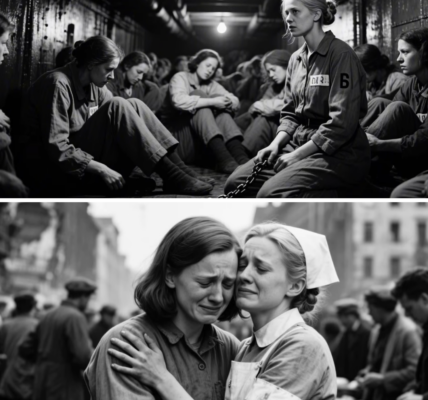
History rarely unfolds in a single direction. While armies cross borders and governments rise or fall, ordinary people continue working, falling in love, raising children, chasing ambitions, and trying to survive. Old photographs preserve these lives in fragments: a soldier carrying a cat on his head, a child laboring in a coal mine, a prisoner learning to walk with an artificial limb, or a city reduced to rubble. Some images are unsettling, others unexpectedly tender, and a few seem almost impossible to believe. Together, they form a portrait of humanity at its most inventive, vulnerable, cruel, and resilient—a past far more complicated than any timeline can capture.
In the early twentieth century, traveling circuses attracted audiences with performers whose appearances or abilities were presented as extraordinary spectacles. Schlitzie Surtees became one of the most recognizable performers of this world. Born with microcephaly, Schlitzie had significant developmental disabilities and communicated in ways that differed from those around him. He often wore loose clothing and sometimes appeared in dresses as part of his stage presentation.
The photographs of Schlitzie belong to a complicated history. They preserve the existence of a performer who became famous, but they also reflect an entertainment industry that frequently marketed disabled people as curiosities. Behind the stage persona was a human being whose life cannot be understood solely through the labels used by promoters. Looking at such photographs today means balancing historical context with respect for the person pictured, recognizing both the limitations of the world he inhabited and the dignity that sensational publicity often overlooked.
Joseph Merrick, widely known as the “Elephant Man,” faced a similarly difficult relationship with public attention in Victorian Britain. His physical differences became pronounced during childhood, and after his mother’s death, his life grew increasingly precarious. Merrick was eventually exhibited as a sideshow attraction before finding more stable circumstances through the intervention of people who took an interest in his welfare.
His story exposes a troubling contradiction in the history of public entertainment: audiences paid to stare at people who were often denied privacy and ordinary opportunities. The same society that turned bodily difference into a spectacle could struggle to recognize the person behind it. Merrick’s life is remembered not merely because of his appearance, but because it raises enduring questions about compassion, exploitation, and the way societies treat people who do not fit familiar expectations.
Other photographs preserve the lives of people who were forced to endure physical suffering through circumstances far beyond their control. At Changi prison camp in Singapore in 1945, a group of men was photographed wearing artificial limbs reportedly made in the camp by Australian warrant officer Arthur Henry Mason Purton of the 2/30th Battalion. The men had been held as prisoners during the Second World War, when captivity brought hunger, disease, exhausting labor, and inadequate medical care.
The artificial limbs represented something more than improvised equipment. In a prison camp, where materials and tools were limited, the ability to make a replacement limb could help a wounded prisoner regain some mobility and independence. The photograph records both the consequences of war and the ingenuity that emerged in response to them. These men had been deprived of freedom, yet practical knowledge and cooperation could still create small opportunities for recovery.
The image also reminds us that the history of war is not exclusively a history of combat. Millions of people experienced conflict as prisoners, refugees, medical patients, laborers, or family members waiting for news. For those who survived captivity, the end of the war did not necessarily mean the end of suffering. Recovery from wounds, malnutrition, and trauma could take years, and some losses could never be repaired.

During the Second World War, the Eastern Front became one of the largest and most destructive theaters of conflict. In 1941, a German Henschel Hs 123 attack aircraft was photographed after being shot down in the Moscow region, with a Red Army soldier standing guard nearby. The Hs 123 was an older biplane design that remained in service because of its usefulness in ground-attack operations. By the time German forces approached Moscow, the conflict had become a brutal struggle over territory, supply lines, and the survival of entire armies.
The wreckage of a single aircraft represented only a small part of the enormous material losses suffered by both sides. Aircraft were built, deployed, damaged, and replaced as the fighting continued. Behind every machine stood pilots, mechanics, ground crews, and soldiers whose lives depended on the outcome of operations they could not always control.
In 1944, German forces retreating through Belarus left behind devastated landscapes and damaged infrastructure. Photographs of railway tracks being destroyed near Vitebsk show how retreating armies could attempt to deny transport routes to their opponents. Railways were crucial to military supply, carrying troops, ammunition, food, and equipment across enormous distances. Destroying a line could slow an advancing army, but it could also leave local communities with damaged transport and a long process of reconstruction.
Elsewhere, the Red Army advanced toward German territory. Soviet soldiers and commanders inspected a captured Nazi flag in the Vitebsk region in 1944, turning a military trophy into a symbol of changing fortunes. Such photographs were often used to communicate victory, morale, and the progress of an offensive. Yet the capture of a flag could not reveal the full human cost of the fighting that had preceded it.
In the Mediterranean, the liberation of Marseille in 1944 brought another kind of transformation. French resistance fighters and members of the French Forces of the Interior took positions along La Canebière, one of the city’s principal streets. The struggle to liberate the city involved French resistance forces and Allied troops, while German occupation forces attempted to maintain control. When the fighting ended, residents faced the task of rebuilding public life after years of occupation and war.
A photograph of a partisan parade in liberated Marseille captures the public face of victory. Crowds could celebrate the return of freedom, but liberation also brought difficult questions about collaboration, punishment, political authority, and the future of France. For people who had lived under occupation, the end of German control was a turning point, not a return to the exact world that had existed before the war.
The Pacific theater produced its own extraordinary images of naval power and destruction. In 1945, the American battleship USS Missouri operated off Okinawa when a Japanese kamikaze aircraft struck its side below the main deck. The impact caused relatively minor damage and no casualties aboard the battleship, according to the supplied caption.
The attack nevertheless belonged to a campaign that placed enormous pressure on Allied naval forces. Kamikaze pilots deliberately directed their aircraft into enemy ships, sacrificing themselves in an effort to damage or destroy vessels that supported the invasion of Okinawa. The USS Missouri survived the strike, but the photograph preserves the instant when a ship designed to withstand heavy combat became the target of an aircraft used as a weapon.
The German battleship Tirpitz, photographed in 1941, represented another dimension of naval warfare. Its size and armament made it a formidable surface warship, and its presence forced the Allies to consider the threat it posed to maritime operations. Naval power depended not only on battles themselves but also on the possibility that a powerful enemy ship might interrupt shipping routes or threaten strategically important waters.
On land, soldiers faced dangers that were far less visible from a distance. In January 1966, a United States Marine from Company H, 2nd Battalion, 4th Marines, was photographed moving through a gully filled with punji stakes in Vietnam. These sharpened stakes, often concealed in the ground, were intended to injure people who stepped into them. The photograph reveals the physical tension of moving through terrain where the danger could be hidden beneath leaves, mud, or vegetation.

Vietnam was a war in which the landscape itself became part of the conflict. Dense vegetation, unfamiliar terrain, concealed positions, and improvised traps complicated the movement of troops. A soldier could be threatened without seeing an enemy, and a routine patrol could become dangerous with little warning.
American military forces also deployed heavily armored vehicles, including M67 flamethrower tanks. These vehicles carried equipment designed to project burning fuel against fortified positions, a terrifying application of military engineering. Their presence reflected the effort to overcome defensive positions that conventional weapons might not easily destroy, but they also embodied the destructive force brought into communities where soldiers and civilians often lived close together.
War in Vietnam was not experienced only by foreign troops. Vietnamese families faced bombing, displacement, and the destruction of homes and livelihoods. The broader conflict divided communities and shaped the lives of generations. Photographs of weapons and soldiers are therefore only one part of the record; the lives of civilians, who had to survive amid competing armies and political forces, remain equally important.
The Cold War extended these tensions into other regions. In 1984, Soviet troops in Afghanistan were photographed preparing food outdoors. The apparently ordinary scene belonged to a war that had begun with the Soviet intervention in 1979 and would continue until the withdrawal of Soviet forces in 1989. Soldiers still needed to eat, maintain equipment, and find moments of rest, even while operating in a conflict that had devastating consequences for Afghan society.
A photograph of a Sahrawi woman with her child and rifle in December 1976 captures another side of armed conflict. The Western Sahara War followed Spain’s withdrawal from the territory and the competing claims of Morocco, Mauritania, and the Polisario Front, which sought self-determination for the Sahrawi people. Women in the conflict zone faced the same basic challenges as other civilians—protecting children, finding shelter, and securing food—while some also took on military or logistical roles.
The photograph should not be read as proof of the woman’s exact circumstances beyond what the caption identifies. Yet it brings into view a reality common to many wars: civilian and military life can overlap in places where displacement, territorial control, and survival become inseparable.

In 1971, an IRA fighter carrying a Thompson submachine gun was photographed in Derry, Northern Ireland. The image belongs to the wider period of conflict known as the Troubles, which involved republican and loyalist paramilitary groups, British security forces, and a deeply divided political environment. The presence of a weapon in an urban setting illustrates how political disputes could move into residential streets, where ordinary people were forced to live alongside the threat of violence.
The fall of the Berlin Wall in 1989 offered a striking contrast. For decades, the wall had symbolized the division of Berlin and the larger ideological split between East and West. Its opening became a powerful image of political change, as people crossed boundaries that had shaped their lives for a generation. The event did not resolve every problem created by the Cold War, but it transformed the physical and political landscape of Europe.
A photograph of American war correspondent Ann Stringer speaking with Soviet soldiers at Torgau in 1945 recalls an earlier moment when armies from the two future Cold War blocs met during the defeat of Nazi Germany. Their encounter took place in a world where the immediate enemy was clear, even as the postwar order was still taking shape. Within a few years, former allies would increasingly view one another through the lens of rivalry and suspicion.
History’s sharpest contrasts are often found within a single generation. A person who witnessed the defeat of Nazi Germany might later live through the Berlin Wall’s construction and collapse. A child who grew up during the Second World War might become an adult in a world shaped by nuclear weapons, space exploration, and television. The photographs connect these experiences, showing how rapidly the circumstances of everyday life could change.
The fear of nuclear conflict became especially visible in the years after 1945. In 1953, a cannon fired a W9 nuclear artillery projectile over Frenchman Flat in Nevada. The projectile detonated with a yield of approximately 15 kilotons, making it the first and only nuclear shell fired from a cannon in a test. The experiment demonstrated an attempt to adapt atomic weapons to battlefield use, bringing the destructive power of nuclear technology into the realm of conventional artillery.
The test also exposed a profound contradiction in modern military thinking. Engineers were developing weapons with extraordinary destructive capacity, while military planners were trying to imagine circumstances in which such weapons might be used. The ability to fire a nuclear projectile from a cannon did not make nuclear war manageable. It made the boundary between conventional combat and mass destruction even more troubling.

The captured German V-1 flying bomb offers another example of military technology crossing into new forms. After the Second World War, an example was brought to the United States for testing at Wright-Patterson Air Force Base in Ohio. The V-1 had been used by Nazi Germany as a pilotless flying bomb against targets including London. Its pulsejet engine and relatively simple guidance system represented an early stage in the development of cruise missiles.
Studying captured weapons allowed engineers to examine the technologies developed by their former enemies. The end of a war did not mean that military research stopped; in many cases, it accelerated. The same machinery that had been designed to attack cities became an object of technical study, influencing the continuing competition between major powers.
Yet the most revealing photographs of military technology are not always pictures of weapons. In 1946, surplus military motorcycles were put up for sale after the war had ended. The conflict had produced enormous quantities of vehicles, tools, aircraft, and equipment. When fighting stopped, governments and businesses had to decide what to do with this vast material inheritance.
Some equipment was stored, some was dismantled, and some entered civilian life. Machines once used to carry dispatches or move soldiers could become practical transport for ordinary buyers. This conversion reflected a larger postwar transformation: societies attempted to redirect industrial capacity from destruction toward reconstruction, commerce, and daily convenience.
The same shift appears in photographs of American consumer culture. In 1960, a Chicago street scene captured a city adapting to the rhythms of automobiles, public transport, shopfronts, and crowds. A photograph of New York from the late nineteenth or early twentieth century shows a very different urban world, shaped by older buildings, changing transport systems, and the density of street life.
Cities rarely change all at once. Buildings are replaced, streets are widened, businesses open and close, and new forms of transportation alter the pace of everyday life. The photographs preserve these changes without needing to explain them. A storefront, a passing vehicle, or a crowded pavement can become evidence of how people lived at a particular moment.
A bicycle-powered car photographed in London in 1928 reveals the continuing search for alternatives to conventional transportation. Other inventors experimented with unusual motorcycles and single-wheel vehicles. Many such designs never became widely adopted, but they show that the modern transport system was not inevitable from the beginning. It emerged through a long series of experiments, commercial decisions, and practical compromises.
Some inventions succeeded because they addressed a genuine need. Others attracted attention because they looked strange or promised a glimpse of a different future. The early twentieth century was full of both. A photograph of an aircraft taking off from the top of a Los Angeles building in 1920, as the caption describes, belongs to a period when aviation was still developing its practical possibilities and public image. Any precise details about the location or flight would need verification, but the idea itself reflects the era’s fascination with flight and modern engineering.

Meanwhile, the physical risks of technological progress remained substantial. In 1911, railway construction workers were photographed walking along a bridge high above the Crooked River in Oregon. In New York, workers building skyscrapers balanced on exposed steel girders far above the streets. Such images are often remembered for their daring composition, but they also reveal the dangerous conditions under which many major structures were built.
The men who assembled steel frames were essential to the growth of modern cities. Their work demanded physical skill and coordination, yet early construction sites often lacked the safety systems expected today. The finished skyscrapers became symbols of commercial power and engineering achievement, while the people who had risked their lives to build them were frequently absent from the public celebrations.
Other photographs show people trying to escape the pressures of modern life through entertainment and leisure. In the 1920s, the Moulin Rouge in Paris was part of the city’s vibrant cabaret culture. Performers, musicians, and dancers helped create an atmosphere that attracted locals and visitors alike. The cabaret belonged to a broader cultural landscape in which nightlife, popular music, and public entertainment became increasingly important parts of urban identity.
In 1955, Irish McCalla was photographed with her chimpanzee co-star Neil while associated with Sheena, Queen of the Jungle. The production reflected the appeal of adventure stories and exotic settings in mid-century television. Such entertainment offered audiences imaginative escapes from everyday routines, although its depictions of distant cultures and wilderness often reflected the assumptions of the period in which it was made.
Music created another kind of shared experience. Bob Marley, photographed in 1976, was developing the international profile that would make him one of the most influential figures in reggae. His music connected Jamaican musical traditions with themes of identity, social injustice, spirituality, and resistance. Photographs of performers can capture their appearance at a particular moment, but their influence often grows far beyond the period in which the image was taken.
Michael Jackson in 1978 represented a different stage in the development of popular music and celebrity culture. The growth of television, recorded music, and global media meant that performers could become recognizable to audiences across continents. Fame increasingly extended beyond live performances, reaching into homes through records, broadcasts, magazines, and later music videos.
A photograph of Elvis Presley during his military service preserves a less theatrical moment in the life of a star whose public image was usually associated with music and performance. Military service placed him within an institution governed by routines and responsibilities different from those of the entertainment industry. Even famous individuals had periods when they lived under rules shared with thousands of other people.
The archive also captures the changing lives of women in public culture. Flight attendants in the 1960s were photographed during an era when commercial aviation was becoming more accessible to a growing number of passengers. Their work was often presented through carefully controlled images of appearance and hospitality, while the actual job demanded long hours, technical knowledge, and responsibility for passenger safety.

Fashion photographs from the same period document shifting ideas about how women should look and behave. Shorter hemlines, bold hairstyles, and new clothing styles became visible markers of changing social attitudes. The history of fashion is not simply a procession of trends; it reflects debates about respectability, independence, gender, and the freedom to present oneself differently.
A photograph of a Moroccan woman wearing traditional makeup in 1962, alongside images of women from other cultural backgrounds, also reminds us that there is no single universal standard of beauty or dress. Clothing can carry family traditions, religious significance, local identity, or personal preference. Historical photographs must be approached with care so that unfamiliar styles are not reduced to exotic curiosities.
The same principle applies to portraits of Indigenous peoples. Chief Wolf Robe of the Southern Cheyenne was photographed in the late nineteenth century and again in images associated with the early twentieth century. He is often linked to the design of the Indian Head nickel, although claims about the specific individuals who modeled for that coin have been debated. His photograph belongs to a wider record of Native American leaders whose images were circulated during a period of profound dispossession and political change.
Chief Bone Necklace of the Oglala Lakota and Chief Wolf Robe represent individuals within living communities, not merely figures from a vanished past. Photographs of Native American leaders often became part of a public fascination with the American West, but the people pictured belonged to societies with their own political structures, histories, and continuing struggles over land and sovereignty.
The same applies to the Crow Treaty of 1868 at Fort Laramie, Wyoming. Treaties between the United States and Native nations were instruments of diplomacy, but they were also made within a history of military pressure, territorial expansion, and unequal power. Their consequences continued long after the signing ceremonies. A treaty photograph can show a gathering, yet the meaning of the agreement lies in the promises made, the disputes that followed, and the lives affected by its enforcement.

A portrait of an enslaved man showing scars in Louisiana in 1863 presents a more direct confrontation with the brutality of American history. The scars on his body were physical evidence of violence, but the photograph also belonged to a period when the future of slavery was being fought over during the American Civil War. Images of formerly enslaved people were sometimes used to document the cruelty of the institution and support abolitionist arguments.
The photograph cannot reveal the man’s full identity or everything he endured. Nevertheless, it resists the abstraction of slavery into statistics alone. The system relied on coercion, forced labor, family separation, and the treatment of human beings as property. A visible scar becomes a reminder that political and economic systems have consequences for individual bodies.
Alfred A. Stratton lost both arms after being struck by cannon fire during the American Civil War in 1864, when he was nineteen. A photograph of him preserves the consequences of a conflict that left hundreds of thousands of soldiers dead and many more wounded. In an age before modern reconstructive surgery, prosthetics, and rehabilitation services, surviving a severe injury often meant confronting lifelong physical and social challenges.
The artificial limbs made for prisoners at Changi during the Second World War belong to this longer history of adaptation after injury. Across generations, people have developed ways to help injured individuals move, work, and participate in daily life. The technologies have changed, but the basic need has remained constant: survival is only the beginning of rebuilding a life.
The archive’s quieter images can be just as revealing. In one photograph, a dog waits outside a New York store in 1956, apparently expecting its owner to return. Another shows a father with his daughters after twenty-seven years. A photographer revisits people he photographed four decades earlier and recreates the original compositions. These images offer a rare view of time itself—not as a sequence of dates, but as changes in faces, relationships, surroundings, and memory.
The repeated photograph is especially powerful because it places two moments beside one another. The people have aged, fashions have changed, and the world around them may have been transformed. Yet the familiar pose creates a bridge between the images. What once seemed ordinary becomes meaningful because time has made it impossible to repeat the original moment exactly.

Some photographs preserve humor rather than tragedy. Twenty-two students squeezed into a single telephone booth in 1959, turning a student challenge into a playful demonstration of collective effort. A soldier posed with a cat balanced on his head. Other pictures show people making unusual vehicles, attempting strange stunts, or simply pulling exaggerated expressions for the camera.
These images are important precisely because they are not monuments to great leaders or decisive battles. They remind us that people in the past laughed, played, experimented, and behaved foolishly, just as people do now. History can become distorted when every image is treated as solemn evidence of a grand narrative. Sometimes the most honest way to understand the past is to allow its people to be funny.
But the archive contains images that are difficult to look at without discomfort. In November 1938, residents of Siegen, Germany, watched their synagogue burn during the violence of Kristallnacht. The coordinated anti-Jewish pogrom took place across Nazi Germany and Austria on November 9–10, destroying synagogues, vandalizing Jewish businesses and homes, and leading to the arrest and abuse of thousands of Jewish men.
The photograph of the burning synagogue in Siegen records a local scene within a much wider campaign of persecution. The violence did not emerge from nowhere. It followed years of state-sponsored discrimination, exclusion, propaganda, and attacks on Jewish life. Kristallnacht marked a dramatic escalation, demonstrating that the Nazi regime was willing to permit and organize mass violence in public view.
Photographs of such events demand more than a passing glance. The people watching the fire were witnesses to the destruction of a community’s religious and cultural life. The building was not merely a structure; it was a place of worship, gathering, memory, and continuity. Its destruction formed part of the broader effort to isolate Jewish people from German society before the Holocaust escalated into systematic mass murder.
A photograph of female guards at a Nazi concentration camp belongs to the same history of persecution and responsibility. Women served in several Nazi camp systems, participating in the administration and enforcement of brutal conditions. Their presence challenges the assumption that the machinery of persecution was operated by men alone. At the same time, each photograph must be identified carefully, because a caption without a confirmed location or date cannot establish the precise circumstances of the scene.
The Holocaust and other systems of mass violence remind us that cruelty does not always appear as a dramatic individual act. It can be organized through institutions, rules, transport systems, prison routines, and the everyday decisions of people who participate in a system of persecution. Historical images can help reveal those structures, but they must be studied alongside reliable documentation rather than treated as self-explanatory proof.
Even the most ordinary-looking photographs may contain a hidden history. A worker at a spinning mill in Salem, Massachusetts, had spent two years in the spinning room. A fifteen-year-old coal-mine worker named Vance reportedly earned seventy-five cents a day for ten hours of work, mainly opening and closing a mine door. His task might have appeared simple, but it placed a child inside a dangerous industrial environment for a long working day.
Such images force us to ask who benefited from the economic systems of the past and who paid the price. Industrial expansion created wealth and new products, but its benefits were unevenly distributed. Children worked because families needed income and employers sought cheap labor. Reformers challenged these conditions over time, leading to changes in education, workplace safety, and labor law, though the process was neither immediate nor uniform.
Across these photographs, one theme returns again and again: the difference between what an image shows and what it means. A battleship can represent technological achievement and the threat of destruction. A fashion portrait can preserve a style while hinting at changing social expectations. A smiling face can conceal suffering, and a solemn expression can tell us very little about what a person was thinking.
The camera freezes a moment, but history continues beyond its edges. The people in these photographs had lives before the shutter clicked and lives—sometimes brief, sometimes long—after the image was made. They lived through systems they did not choose, made decisions with limited information, and found ways to create meaning in circumstances that ranged from comfortable to catastrophic.
Perhaps the most important lesson of this visual archive is that no single photograph can contain an entire life, and no single event can explain an entire century. We must look carefully, question uncertain captions, and resist the temptation to turn real people into simple symbols. The past deserves both curiosity and humility: curiosity to discover what happened, and humility to admit what we still do not know.
Of all these images—from the wounded survivors of war and the victims of persecution to the workers, performers, families, and strangers caught in ordinary moments—which one do you think most deserves to be remembered, and why?
Some content was generated using AI tools (including ChatGPT) and edited by the author for creativity, storytelling, and historical illustration purposes. Historical facts and key details should be verified against reliable historical sources. Any AI-generated or reconstructed visuals are intended for illustrative purposes and should not be interpreted as original historical photographs or archival evidence.